Whether Temperament Testing Changes Minds About Rottweilers
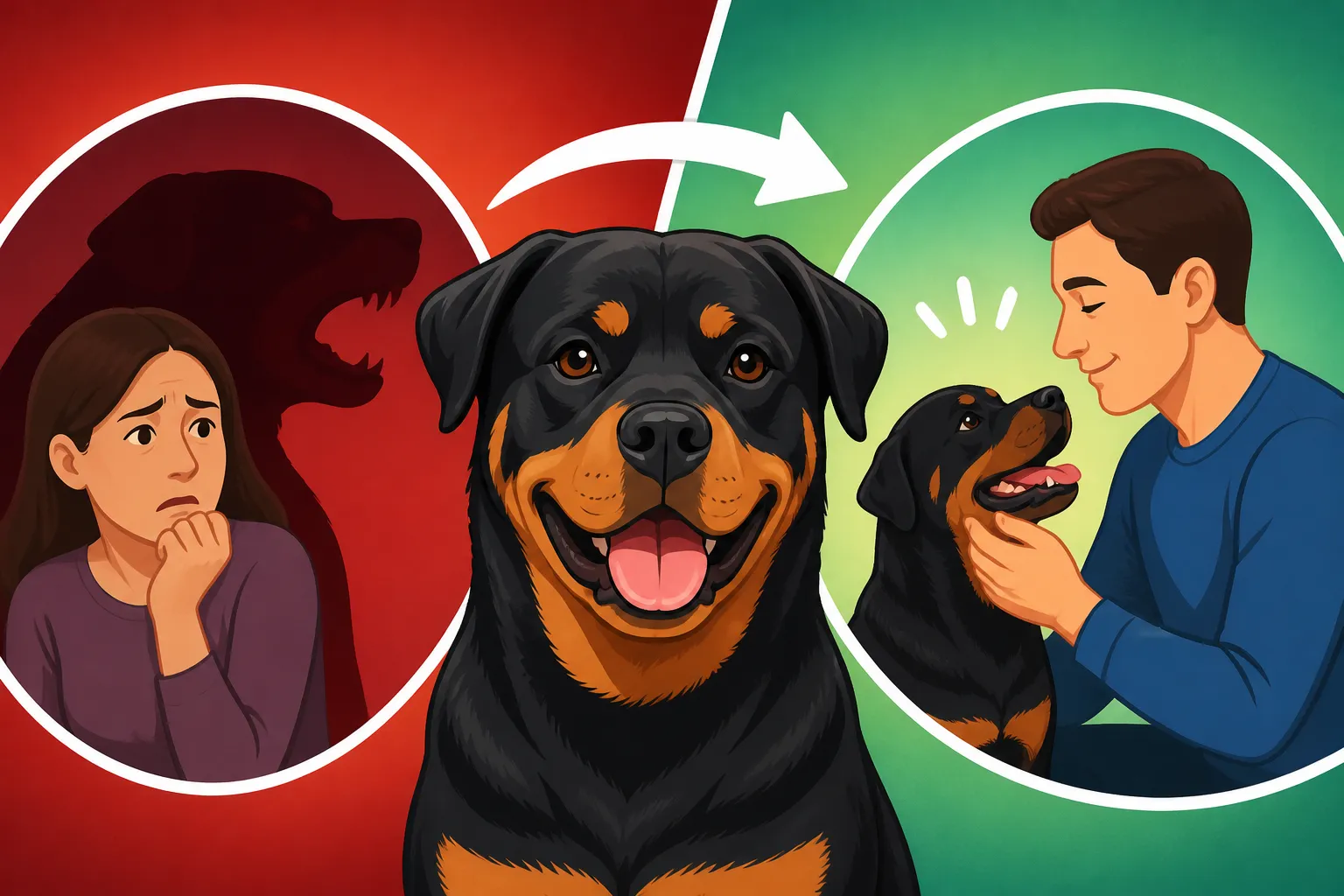
It’s a frustrating reality for so many of us who share our lives with Rottweilers: you adore your intelligent, loyal companion, but the moment you mention their breed, you’re often met with fear, judgment, or outright hostility. This guide delves into the world of temperament testing, exploring what it entails for Rottweilers and, more importantly, whether these certifications can genuinely change the deep-seated perceptions that plague our beloved breed.
Understanding the "Rottweiler Problem" in Public Perception
Let's be honest, living with a Rottweiler means facing a unique set of challenges that extend far beyond normal dog ownership. It’s not just about managing a large, powerful dog; it’s about navigating a public landscape that often views them through a lens of fear and misinformation. This perception, unfortunately, has real-world consequences for loving owners.
The Weight of Breed Stereotypes and Media Portrayals
For decades, Rottweilers have been typecast in media, often portrayed as aggressive, unthinking brutes or villains' sidekicks. Think about how many movies feature a "guard dog" that's a Rottweiler, snarling and lunging, without any context of proper training or responsible ownership. These dramatic, often exaggerated, portrayals seep into the collective consciousness and paint a picture that is miles away from the true nature of a well-bred, well-socialized Rottweiler. People hear "Rottweiler" and immediately conjure up images from a scary movie, not the gentle giant curled up on your living room rug. It’s an uphill battle to counter decades of ingrained stereotypes with the reality of our sweet, sometimes goofy, and always devoted family members.
The Impact on Owners and Breed-Specific Legislation
This negative public image isn't just annoying; it has serious implications. Many Rottweiler owners find themselves struggling with landlords who enforce strict breed clauses, often without ever having met their dog. Insurance companies might deny homeowners' coverage or charge exorbitant premiums just because a Rottweiler lives in the house, regardless of the dog's individual history or training. Perhaps the most heartbreaking consequence is breed-specific legislation (BSL), which bans or heavily restricts Rottweiler ownership in certain cities, counties, or even entire states. Why Breed-Specific Laws Keep Naming the Rottweiler is a topic that hits home for so many of us, as it punishes responsible owners and their innocent dogs based purely on appearance, not behavior. Imagine having to move or give up your cherished family member because of a law that sees your dog as a statistic, not a soul. It’s a constant source of frustration and anxiety for dedicated Rottweiler families.
What Temperament Testing Actually Involves for a Rottweiler
Given the societal hurdles, many Rottweiler owners turn to temperament testing as a way to prove their dog's good nature. But what exactly do these tests involve, and how effective are they? It's more than just showing off a few tricks; it's about demonstrating a dog's stability and reliability under various circumstances.
Common Temperament Tests and Their Focus
There are several recognized temperament tests, each designed to evaluate different aspects of a dog's character and training. One of the most widely known and respected is the American Kennel Club's (AKC) Canine Good Citizen (CGC) program. This test focuses on basic manners and obedience in a calm setting, assessing how a dog reacts to strangers, other dogs, distractions, and being handled. It's about proving your dog is a polite, well-adjusted member of society.
Beyond the CGC, other tests exist, particularly in Europe, like the Begleithundprüfung (BH), which is a German temperament and obedience test required before a dog can participate in more advanced protection sports. The BH is more rigorous, involving elements like walking on a busy street, interacting with bicycles, and remaining calm when confronted with loud noises or jogging people. For a Rottweiler, which traditionally comes from working lines, these tests can be a natural extension of their inherent abilities and training. They aim to show that the dog is stable, confident, and responsive to its handler, not inherently aggressive or fearful. Understanding The Ten CGC Items and Which a Rottweiler Fails can give you a clear picture of what's expected.
How a Rottweiler is Assessed During a Test
During a temperament test, a neutral evaluator observes the dog's responses to a series of common situations. For a CGC, this might involve the dog sitting politely while a stranger approaches and pets them, walking on a loose leash past another dog, or staying in place while the owner steps away. The focus is on controlled, calm behavior. The evaluator isn't looking for a dog that's exuberantly friendly with everyone, but one that is confident, controlled, and neither aggressive nor overly fearful. The Calm Confidence a Rottweiler Standard Asks For is what these tests truly aim to measure – that self-assured, unflappable nature characteristic of a well-balanced Rottweiler.
A Rottweiler who passes these tests demonstrates that they can be calm in public, tolerate handling, and follow basic commands even with distractions. It's a testament to both the dog's innate temperament and the owner's dedication to training and socialization. These tests aren't about breaking a dog's spirit but about channeling their natural intelligence and guarding instincts into appropriate, safe behaviors. This is often where proper socialization, as discussed in Rottweiler Socialization Before Sixteen Weeks, really pays off.
The Limitations and Criticisms of Temperament Evaluations
While temperament tests are incredibly valuable, they do have limitations. A test is a snapshot in time; a dog might perform perfectly on a given day but react differently under extreme stress or novel circumstances. Critics also point out that while a test like the CGC is a good baseline, it doesn't necessarily cover every scenario that might lead to a negative public encounter, nor does it fully address the "guarding instinct" inherent in the breed, which, if not properly managed, can be misunderstood.
Furthermore, a dog's temperament can be influenced by many factors, including health, environment, and training continuity. A dog that passes a CGC at two years old could develop behavioral issues later if not maintained. Another criticism is that these tests are often performed by dedicated owners who have already invested significant time and effort into their dogs, meaning the dogs who show up to be tested are already likely to have good temperaments and training, which might not be representative of the entire breed. It's an important tool, but not a magic bullet.
Does Temperament Testing Truly Shift Public Opinion?
This is the million-dollar question for many of us. We put in the work, we train our dogs, we get those certifications, but does it actually make a difference in how the wider world perceives Rottweilers? The answer, unfortunately, is often nuanced and less straightforward than we hope.
The Role of Certification in Demonstrating Good Canine Citizenship
Having a Rottweiler with a CGC title, or even more advanced working titles, is a powerful statement. It's concrete evidence that your dog is well-behaved, stable, and has received significant training. This can be incredibly validating for owners and can certainly impress individuals who take the time to learn what the titles mean. When you can confidently say, "My Rottweiler is a Canine Good Citizen, meaning he passed a rigorous test of manners and obedience," it provides a level of reassurance that simply saying "He's a good boy" might not.
For individuals like landlords or specific venues (e.g., some pet-friendly hotels), a CGC certificate can sometimes act as a "passport," opening doors that might otherwise be closed due to breed restrictions. It tells them that this specific dog has been evaluated and deemed safe in public settings. It's a tangible piece of paper that speaks volumes about responsible ownership and a dog's reliability. Canine Good Citizen With a Rottweiler outlines some of the efforts involved. When shopping for training supplies or enrichment items to help your Rottweiler succeed, checking out a trusted retailer like Chewy can provide options for durable toys and training aids that can withstand a powerful Rottweiler.
Challenges in Communicating Test Results to the General Public
Despite the value of these certifications, getting the general public to understand and appreciate them is a significant hurdle. Many people simply don't know what a Canine Good Citizen title means. They see a large, black-and-tan dog, and their preconceived notions often override any information about certifications. Explaining the nuances of a BH test to someone who only believes what they've seen in sensationalized news reports can feel like an impossible task. The Reactions Rottweiler Owners Get in Public often highlight this communication gap.
The challenge lies in the scale of the problem. While individual owners can proudly present their dog's credentials, it's hard to disseminate that information widely enough to counteract deeply ingrained societal fear and misinformation. One well-publicized negative incident involving any Rottweiler can often undo the good work of thousands of responsible owners and certified dogs. It’s an ongoing battle against a powerful narrative.
Individual Dogs vs. Breed-Wide Perceptions
Temperament testing undeniably proves the individual merit of your Rottweiler. It demonstrates that your dog is a good canine citizen, well-trained and stable. However, changing breed-wide perceptions is a much larger and slower undertaking. While your dog might be an ambassador for the breed, it's difficult for a few well-behaved individuals to completely overturn years of negative stereotyping. The problem is that many people generalize from the worst examples, rather than appreciating the best.
Even with numerous certified Rottweilers demonstrating exemplary behavior, the label "Rottweiler" still carries a heavy baggage for many. This is why breeders often emphasize the temperament of their lines, ensuring that puppies are born with inherent confidence and stability, which then needs to be nurtured through socialization and training. The conversation about Rottweiler Temperament and That Self-Assured Aloofness helps explain why their calm demeanor is often misunderstood.
Influence on Breed-Specific Legislation and Insurance Policies
Beyond public opinion, a critical question for temperament testing is its impact on the cold, hard realities of policies: breed-specific legislation and insurance. Can a certificate actually prevent a ban or lower your homeowners' premium?
Advocating for Individual Assessment Over Blanket Bans
For advocates against BSL, temperament testing is a crucial tool. It provides a logical argument that dogs should be judged on their individual behavior and training, not solely on their breed. Organizations lobbying against BSL often use data on certified dogs, emphasizing that responsible ownership and training, demonstrated by these tests, are far more effective in preventing incidents than blanket breed bans. They push for "deed-not-breed" legislation, where a dog's behavior, regardless of its type, is the determining factor.
Some forward-thinking municipalities or housing communities will consider a CGC certificate as a factor in allowing a Rottweiler. This is a step in the right direction, recognizing the effort and responsibility of the owner. It offers a glimmer of hope that, over time, more entities will move towards individual assessment, rather than relying on outdated and often unfair stereotypes.
What Insurers and Landlords Look For (and Often Ignore)
This is where the rubber meets the road, and often, it's a frustrating experience for Rottweiler owners. The Rottweiler Reputation That Reaches Insurers is a powerful force. Many insurance companies, particularly the larger carriers, have strict breed-restriction lists that include Rottweilers. For them, it's often a cold, hard actuarial decision based on bite statistics (which themselves can be problematic and misattributed) rather than individual dog temperament. While some might offer an umbrella policy or riders for specific breeds, a CGC certificate alone often isn't enough to get them to waive a blanket breed exclusion or significantly lower a sky-high premium.
Similarly, many landlords, especially in large apartment complexes, have "no Rottweiler" policies. While some private landlords might be swayed by a well-behaved dog and a CGC certificate, particularly if you can document extensive training, it’s far from a guarantee. They're often concerned about their own liability and potential insurance issues, making them hesitant to make exceptions. Rottweiler Owners Turned Down by Landlords is a common, heartbreaking story. Providing evidence of your dog's training and good behavior is a step in the right direction, and you can find many tools and resources on Chewy for advanced training sessions that help build confidence and skill.
The Long Road Ahead for Policy Change
Changing established policies regarding BSL and insurance breed restrictions is a long, arduous process. It requires consistent advocacy, education, and the accumulation of data that shows the true nature of responsible Rottweilers. While temperament testing and certifications are vital pieces of this puzzle, demonstrating that a well-trained Rottweiler is a safe and valuable member of the community, they are just one part of a much larger effort.
It's about shifting entrenched mindsets and legislative frameworks that have often been in place for decades. The more Rottweiler owners who commit to training, achieve certifications like CGC, and actively advocate for their breed, the more cumulative impact we can have. Whether a CGC Title Lowers a Rottweiler Premium illustrates that progress is slow, but every well-behaved, certified Rottweiler contributes to the broader narrative we are trying to change.
Here’s a look at how different evaluations compare in scope:
| Test Name | Primary Focus | Assessment Areas | Key Outcome |
|---|---|---|---|
| AKC Canine Good Citizen (CGC) | Basic manners & public behavior | Accepting a friendly stranger, sitting politely for petting, appearance & grooming, walking on a loose leash, walking through a crowd, "sit" & "down" on command / staying in place, coming when called, reaction to other dogs, reaction to distractions, supervised separation. | Certified "Good Citizen" for public etiquette. |
| Begleithundprüfung (BH) | Obedience & temperament in public | Leash exercises (normal, fast, slow pace), off-leash heeling, recall, down-stay under distraction, reaction to street traffic (cars, bicycles, people). | Qualification for further sport/working titles. |
| Therapy Dog Evaluation | Calmness & tolerance of handling | Interactions with strangers (various ages), reactions to medical equipment, loud noises, awkward petting, prolonged stays, calm presence. | Certification for therapeutic visits. |
| OFA Temperament Certification | Natural social behavior & stability | Interactions with strangers, startle response, sound sensitivity, aggression, confidence. | Evaluation of natural temperament, not training. |
This article is for general informational purposes only and does not constitute professional advice. Laws, prices and regulations vary by location and change over time. Consult a qualified professional for guidance on your specific situation.