Rottweiler Behavior at the Groomer
Bringing a Rottweiler to the groomer can sometimes feel like an Olympic event, even for those of us who adore these magnificent dogs. Their sheer size and incredible strength, combined with their naturally reserved demeanor, mean that a routine bath and nail trim can quickly become a wrestling match if not handled correctly. This guide will walk you through understanding your Rottweiler's unique needs, preparing them for a positive experience, and finding the right professional to ensure grooming is a calm, stress-free affair for everyone involved.
Why Grooming Can Be a Stress Point for Rottweilers
It's easy to assume that because Rottweilers have short coats, they don't need much grooming, or that any groomer can handle them. Unfortunately, this isn't always the case. Several factors can make a trip to the groomer a challenging experience, both for your dog and the person wielding the clippers.
The Physical Challenge of a Big Dog
Let's be honest: a full-grown Rottweiler is a substantial animal. They can weigh upwards of 100 pounds, and their muscle mass is impressive. This isn't just about weight; it's about the sheer power they possess. A Rottweiler who decides they don't want their nails trimmed or their ears cleaned can be incredibly difficult, if not impossible, for a single groomer to manage safely, especially if they are squirming or resisting. Special equipment, like heavy-duty grooming tables with sturdy restraints (used gently and appropriately, of course), and sometimes even two handlers, might be necessary.
Beyond their strength, their physical presence itself can be intimidating to someone not accustomed to working with large, powerful breeds. It's not about aggression, but simply the physical reality of maneuvering and controlling such a strong dog for delicate tasks like clipping between paw pads or expressing anal glands. This requires a confident, experienced hand and an understanding of canine body mechanics.
Their Naturally Reserved Temperament
Unlike some breeds that greet every stranger with slobbery kisses and a wagging tail, Rottweilers often possess a reserved, "wait-and-see" approach to new people and situations. This isn't shyness or fear, but a self-assured aloofness that is characteristic of the breed. They observe, assess, and decide who is worthy of their trust and attention. While a wonderful trait in a guard dog, it can present a hurdle in a bustling grooming salon filled with strange smells, sounds, and unfamiliar hands.
This inherent aloofness means that a Rottweiler might not instantly warm up to a new groomer, no matter how kind. They may stand stiffly, avoid eye contact, or simply tolerate handling rather than enjoy it. This isn't a sign of aggression, but rather their natural processing of a new social interaction. It takes time, patience, and a skilled groomer to earn their trust, allowing them to relax and cooperate. Understanding Rottweiler Aloofness and Why It Reads as Cold is crucial for both owners and groomers.
Past Negative Experiences Can Leave Lasting Marks
Imagine being poked, prodded, or held still against your will, especially by someone you don't know well. Now imagine that experience being uncomfortable or even painful. For a Rottweiler, a single negative grooming experience – perhaps a quicked nail, a too-hot dryer, or a rough handling from an impatient groomer – can create a lasting aversion to the entire process. Dogs learn by association, and if grooming becomes associated with fear or pain, every subsequent visit will be met with resistance.
This is why starting early and making every interaction positive is so vital. It’s far easier to build good associations from scratch than it is to undo deeply ingrained fear or anxiety. A dog that has learned to associate the grooming salon with discomfort will often display signs of stress long before they even arrive, making the job exponentially harder for everyone involved. Rottweiler Behavior Problems That Start Small can quickly escalate if not addressed with empathy and proper technique, and grooming challenges are a prime example.
Proactive Steps for a Positive Grooming Foundation
The good news is that you, as your Rottweiler's owner, have immense power to shape their perception of grooming. Starting early, being consistent, and using positive reinforcement can make all the difference, turning a potential struggle into a routine part of their life.
Early Socialization and Desensitization to Handling
The single most important thing you can do is start handling your Rottweiler puppy from day one. Make it a fun, positive experience. Gently touch their paws, inspect their ears, open their mouth, and run your hands all over their body. Pair these touches with delicious treats and calm praise. The goal is to make them completely comfortable with being touched and manipulated, especially in the areas a groomer will need to access. This isn't just about grooming; it's fundamental to vet visits and overall good manners.
Enrolling your puppy in well-run puppy classes can also expose them to new people, sounds, and handling in a controlled, positive environment. Reputable online training platforms like BAXTER & Bella offer comprehensive puppy programs that often include modules on handling and preparing for vet and groomer visits, giving you structured guidance right from home. This early exposure is key to Socializing a Rottweiler Puppy Properly and building a resilient, confident adult. The more normalized handling is, the less stressful it will be for them.
Getting Your Rottweiler Used to Grooming Tools at Home
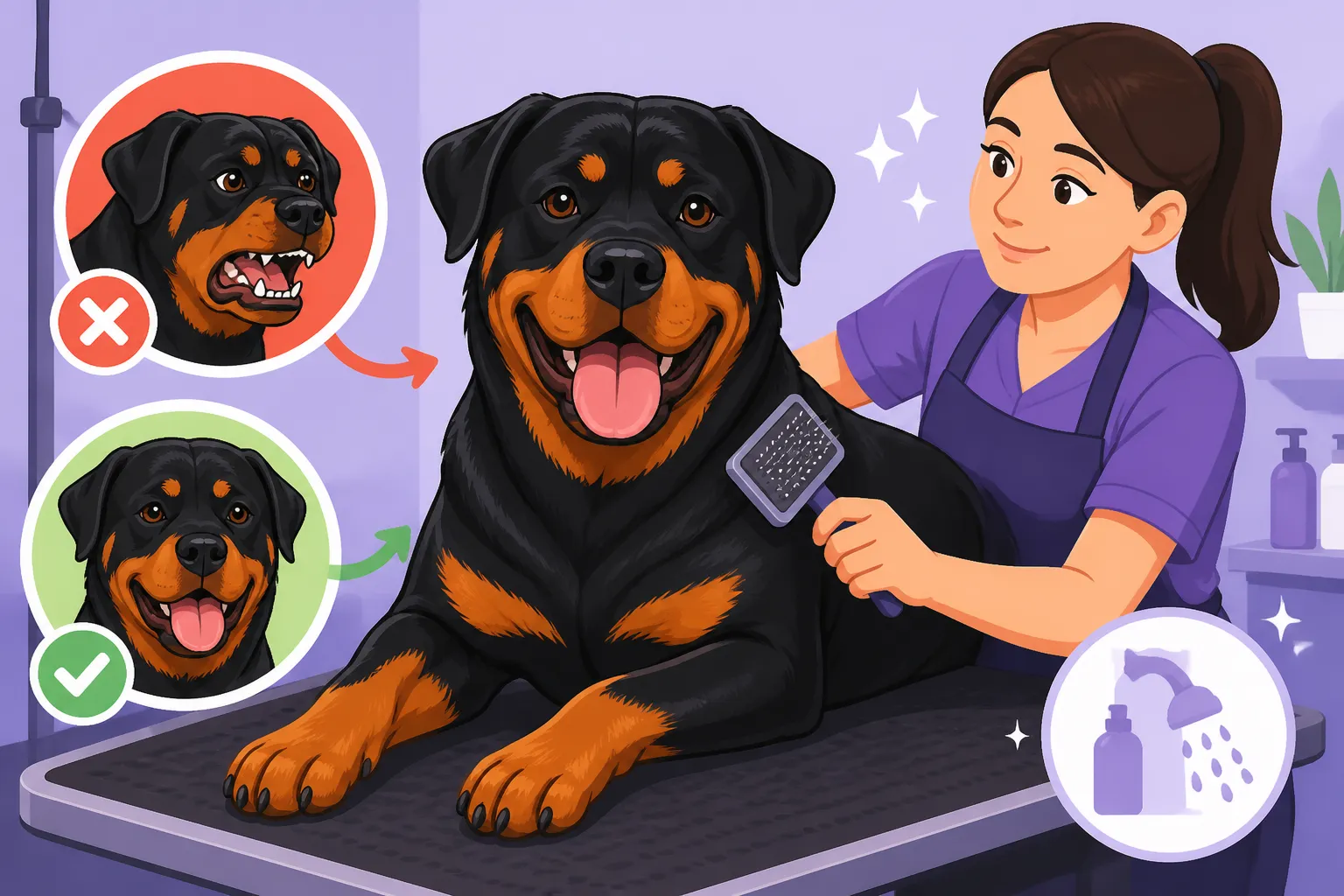
The sounds and sensations of grooming tools can be startling. Introduce clippers, brushes, and nail trimmers slowly and positively. Let your Rottweiler sniff the tools. Turn electric clippers on away from them at first, offering a treat, then gradually bring the buzzing sound closer. Touch their fur with the turned-off clippers, then briefly touch the vibrating clippers to a non-sensitive area like their shoulder, immediately followed by a treat. Do this in very short sessions, several times a day, building up their tolerance gradually.
For brushing, make it a pleasant daily ritual. Invest in good quality brushes that won't pull or irritate their skin. Many excellent options, including de-shedding tools and slicker brushes, are readily available on Amazon. Practice running the brush over their entire body, paying special attention to their paws, tail, and belly. This not only gets them used to the sensation but also helps manage shedding and keeps their skin healthy. Creating positive associations with these tools at home translates directly to a calmer experience at the groomer. It’s all part of Rottweiler Handling Practice for Grooming.
Here's a quick look at some essential at-home grooming tools:
| Tool Type | Purpose | Key Features for Rottweilers |
|---|---|---|
| Slicker Brush | Removes loose undercoat, prevents matting | Large head, sturdy pins, comfortable handle for long sessions |
| De-shedding Tool | Specifically for undercoat removal | Strong blades, ergonomic grip, effective for dense coats |
| Nail Clippers | Trimming nails | Heavy-duty, sharp blades, safety guard (optional) |
| Nail Grinder | Smoothing and shortening nails | Quiet motor, cordless, multiple speed settings, good for thick nails |
| Ear Cleaner | Preventing ear infections | pH-balanced, gentle formula, easy-to-use applicator |
| Dog Shampoo | Bathing and coat conditioning | Hypoallergenic, moisturizing, suitable for short coats, large bottle |
| High-Velocity Dryer | Speeding up drying after baths | Powerful airflow, multiple heat settings, reduces drying time |
The Power of Positive Reinforcement and Calmness
Your demeanor is your Rottweiler's cue. If you are anxious or stressed about grooming, they will pick up on it. Approach grooming sessions, both at home and at the salon, with a calm, confident, and positive attitude. Use plenty of high-value treats (think chicken, cheese, or liverwurst) to reward calm behavior. Break sessions into very short, manageable chunks. If your dog shows signs of stress, take a break, reassure them, and try again later or shorten the session.
Never force your Rottweiler to endure something they are clearly distressed by. Forcing them can break their trust and create deeper aversions. Instead, incrementally build their tolerance. Celebrate every small success – a paw held calmly for a second, an ear gently touched. This consistent positive reinforcement builds confidence and makes your Rottweiler see grooming as a positive, rewarding activity, rather than something to be feared or fought. This consistent work is essential for Rottweiler Puppy Training Through the First Year and beyond.
Selecting the Right Grooming Professional for Your Rottweiler
Choosing a groomer isn't just about convenience or price. For a Rottweiler, it's about finding someone who understands their breed-specific needs and has the experience and patience to create a positive experience.
Expertise with Large and Powerful Breeds
This is non-negotiable. Don't settle for a groomer who primarily works with small, fluffy breeds. Look for someone who has direct, hands-on experience with Rottweilers, German Shepherds, Great Danes, or similar large, strong working dogs. These groomers understand the physical demands of the job, have the appropriate equipment, and are more likely to be familiar with the nuances of their temperament and body language. They know that a stiff tail and averted gaze in a Rottweiler isn't necessarily a sign of aggression, but often a sign of careful assessment.
Ask potential groomers specific questions about their experience. "How many Rottweilers have you groomed? What's your approach to a dog that's nervous or resistant?" Their answers should reflect a deep understanding of dog behavior, not just grooming techniques. A groomer who boasts about "dominating" a dog or "showing them who's boss" is probably not the right fit for your sensitive Rottweiler.
A Patient and Fear-Free Approach
Seek out groomers who advocate for a "fear-free" or low-stress grooming environment. This means they prioritize the dog's emotional well-being over simply getting the job done quickly. They should be willing to take breaks, use positive reinforcement (treats, praise), and work at your dog's pace. A good groomer understands that building trust takes time, especially with a Rottweiler, and rushing the process can backfire.
They might have specialized areas designed for larger dogs, non-slip surfaces, and techniques to minimize stress, such as calming essential oils or gentle handling techniques. Always visit the salon in person if possible. Is it clean? Is it chaotic or calm? Do the dogs currently being groomed look stressed or relaxed? Trust your gut feeling about the environment and the staff's overall demeanor.
Communication and Transparency with the Owner
A truly professional groomer will maintain open and honest communication with you. Before the first appointment, they should conduct a thorough consultation to discuss your Rottweiler's history, temperament, and any specific concerns you have. They should ask about any past negative experiences and how your dog typically reacts to handling.
After the groom, they should provide feedback on your dog's behavior during the session, noting any areas of resistance or progress. They should be transparent about what they were able to accomplish and what might need more work in future sessions. If they encountered any difficulties, they should explain why and suggest strategies for improvement, rather than simply criticizing your dog's behavior. This partnership between owner and groomer is invaluable for ensuring your Rottweiler's long-term comfort and safety.
Practical Strategies for a Smooth Salon Visit
Even with the best preparation and the right groomer, a little extra planning can go a long way in making salon visits as stress-free as possible for your Rottweiler.
Prioritize Exercise and Potty Breaks
A tired dog is a good dog, and a Rottweiler with pent-up energy is far more likely to be restless and resistant during a grooming session. Before heading to the groomer, take your Rottweiler for a good, long walk or engage in some vigorous playtime. Get their mental and physical energy out. This doesn't mean exhausting them to the point of collapse, but rather ensuring they are relaxed and ready to settle for an hour or two.
Also, always give them ample opportunity for a potty break right before you go in. A full bladder or bowels will only add to their discomfort and stress during the groom, making them more likely to squirm and try to get down. A relaxed, relieved Rottweiler is much more likely to stand still and cooperate.
Considering Muzzle Training for Safety and Comfort
Many owners are hesitant about muzzles, viewing them as a sign of aggression or punishment. However, for a breed as powerful as a Rottweiler, muzzle training can be an incredibly valuable tool that ensures the safety of everyone involved – your dog, the groomer, and even yourself. A well-fitted, comfortable muzzle (like a basket muzzle that allows panting and drinking) that your dog is positively conditioned to wear can reduce anxiety for the groomer, allowing them to work more confidently and gently, which in turn helps your dog relax.
Start muzzle training at home, long before you ever need it for a groomer. Make it a fun game with lots of treats, stuffing the muzzle with peanut butter or cream cheese, so your dog willingly puts their nose in. Gradually increase the time they wear it. This way, if a situation arises where a muzzle is needed – perhaps for a tricky nail trim or if your dog is in pain – it's not a new, scary experience. Understanding Muzzle Training a Rottweiler Before You Need It can save a lot of stress down the line.
Keep Your Own Emotions in Check
Our dogs are masters at reading our emotions. If you're anxious, worried, or stressed when dropping your Rottweiler off at the groomer, they will sense it. This can heighten their own anxiety and make the separation more difficult. Instead, project a calm, confident, and cheerful attitude. Make the drop-off quick and uneventful. A simple, "Be a good boy/girl, I'll be back soon!" delivered with a relaxed tone and a quick pat is usually far more effective than a prolonged, emotional goodbye.
Trust the groomer you've chosen. If you've done your homework and selected a professional who is experienced and patient, you can feel confident that your Rottweiler is in good hands. Your calm demeanor will help your Rottweiler feel more secure and less worried about being left with a stranger, setting the stage for a much smoother session.
Maintaining Your Rottweiler's Grooming Needs Between Professional Sessions
Even with regular professional grooming, much of your Rottweiler's well-being depends on the consistent care you provide at home. This isn't just about hygiene; it's about bonding, health, and reinforcing positive handling.
Regular Brushing and Coat Health
While Rottweilers have short coats, they are not maintenance-free! They have a double coat and shed quite a bit, especially during seasonal "blows" twice a year. Regular brushing, ideally a few times a week, is crucial. It helps remove loose fur, reduces shedding around your house, distributes natural oils for a healthy, shiny coat, and prevents any potential skin issues from going unnoticed. Rottweiler Undercoat Shedding Twice a Year can be quite a surprise for first-time owners!
Using a good quality rubber curry brush or a de-shedding tool (many excellent ones can be found on Amazon) will make a big difference. Make brushing a positive experience with praise and treats, reinforcing that handling is pleasant. This routine also allows you to perform regular skin checks, looking for any lumps, bumps, or irritations that might need veterinary attention. This is a great way to use The Rottweiler Grooming and Shedding Supplies you've already invested in.
At-Home Nail Care and Ear Cleaning
Nail care is incredibly important for Rottweilers. Overgrown nails can cause pain, make it difficult for them to walk properly, and even lead to long-term joint problems. If your Rottweiler's nails click on the floor when they walk, they're too long. Ideally, you should be able to slide a piece of paper under their nails when they're standing. Regular short trims are better than infrequent, drastic ones. If you're uncomfortable with clippers, a Dremel-style grinder can be a gentler option, but both require positive conditioning. Getting used to Rottweiler Nail Trimming at Size can be a major hurdle but is essential.
Rottweilers also have drop ears, which can trap moisture and debris, making them prone to ear infections. Regular ear checks and cleaning (with a veterinarian-approved solution) are vital. Lift the ear flap, check for redness, odor, or discharge, and gently wipe the visible parts of the ear canal. If you notice any signs of infection, consult your vet immediately. Consistent attention to Rottweiler Ear Care Under a Drop Ear can prevent painful problems.
Making Home Grooming Part of Your Routine
Think of home grooming not as a chore, but as an extension of your bond with your Rottweiler. These short, consistent sessions reinforce all the positive handling work you've done. A quick brush, a nail check, and an ear wipe a few times a week will keep your Rottweiler comfortable, healthy, and accustomed to being handled. When it comes time for a professional groomer, these regular positive experiences will make the salon visit much smoother.
It’s about building a predictable routine where your Rottweiler knows what to expect and trusts that your touch is always gentle and accompanied by rewards. This consistent investment in their comfort and well-being will pay dividends in a happier, healthier, and more cooperative Rottweiler throughout their life.
Taking your Rottweiler to the groomer doesn't have to be a battle. By understanding their unique breed traits, laying a strong foundation with early socialization and positive reinforcement, and carefully choosing a skilled, patient groomer, you can transform grooming into a manageable and even pleasant experience. Consistency, patience, and a calm approach are your best allies in ensuring your powerful companion is a cooperative and comfortable customer, whether at home or in the salon.
Disclaimer
This article is for general informational purposes only and does not constitute professional advice. Laws, prices and regulations vary by location and change over time. Consult a qualified professional for guidance on your specific situation.