Rottweiler Leaning and Body Blocking
One of the most endearing, yet sometimes inconvenient, habits of a Rottweiler is their propensity to lean on you or, in some cases, outright body block you. It feels like a massive, affectionate hug, but for such a powerful dog, it’s a behavior that needs to be understood and gently guided from puppyhood to ensure it remains a loving gesture and doesn't escalate into a controlling or problematic habit. This guide will delve into the nuances of why Rottweilers lean and body block, how to interpret their intentions, and practical ways to manage these behaviors effectively.
The Deep-Seated Instincts Behind Rottweiler Leaning
When your Rottweiler leans into your legs, it's not just a casual gesture; it's often an echo of their ancient purpose and a strong expression of their bond with you. These majestic dogs were originally bred for herding and guarding livestock, driving cattle, and protecting their butchers' earnings. This history has ingrained certain behaviors that manifest in modern-day leaning and physical contact. Understanding these roots helps us interpret their actions and respond appropriately.
Historical Context of the "Lean"
Imagine a time when the Rottweiler's ancestors, the Roman drover dogs, worked tirelessly alongside their human companions. Their job wasn't just to move cattle but to keep them safe, often by pushing against the herd to direct or contain them. This constant physical pressure, this "lean," was a vital part of their job. When the breed evolved in the town of Rottweil, becoming the "Metzgerhund" or butcher's dog, this instinct to lean continued. They would lean against their owner, not just for affection, but as a silent, steadfast declaration of presence and protection, often while guarding the butcher's money pouches tied around their necks.
This historical role means that leaning isn't just a random act; it's a deep-seated instinct to be with you, on you, and for you. It’s a physical manifestation of their protective nature and their desire to be connected to their pack leader. It’s their way of saying, "I am here, I am with you, and I am watching." While our modern Rottweilers are not herding cattle or guarding sacks of gold, that inherent need for physical connection and proximity, often expressed through leaning, remains a core part of their being. For more on their historical roles, you might find What Rottweil Made the Metzgerhund Do fascinating.
Affectionate vs. Assertive Leaning
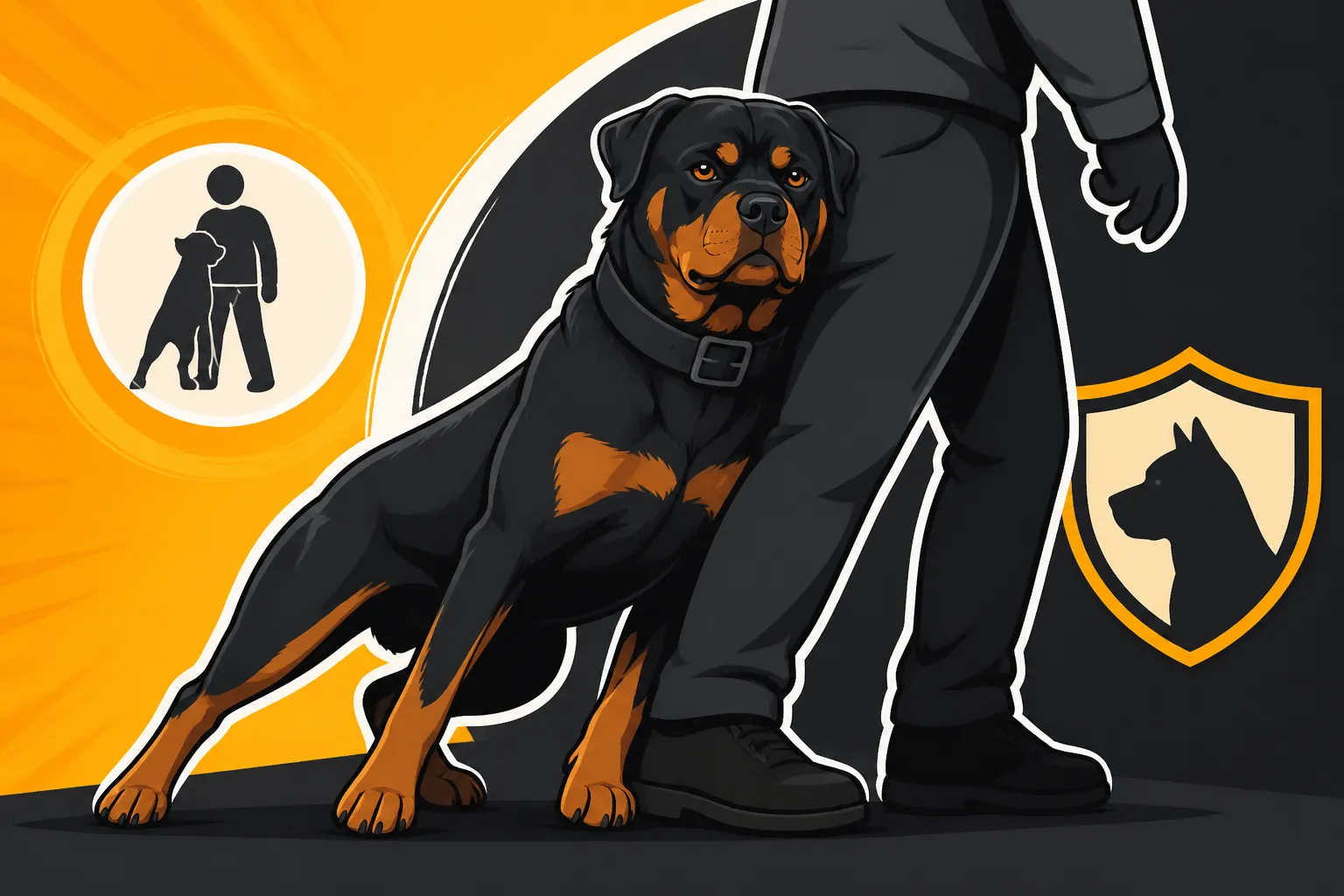
Not all leans are created equal. A soft, relaxed lean against your leg while you're reading or watching TV is often a pure expression of affection and comfort. It's their way of seeking closeness, a canine cuddle, especially if they then sigh contentedly or rest their head on you. This kind of lean is typically accompanied by loose body language, a soft gaze, and a relaxed tail wag (if they have a natural tail). It signifies trust and contentment, a desire to be physically connected to their most cherished human.
However, a more rigid, intense lean, especially when new people or other dogs are present, can be a subtle form of assertion or guarding. Your Rottweiler might be positioning themselves between you and the perceived "intruder," using their considerable body mass to communicate their protective stance. In this scenario, their body might be stiffer, their gaze more fixed, and their tail, if wagging, might be more of a low, stiff fan. It's not necessarily aggressive, but it's a clear signal that they are alert and taking their guardian role seriously. Learning to read these subtle differences in their body language is key to understanding your Rottweiler's intentions.
Deciphering the Rottweiler Body Block
While leaning is usually about contact and presence, body blocking takes it a step further. It's a deliberate act of placing their body in your path or between you and something else, effectively controlling movement or access. This behavior can be incredibly confusing for owners, as it can feel both affectionate and incredibly bossy at the same time.
What Constitutes a Body Block
A body block is more than just leaning; it's an active obstruction. Imagine you're trying to walk into the kitchen, and your Rottweiler suddenly plants themselves squarely in the doorway, forcing you to navigate around them or ask them to move. Or perhaps you're on the couch, and they position themselves directly between you and another family member, subtly asserting their claim to your attention. They might lie down across a doorway, making it awkward to step over them, or stand directly in front of the television, demanding interaction.
This isn't always an aggressive act. Sometimes, it's a learned behavior to get attention. If every time your Rottweiler body blocks you, you stop to pet them or talk to them, they quickly learn that this behavior gets results. Other times, it might be a subtle form of resource guarding, where you are the resource they are trying to "guard" from others. It's important to differentiate between an innocent "I want attention" block and a more serious "you're mine and I control this space" block. Pay attention to the context and their overall demeanor. If they seem stiff or give a hard stare, it warrants closer examination.
Why Rottweilers Engage in Body Blocking
Rottweilers are intelligent, confident dogs with a strong sense of purpose. Their historical role required them to be decisive and to manage livestock, which involved a certain degree of control and spatial awareness. This translates into a natural inclination to organize their environment and the people within it. When they body block, they might be:
- Seeking attention: If you've inadvertently rewarded their blocks with pets or interaction, they'll repeat the behavior. It's a highly effective way for a large dog to get noticed!
- Attempting to control movement: They might want you to go a certain direction, stay in a particular spot, or simply not leave their side. This can stem from a desire to keep the "pack" together or a subtle attempt to lead.
- Resource guarding (you or space): As mentioned, they might view you as a high-value resource and try to prevent others from accessing you. They might also guard a favorite spot on the couch or a pathway they consider theirs. Understanding Rottweiler Resource Guarding at Home can shed more light on this.
- Expressing anxiety or insecurity: Sometimes, a dog that feels insecure might try to control their environment to feel safer. A body block can be a way to create a physical barrier between themselves and a perceived threat, even if that threat is just the mail carrier.
It's vital to remember that a Rottweiler's size and strength mean that even a "playful" body block can be intimidating or even accidentally knock someone over. Therefore, understanding the underlying motivation and providing clear guidance is paramount, especially when you have children or elderly family members in the home.
Managing Leaning and Body Blocking Effectively
The key to managing these behaviors is consistency, clear communication, and ensuring you are perceived as the calm, confident leader who makes the decisions about space and movement. You want to preserve the affectionate lean while discouraging any behavior that becomes pushy or controlling.
Reinforcing Desired Behavior
The easiest way to shape your Rottweiler's behavior is to reward what you do want. When your Rottweiler leans gently against you in a relaxed, appropriate way, acknowledge it with calm praise and a gentle pet. This teaches them that a polite lean is acceptable. However, if the lean comes with excessive demand for attention, wait for a moment of quiet relaxation before giving attention. This teaches them that calm behavior gets rewarded, not pushiness.
For body blocking, the strategy is similar but requires more active redirection. If your Rottweiler blocks your path, do not step over them, push them away, or get frustrated. Instead, give a calm, clear cue like "Move" or "Place" (if they have a designated spot). Lure them away with a treat to the side, then immediately reward them when they move. Once they've moved, you can proceed. This teaches them that moving on cue is rewarded, and blocking your path will not achieve their goal. Consistency is crucial here; everyone in the household needs to use the same cues and expectations. Online training programs like those offered by BAXTER & Bella can provide structured guidance on teaching these foundational commands to manage large breeds effectively.
Setting Clear Boundaries
Rottweilers thrive on clear boundaries and knowing what's expected of them. If you don't want your Rottweiler body blocking doorways, start by teaching them a "stay" or "place" command for designated areas. Use gates or physical barriers in your home initially to prevent them from blocking access to certain rooms. When they approach you, teach them to sit politely for attention instead of jumping or leaning.
For leaning that feels too intense or demanding, gently step away from them. Don't engage with the lean itself. When they realize leaning doesn't get them what they want (usually more attention), they will often try other behaviors. As soon as they offer a sit or just stand calmly beside you, that's your moment to reward them with attention. It takes patience, especially with a dog that has already established these habits, but it's incredibly effective. Remember that a big part of Training a Rottweiler Before It Outweighs You is establishing these clear rules early on.
Using Training Aids for Control
For persistent leaning or body blocking, especially during walks or when meeting new people, certain training aids can be invaluable. A well-fitted front-clip harness, for example, can redirect your Rottweiler's forward momentum if they try to lean into you or pull too much. When they try to lean or pull, the harness gently turns their body to the side, making the lean less effective and uncomfortable. Brands available on platforms like Amazon offer a wide range of such harnesses specifically designed for large, strong breeds like Rottweilers.
Head halters can also be very effective for larger, stronger dogs, giving you more control over their head and therefore, their direction. While some dogs initially resist head halters, with positive reinforcement and gradual introduction, many learn to accept them. These tools are not meant to be a substitute for training but rather aids to help you communicate and guide your Rottweiler more effectively while you reinforce the desired behaviors. Harness Hardware That Holds a Pulling Rottweiler discusses options that might be suitable.
Understanding the Nuances of Rottweiler Physicality
Rottweilers are powerful animals, and their sheer physical presence means that even subtle actions can have a significant impact. Ignoring or misinterpreting their body language can lead to misunderstandings or, worse, unintended accidents.
Differentiating From Normal Contact
It's important not to confuse affectionate leaning or casual nudging with deliberate body blocking. A Rottweiler pushing their head under your hand for pets, or even a soft bump with their nose, is generally a healthy, attention-seeking behavior. A gentle lean against your side while you're standing in line at the coffee shop or visiting a friend can also be perfectly normal and affectionate. These are usually accompanied by soft eyes and relaxed body posture.
The distinction lies in the intent and effect. If the contact is preventing your movement, forcing an interaction, or creating a barrier, then it leans towards body blocking. If it's a soft, voluntary contact that you can easily disengage from without conflict, it's likely just a Rottweiler's unique way of showing affection and staying connected. Learning to read your dog's full body language – their eyes, ears, tail, and muscle tension – will help you distinguish between these behaviors.
When to Seek Professional Help
Most leaning and body blocking can be managed with consistent training and clear boundaries at home. However, there are times when seeking professional guidance is advisable. If your Rottweiler's body blocking is:
- Accompanied by aggression: Growling, snapping, or attempts to bite when you try to move them.
- Escalating: The behavior is becoming more frequent, intense, or harder to manage.
- Causing fear or anxiety: You or other family members are becoming genuinely intimidated by their actions.
- Causing physical hazards: They are consistently knocking people over, especially children or the elderly.
In these cases, a certified professional dog trainer or a veterinary behaviorist can help assess the underlying cause of the behavior and develop a tailored modification plan. They can observe your Rottweiler in your home environment and provide hands-on coaching to address the specific issues you're facing. Sometimes, what looks like a training issue can have roots in underlying pain or anxiety, which a professional can help rule out. For finding a suitable expert, Finding a Rottweiler-Experienced Trainer Near You can be a great starting point.
Table: Leaning vs. Body Blocking – A Quick Guide
To help differentiate between these behaviors, here's a simple breakdown of common indicators:
| Feature | Leaning (Affectionate) | Body Blocking (Controlling/Demanding) |
|---|---|---|
| Body Posture | Relaxed, soft, pliable | Stiff, rigid, unyielding |
| Eye Contact | Soft, blinking, looking to you for connection | Fixed, hard stare, often avoiding eye contact with you |
| Tail Wag | Loose, wide wag, or relaxed | Stiff, low, sometimes frantic fan wag, or none |
| Location | Next to you, often in a quiet moment | Directly in your path, between you and a person/object |
| Movement | You can easily step away or shift them | Resists movement, forces you to navigate around them |
| Sound | Contented sighs, soft nudges | May be silent, or accompanied by an attention-seeking whine |
| Goal | Closeness, comfort, affection | Attention, control of space/movement, guarding |
It's crucial to evaluate these cues in context. A relaxed lean is a beautiful thing that strengthens your bond, but a rigid body block needs careful, consistent management.
Cultivating a Harmonious Home with Your Rottweiler
Ultimately, your goal is to have a Rottweiler who is a loving, well-mannered companion, comfortable in their role within your family. Leaning and body blocking, when understood and managed correctly, can be integrated into this harmonious relationship.
Building Trust and Respect
A strong bond with your Rottweiler is built on trust and mutual respect. This means providing clear leadership, consistent training, and meeting their physical and mental needs. If your Rottweiler trusts that you are in charge and will keep them safe, they are less likely to feel the need to control situations through body blocking. Regular training sessions, even short ones, reinforce your bond and their understanding of your expectations. Consider exploring resources like BAXTER & Bella for online puppy and obedience training, which can help foster this relationship from an early age.
It also means respecting their need for personal space when they indicate it, and providing them with a safe, comfortable place of their own, like a sturdy crate or a cozy bed, where they can retreat without being disturbed. This balance of togetherness and individual space is vital for a confident, well-adjusted Rottweiler. For tips on appropriate confinement, refer to The Crate Size a Hundred Twenty Pound Rottweiler Needs.
Consistency Across the Household
Perhaps the biggest challenge in managing these behaviors is ensuring that everyone in the household is on the same page. If one person allows demanding leans and body blocks, while another tries to discourage them, your Rottweiler will get mixed signals and the behavior will likely persist. Hold a family meeting to discuss what is acceptable and what is not, and agree on consistent cues and responses.
Children, especially, need to be taught how to interact with a large dog like a Rottweiler. Teach them not to climb over a body-blocking dog, but rather to ask an adult for help or to use the agreed-upon "move" command. This consistency reinforces your rules and helps your Rottweiler understand their place in the family hierarchy, contributing to a calmer, happier home for everyone. The journey of Rottweiler Puppy Training Through the First Year is all about building these consistent foundations.
Rottweilers are magnificent, loyal companions, and their physical demonstrations of affection and presence are part of what makes them so unique. By understanding the historical roots of their leaning, accurately interpreting their body language, and applying consistent training, you can ensure that these behaviors remain a cherished part of your bond, rather than becoming a challenge.
Disclaimer
This article is for general informational purposes only and does not constitute professional advice. Laws, prices and regulations vary by location and change over time. Consult a qualified professional for guidance on your specific situation.