Rottweiler Play Style With Smaller Dogs
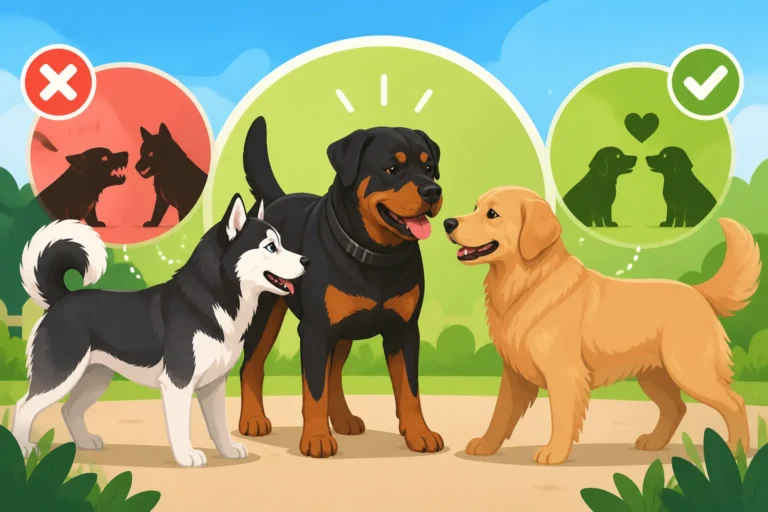
One of the biggest worries I hear from Rottweiler owners, especially those new to the breed, is how their big, boisterous friend will interact with smaller, more delicate dogs. It’s a completely valid concern; Rottweilers are built like tanks and play with all the enthusiasm you’d expect from a powerful working dog, which can inadvertently lead to accidents with a little Chihuahua or even a bouncy terrier. This guide is all about understanding the nuances of Rottweiler play with smaller dogs, identifying potential issues, and giving you the tools to foster safe and happy interactions for everyone involved.
Understanding the Rottweiler's Natural Play Style
Rottweilers are magnificent dogs, powerful and athletic, and their play style often reflects their heritage as drovers and protectors. They're not always graceful, and their sheer size and strength can be a huge mismatch for a smaller canine companion. It’s not about aggression; it’s often about a fundamental difference in how they perceive and engage in play.
The Power Differential: Size and Strength
Let's be real: a Rottweiler can easily weigh over a hundred pounds, sometimes a good deal more. A smaller dog might be a mere ten or twenty pounds. That's a massive difference, and it means that what feels like gentle nudging or a playful pounce to a Rottweiler could easily be a jarring blow or even cause injury to a tiny dog. Imagine a grown human playfully tackling a toddler—even with the best intentions, the size difference makes it inherently risky. Your Rottweiler doesn't mean harm, but their body mass alone is a significant factor.
This isn't just about weight; it's about bone density, muscle mass, and sheer momentum. A Rottweiler running at full tilt might accidentally bowl over a small dog without even slowing down. A quick shake of the head with a toy can send a smaller dog flying if they're on the other end. We have to acknowledge this inherent physical disparity and manage interactions accordingly. It’s not fair to expect a Rottweiler to instinctively understand the fragility of a smaller playmate, just as it’s not fair to expect the smaller dog to simply "handle" the rough play. Management and proactive training are key.
The Rottweiler's Play Ethic: Rough and Tumble
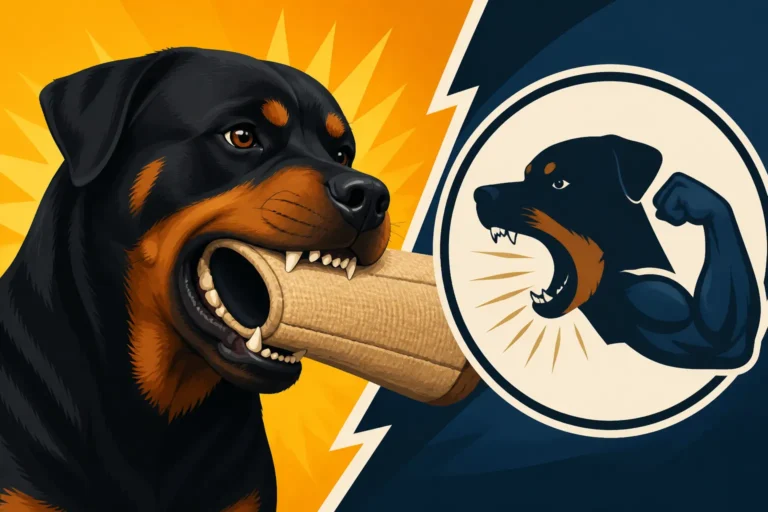
Rottweilers often engage in what we call "rough and tumble" play. This means lots of body slams, wrestling, chasing, and mouthy interactions. With another large, robust dog, this is perfectly normal and healthy play. They can match each other's energy and absorb the impact. They might mouth at each other's necks and legs, growl, and crash into each other. However, when a Rottweiler tries to initiate this kind of play with a tiny dog, the consequences can range from scary to dangerous.
They might try to "herd" or "body block" smaller dogs, a remnant of their droving ancestry, which can be overwhelming. They might try to pin them, or use their big paws in what they consider a playful manner. A simple game of chase can turn problematic if the Rottweiler tries to catch the smaller dog with a forceful pounce. The smaller dog might misinterpret the Rottweiler's vocalizations or body language, leading to fear or defensive snapping. This is why supervision is paramount, and why sometimes, separate playdates are just the safer option.
Body Language: Interpreting a Rottweiler's Cues
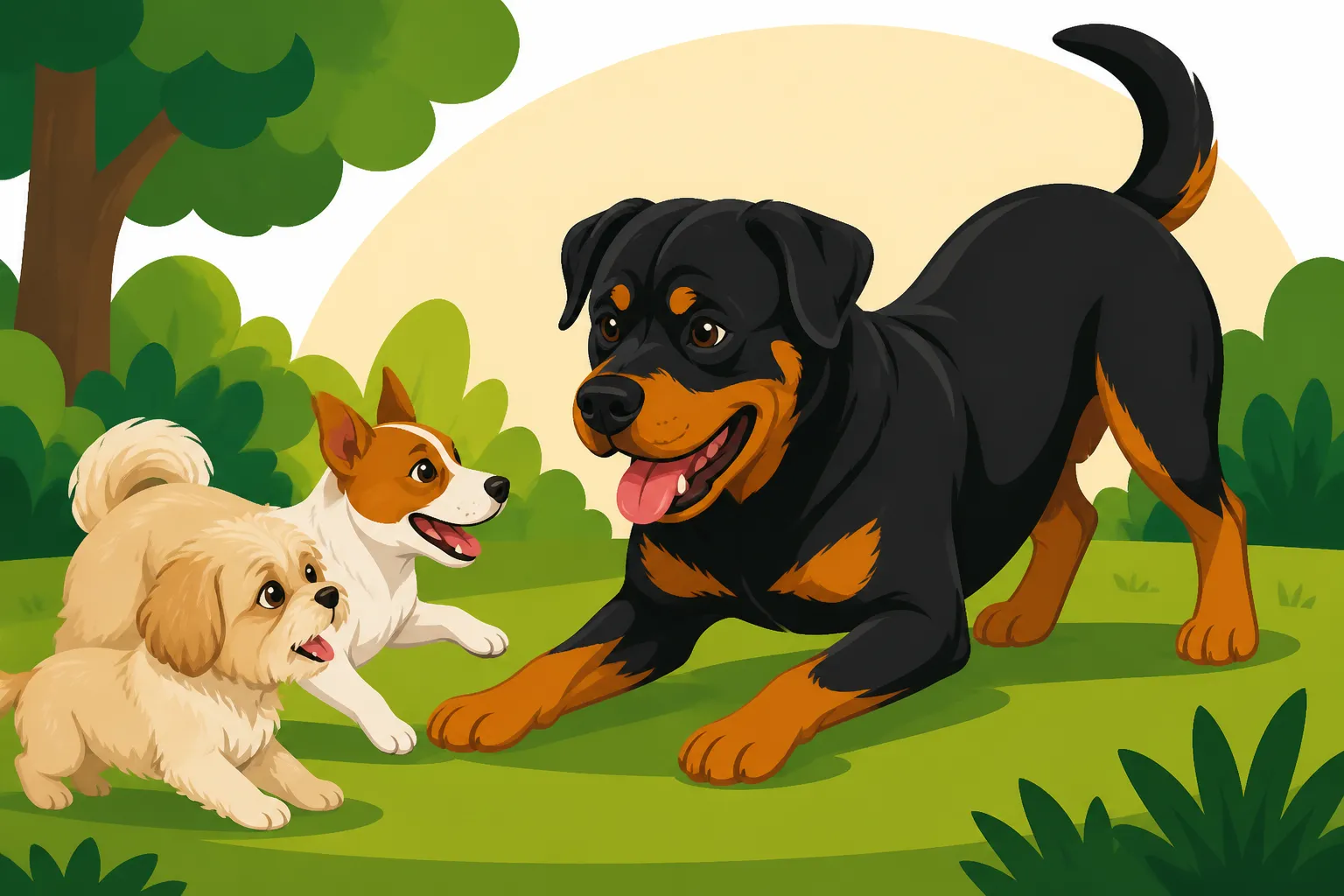
Even when your Rottweiler is trying to be gentle, their sheer size can make their play signals look intimidating to a smaller dog. A play bow from a huge Rottweiler might send a tiny dog scurrying. Their deep barks and rumbling growls during enthusiastic play can sound aggressive to someone unfamiliar with their typical play vocalizations. It's crucial for owners to understand their own Rottweiler's specific play style and signals, and also to learn how to read the smaller dog's reactions. Is the smaller dog engaging willingly, or are they trying to disengage? Are they showing stress signals like lip licking, yawning, tail tucked, or trying to hide?
A truly happy play interaction involves both dogs taking turns, self-handicapping (where the larger dog intentionally plays gently or gets down to the smaller dog's level), and a clear willingness from both parties to continue. If the smaller dog is constantly trying to escape, or if your Rottweiler is consistently being too rough despite your attempts to moderate, then the play isn't mutually enjoyable and needs to be stopped. Learning to interpret these subtle cues quickly can prevent incidents. For more on interpreting subtle cues, understanding Reading a Still Rottweiler That Is Not Relaxed can be very insightful, as stillness can sometimes mask underlying tension.
Assessing Risk and Recognizing Unsafe Play
It's natural to want your Rottweiler to get along with all dogs, big and small. But being a responsible owner means actively assessing risks and knowing when to step in. Blindly hoping for the best is a recipe for disaster when you have a powerful dog like a Rottweiler.
Red Flags: What Unsafe Play Looks Like
Unsafe play isn't always overt aggression; it can be much more subtle, especially when there's a size mismatch. Here are some red flags to watch for:
- Relentless Chasing: If your Rottweiler is constantly chasing the smaller dog, and the smaller dog isn't engaging back but rather trying to flee or hide, that's not play. It's harassment.
- Body Blocking or Pinning: When the Rottweiler uses its body to trap the smaller dog, preventing escape, or pins them to the ground for extended periods without the smaller dog actively inviting or participating in the "wrestling."
- Targeting Delicate Areas: Repeated mouthing or nipping at the smaller dog's neck, ears, or legs, especially if it's more than a soft, inhibited mouth. Even if your Rottweiler has Teaching Bite Inhibition to a Rottweiler Puppy, it can be difficult for them to gauge their strength on a fragile small dog.
- Small Dog Showing Stress Signals: Look for tucked tails, flattened ears, lip licking, yawning (out of context), whale eye (showing the whites of their eyes), shaking, panting heavily when not hot, or trying to hide behind you or objects. These are all signs the smaller dog is uncomfortable or fearful.
- Lack of Reciprocity: Play should be back and forth. If one dog is always the "chaser" or "tackler" and the other is always "fleeing" or "being tackled," it's not balanced.
- Increasing Intensity: If the play starts gently but escalates quickly to a point where your Rottweiler is no longer self-handicapping, it's time to intervene.
Any of these signs mean you need to immediately and calmly separate the dogs. It's better to end play too early than too late.
Common Mistakes Owners Make
Even with the best intentions, owners can make mistakes that inadvertently increase the risk of an incident. Understanding these pitfalls can help you avoid them.
One common mistake is assuming goodwill is enough. While your Rottweiler may be the sweetest dog in the world, their physical capabilities don't change. Good intentions don't prevent accidental injuries. Another error is allowing play to become over-aroused. When dogs get overly excited, their impulse control can vanish. For a Rottweiler, this means their natural rough play can become too much for a small dog very quickly. This is especially true in environments like dog parks where there's a lot of chaotic energy. Dog parks, for instance, carry Rottweiler Dog Park Risks at Adult Size that are amplified when smaller dogs are involved.
Lack of consistent supervision is also a major problem. You cannot simply let a Rottweiler and a smaller dog "figure it out" without your constant, active attention. Even stepping away for a moment can be enough time for an accident to happen. Similarly, failing to teach your Rottweiler impulse control with all dogs, not just small ones, sets them up for failure. Training commands like "leave it," "settle," and a strong recall are critical for managing these interactions. Without strong foundational training, you're relying purely on luck. Rottweiler Puppy Training Through the First Year is crucial for building this kind of foundation.
Finally, ignoring the small dog's cues is a significant oversight. Owners of smaller dogs might be hesitant to speak up, or they might think their dog is just "being dramatic." But a fearful small dog is a reactive small dog, and defensive snapping can escalate a situation unnecessarily. Always respect the smaller dog's boundaries and advocate for their comfort.
Strategies for Safe and Controlled Interactions
So, how can you help your Rottweiler enjoy the company of smaller dogs without constant worry? It comes down to proactive management, consistent training, and creating the right environment.
Essential Supervision and Intervention
This really can't be stressed enough: active supervision is non-negotiable. When your Rottweiler is interacting with a smaller dog, your eyes need to be glued to them. Don't be on your phone, don't be chatting intensely with a friend, don't turn your back for more than a second. You need to be ready to intervene at a moment's notice.
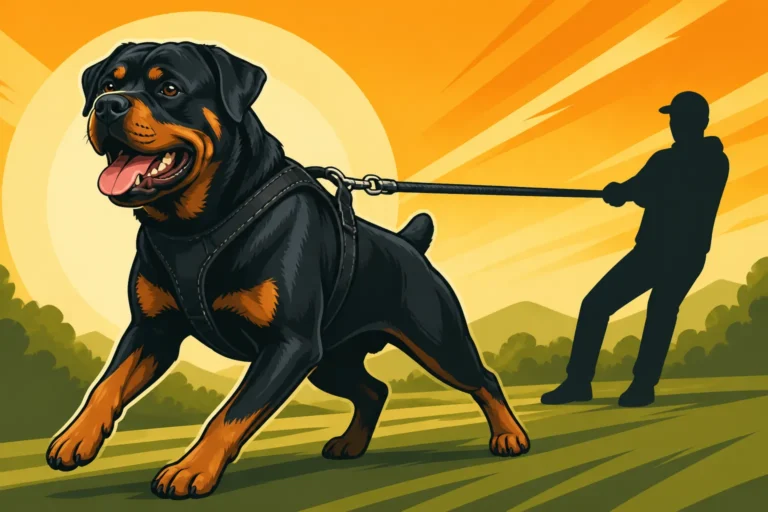
Your intervention should be calm and consistent. If you see signs of escalating or unsafe play, simply call your Rottweiler away. Use a positive interrupter or a gentle body block if needed to create space. You can step between them or guide your Rottweiler away by their collar. Keep a long line on your Rottweiler if you're in an open area, or consider a sturdy harness like those found on Amazon, which gives you more control without putting pressure on their neck. The goal is to redirect their energy, perhaps to a solo play session with a favorite toy, or a brief training exercise. Consistent intervention teaches your Rottweiler that you are in charge of managing the play, and that gentle behavior is rewarded with continued social time.
Training for Impulse Control and Gentle Play
Effective training is the cornerstone of safe inter-dog play. Your Rottweiler needs to understand boundaries and have excellent impulse control.
- "Leave It" and "Drop It": These are foundational. Your Rottweiler needs to be able to disengage from a toy, a treat, or even another dog on command. Practice this in increasingly distracting environments.
- Reliable Recall: A solid recall is your emergency brake. If play gets too rough, you need to be able to call your Rottweiler back to you immediately, regardless of what's happening. Rottweiler Recall Away From a Squirrel is the kind of real-world scenario you need to train for.
- "Gentle": Teach your Rottweiler a "gentle" cue for taking treats or interacting with fragile objects. You can generalize this to mean gentle with smaller dogs as well, rewarding calm, soft interactions.
- Structured Leash Walks: Practice walking politely on a leash around smaller dogs without lunging or pulling. This teaches self-control in the presence of other dogs before off-leash play is even considered. Teaching a Rottweiler Not to Pull at 110 Pounds is a skill that directly translates to better control in play scenarios.
- Settling on Command: Teach your Rottweiler to settle calmly on a mat or bed, even when exciting things are happening around them. This is key for taking breaks from play before they become over-aroused.
Consider online training programs like those offered by BAXTER & Bella. They often provide structured lessons that can help reinforce these crucial commands and provide guidance on managing a powerful dog through various social situations. These programs can be a fantastic resource for building confidence and control.
Creating a Safe Play Environment
The environment where your Rottweiler interacts with smaller dogs can make all the difference.
- Confined, Controlled Spaces: Avoid wide-open, chaotic spaces like crowded dog parks, especially initially. Instead, opt for a securely fenced yard or a private dog run where you can control who enters and leaves.
- Neutral Territory: For initial introductions, a neutral space can help both dogs feel less territorial.
- One-on-One Introductions: Introduce your Rottweiler to one calm, dog-savvy small dog at a time, rather than a whole pack of them. This allows for focused supervision and a more controlled interaction.
- Safe Retreats: Ensure the smaller dog has easy access to elevated platforms, crates, or areas where they can retreat and feel safe without being pursued. Baby gates can also be your best friend in a home environment, allowing separate spaces for decompression.
- Manage Resources: Food, toys, and even owner attention can be sources of conflict, particularly if your Rottweiler has Rottweiler Resource Guarding at Home. Remove all high-value items before play to avoid any potential guarding issues. Feed dogs separately, and offer separate, non-valuable toys.
Here's a quick comparison of safe vs. unsafe play scenarios to help you visualize what to aim for and what to avoid:
| Play Behavior Aspect | Safe Interaction | Unsafe Interaction |
|---|---|---|
| Engagement | Both dogs willingly approach, disengage, and re-engage. | One dog consistently pursues or is pursued. |
| Body Language | Loose, bouncy movements, soft eyes, frequent play bows, happy tail wags (if natural). | Stiff body, hard stare, tucked tail, flattened ears, excessive panting, yawning. |
| Physicality | Self-handicapping by the larger dog, taking turns, gentle mouthing, breaks. | Relentless body slams, pinning, vigorous shaking, targeted nipping. |
| Vocalizations | Happy grumbles, play barks, but not persistent or high-pitched yelps of distress. | Continuous growling without breaks, yelps of fear from the smaller dog. |
| Initiation | Both dogs initiate play, or the larger dog offers clear, calm play invitations. | Larger dog constantly overwhelms and initiates with excessive force. |
| Breaks | Dogs naturally take breaks, sniff around, then re-engage. | Play is continuous, escalating without pauses, no opportunities to disengage. |
When to Seek Professional Help and Alternatives to Direct Play
Sometimes, despite your best efforts, your Rottweiler's play style just isn't suitable for direct interaction with smaller dogs. That's perfectly okay and often the most responsible conclusion.
When to Call a Professional Trainer
If you're consistently seeing the red flags of unsafe play, or if you feel overwhelmed by your Rottweiler's intensity, it's absolutely time to bring in a professional. A certified professional dog trainer or a veterinary behaviorist can observe your dog's interactions, assess their specific temperament and play style, and provide tailored guidance. They can help you:
- Refine Training: Work on advanced impulse control, distraction proofing, and teaching your Rottweiler to "check in" with you during play.
- Address Underlying Issues: Sometimes, what looks like rough play can stem from anxiety, poor social skills, or even a lack of appropriate outlets for their energy. A professional can help identify and address these.
- Socialization Guidance: They can guide you through structured socialization experiences with other dogs, ensuring positive and safe interactions. For more general advice, see Rottweiler Socialization Before Sixteen Weeks.
- Build Confidence: For both you and your dog, having expert support can make a huge difference in building confidence in managing these complex social situations. Finding a Rottweiler-Experienced Trainer Near You is a great first step.
Don't wait until an accident happens. Early intervention from a professional is always better.
Alternative Enrichment and Socialization
It’s important to remember that not every dog needs to play directly with every other dog. There are many ways to enrich your Rottweiler's life and fulfill their social needs without putting smaller dogs at risk.
- Structured Play with Appropriately Sized Dogs: Arrange playdates with other large, robust dogs who match your Rottweiler's play style. This allows them to let loose and enjoy themselves without you worrying about fragility.
- Parallel Walks: Enjoy walks with friends who have smaller dogs, keeping your dogs on separate leashes and maintaining enough distance that they can observe each other calmly without direct interaction. This still provides social exposure without the physical risks of direct play.
- Mental Enrichment: Engage your Rottweiler in activities that challenge their mind, such as puzzle feeders, scent work, or advanced obedience training. These are incredibly fulfilling and can tire them out just as much as physical play. Rottweiler Impulse Control Games can be a great way to combine mental stimulation with skill building.
- One-on-One Time with You: Dedicate quality time to one-on-one interaction, whether it's playing fetch, practicing commands, or simply cuddling on the couch. Your bond with your Rottweiler is their primary social connection.
- Dog Sports: Consider dog sports like obedience, rally, tracking, or even carting. These activities provide an outlet for their intelligence, strength, and drive in a structured, safe environment, often alongside other dogs in a non-contact setting.
Ultimately, your Rottweiler's safety and the safety of other dogs are your responsibility. By understanding their natural instincts, training them consistently, and managing their environment carefully, you can ensure they lead a rich, happy life, even if that means their play with smaller dogs is more about polite coexistence than rough-and-tumble wrestling.
Disclaimer
This article is for general informational purposes only and does not constitute professional advice. Laws, prices and regulations vary by location and change over time. Consult a qualified professional for guidance on your specific situation.