The Raised Bowl Argument in Rottweiler Bloat
As a Rottweiler parent, you want to do everything right for your beloved companion, but sometimes the sheer volume of conflicting advice can be incredibly confusing, especially when it comes to serious conditions like bloat. One of the most persistent myths and fiercely debated topics revolves around whether feeding your Rottweiler from a raised bowl actually helps prevent this life-threatening emergency. This guide is here to cut through the noise and explain the latest understanding of the "raised bowl argument" so you can make informed decisions for your dog's health.
The Long-Standing Belief About Raised Bowls and Bloat
For years, it seemed like common sense, didn't it? The idea that elevating a dog's food and water bowls would somehow make eating more comfortable, improve digestion, and prevent them from gulping down air – a supposed culprit in bloat – felt intuitively right. Many of us, myself included, heard this advice from well-meaning friends, breeders, and even some older veterinary texts.
Why the Idea of Elevated Feeding Made Sense
The logic behind raised bowls was quite compelling on the surface. Imagine a large dog, especially a giant breed like a Rottweiler, bending their neck down to eat from a bowl on the floor. It looks a bit awkward, right? Owners thought that this stooping posture might lead to neck strain or make it harder for the dog to swallow effectively. The belief was that if a dog could eat from a more natural, upright position, similar to how a human eats at a table, they would experience less discomfort and, crucially, ingest less air while eating. Less air meant less gas building up in the stomach, which in theory, should reduce the risk of bloat. This made sense to a lot of people, and countless elevated feeders were sold based on this very notion.
Another common thought was that eating from a raised position would slow down a fast eater. If the food was more accessible, perhaps they wouldn't have to contort their bodies, leading to a calmer, slower mealtime. For a dog known for its power and sometimes enthusiastic eating habits, like our Rottweilers, this seemed like a simple, effective solution to a very serious potential problem. It seemed so straightforward that it became almost ingrained advice in the large and giant breed communities.
The Initial Studies That Fueled the Debate
Before more comprehensive research emerged, some early observations or less rigorous studies might have hinted at a benefit, or at least no harm, from raised bowls. Many anecdotes from owners suggested their dogs ate more comfortably, especially older Rottweilers with arthritis or mobility issues, leading to a general acceptance of the practice. For instance, if an older dog with arthritis in its neck or front legs found it easier to eat without bending, it was a clear comfort benefit, and the bloat prevention aspect was an added, if unproven, bonus.
It wasn't that people were intentionally misled; it was more a case of logical deduction and anecdotal evidence filling a void where robust scientific data was still developing. When you're trying your best to protect a dog from something as terrifying as Bloat in a Rottweiler and the Hours That Matter, you tend to cling to any promising lead. Many breeders continued to recommend elevated feeders, passing down what they believed was best practice for decades. This created a strong foundation of conventional wisdom that would later prove challenging to overturn, despite new scientific findings.
The Science That Challenged the Conventional Wisdom
While the logic behind raised bowls felt sound for many years, science, as it often does, eventually offered a different perspective. What initially seemed like a preventative measure was, for many large and giant breeds, revealed to be a potential risk factor.
The Purdue Study and Its Unsettling Findings
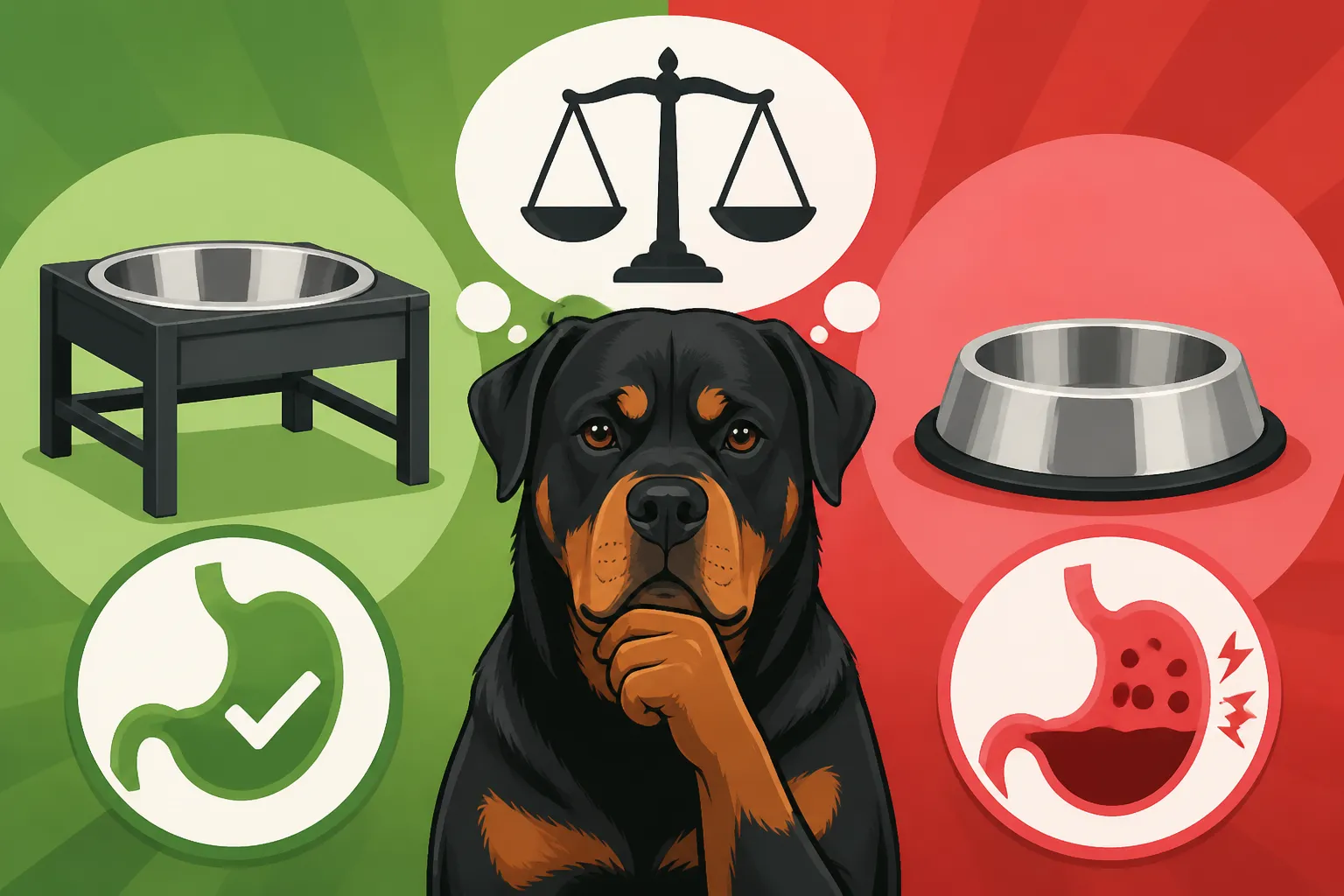
The most influential piece of research that truly shifted the understanding of raised bowls and bloat came from the Purdue University College of Veterinary Medicine. Their landmark study, published in the Journal of the American Veterinary Medical Association, investigated risk factors for gastric dilatation-volvulus (GDV), commonly known as bloat. The results, particularly concerning elevated feeders, were quite unsettling for many Rottweiler owners.
The study, which examined hundreds of large and giant breed dogs over several years, concluded that feeding from a raised bowl increased the risk of bloat in these breeds. Specifically, for large and giant breeds like our Rottweilers, consuming food from an elevated bowl was associated with a higher likelihood of developing GDV, not a lower one. This finding flew directly in the face of the widely held belief that raised bowls were protective.
It's important to understand the scope of this study. It was a large, multi-institutional, prospective study, meaning they followed dogs over time and collected data rigorously. They weren't just looking at dogs that already had bloat; they were trying to identify factors that predicted its occurrence. This kind of research carries significant weight in the veterinary community and helped reshape recommendations for owners of at-risk breeds. The data suggested that rather than reducing swallowed air, elevated bowls might somehow facilitate it, or introduce other biomechanical changes that contribute to the stomach twisting.
Understanding the Proposed Mechanisms of Increased Risk
So, if raised bowls don't help, why might they actually increase the risk? While the exact mechanisms are still being fully elucidated, several theories have been proposed, often linking back to the way a dog consumes food from an elevated position.
One prevailing theory suggests that when dogs eat from a raised bowl, they may actually gulp more air. When a dog eats from the floor, their head is lower than their stomach, and gravity might help some of that swallowed air escape before it gets trapped. With an elevated bowl, the head is more level or even slightly above the stomach, which some researchers hypothesize could make it easier for air to be swallowed and harder for it to be burped up, leading to a build-up of gas. Imagine trying to drink water quickly from a straw; sometimes you end up swallowing more air, right? It's a similar concept.
Another thought is that elevated feeding might encourage faster eating. Some dogs, when they don't have to bend down, might eat even more rapidly, leading to increased air intake along with their food. The speed of eating itself is a known risk factor for bloat. While a Slow Feeder Bowls That Hold a Rottweiler Ration can mitigate this, the elevated position alone doesn't necessarily slow down a determined Rottweiler.
Furthermore, the act of eating from an elevated position might change the dynamics of the stomach and esophagus during feeding. Some theories suggest it could alter the angle at which food and air enter the stomach, potentially making it more prone to distension and subsequent twisting. Given the seriousness of this condition, knowing Why a Rottweiler Stomach Twists at All is paramount, and understanding every potential contributing factor, even counter-intuitive ones, becomes crucial. This is why organizations like the American College of Veterinary Surgeons and the American Veterinary Medical Association now generally advise against the routine use of elevated feeders for large, deep-chested breeds at risk for GDV.
Navigating Feeding Decisions for Your Rottweiler Today
Given the scientific findings, what’s a conscientious Rottweiler owner to do? It's a tough pill to swallow when something you thought was beneficial turns out to be potentially harmful. The key is to make informed choices based on current research while still addressing your dog's individual needs.
Practical Considerations for Feeding Your Rottweiler
While the general recommendation leans against raised bowls for bloat prevention, there are still specific circumstances where an elevated feeder might be considered for comfort. For example, if you have a senior Rottweiler with severe arthritis in their neck, spine, or front legs, bending down to eat might be genuinely painful. In such cases, the quality of life and pain management might override the increased bloat risk, especially if other bloat prevention strategies are in place. This is a conversation you absolutely must have with your veterinarian, weighing the pros and cons carefully. For older dogs, things like Senior Rottweiler Mobility Decline are a real concern, and sometimes a raised bowl might genuinely make their mealtime less agonizing.
However, for a young, healthy Rottweiler, the comfort argument is less compelling compared to the established bloat risk. Most healthy dogs are perfectly capable of eating from the floor without discomfort. Instead of focusing on bowl height, consider the material and cleanliness of the bowls. Stainless steel is often recommended because it's easy to clean and less prone to harbor bacteria, which is generally good practice for any dog, regardless of breed.
Remember, while comfort is important, preventing a life-threatening emergency like bloat takes precedence for most owners. This is where pet insurance, like a policy from Healthy Paws, can be incredibly valuable, covering unexpected emergencies like bloat surgery.
Proven Strategies to Minimize Bloat Risk
Instead of focusing on raised bowls, shift your attention to strategies that have more robust scientific backing for reducing bloat risk. These are the actionable steps that truly make a difference for a breed prone to this condition.
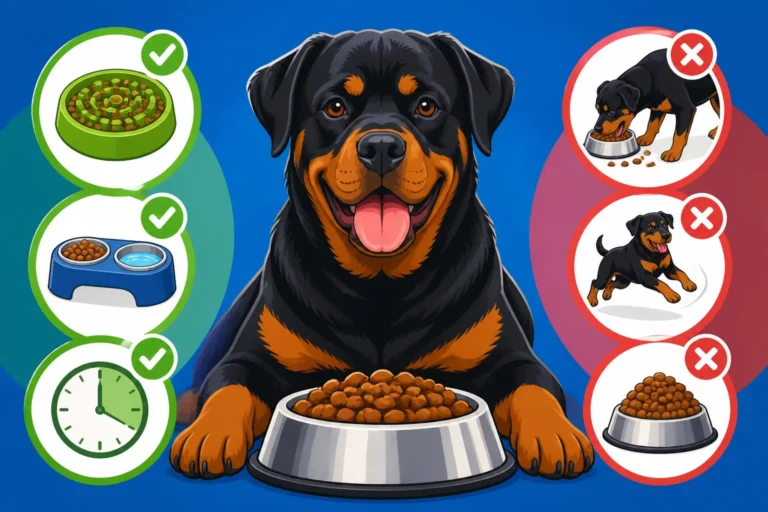
One of the most widely recommended strategies is to feed multiple smaller meals throughout the day instead of one large meal. Splitting your Daily Calories for a Hundred Twenty Pound Rottweiler into two or even three meals can significantly reduce the amount of food and gas in the stomach at any one time, making it less likely to distend and twist. For instance, feeding your Rottweiler in the morning and evening, rather than just once a day, is a simple yet effective change.
Another excellent strategy is to use slow feeder bowls. These bowls have various ridges, mazes, or obstacles that force your dog to eat around them, thus slowing down their consumption dramatically. This reduces the amount of air they gulp down and helps them feel fuller on less food because they're taking more time to eat it. This is a much more effective way to address fast eating than relying on a raised bowl.
Strictly controlling exercise around meal times is also crucial. Vigorously exercising a Rottweiler an hour before or two hours after eating can significantly increase the risk of bloat. The stomach can slosh around, and the combination of gas and movement can contribute to twisting. Think of it like a full water balloon being tossed around – it’s just asking for trouble. Ensure your Rottweiler has a calm, quiet period before and after meals. Knowing How Long to Wait After a Rottweiler Meal Before Exercise is a critical piece of information for all owners.
Finally, for breeds at high risk, like Rottweilers, a prophylactic gastropexy is often recommended. This is a surgical procedure where the stomach is permanently tacked to the abdominal wall, preventing it from twisting. It doesn't prevent the stomach from dilating (filling with gas), but it almost entirely eliminates the deadly twisting component. Many owners opt to have this procedure done when their Rottweiler is already undergoing another surgery, such as spaying or neutering, reducing the need for a separate anesthetic event. You can learn more about Gastropexy to Prevent Rottweiler Bloat and discuss whether it's right for your dog with your vet. This preventive measure, while surgical, offers the most significant reduction in the deadliest aspect of bloat.
When to Consult Your Veterinarian and What to Watch For
Even with all the preventative measures in the world, bloat can strike. Being prepared means knowing the signs and acting immediately. It’s an absolute emergency, and precious minutes can literally mean the difference between life and death for your Rottweiler.
Recognizing the Urgent Signs of Bloat
Every Rottweiler owner should have a clear understanding of the signs of bloat (gastric dilatation-volvulus or GDV). Time is of the essence, and delaying veterinary care by even an hour can drastically reduce survival rates. The most common and urgent signs include:
- Distended or Swollen Abdomen: Your dog's belly might look noticeably larger, especially on one side, and feel hard to the touch. This can progress very quickly.
- Non-Productive Retching or Vomiting: This is one of the most classic signs. Your Rottweiler will try to vomit, often forcefully, but nothing (or very little foamy saliva) comes up. It looks like they are trying desperately to throw up but can't. This can be terrifying to witness. If you see A Rottweiler Retching Without Bringing Anything Up, do not wait.
- Restlessness and Pacing: Your dog might seem extremely uncomfortable, unable to settle down, constantly shifting positions, or pacing anxiously. They are in pain.
- Drooling Excessively: Increased drooling can be a sign of discomfort and nausea.
- Weakness or Collapse: As the condition progresses, your dog may become weak, lie down and refuse to get up, or even collapse.
- Rapid, Shallow Breathing: The distended stomach puts pressure on the diaphragm, making it difficult for your dog to breathe normally.
- Pale Gums: This indicates poor circulation and can be a late sign of shock.
If you observe any combination of these symptoms, especially non-productive retching and a swollen belly, consider it an emergency. Don't wait to see if it gets better. Call your emergency vet immediately and tell them you suspect bloat. They will prepare for your arrival. Knowing What Rottweiler Bloat Looks Like in the First Hour can truly save your dog's life. This is where having pet insurance, like that offered by Healthy Paws, can alleviate the financial stress of an emergency situation, allowing you to focus solely on your dog's care.
Discussing Proactive Measures with Your Vet
Your veterinarian is your best resource for personalized advice on bloat prevention for your specific Rottweiler. During your regular check-ups, bring up your concerns about bloat and discuss all available options. They can assess your dog's individual risk factors, which may include genetics, temperament (anxious dogs are sometimes thought to be at higher risk), and eating habits.
One of the most important discussions to have is about preventive gastropexy. As mentioned, this surgery significantly reduces the risk of the stomach twisting, which is the most dangerous aspect of GDV. It's often recommended for all Rottweilers, especially if they are undergoing another abdominal surgery, like spaying or neutering. Your vet can walk you through the Preventive Gastropexy Pricing for a Rottweiler, the recovery process, and whether it's a suitable option for your dog. For many owners, the peace of mind this procedure offers is invaluable, knowing they've taken a significant step to protect their companion.
Your vet can also help you refine your feeding plan, recommending specific slow feeder bowls, appropriate portion sizes for Feeding an Adult Rottweiler at a Hundred Twenty Pounds, and the best schedule for meals to lower bloat risk. They might suggest specific diets or supplements, though dietary recommendations for bloat are less universally agreed upon compared to meal timing and gastropexy. Understanding Which Rottweilers Are Most Likely to Bloat can also help guide these conversations, as some lines or individuals may carry higher predispositions. Always rely on your vet for the most current, evidence-based advice tailored to your Rottweiler.
| Bloat Risk Factor | Effect on Risk | Action to Mitigate Risk |
|---|---|---|
| Raised Bowls | Potentially Higher | Feed from floor level. |
| Single Large Meal | Higher | Split into 2-3 smaller meals per day. |
| Fast Eating/Gulping | Higher | Use slow feeder bowls. |
| Exercise Around Meals | Higher | Restrict vigorous activity 1 hour before, 2 hours after. |
| Anxious Temperament | Potentially Higher | Ensure calm feeding environment, consider behavior mod. |
| Genetics/Family History | Higher | Discuss prophylactic gastropexy with your vet. |
| Older Age | Higher | Increased vigilance, consider gastropexy earlier. |
| Deep-Chested Breed (Rottweiler) | Inherently Higher | Implement all known preventative measures consistently. |
Disclaimer
This article is intended for informational purposes only and does not constitute veterinary advice. Always consult with a qualified veterinarian for any health concerns or before making any decisions about your Rottweiler's care, diet, or treatment.