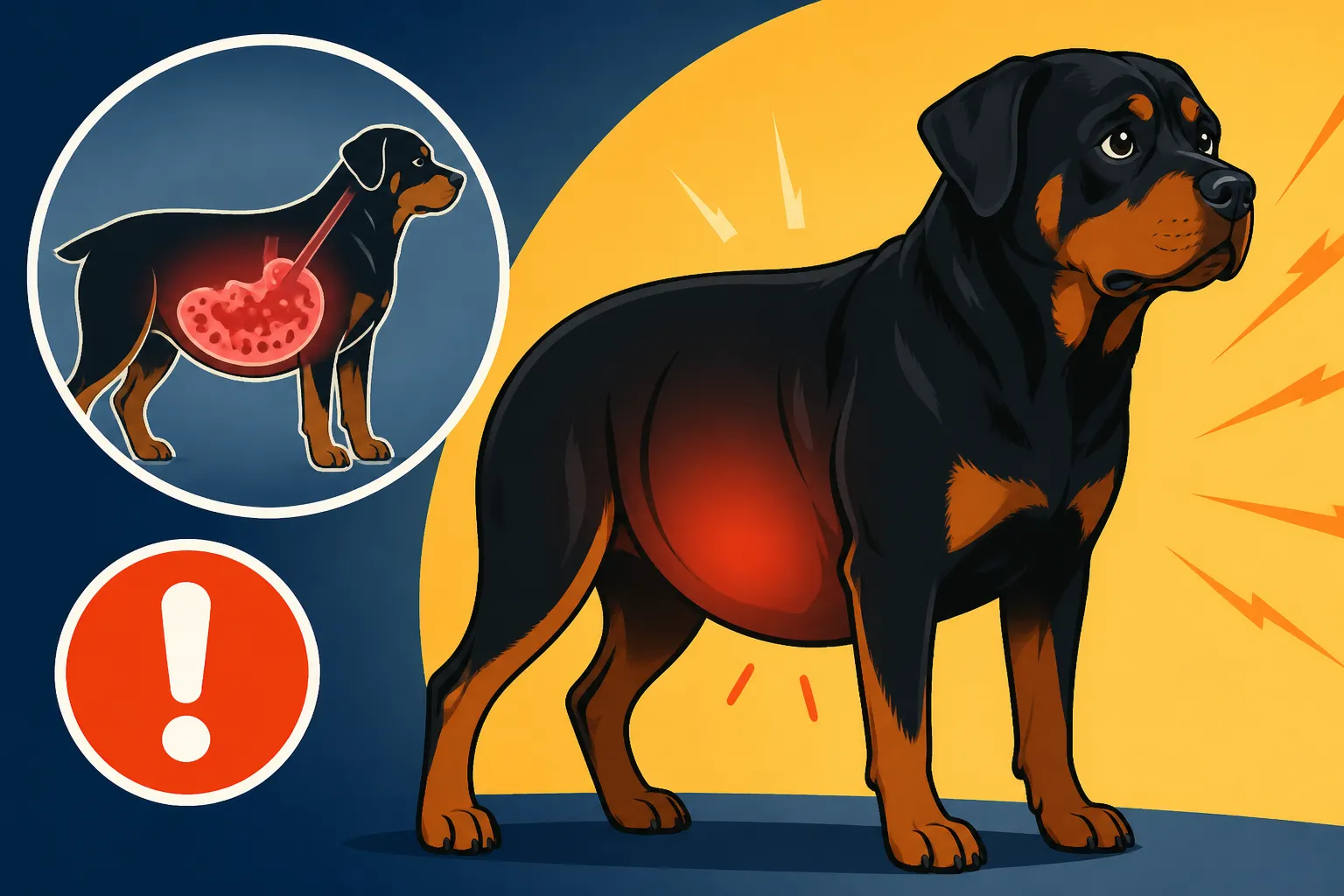
What Rottweiler Bloat Looks Like in the First Hour
One of the most terrifying emergencies a Rottweiler owner can face is bloat, a condition that can escalate from a subtle change in behavior to a life-threatening crisis in mere minutes. The sheer size and deep chest of our beloved Rotties unfortunately put them at a higher risk, and knowing what to look for in those critical first sixty minutes can truly be the difference between life and death. This guide will walk you through the very first, often easily missed, signs of bloat so you can recognize the danger and act swiftly.
Understanding Bloat and Its Rapid Onset in Rottweilers
The fear of bloat, or Gastric Dilatation-Volvulus (GDV) as veterinarians call it, is a constant companion for many of us who share our lives with deep-chested breeds like Rottweilers. It's not just a bad stomach ache; it's a rapidly progressing, incredibly painful, and often fatal condition that can strike without much warning, turning a perfectly normal evening into a frantic race against time.
Why Bloat is a Rottweiler Emergency
When we talk about a "Rottweiler emergency," bloat sits right at the top of the list, often alongside issues like sudden collapse from Hemangiosarcoma and Sudden Rottweiler Collapse or critical injuries. The reason it's such an emergency for Rottweilers is multifaceted. Firstly, their specific anatomy – a deep, narrow chest combined with relaxed abdominal ligaments – allows their stomach more room to swing and twist. This physical predisposition means that when something goes wrong, it can go wrong very quickly and very dramatically. We're not talking about a gradual decline over hours; we're talking about a situation that can become critical in under an hour.
The urgency stems from the physical effects once the stomach distends and then, most dangerously, twists. This torsion cuts off blood supply to the stomach wall, preventing gas and fluid from escaping, leading to rapid tissue death. The expanded stomach also presses on major blood vessels, hindering blood flow back to the heart, which can quickly lead to shock. This is why immediate action is so crucial; every minute lost is a minute where the damage to organs is worsening, and the chances of survival are diminishing. It's a truly harrowing experience for both the dog and their devoted owner, and the helplessness can be overwhelming if you don't know exactly what to watch for.
The Mechanics of Gastric Dilatation-Volvulus GDV
To truly grasp the severity of bloat, it helps to understand what's actually happening inside your Rottweiler. "Gastric Dilatation" simply means the stomach is filling with gas and fluid and expanding, becoming distended. This alone is uncomfortable, but it’s the "Volvulus" part that makes GDV so lethal. Volvulus means the distended stomach then twists on its axis, often 180 to 360 degrees, effectively pinching off both the entrance (esophagus) and exit (duodenum) of the stomach.
Imagine blowing up a balloon and then tying both ends in a knot – that's essentially what happens to your Rottweiler's stomach. Gas, fluid, and food can't escape. The stomach continues to swell, putting immense pressure on surrounding organs and the diaphragm, making it hard for your dog to breathe. The twisting motion also cuts off blood flow to the stomach, causing its tissue to start dying. Toxins build up from the dying tissue and stagnant blood, which are then released into the bloodstream, sending the dog into severe shock. This is why bloat isn't just about discomfort; it’s a systemic emergency that impacts nearly every major bodily function. This rapid mechanical and physiological cascade is why recognizing the early signs in that first hour is paramount.
The Early, Subtle Signs of Bloat You Cannot Miss
Recognizing bloat early is key, but the initial signs can be incredibly subtle, easily mistaken for general discomfort or an upset stomach. It’s during this crucial first hour that your observation skills become your Rottweiler's best defense. Many owners beat themselves up later, wishing they had noticed something sooner, so let's break down exactly what to watch for.
Visible Changes in Your Rottweiler's Abdomen
One of the most classic, albeit sometimes later-stage, signs of bloat is a distended abdomen. In the very first hour, this might not be a dramatic, basketball-like swelling, but rather a subtle firmness or slight enlargement, particularly on the left side behind the last rib. You might notice your Rottweiler's waist, which usually has a nice tuck, starting to look straighter or even bulge slightly. If you gently press on their side, it might feel unusually tense or hard, almost like a drum. Your dog might seem uncomfortable if you touch their belly, flinching away or even grumbling softly.
Sometimes, the abdomen itself doesn't look hugely different, but the dog's posture changes in an attempt to relieve pressure. They might stand with their legs splayed, or hunch their back, keeping their head low. Some dogs might try to stretch out, hoping to alleviate the internal pressure. A quick visual check, especially if your dog is otherwise acting "off," can give you a vital clue. Compare their belly to how it normally looks after a meal versus when it's just feeling a bit full. If it feels hard and tight, rather than soft and yielding, that's a red flag.
Behavioral Cues and Discomfort
Beyond physical changes, your Rottweiler will almost certainly show behavioral signs of distress, even in the initial stages. One of the most common and telling early signs is restlessness. Your dog might pace incessantly, unable to settle down, shifting positions repeatedly but finding no comfort. They might stand and stretch, then lie down only to pop back up a minute later. This restlessness isn't just boredom; it's a frantic attempt to escape severe internal pain.
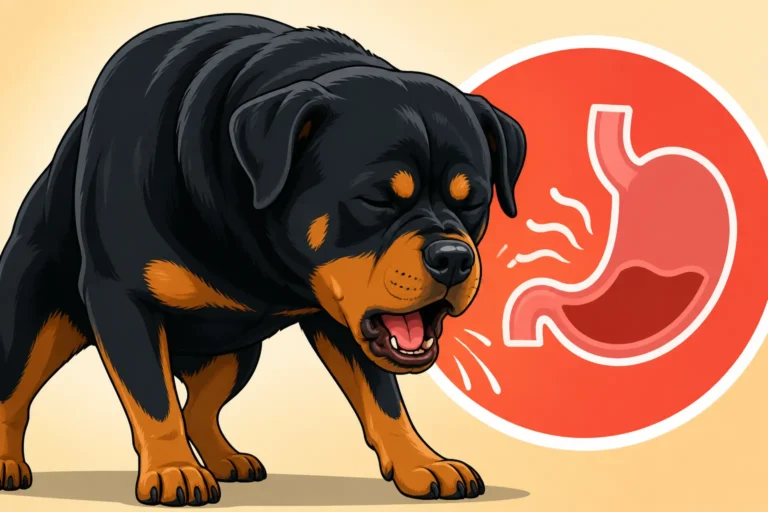
Another critical behavioral cue is unproductive retching or gagging. This is distinct from regular vomiting where food or fluid comes up. With bloat, your Rottweiler will look like they're trying desperately to vomit, perhaps dry heaving, but nothing or very little (maybe a bit of foamy saliva) actually comes out. This is because the twisted stomach prevents anything from leaving. It's a heartbreaking sound and sight, a desperate struggle against a blocked system. Additionally, you might notice excessive drooling, lethargy (despite the restlessness), or a sudden reluctance to move or interact. They might hide, or conversely, become unusually clingy, seeking comfort from you. Any sudden, unexplained change in your Rottweiler's demeanor, especially coupled with other physical signs, warrants immediate attention. If you're trying to figure out What Rottweiler Bloat Looks Like in the First Hour, these behavioral changes are often the very first indicators.
Sound and Respiratory Clues
While visual and behavioral cues are prominent, paying attention to sounds and your Rottweiler's breathing can also provide critical insights in that first hour. Listen closely to your dog. Are they whining softly, almost imperceptibly, even when you're not touching them? This low, continuous whine can be a sign of constant, escalating pain. Some dogs might groan or sigh heavily, especially when shifting positions.
Respiratory changes are also important. As the stomach distends, it pushes against the diaphragm, making it harder for your Rottweiler to take full, deep breaths. You might observe rapid, shallow breathing, even when your dog is at rest. Their gums might appear pale or even bluish, indicating poor oxygenation and circulation, a sign that the body is already struggling. If your Rottweiler suddenly starts panting heavily without having exercised, or if their normal breathing pattern becomes labored, it's a serious alarm bell. Combine these auditory and respiratory cues with the restlessness and unproductive retching, and you have a strong indication that something is terribly wrong and time is of the essence.
What to Do Immediately When You Suspect Bloat
Discovering your beloved Rottweiler showing signs of bloat is a moment of sheer panic for any owner. However, panic is the enemy of action. This is the moment to channel your fear into decisive, immediate steps. There’s no time to "wait and see" or consult Dr. Google further. Your dog’s life depends on rapid intervention.
Immediate Veterinary Contact and Transport
As soon as you suspect bloat, even if the signs are subtle, the absolute first thing you must do is call your veterinarian or the nearest emergency veterinary hospital immediately. Do not waste precious minutes trying to figure out if it's "really bloat." State clearly that you suspect GDV/bloat in your Rottweiler and that you are on your way. This gives the veterinary team a heads-up and allows them to prepare for your arrival, potentially saving critical minutes once you get there. They might advise you on the fastest route or what to do upon arrival.
Once you’ve made that call, get your Rottweiler into the car as quickly and safely as possible. If your dog is struggling, consider using a blanket or sturdy sling to help them into the vehicle, especially if they are already weak or unable to move on their own. Try to keep them as comfortable as possible during transit, minimizing jostling. Every second counts. Driving carefully but swiftly to the clinic is paramount. Remember, this isn't a situation where you can postpone; the clock is ticking, and the stomach tissue damage and shock progress incredibly rapidly.
Preparing for the Emergency Visit
While getting your Rottweiler to the vet is the primary concern, a little preparation can streamline the process upon arrival. While one person drives, if possible, another can try to gather essential information. This includes any recent changes in diet, medications your Rottweiler is currently on, and details about when the symptoms started and what you've observed. While the veterinary team will ask these questions, having the information readily available can speed up their assessment.
Financially, it’s also wise to be prepared for the significant cost of emergency surgery. Bloat surgery can run into thousands of dollars, easily. This is where having pet insurance, perhaps from a reputable provider like Healthy Paws, can be an absolute lifesaver. Knowing you have coverage can remove a layer of stress, allowing you to focus entirely on your dog's care. Even without insurance, understanding the potential financial outlay will help you make quick decisions with the vet. Don't be afraid to discuss payment options or financial aid programs if needed; the most important thing is getting your Rottweiler the treatment they need without delay.
Differentiating Bloat from Other Upset Stomachs
It’s easy to dismiss early bloat signs as just a "tummy ache," especially with a dog breed that can be prone to gastrointestinal issues. However, confusing bloat with a less severe upset can have devastating consequences. Knowing the key differences can empower you to make the right decision when every second counts.
Common Stomach Upset vs. Bloat
Many things can give a Rottweiler an upset stomach. Maybe they ate something they shouldn't have, or perhaps they're experiencing a mild food sensitivity, or even something like Panosteitis in a Growing Rottweiler Puppy can cause a dog to act a little "off" with general malaise. These typically manifest with vomiting (where actual food or bile comes up), diarrhea, or mild lethargy. The dog might not want to eat, but they can usually settle down, and their abdomen generally remains soft and non-distended. While still requiring observation and potentially vet attention, these issues rarely escalate with the terrifying speed of bloat.
Bloat, on the other hand, presents with a distinct cluster of signs:
- Unproductive retching: This is the hallmark. The dog is clearly trying to vomit, but nothing comes out.
- Rapid abdominal distension and firmness: The belly becomes visibly swollen and hard to the touch, often within minutes or an hour.
- Extreme restlessness and discomfort: The dog cannot get comfortable, pacing, trying to stretch, or exhibiting signs of severe pain.
- Weakness or collapse: As shock sets in, the dog might become incredibly weak, have pale gums, and struggle to stand.
| Symptom | Common Upset Stomach | Bloat (GDV) |
|---|---|---|
| Vomiting | Produces food, bile, or liquid | Unproductive retching/gagging (nothing comes up) |
| Abdominal Appearance | Soft, may be slightly tender but not distended | Rapidly distending, taut, hard, drum-like |
| Behavior/Comfort | Mild lethargy, may be able to rest or settle | Extreme restlessness, pacing, inability to get comfortable, signs of severe pain |
| Gums | Normal pink color | Pale, grey, or bluish |
| Breathing | Normal, perhaps slightly increased if nauseous | Rapid, shallow, labored breathing |
| Progression | Gradual, may resolve or worsen over hours/days | Rapid and acute, worsens dramatically within minutes/an hour |
If you're seeing unproductive retching and a quickly firming, distended abdomen, it's imperative to bypass the "wait and see" approach for a mild upset stomach and treat it as a full-blown emergency.
When in Doubt, Always Act
The advice from every experienced Rottweiler owner and veterinarian is unanimous: if you are even remotely concerned that your Rottweiler might have bloat, do not hesitate. Go to the emergency vet. It's far better to make a trip for a false alarm and have your vet confirm it's just an upset stomach than to wait and lose precious moments, even minutes, when it is bloat. Pet insurance providers like Healthy Paws understand these emergencies, and while you might have a deductible, the peace of mind is priceless.
Veterinary professionals are trained to quickly assess for bloat. They will likely perform X-rays to confirm if the stomach is dilated and twisted, and then move immediately to stabilize your dog and prepare for surgery. This rapid intervention is the only way to save a dog with GDV. Delaying action, even for an hour, significantly reduces the survival rate. Trust your gut instinct, especially with a breed like the Rottweiler that is so prone to this devastating condition. You know your dog best, and if something feels profoundly wrong, it probably is. Understanding Feeding Rules That Lower Rottweiler Bloat Risk and Gastropexy to Prevent Rottweiler Bloat are important preventive measures, but recognizing the emergency signs is critical for reactive care.
Disclaimer
This article is intended for informational purposes only and does not constitute medical advice. Always consult with a qualified veterinarian for any health concerns or before making any decisions about your pet's health or treatment.