Why a Rottweiler Stomach Twists at All
One of the most terrifying emergencies a Rottweiler owner can face is bloat, or Gastric Dilatation-Volvulus (GDV). The suddenness, the pain, the frantic rush to the emergency vet – it's a nightmare scenario that sadly, is far too common in our beloved deep-chested companions. Understanding why a Rottweiler's stomach twists is the first crucial step in preventing this silent killer and being prepared for the worst.
Unraveling the Terrifying Phenomenon of Gastric Dilatation-Volvulus
The term "bloat" often sounds benign, like an upset stomach, but for Rottweilers, it's anything but. Gastric Dilatation-Volvulus (GDV) is a rapid and incredibly dangerous condition where the stomach first fills with gas (dilatation) and then, critically, twists upon itself (volvulus). This isn't just a stomachache; it's a full-blown medical catastrophe that requires immediate, aggressive intervention. Many of us have experienced that sickening panic, noticing the first signs of trouble, and knowing deep down that every second counts. It's truly a race against time, as detailed in our guide on Bloat in a Rottweiler and the Hours That Matter.
What Happens When a Rottweiler's Stomach Twists
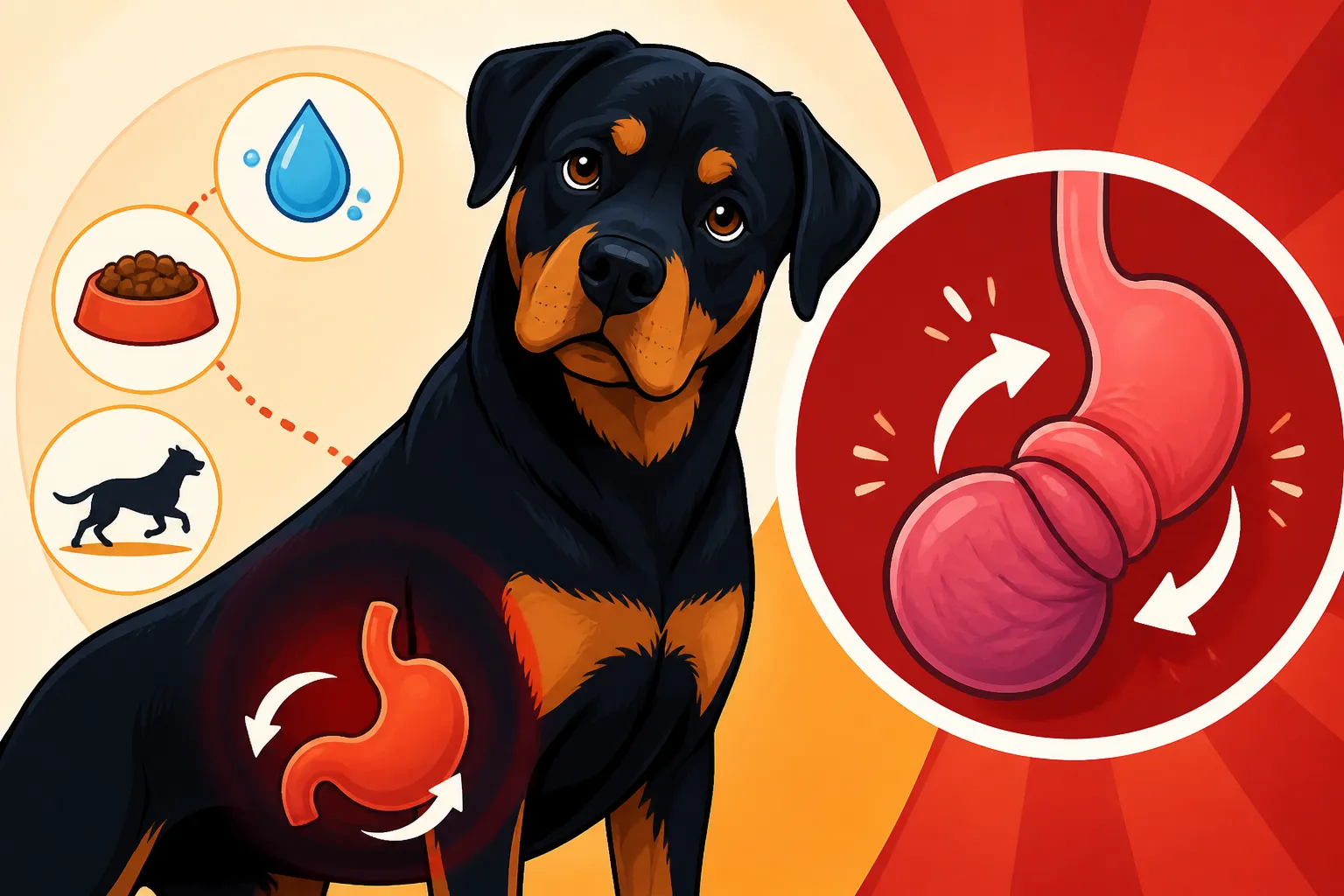
Imagine a balloon filling with air, then imagine tying a knot in both ends of that balloon. That's a simplified, yet terrifyingly accurate, picture of what occurs during a GDV episode. First, the stomach rapidly distends with gas, fluid, or even food. This distention alone is painful and puts immense pressure on surrounding organs. For our Rotties, who often eat quickly or drink large amounts of water, this initial gas build-up can happen alarmingly fast.
What comes next is the twist. The stomach, now swollen and heavy, rotates, often clockwise, on its axis. This rotation completely pinches off both the entry (esophagus) and exit (duodenum) points of the stomach. So, not only can nothing enter or leave, but the gas already trapped inside can't escape. It's a cruel feedback loop: more gas builds up, the stomach distends further, and the twist tightens, exacerbating the problem. This mechanical obstruction is what transforms simple bloat into deadly GDV. It's a deeply distressing thing to witness, a healthy dog suddenly collapsing into excruciating pain.
The Rapid, Life-Threatening Cascade of Complications
Once the stomach twists, the clock starts ticking on a host of severe, life-threatening complications. The most immediate and critical issue is the complete obstruction of blood flow. The twist cuts off the blood supply to the stomach wall, leading to tissue death (necrosis). Parts of the stomach can become irreversibly damaged within hours. This also means toxins are released into the bloodstream, triggering systemic shock.
Beyond the stomach itself, the immense pressure from the swollen organ impacts everything around it. It presses on major blood vessels returning blood to the heart, causing a drastic drop in blood pressure and irregular heart rhythms. The spleen, which is attached to the stomach, often twists along with it, further compromising blood flow and causing additional internal bleeding. The lungs can also be compressed, making it harder for your Rottweiler to breathe. Without emergency surgery to untwist the stomach and relieve the pressure, a Rottweiler suffering from GDV will almost certainly die. This is why knowing Recognizing Bloat in a Rottweiler is so vital for every owner.
The Physical and Behavioral Traits That Increase Rottweiler Risk
It’s not just bad luck that makes Rottweilers susceptible to bloat; there are specific physiological and behavioral factors inherent to the breed that unfortunately put them at a much higher risk. This knowledge isn't meant to frighten you, but to empower you with the understanding needed to take proactive steps.
Why Their Deep Chests Are a Double-Edged Sword
Take a good look at your Rottweiler's majestic build. Notice that deep, broad chest? It's a hallmark of the breed, giving them their powerful, imposing presence. Unfortunately, this very anatomical feature is a major predisposing factor for GDV. Breeds with deep, narrow chests provide more "swinging room" for the stomach to distend and then rotate. Think of a pendulum: the longer the chain, the wider the arc it can swing. In a Rottweiler's deep chest, there's more vertical space for the stomach to move, increasing the likelihood of it twisting rather than simply expanding.
This isn't unique to Rottweilers; other large, deep-chested breeds like Great Danes, German Shepherds, and Weimaraners also share this unfortunate vulnerability. It's a genetic lottery of sorts, where their magnificent conformation comes with a hidden risk. This inherent anatomical trait means that even if you do everything "right," the risk can never be entirely eliminated, only significantly reduced. It’s a harsh reality that many devoted owners grapple with.
How Eating Habits and Activity Levels Play a Role
Beyond anatomy, how our Rottweilers eat and what they do around mealtime can significantly contribute to their bloat risk. Many Rottweilers are enthusiastic eaters, to put it mildly! They can inhale their food in a matter of minutes, swallowing a lot of air along with it. This rapid consumption introduces excess gas into the stomach, setting the stage for dilatation. Similarly, drinking large quantities of water immediately after a meal can rapidly fill the stomach, adding weight and volume that might encourage a twist.
The timing of activity around meals is another critical factor. Intense exercise, running, or even vigorous play immediately before or after eating can cause the stomach to slosh and tumble, increasing the chance of rotation. Imagine trying to run a marathon right after Thanksgiving dinner – your stomach wouldn't appreciate it, and neither does your Rottweiler's. This is why our previous advice on How Long to Wait After a Rottweiler Meal Before Exercise is so important. Stress, too, can play a part; anxious dogs might eat more frantically or hold more tension, potentially affecting their digestive system. It's about creating a calm, measured routine around mealtimes.
Exploring the Genetic and Age-Related Predispositions
While diet and anatomy are significant, the plot thickens when we consider genetics and age. These factors add further layers to the complex question of why some Rottweilers are tragically afflicted by bloat and others are not.
Is Bloat Something They Inherit?
The scientific community strongly believes that there is a genetic component to GDV in Rottweilers and other susceptible breeds. While it's not a simple single gene inheritance, a dog's pedigree and family history can absolutely influence their risk. If a Rottweiler's parents or close relatives have experienced bloat, especially if it was a GDV episode, that individual puppy likely carries a higher predisposition. This is one of the many reasons why responsible breeders are so crucial; they often track health issues like bloat within their lines and strive to make informed breeding decisions to reduce the incidence of such devastating conditions.
Unfortunately, it's not as clear-cut as some other genetic diseases, so there isn't a simple DNA test for bloat. This makes it a silent, insidious threat that underscores the importance of transparent communication between breeders and puppy buyers regarding family health history. While no breeder can guarantee a dog will never bloat, understanding the lineage can help you assess risk.
The Increasing Vulnerability as They Age
Just like with us, our Rottweilers' bodies change as they get older, and some of those changes can increase their susceptibility to GDV. Research indicates that the risk of bloat generally increases with age, particularly after five or six years old. The ligaments and connective tissues that help hold the stomach in place can stretch and weaken over time, providing even more opportunity for the stomach to shift and twist. It's a sad truth that our senior companions, who we cherish so deeply, face this heightened threat. You can read more about this in Rottweiler Bloat Risk Rising With Age.
Additionally, older dogs might have other underlying health conditions that could indirectly contribute to risk, such as altered gut motility or increased stress. It's a reminder that their care needs to adapt as they age, and vigilance for symptoms of bloat becomes even more critical in their golden years. This doesn't mean younger Rottweilers are immune, but it's important to be especially watchful as they mature.
Proactive Strategies to Protect Your Rottweiler
While we can't change our Rottweiler's deep chest or completely eliminate all risk, there are very tangible, actionable steps we can take as responsible owners to significantly reduce the likelihood of this life-threatening event. Being proactive is key to giving our beloved companions the best chance at a long, healthy life.
Optimizing Feeding Routines and Reducing Stress
One of the most impactful areas where you can intervene is in your Rottweiler's feeding routine. Instead of one large meal a day, break it up into two or even three smaller meals. This reduces the amount of food and gas that can accumulate in the stomach at any one time. Our guide on Splitting a Rottweiler's Food Into Two Meals delves into this in detail. Encourage slower eating by using slow-feeder bowls, puzzle feeders, or simply spreading food out on a cookie sheet. These methods force them to eat more deliberately, reducing air intake.
Here's a quick look at key feeding strategies:
| Risk Factor | Mitigation Strategy | Rationale |
|---|---|---|
| Single Large Meals | Two to three smaller meals daily | Reduces stomach distention and gas build-up |
| Rapid Eating | Slow-feeder bowls, puzzle feeders | Decreases air ingestion and forces slower pace |
| Exercise Around Meals | Restrict activity 1 hour before/after | Prevents stomach sloshing and potential torsion |
| Drinking Large Amounts Quickly | Offer water throughout the day, smaller amounts after meals | Prevents rapid stomach filling with liquid |
| Stress | Create a calm, consistent feeding environment | Reduces frantic eating and digestive upset |
The debate around raised bowls is interesting. For years, some believed they reduced bloat risk, but more recent studies suggest they might actually increase it in some dogs by encouraging faster eating or changing the angle of the esophagus. This is why we have a specific article on The Raised Bowl Argument in Rottweiler Bloat. It's best to consult your vet regarding this if you are currently using one. After all, what truly matters is reducing rapid consumption and stress around meals.
Considering Preventive Measures Like Gastropexy
Beyond daily feeding habits, there's a significant preventive measure many Rottweiler owners consider: a prophylactic gastropexy. This surgical procedure involves permanently tacking the stomach to the abdominal wall, preventing it from twisting. While it doesn't prevent the stomach from dilating (filling with gas), it makes the deadly "volvulus" almost impossible. This single procedure can dramatically lower the risk of a GDV emergency.
Many vets recommend performing a gastropexy at the same time as a spay or neuter, as the dog is already under anesthesia and the abdomen is open. This combined procedure minimizes surgical risk and recovery time. Our article on Gastropexy Done During a Rottweiler Spay or Neuter provides more context. While it's an upfront cost, the peace of mind it offers is invaluable, especially when you consider the terrifying costs and low survival rates of emergency bloat surgery. When you’re looking at emergency bills that can easily soar into the many thousands, robust pet insurance coverage from providers like Healthy Paws becomes not just a convenience, but a critical safety net. Having a plan that covers emergencies can make the decision to opt for a life-saving surgery for your Rottweiler much less financially daunting. Many owners find that the long-term benefit of a gastropexy, both in terms of their dog's health and their own stress levels, far outweighs the initial expense.
Even with a gastropexy, maintaining good feeding habits is still crucial for overall digestive health and comfort. But knowing that the stomach can't twist offers a profound sense of relief to owners of these magnificent, deep-chested dogs. It allows you to rest a little easier, knowing you’ve taken a major step to protect your beloved Rottweiler from one of the most frightening health threats they face. When disaster strikes, the immediate cost of a Rottweiler Bloat Surgery and the Odds of Survival can be astronomical, and having insurance like a Healthy Paws policy can soften that blow considerably. Planning ahead, both medically and financially, is the best way to ensure you're ready for whatever life throws your way.
Disclaimer
The information provided in this guide is for general informational purposes only and does not constitute veterinary advice. Always consult with a qualified veterinarian for any health concerns or before making any decisions about your Rottweiler's care.