Skin Checks During a Rottweiler Grooming Session
As a Rottweiler owner, you know that our big, beautiful dogs are so much more than their imposing presence. They’re sensitive, loyal family members, and their well-being is always top of mind. One of the often-overlooked but incredibly important aspects of their routine care is performing thorough skin checks during grooming sessions. It’s easy to get caught up in just brushing out that dense coat, but a quick run-over isn't enough to catch the subtle signs of underlying issues that could be brewing right beneath the surface. This guide will walk you through exactly how to make those grooming times double as vital health inspections, ensuring you're proactive about your Rottweiler's skin health.
Why Regular Skin Checks Are Non-Negotiable for Your Rottweiler
Our Rottweilers are known for their stoic nature and their thick, beautiful black and rust coats. While this coat is part of their charm, it can also be a master at hiding problems. A small lump, a patch of irritated skin, or even a sneaky tick can go unnoticed for far too long if you’re not actively looking for it. By the time it becomes obvious, the issue might be more advanced or uncomfortable for your dog, requiring more intensive treatment. Think of grooming not just as a beauty treatment, but as your first line of defense in preventative care.
The Hidden Nature of Rottweiler Skin Issues
That gorgeous double coat on your Rottweiler is designed to protect them from the elements, but it's also remarkably good at concealing what's happening underneath. Flea bites can turn into hot spots, small scrapes can become infected, or tiny lumps can grow, all without you seeing them during a casual petting session. Rottweilers also tend to have a higher pain tolerance than some other breeds, which means they might not vocalize discomfort until a problem is quite significant. This means it's entirely up to us, their devoted owners, to be vigilant.
Imagine you're giving your dog a good scratch behind the ears, and everything feels normal. But if you were to systematically part that fur and really look, you might discover a small scab or a tiny tick embedded in the skin. Because the coat is so dense, moisture can also get trapped close to the skin, creating a perfect breeding ground for bacteria or yeast, which can lead to frustrating and itchy infections. Without a thorough examination, these conditions can fester, causing your dog unnecessary distress and potentially leading to more complicated health problems down the road.
Early Detection: The Key to Better Outcomes
Catching skin issues early is absolutely critical, especially for a large breed like a Rottweiler. A small lump, for instance, might be a benign fatty tumor (a lipoma), which is common in older dogs. But it could also be something more serious, like a mast cell tumor, which benefits greatly from early diagnosis and intervention. The sooner you identify something new or unusual, the sooner you can get it checked by your veterinarian, which often leads to simpler, less invasive, and more successful treatment options.
Consider a hot spot – a rapidly spreading, red, moist, and painful skin lesion. If you catch it when it's just a small patch of irritation, a simple topical treatment and keeping the area clean and dry might be all that's needed. But if it's left to grow and fester under that thick fur, it can become deeply infected, require antibiotics, pain medication, and potentially even shaving a large area of your dog's coat. Early detection saves your dog discomfort and you potential heartbreak and vet bills. It also allows you to intervene before a minor issue escalates into a major one, giving your Rottweiler the best chance at a quick and full recovery. You can learn more about specific types of lumps in Lumps on a Rottweiler That Need Testing and Mast Cell Tumors on a Rottweiler's Skin.
How to Conduct a Thorough Skin Check During Grooming
Performing a proper skin check isn't complicated, but it does require a systematic approach and a little patience. The goal is to make it a calm, positive experience for your Rottweiler, so they associate grooming time with gentle handling and attention, not stress.
Setting the Stage: Environment and Tools
Before you even start, set yourself up for success. Choose a quiet time when your Rottweiler is relaxed and you're not rushed. Find a well-lit area – natural daylight is ideal, but a good overhead light or even a strong flashlight can help illuminate those dark areas. A non-slip surface where your dog feels secure, like a grooming table or even a sturdy rug on the floor, is also important. If you don't have a specific grooming table, consider placing a non-slip mat on an elevated surface that is stable and safe for your dog's size.
You'll need a few basic tools. A slicker brush and a sturdy comb are essential for parting that dense coat. You might also want a pair of blunt-nosed scissors for carefully trimming around matted areas or hot spots (though this should be done with extreme caution). Cotton balls or soft wipes can be useful for cleaning ears or around the eyes. Having some treats on hand is always a good idea to reward cooperation and make the experience enjoyable. You can find a wide array of quality grooming tools on platforms like Amazon or specialized pet retailers like Chewy. Always opt for tools designed for large, double-coated breeds to ensure they're effective without causing discomfort.
A Head-to-Tail Approach: Systematic Inspection
Now for the hands-on part. The trick is to go slowly and systematically, ensuring you don't miss any areas. Start at one end of your Rottweiler and work your way to the other, making sure to check every inch.
- Head and Face: Begin with the head. Gently lift your Rottweiler's ears and inspect the inner flap and ear canal. Look for redness, discharge, excessive wax, or any unusual odor. Rottweiler Ear Care Under a Drop Ear delves into this further. Check around their eyes for any irritation, discharge, or signs of entropion, where the eyelid rolls inward. Rottweiler Entropion and Eyelid Problems offers more detail. Lift their lips and check their gums and teeth for any signs of dental disease, cracks, or unusual growths. Rottweiler Dental Disease and Cracked Teeth is a great resource here. Feel along their muzzle and under their chin for any lumps.
- Neck and Shoulders: Part the fur along their neck, feeling for any bumps, swelling, or tender spots. Pay close attention to the throat area where lymph nodes are located, feeling for any enlargement. Move down to their shoulders, checking for any skin folds or areas where friction might cause irritation.
- Chest and Abdomen: Carefully examine their chest and underarms. These are areas where friction can occur, leading to chafing or hot spots. Gently part the fur on their belly, looking for any rashes, lesions, or insect bites. Don't forget the groin area, which can be prone to yeast infections or hidden ticks. Feel for any changes in tissue texture or any new masses.
- Back and Sides: Systematically comb or brush through the fur on their back and sides, using your fingers to feel the skin underneath. Look for any dandruff, flakiness, or changes in coat texture. Run your hands over their rib cage and spine, feeling for any bumps or areas of sensitivity. This is a common place to find insect bites or small skin lesions.
- Legs and Paws: Examine each leg, from shoulder/hip down to the paw. Check for any swelling, tenderness, or lumps. Pay special attention to their elbows, as pressure sores can sometimes develop there, especially in older or less mobile dogs. Lift each paw and thoroughly inspect the paw pads for cuts, cracks, or foreign objects. Spread their toes apart and look between them for redness, moisture, or growths. Don't forget to check their nails and nail beds for any infections or discoloration. Nail Bed Infections on a Rottweiler Paw explains what to look for there.
- Tail and Rear: Finally, lift their tail and inspect the skin around the base and under the tail. This area can sometimes harbor hidden issues, especially if your Rottweiler has a docked tail. Check for any signs of irritation, matting, or discharge.
By following this systematic approach, you'll ensure no part of your Rottweiler's skin goes unchecked, giving you the best chance to spot potential problems early.
Common Skin Woes to Watch Out For in Rottweilers
As powerful and majestic as our Rottweilers are, they are not immune to skin issues. Knowing what to look for can empower you to act quickly if you notice something amiss. Many common problems, if caught early, are easily managed.
Lumps, Bumps, and Growths
This is perhaps one of the most common concerns for any dog owner, and Rottweilers are no exception. As they age, it’s not unusual for them to develop benign fatty tumors, called lipomas. These are typically soft, movable under the skin, and don't bother the dog. However, not all lumps are harmless. It's crucial to pay attention to any new lumps or bumps you discover.
When you find a lump, take note of its size, its location, whether it's soft or hard, and if it moves freely under the skin or feels fixed. Some lumps can be cysts, warts, or even insect bites that swell up. Unfortunately, some can also be cancerous, such as mast cell tumors, which can range from benign to aggressive. Always be vigilant. If a lump changes in size, shape, color, becomes tender, or starts to bleed, it needs immediate veterinary attention. Keeping The Health Records Worth Keeping on a Rottweiler can help you track these findings over time.
Redness, Rashes, and Hot Spots
Rottweilers, with their dense coats, can be prone to skin irritation that quickly escalates. Redness, rashes, and persistent itching are often indicators of allergies, either environmental or food-related. Their thick fur can trap pollen, dust, or other allergens against the skin, leading to a contact dermatitis. You might notice your dog scratching, licking, or chewing at certain areas excessively.
A "hot spot" (acute moist dermatitis) is a particularly nasty and rapidly developing skin lesion that can appear out of nowhere. It starts as a small itchy patch, often triggered by a flea bite or an allergy, and your dog's intense licking and chewing quickly make it worse. The area becomes red, moist, oozy, and very painful. Because Rottweilers have such thick coats, these can expand significantly and become severely infected before you even see them. Keeping the coat clean and dry, especially after baths or swims, is vital. For more on this, check out Rottweiler Skin Allergies and Summer Hot Spots and Rottweiler Allergies and Recurring Skin Infections.
Parasites and Their Tell-Tale Signs
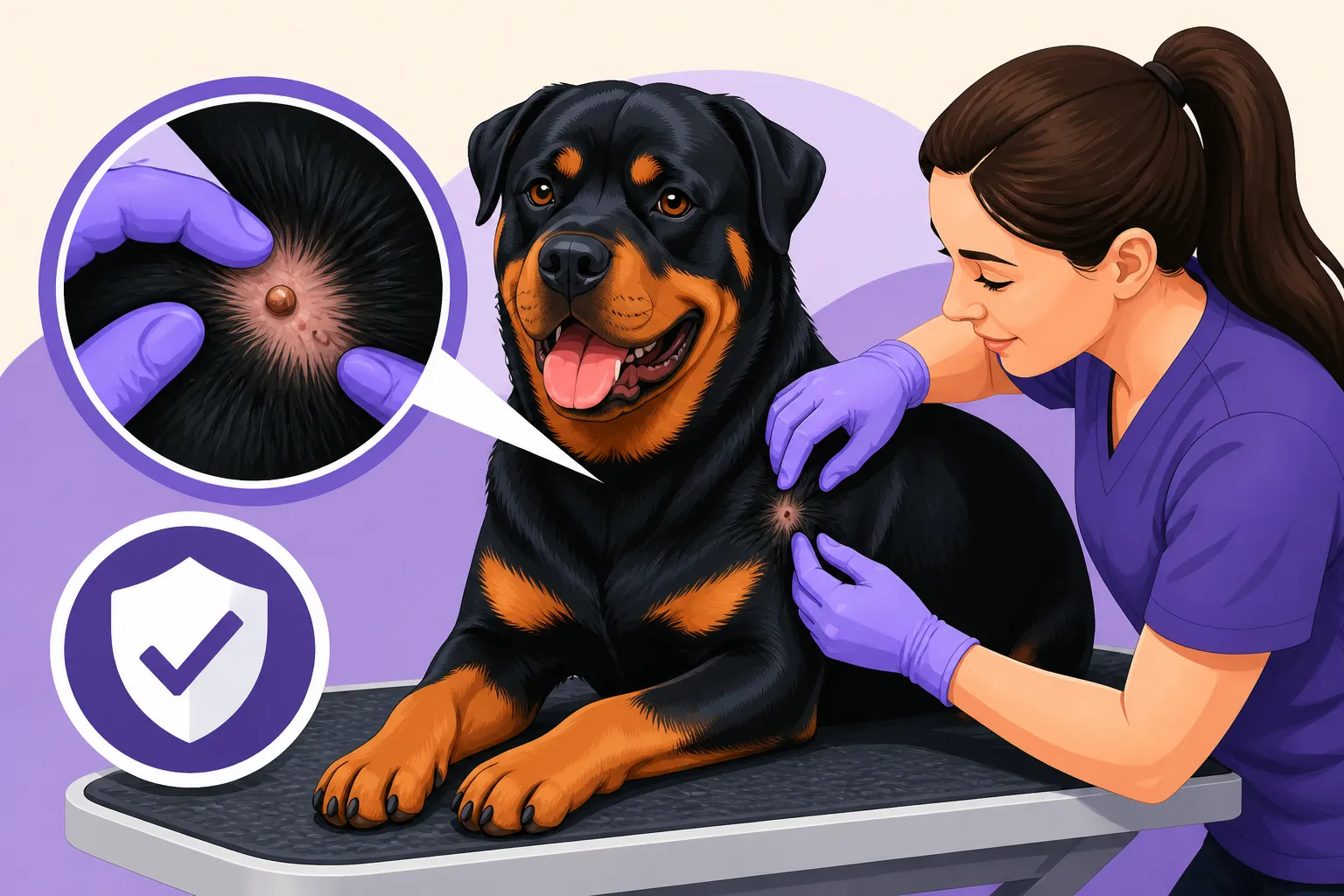
No one wants to think about parasites, but they are a very real threat to our dogs' skin health. Fleas are tiny, fast-moving insects that can cause intense itching, leading to skin irritation and even allergic reactions in sensitive dogs. You might not see the fleas themselves, but "flea dirt" (which looks like tiny black specks of pepper) on their skin or bedding is a sure sign. Ticks, on the other hand, are larger and attach themselves to feed on blood. They are often found in crevices like behind the ears, in the armpits, or between the toes.
Regular grooming sessions are perfect for spotting these unwelcome guests. A fine-toothed flea comb can help you find fleas and flea dirt. If you find a tick, remove it carefully with tweezers, grasping it as close to the skin as possible and pulling straight out. Mites, while microscopic, can cause intense itching, hair loss, and scabbing. If you suspect mites, your vet will need to do a skin scraping for diagnosis. Consistent parasite prevention, as discussed in Rottweiler Flea and Tick Prevention Priced by Weight, is key to keeping these critters at bay.
Changes in Coat Quality
Your Rottweiler's coat is often a mirror of their internal health. While some shedding is normal, particularly during seasonal coat blows, excessive or unusual shedding, dullness, or the appearance of bald patches can signal an underlying problem. A healthy Rottweiler coat should be shiny, dense, and relatively smooth.
If your Rottweiler's coat suddenly becomes dull, dry, or brittle, or if you notice significant thinning or bald spots without obvious itching, it could be a sign of a nutritional deficiency, hormonal imbalance (like hypothyroidism), or another systemic illness. For example, Thyroid Disease Behind a Rottweiler's Dull Coat explains how a dull coat can be a symptom of an underactive thyroid. Similarly, changes in skin texture, like excessive oiliness or extreme dryness and flakiness (dandruff), warrant investigation. Keeping a close eye on their coat during grooming can give you early warning signs of internal health issues that need veterinary attention.
What to Do When You Find Something Concerning
It's natural to feel a pang of worry when you find something unusual on your beloved Rottweiler. But don't panic! The best thing you can do is stay calm, document your findings, and know when to seek professional help.
Documenting Your Findings
Finding a lump, rash, or suspicious spot is the first step. The next, and equally important, step is to document it. Take a photo, if possible, to capture its current appearance. Note the exact location on your dog's body, its size (you can use a ruler for accuracy), its texture (soft, firm, squishy, hard), and its color. Write down the date you first noticed it.
This detailed record will be incredibly helpful for your veterinarian. It allows them to quickly assess if the issue is new, if it has grown, or if it has changed in appearance. Without this documentation, it's easy to forget details or misremember when something first appeared, which can impact diagnosis and treatment. This practice aligns well with good overall health record keeping, as highlighted in The Health Records Worth Keeping on a Rottweiler.
When to Consult Your Vet
While some minor skin irritations might resolve on their own with careful cleaning, many issues require a veterinarian's expertise. You should always consult your vet if you find:
- Any new lump or growth, especially if it's firm, fixed, rapidly growing, or seems painful.
- A hot spot that is expanding rapidly, is very painful, or shows signs of deep infection (pus, strong odor).
- Persistent itching, scratching, or licking that leads to hair loss or broken skin.
- Rashes or skin redness that don't resolve within a day or two, or that are spreading.
- Signs of parasites that you can't get rid of with over-the-counter products, or if your dog is showing signs of illness (lethargy, fever).
- Any changes in coat quality (dullness, excessive shedding, bald patches) that aren't easily explained by seasonal shedding or old age, particularly if accompanied by other symptoms like weight changes, or changes in thirst or appetite (as discussed in Rottweiler Hypothyroidism and Unexplained Weight Gain).
It's always better to be safe than sorry, especially with our Rottweilers who might not show discomfort readily. Your vet can perform diagnostic tests, such as skin scrapings, biopsies, or blood work, to determine the cause of the problem and recommend the most appropriate treatment.
Preventative Measures and Ongoing Care
Beyond vigilant skin checks, there are several things you can do to promote healthy skin and coat for your Rottweiler. A high-quality diet is fundamental. Ensure your dog is eating a well-balanced diet appropriate for their life stage and activity level. Some owners explore fresh food options, like those offered by Ollie, which can sometimes lead to improvements in skin and coat health due to better nutrient absorption.
Consider adding omega-3 fatty acid supplements to their diet, which can support skin barrier function and reduce inflammation. Talk to your vet about appropriate dosages for your Rottweiler's size. Regular bathing with a mild, dog-specific shampoo and conditioner can help keep their skin clean and moisturized, but don't overdo it, as excessive bathing can strip natural oils. Using a good quality deshedding tool, readily available on Chewy or Amazon, can help remove loose undercoat, preventing matting and improving air circulation to the skin. Finally, maintaining a healthy weight for your Rottweiler can reduce friction in skin folds and alleviate pressure on joints, indirectly supporting overall skin health.
| Skin Concern | What to Look For | Immediate Action | When to Call the Vet |
|---|---|---|---|
| Lumps/Bumps | Any new or changing growth, soft or firm, mobile or fixed | Note size, location, and texture. Monitor closely. | Any new lump, rapid change in size/texture, tenderness, or bleeding |
| Redness/Rashes | Inflamed skin, pustules, scabs, excessive licking/chewing, hair loss | Gentle cleaning with mild pet shampoo. Avoid further irritation. | Persistent redness, spreading rash, increasing pain, discharge, or if accompanied by fever |
| Hot Spots | Red, moist, often oozing, painful patches; rapid enlargement | Gently clean, carefully trim hair around the area. Keep it dry and prevent licking (e.g., e-collar). | Rapid enlargement, severe pain, deep infection, or no improvement within 24-48 hours |
| Excessive Dryness | Flaky skin, dandruff, dull coat, itching | Hydrating shampoo/conditioner. Discuss adding omega-3s with your vet. Avoid harsh grooming products. | Persistent itching, discomfort, or if accompanied by other signs of illness (e.g., lethargy, weight changes) |
| Parasites | Fleas (flea dirt), visible ticks, scabs, intense itching, hair loss | Comb with a flea comb, carefully remove ticks. Apply vet-approved topical or oral parasite prevention. | Persistent infestation, severe skin irritation, dog seems unwell, or signs of tick-borne illness |
Disclaimer
This article is for general informational purposes only and does not constitute professional advice. Laws, prices and regulations vary by location and change over time. Consult a qualified professional for guidance on your specific situation.