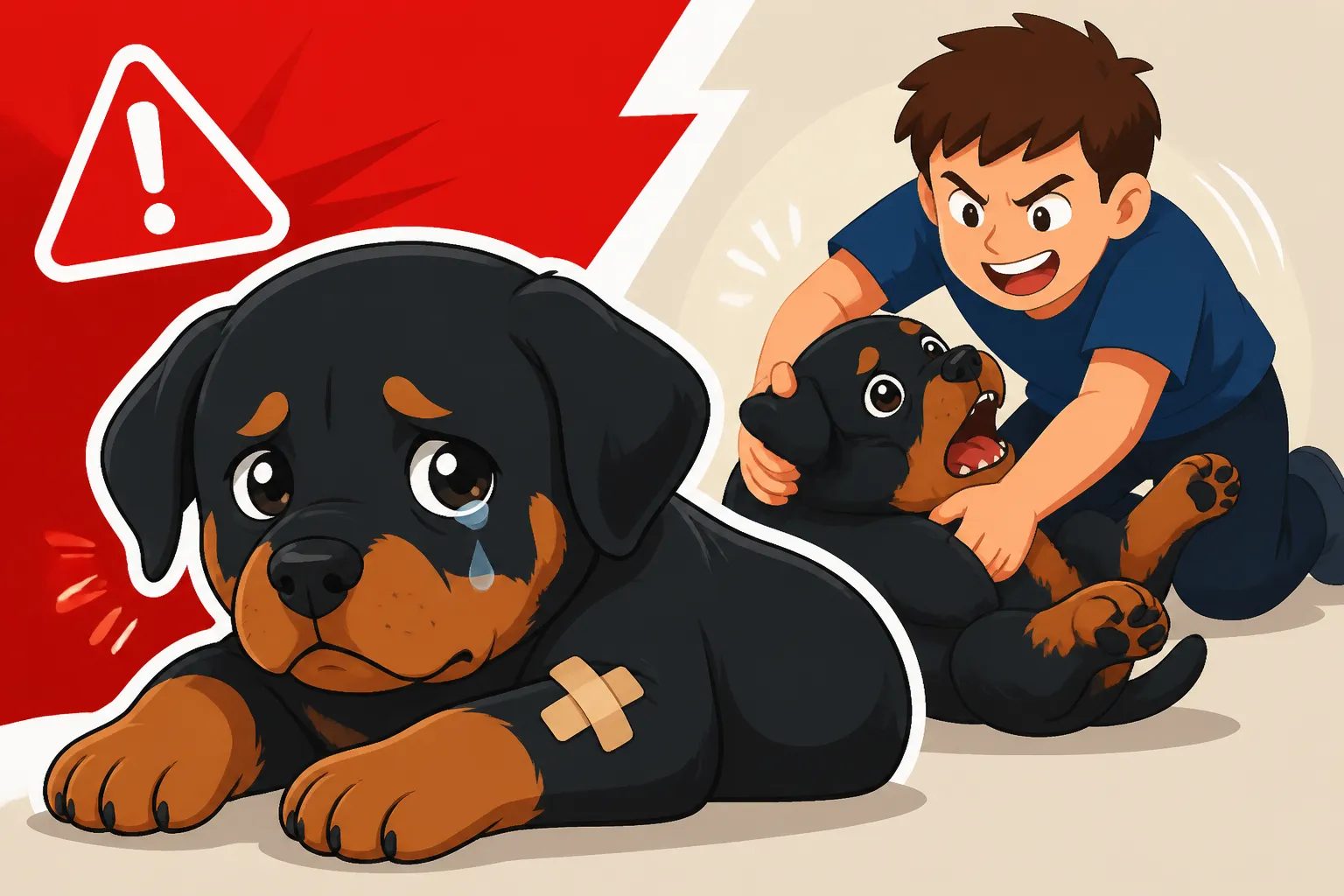
Roughhousing That Damages a Rottweiler Puppy
It’s heartbreaking to think that our loving interactions with our Rottweiler puppies could actually cause them harm, but it’s a very real concern. We all want to bond with our new furry family member, and often that involves boisterous play, wrestling, and letting them jump around with boundless energy. However, for a rapidly growing, heavy-boned breed like the Rottweiler, what feels like innocent roughhousing can actually lead to serious, lifelong orthopedic issues. This guide will help you understand the specific vulnerabilities of your Rottweiler puppy's developing body and how to engage in play that builds a strong bond without risking their future health.
The Vulnerable Foundation: Why Puppy Roughhousing is Different for Rottweilers
Imagine a skyscraper under construction. While the building quickly gains height, its foundation is still being carefully poured and set, making it incredibly vulnerable to stress. Your Rottweiler puppy is much the same. They grow at an astonishing rate, sometimes gaining several pounds a week, but their skeletal system, particularly their joints, isn't fully mature until much later. This rapid growth, combined with their inherent size and strength, creates a unique set of challenges when it comes to playtime.
Unclosed Growth Plates and Their Fragility
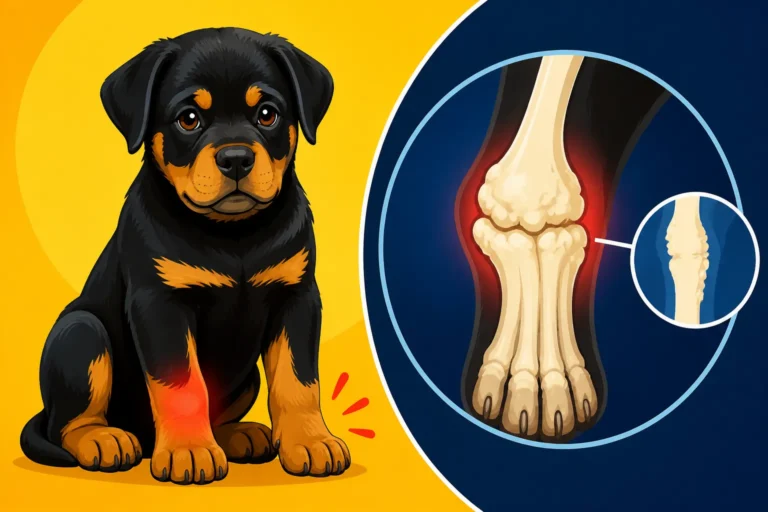
At the end of your puppy's long bones – think femurs, tibias, and radius/ulna – there are areas of soft, developing cartilage called growth plates. These are essentially "growth zones" where new bone is formed, allowing the bones to lengthen. Until these growth plates fully close and harden into solid bone, which typically happens between 18 to 24 months for Rottweilers, they are incredibly fragile.
Even a seemingly minor twist, jump, or hard landing during rough play can cause a fracture or damage to these delicate plates. This isn't like a broken bone in an adult dog; damage to a growth plate can disrupt the normal growth process, leading to limb deformities, uneven limb length, or chronic lameness. It's a silent threat because a puppy might not always show immediate, severe pain, but the damage is done. Understanding Rottweiler Growth Plates and Why They Close So Late is crucial for all owners.
Consider a scenario where your puppy is enthusiastically jumping off the sofa to greet you, or maybe they're playing a frantic game of fetch where they slide to a sudden stop. Each of these high-impact actions puts immense pressure on those vulnerable growth plates. What seems like playful exuberance could inadvertently lead to a costly and painful injury. This is why vigilance during playtime is paramount.
The Impact of Rapid Growth on Joint Health
Beyond the growth plates themselves, the entire joint structure – the cartilage, ligaments, and tendons – is still developing and strengthening. Rottweilers are genetically predisposed to conditions like hip and elbow dysplasia, where the joints don't form correctly. Excessive or inappropriate exercise and roughhousing during this critical development period can exacerbate these genetic tendencies, turning a minor predisposition into a significant problem.
When a puppy's joints are repeatedly jarred, twisted, or subjected to unnatural forces, it can contribute to the malformation or accelerated wear that leads to these debilitating conditions. It's not just about avoiding sudden injuries; it's about minimizing cumulative stress. A well-bred Rottweiler from parents with good clearances still needs careful handling during its formative months to give those joints the best chance to develop properly. Always be mindful of Rottweiler Hips and Elbows and the 24-Month Rule and how careful rearing influences these critical years.
Imagine a growing puppy whose bones are lengthening rapidly, but the surrounding soft tissues aren't keeping pace. If you then introduce high-intensity activities, you're essentially putting a brand new engine under immense strain before all its parts are properly broken in and lubricated. This kind of chronic stress can contribute to Osteochondrosis From Overfeeding a Rottweiler or other developmental bone diseases, even if the puppy is well-fed. It really emphasizes why gentle care is so important.
The Weight Advantage: When Your Puppy Outgrows Your Strength
It's easy to forget how quickly a tiny, cuddly Rottweiler puppy transforms into a powerful, substantial dog. What feels like manageable wrestling or boisterous play when your puppy weighs 20 pounds becomes an entirely different experience when they hit 60, 80, or even 100 pounds. Their increasing size and strength mean that even accidental bumps or unintended leverage during play can cause injury not just to them, but also to you or others around them.
The habits established during puppyhood will carry into adolescence and adulthood. If you teach a 30-pound puppy that it’s okay to jump on you, tackle you, or play bite hard, imagine managing that same behavior when they are a fully grown, excited 110-pound dog. Their enthusiasm can easily overwhelm, making it difficult to control situations and prevent harm. This shift in physical dynamics means we need to be proactive in setting boundaries and teaching appropriate play from the very beginning.
This isn't just about their safety; it's also about preventing a large, powerful dog from unintentionally causing harm to people or other, smaller pets. A playful bump from a 100-pound adolescent Rottweiler could easily knock over a small child or an elderly person. Establishing a pattern of respectful, controlled play early on, long before they reach their full intimidating size, is key to a harmonious household.
Common Roughhousing Mistakes That Can Cause Injury
As much as we love to see our Rottweiler puppies full of life and energy, some of the ways we instinctively play with them, or allow them to play, can be seriously detrimental. It’s not about being a spoilsport; it’s about being a responsible guardian who understands the unique physical needs of this magnificent breed. These are the kinds of activities that, while seemingly harmless, carry significant risks for a growing Rottweiler.
High-Impact Activities and Jumping
Any activity that involves repeated jumping, sudden stops, sharp turns, or hard landings can be incredibly damaging to a Rottweiler puppy’s developing joints and growth plates. This includes games like jumping off furniture, leaping out of a car or truck, intensely chasing a ball across hard pavement, or even prolonged sessions of wrestling that end with a thud.
Think about a puppy constantly jumping off a bed or a low porch step. Each time they land, their immature joints absorb the shock. Over time, or with one wrong landing, this can lead to sprains, fractures, or long-term joint damage. It's a huge factor in the development of conditions like Rottweiler Hip Dysplasia and the OFA Grade and Rottweiler Elbow Dysplasia and Front Leg Lameness. This is why even seemingly innocuous activities like regular trips up and down stairs need to be managed carefully for young puppies, as discussed in Stairs and a Rottweiler Puppy's Joints. Their enthusiasm often outweighs their physical resilience.
It's tempting to think your puppy is invincible because they bounce back so quickly, but the cumulative effects of these micro-traumas can build up. Instead of playing vigorous fetch on concrete, opt for a soft grassy area. Limit the height from which they can jump and always supervise their interactions, especially when they're zooming around the house. We want to build strong bodies, not break them down prematurely.
Excessive Tug-of-War and Twisting Motions
Tug-of-war can be a fantastic game for building bond and teaching impulse control when done correctly. However, aggressive, prolonged, or highly competitive tug-of-war can be problematic for a Rottweiler puppy. When a puppy grips tightly and twists its body, or if you apply too much force and jerk the toy around, it places immense strain on their neck, spine, and developing jaw.
A Rottweiler's powerful jaws are designed for holding, and while that strength develops, their internal structures are still vulnerable. Aggressive tugging can potentially strain neck muscles, injure growth plates in the shoulder or elbow, or even cause dental issues if they're constantly wrenching their head. If you choose to play tug, keep it brief, controlled, and ensure the puppy is pulling in a straight line, not twisting violently. Always use a proper tug toy, not something improvised that could snap or cut their mouth.
The key is to avoid putting undue stress on their still-forming skeletal structure. A short, gentle game of tug where the puppy is encouraged to "drop it" on command is a world away from a frantic, uncontrolled pulling match. Remember, the goal is not to "win" against your puppy, but to engage in play that is safe and builds positive behaviors. For durable and safe tug toys, many owners find great options on Amazon or Chewy.
Rough Play with Other Dogs and Children
While socialization is incredibly important, not all play is created equal, especially when it involves significant size or age differences. A much larger, boisterous adult dog might accidentally injure a Rottweiler puppy during play, simply due to their weight and lack of awareness. Similarly, two equally sized, energetic puppies can sometimes get carried away, leading to excessive roughhousing that is too high-impact.
Children, despite their best intentions, often don't understand a puppy's physical fragility. They might wrestle too roughly, pull on limbs, or engage in chase games that lead to hard falls. It’s our responsibility to supervise all interactions between puppies, other dogs, and children. Teach children how to play gently and respectfully, emphasizing that a puppy is not a toy. For specific advice on these interactions, consider reading Rottweiler Puppy Play Biting With Children.
It’s about setting up playdates for success. Choose play partners that are age and size-appropriate, and always supervise closely, ready to intervene if play gets too rough or intense. Learning to read your puppy's body language and the body language of other dogs is essential to ensuring that play remains safe and fun for everyone involved.
| Play Activity | Risk Level for Rottweiler Puppy | Potential Damage |
|---|---|---|
| Jumping off high surfaces | High | Growth plate fractures, joint sprains, developmental issues |
| Intense, prolonged fetch | Medium-High | Strain on joints, soft tissue injuries, hip/elbow issues |
| Aggressive tug-of-war | Medium | Neck/spinal strain, jaw injury, dental problems |
| Unsupervised play with large dogs | Medium-High | Accidental injury, fear, behavioral issues |
| Running on hard surfaces | Medium | Joint impact, bone bruising, accelerated wear |
| Sudden stops and turns | High | Ligament tears (cruciate), growth plate damage |
| Wrestling with humans | Medium-High | Accidental falls, joint twisting, encouraging rough behavior |
| Short, low-impact fetch (soft ground) | Low | Minimal |
| Structured training games | Low | Minimal |
| Chewing on appropriate toys | Low | Minimal |
| Controlled, gentle tugging | Low | Minimal |
Nurturing Healthy Play and Development
So, if intense roughhousing is out, what can you do to keep your Rottweiler puppy entertained, stimulated, and well-exercised? The answer lies in understanding their developmental needs and choosing activities that support, rather than hinder, healthy growth. This means focusing on quality over quantity, and structure over chaos.
Gentle, Structured Playtime is Key
The best way to play with your Rottweiler puppy is through gentle, structured activities that promote mental stimulation and controlled physical exertion. Think about short bursts of activity followed by rest, and always on soft surfaces like grass or carpet. Short sessions of fetch with soft toys, gentle games of hide-and-seek, or even just exploring a new, safe environment are excellent options.
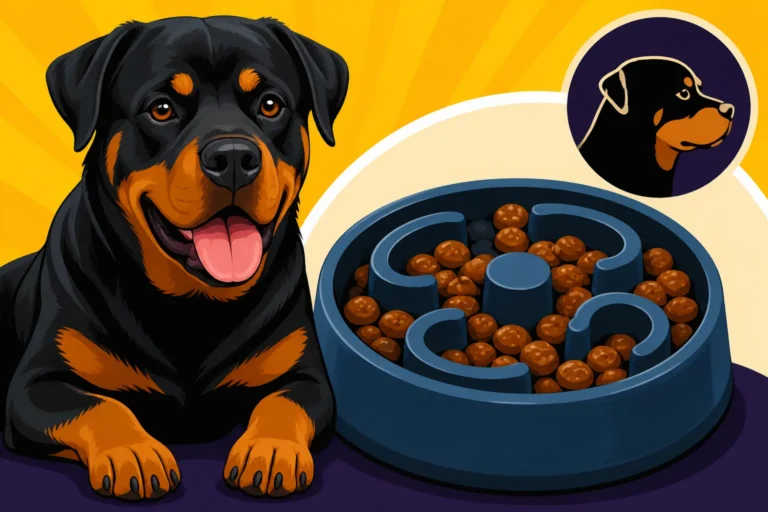
Puzzle toys are your best friend here. They challenge your puppy's brain, keep them engaged, and don't involve any strenuous physical activity. Brands like Chewy offer a wide array of puzzle feeders that can turn mealtime into a mental workout. Obedience training games, where your puppy learns commands like "sit," "stay," and "come" in a playful manner, also build a strong bond without physical risk. For guidance on appropriate exercise duration, remember The Five Minute Rule for Rottweiler Puppy Walks. This rule suggests 5 minutes of exercise per month of age, twice a day, to protect those growing joints.
It’s also an excellent time to introduce them to new textures, sounds, and controlled social interactions. Instead of a free-for-all at the dog park, opt for one-on-one playdates with a known, gentle, vaccinated puppy of similar size and age, or very calm, tolerant adult dogs. The goal is positive exposure and confidence building, not physical exhaustion or rough play.
The Role of Nutrition in Joint Health
Beyond play, proper nutrition is a cornerstone of healthy joint development in a rapidly growing breed like the Rottweiler. It's not just about what they eat, but also how much. Overfeeding a Rottweiler puppy can lead to rapid weight gain, putting extra strain on their developing bones and joints, which, as we've discussed, are already under construction. This can increase the risk of conditions like hip and elbow dysplasia. Maintaining a lean body condition is paramount.
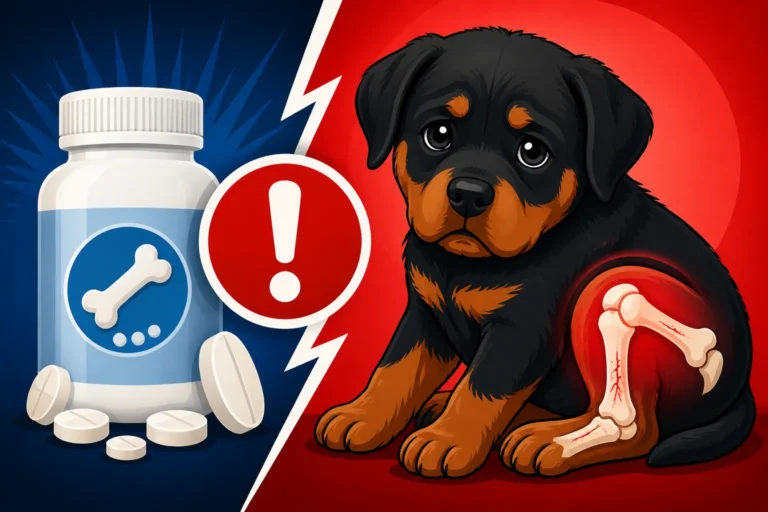
Look for a high-quality large breed puppy formula that specifically addresses the unique nutritional needs of giant breeds. These formulas are typically formulated with controlled calcium and phosphorus levels to support slow, steady bone growth, rather than accelerated growth that can lead to orthopedic problems. Avoid supplementing with extra calcium, as this can severely disrupt the delicate calcium-phosphorus balance and lead to serious developmental bone diseases, a concept covered in Rottweiler Calcium Limits and Why Supplements Hurt.
Some owners explore fresh food options for their Rottweiler puppies. While a high-quality fresh food diet can be beneficial, it’s critical to ensure it’s balanced for large breed puppies by a veterinary nutritionist. Services like Ollie or other reputable fresh food providers often have formulations specifically designed for puppies, but always double-check the calcium and phosphorus ratios to ensure they meet the specific needs for controlled growth in your Rottweiler. A good diet works hand-in-hand with appropriate exercise to build a robust foundation for their long life.
Knowing When to Seek Veterinary Advice
Despite our best efforts, sometimes injuries or developmental issues can still arise. It’s incredibly important to be vigilant for any signs of lameness, limping, stiffness, reluctance to play, or unusual gait. Don't dismiss a limp as "just growing pains." For a Rottweiler puppy, a persistent limp or changes in movement almost always warrant a vet visit, as they could indicate damage to growth plates or early signs of joint disease.
Early detection of orthopedic issues can make a significant difference in prognosis and management. Your veterinarian might recommend X-rays to check for growth plate damage or to evaluate the early stages of Rottweiler Hip Dysplasia Symptoms Before Age Two or elbow dysplasia. Catching these problems early allows for interventions that can potentially slow progression and improve your dog's quality of life. Even if it's a minor soft tissue injury, knowing the cause helps you adjust your play routine.
As your Rottweiler ages, proactive care continues. Conditions like Managing Arthritis in an Older Rottweiler often stem from early developmental issues or injuries. Establishing a strong relationship with your vet and discussing any concerns, no matter how small, is part of being a responsible Rottweiler owner. They are your best resource for navigating the complex growth period of your powerful puppy.
In conclusion, while the urge to tumble and wrestle with your Rottweiler puppy is completely natural, a deep understanding of their unique physical development should guide your play choices. By opting for gentle, structured play, providing appropriate nutrition, and being vigilant for any signs of discomfort, you can help ensure your magnificent companion grows into a strong, healthy adult, free from preventable orthopedic problems.
Disclaimer
This article is for general informational purposes only and does not constitute professional advice. Laws, prices and regulations vary by location and change over time. Consult a qualified professional for guidance on your specific situation.