A Rottweiler Lunging at Dogs Across the Street
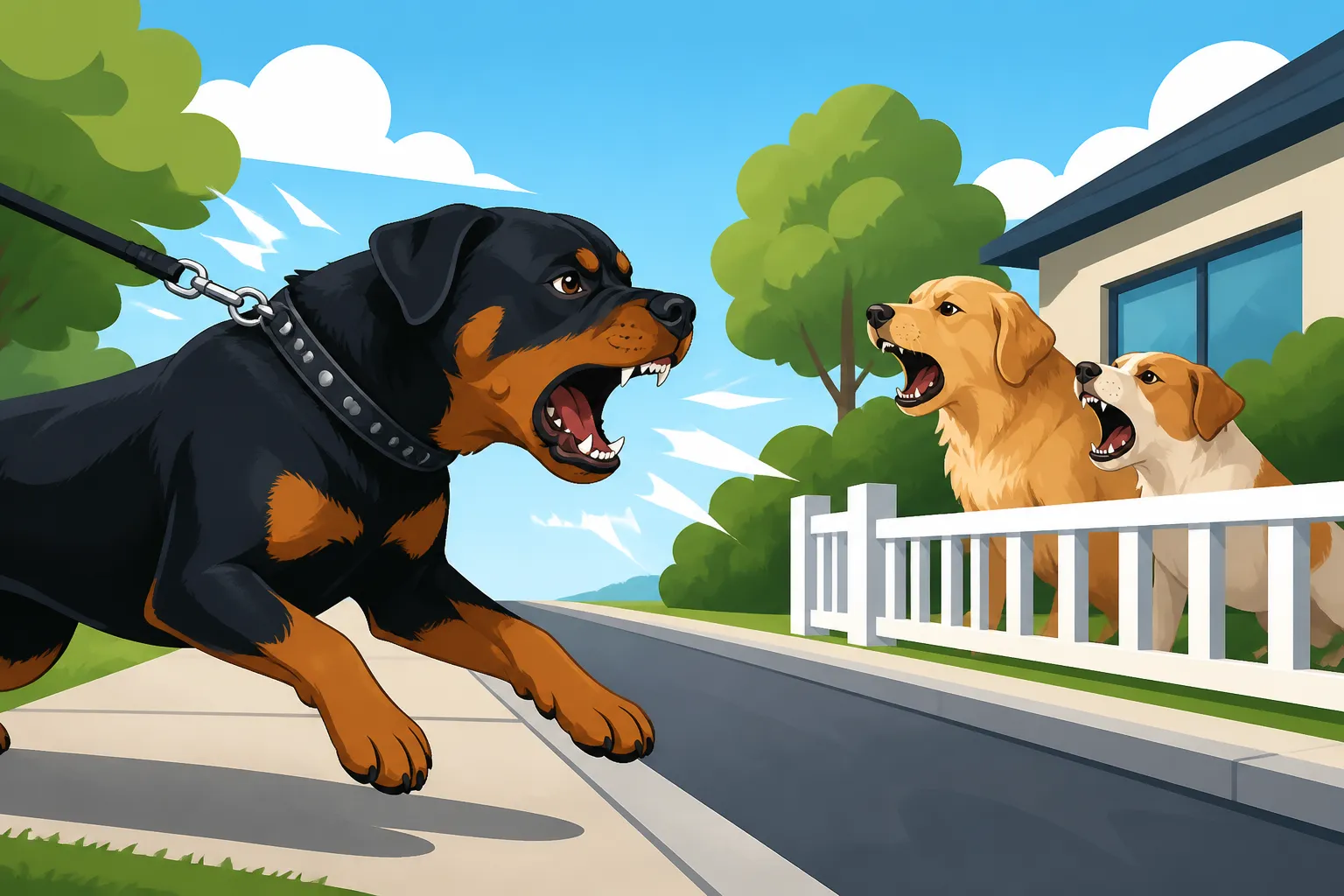
It’s a scenario far too many Rottweiler owners know intimately: you’re out for a peaceful walk, enjoying the fresh air with your magnificent companion, when suddenly, a dog appears across the street. Before you can even react, your calm, confident Rottweiler transforms into a lunging, barking, straining beast on the end of the leash. The embarrassment washes over you, passersby stare, and you're left feeling utterly defeated. This guide is here to help you understand why your Rottweiler lunges at other dogs and, more importantly, what you can do to manage and ultimately transform this challenging behavior.
Understanding Why Your Rottweiler Reacts on Leash
The first step to addressing any challenging behavior is understanding its root cause. With Rottweilers, their size, strength, and inherent protective instincts can amplify what might be a minor reactivity issue in a smaller breed. It's crucial not to assume malice; often, a lunging Rottweiler is not being "aggressive" in the way many onlookers perceive.
The Root Causes of Leash Reactivity
Leash reactivity in Rottweilers, or any dog, isn't usually a single, simple issue. It's a complex mix of emotions and learned behaviors.
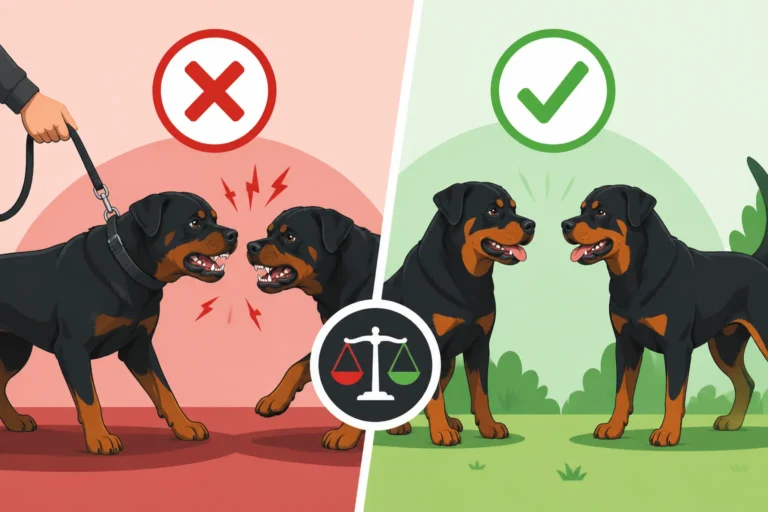
One of the most common drivers is fear or anxiety. Imagine being a big, imposing Rottweiler, but deep down, you're actually quite unsure about other dogs, especially strange ones that might approach too quickly. Because you're on a leash, you can't retreat, which is your natural instinct. So, what do you do? You go on the offensive. Lunging, barking, and growling become a "keep away" signal. "Stay back! I'm scared!" is what your dog is trying to communicate. This can be especially true if your Rottweiler had a negative experience with another dog as a puppy, or if they weren't properly socialized during their critical early months. They might look tough, but inside, they're feeling vulnerable.
Another significant factor is frustration or barrier aggression. Your Rottweiler sees another dog, and they want to get to it. Maybe they want to play, maybe they want to greet, or maybe they just want to investigate. But they're tethered to you, unable to move freely. This restriction builds immense frustration. Think of a child wanting a toy they can see but can't reach – eventually, they might throw a tantrum. For a powerful dog like a Rottweiler, that "tantrum" manifests as lunging and barking. The leash, which is meant for safety and control, ironically becomes a barrier that heightens their arousal and can even lead to behavior that appears aggressive, even if the initial intent wasn't. They learn that the leash prevents them from doing what they want, leading to an outburst.
Finally, there's over-excitement and a lack of impulse control. Some Rottweilers are just big, goofy lovebugs who are too excited to see other dogs. They don't know how to calmly process the sight of another canine. They want to rush over, bounce, and greet, but their enthusiasm is overwhelming. Without proper training in impulse control, this overwhelming excitement can look exactly like aggression. They might pull with all their might, bark loudly, and drag you down the street in their eagerness. This is where training really comes into play; it’s about teaching them a more appropriate way to express their interest.
Reading Your Rottweiler's Body Language
Before your Rottweiler unleashes a full-blown lunge, they are almost always giving off subtle (or not-so-subtle) cues. Learning to read these signals is your superpower in preventing an explosion. If you can catch these early warning signs, you can often intervene before things escalate.
Start by observing their posture. Is their body stiffening? Are their ears pushed back or held in a very alert, forward position? Are they freezing, becoming absolutely still as if locked onto the other dog? Look at their eyes: do you see "whale eye," where the whites of their eyes are visible at the corners because they're staring intently or feeling stressed? Their mouth might be tightly closed, or they might be doing quick, repeated lip licks, which is often a sign of stress. The tail, even a docked one, can give clues – is it tucked, or is it rigid and held high? Even if they have a natural tail, a stiff, high wag is very different from a loose, happy wag. For a deeper dive into these subtle signs, consider Reading a Still Rottweiler That Is Not Relaxed.
As they escalate, these cues become more pronounced. The stiff posture might turn into a hard stare, then a low growl, or a quick, sharp bark. The lunging often comes when they feel their other signals have been ignored, or they simply can't contain their frustration or fear any longer. Recognizing these earlier, quieter signals is key. It gives you precious seconds to create distance, redirect their attention, or intervene with a positive command before they cross their threshold – that invisible line where they can no longer cope calmly.
Practical Strategies for Managing Leash Reactivity
Managing leash reactivity requires a multi-faceted approach. It's not just about stopping the lunging; it's about changing your Rottweiler's emotional response to other dogs and teaching them new, calmer behaviors. This involves both proactive management and active training.
Avoidance and Management Techniques
Before you can actively train, you need to manage the environment to prevent your Rottweiler from practicing the reactive behavior. Every time they lunge and bark, they are essentially rehearsing the behavior, and it becomes more ingrained.
One of the simplest and most effective techniques is changing your walking routes and timing walks. If you know a particular street or park is a hotspot for off-leash dogs or busy with walkers and their pets, avoid it during peak hours. Try walking early in the morning, late in the evening, or exploring quieter, less-trafficked areas. Finding places where you can control the distance to other dogs is invaluable. This isn't about hiding your dog away; it's about setting them up for success by reducing exposure to triggers while you work on training.
Using distance is perhaps the most crucial management strategy. Every dog has a "threshold" – a distance at which they can observe another dog without reacting. For some Rottweilers, this might be 50 feet; for others, it might be 100 yards. Your job is to identify your dog's threshold and keep them under it. When you see another dog approaching, cross the street, turn around, or step behind a parked car to create more space. The goal is for your Rottweiler to notice the other dog but remain calm enough to take a treat or respond to a cue. If they’re already lunging, you’re too close. Maintaining this distance is a commitment, but it’s foundational for effective training later on.
Appropriate equipment can also make a huge difference in managing a strong Rottweiler. A sturdy, comfortable harness that attaches at the front (like a front-clip harness) can greatly reduce pulling and give you more control without causing discomfort. These harnesses redirect your dog's forward momentum back towards you when they pull, making it much harder for them to drag you. Flat collars can put pressure on the trachea and are not ideal for a dog that pulls with the force of a Rottweiler. For a deeper discussion on suitable gear, look into Harness Hardware That Holds a Pulling Rottweiler. In some cases, especially if your Rottweiler has a bite history or you are genuinely concerned for public safety, muzzle training might be a responsible step. A well-fitted basket muzzle allows your dog to pant and drink but provides peace of mind. Learning Muzzle Training a Rottweiler Before You Need It can be a valuable proactive measure.
Counter-Conditioning and Desensitization
Once you can consistently manage your Rottweiler's environment to stay under their reaction threshold, you can begin the real work of changing their emotional response through counter-conditioning and desensitization. This is about creating positive associations where negative ones once existed.
The "Look At That" game is a fantastic place to start. When you're out walking and you spot another dog at a distance where your Rottweiler is aware but still calm (below their threshold), quietly say "Look at that!" (or a similar calm cue). The instant your dog looks at the other dog, mark the behavior with a verbal "Yes!" or a clicker, and immediately give them a super high-value treat (think cooked chicken, cheese, or hot dogs – something they rarely get). The goal is to make the appearance of another dog predict something wonderful happening for them. The sequence is: Dog appears > Your dog looks > You mark > Treat appears. Repeat this process every single time, gradually decreasing the distance as your dog shows consistent calmness. The moment they start to get tense or focused on the other dog without looking back at you for a treat, you're too close. You need to increase the distance again. This is all about Counter-Conditioning a Reactive Rottweiler.
Gradual exposure goes hand-in-hand with counter-conditioning. You’re essentially desensitizing them to the presence of other dogs by showing them that other dogs are not scary, frustrating, or something to be overly excited about. This means starting with a very long distance, maybe just seeing another dog as a tiny speck, and slowly, over weeks or even months, reducing that distance. Each successful, calm encounter builds confidence and rewires their brain to associate other dogs with good things. If you have a friend with a calm, well-behaved dog, you can even arrange controlled "set-ups" in a neutral location, again starting at a great distance and gradually moving closer as long as your Rottweiler remains relaxed.
The use of high-value rewards cannot be stressed enough. For this kind of challenging training, your everyday kibble probably won't cut it. You need treats that are so irresistible, so utterly delicious, that they can override the powerful urge to react. Think about what your Rottweiler goes absolutely wild for. These special treats are reserved only for these training sessions. You want your Rottweiler to think, "Oh, another dog! Awesome, that means chicken is coming!" It shifts their entire emotional state from fear or frustration to eager anticipation. Many online stores, like Amazon, offer a wide variety of high-value training treats. Online training platforms like BAXTER & Bella also provide structured courses and resources that can guide you through these techniques, often emphasizing positive reinforcement and the proper use of high-value rewards.
Training Tools and Support Systems
While the right mindset and techniques are paramount, having the correct tools can make your training journey significantly easier and safer. Don't underestimate the impact of good gear, especially when handling a powerful breed like a Rottweiler.
Essential Training Gear for a Reactive Rottweiler
Choosing the right equipment for a reactive Rottweiler is crucial for both your safety and your dog's comfort. You need items that provide control without causing pain or fear, which could exacerbate reactivity.
Leashes and harnesses are your primary control tools. Forget retractable leashes; they offer no control with a strong dog and can be dangerous. A sturdy, fixed-length leash, ideally 6 feet long and made of durable nylon or leather, is best. A double-ended leash, used with a front-clip harness, offers even more control. One clip goes to the front of the harness, the other to the back or collar, giving you leverage to steer your dog. Front-clip harnesses like the Easy Walk or Freedom Harness are often recommended because they redirect your dog's pulling power. When your Rottweiler pulls, the leash attachment at the chest causes them to pivot back towards you, making pulling less effective and less rewarding for them. This is a game-changer for anyone struggling with Rottweiler Leash Pulling at Adult Weight.
Treat pouches are simple but indispensable. Having high-value treats easily accessible in a pouch clipped to your belt means you can reward your Rottweiler instantly the moment they offer a desired behavior. Fumbling in your pocket for treats can lead to missed opportunities, and timing is everything in counter-conditioning. A quick search on Amazon will show you countless options for hands-free treat pouches.
Long lines are excellent for practicing recall and controlled distance work in safe, open areas away from other dogs. A long line (15-30 feet) allows your Rottweiler to have more freedom to explore and decompress, which is vital for their mental well-being, while still keeping them safely connected to you. This is also a fantastic tool for practicing "Look At That" at greater distances with less pressure than a short leash. Just ensure the area is truly secure and free of unexpected triggers before deploying a long line.
When to Seek Professional Help
While many owners can make significant progress with self-study and consistent effort, there are times when seeking professional guidance is not just helpful but necessary. Don't view it as a failure; view it as giving your Rottweiler the best chance at success.
Recognizing your limits is a sign of responsible ownership. If your Rottweiler's reactivity is severe, involves aggression, or you simply aren't seeing progress with your methods, it's time to call in an expert. Reactivity can be incredibly stressful for both dog and owner, and a professional can provide an objective perspective, tailored advice, and hands-on guidance. Sometimes, you just need someone else to help you troubleshoot and build a solid plan.
When finding a qualified trainer or behaviorist, do your homework. Look for certifications like CPDT-KA (Certified Professional Dog Trainer – Knowledge Assessed), KPA-CTP (Karen Pryor Academy Certified Training Partner), or a veterinary behaviorist (DACVB – Diplomate of the American College of Veterinary Behaviorists). Avoid trainers who use force, pain, or fear-based methods (e.g., choke chains, prong collars used incorrectly, shock collars), as these can suppress symptoms without addressing the underlying emotional issues, potentially making reactivity worse or leading to redirected aggression. A good professional will focus on positive reinforcement and force-free techniques. For help locating a reputable expert, check out Finding a Rottweiler-Experienced Trainer Near You.
Deciding between group classes and private sessions for a reactive Rottweiler depends on the severity of the issue. For most reactive dogs, private sessions are the recommended starting point. They allow the trainer to focus solely on your dog's specific needs in a controlled environment, often without the immediate presence of other dogs. Once your Rottweiler has made significant progress and can handle the sight of other dogs at a distance, a specialized "reactive dog" class (not a general obedience class) might be beneficial. These classes are designed to manage multiple reactive dogs safely, often with barriers or ample space, allowing for structured practice in a more distracting environment.
| Equipment Type | Best Use Cases | Advantages for Reactive Rottweilers | Considerations |
|---|---|---|---|
| Front-Clip Harness | Daily walks, leash pulling | Reduces pulling, better control, distributes pressure evenly, safe for trachea | Requires proper fit, some dogs dislike chest pressure |
| Fixed-Length Leash (6 ft) | Daily walks, training | Consistent control, durable, reliable | Can still be pulled strongly by a large Rottweiler |
| Double-Ended Leash | Advanced control with front-clip harness | Allows for precise steering and pressure distribution, versatile | Requires practice to use effectively |
| Treat Pouch | All training sessions | Quick reward delivery, keeps hands free, prevents fumbling | Choose one that securely holds treats and stays closed |
| Long Line (15-30 ft) | Decompression walks, distance training in safe areas | Allows freedom to sniff and move, controlled exposure at distance | Only use in secure areas away from other dogs, risk of tangling |
| Basket Muzzle | Safety, public peace of mind | Prevents bites, allows panting and drinking, reduces anxiety for owner | Requires positive conditioning, choose well-fitted, comfortable model |
Living with a Reactive Rottweiler and Long-Term Success
Overcoming leash reactivity in a Rottweiler is a journey, not a destination achieved overnight. It requires commitment, understanding, and a willingness to adapt. The goal isn't necessarily a dog that loves every other dog they see, but one that can walk calmly past them without incident.
The Importance of Consistency and Patience
This isn't a quick fix with a magic wand; it's a marathon. You will have good days where your Rottweiler calmly passes another dog, and you'll have frustrating days where they regress, seemingly for no reason. Consistency is your best friend. Every walk, every encounter, is an opportunity to reinforce the new, desired behavior. If one person in the household uses the techniques consistently while another allows the dog to practice reactivity, progress will be incredibly slow or nonexistent. Everyone who walks the dog needs to be on the same page, using the same cues, the same management strategies, and the same rewards.
Patience is equally vital. Rottweilers are intelligent, but they are also creatures of habit. They've likely been practicing their reactive behavior for a while, and it takes time to rewire those ingrained responses. Don't get discouraged by setbacks. Acknowledge them, learn from them (what triggered the reaction? Could you have created more distance?), and move forward. Remember that your dog isn't trying to be difficult; they're reacting out of deeply rooted emotions or learned behaviors. Your calm, consistent leadership will be their guide. Celebrate every tiny win – a glance instead of a stare, a moment of calm before they react, taking a treat when another dog is visible. These small victories build up to significant progress over time.
Creating a Calm Environment at Home
A calm, well-adjusted Rottweiler at home is better equipped to handle stress and triggers outside. Addressing their overall well-being and reducing their general stress levels can significantly improve their leash reactivity.
Mental stimulation is just as important as physical exercise for a Rottweiler. A bored Rottweiler is often a stressed or destructive one. Incorporate puzzle toys, scent work games (hiding treats for them to find), or even training new tricks. These activities engage their powerful brains, tire them out mentally, and provide an outlet for their energy that doesn't involve lunging. Enrichment activities can dramatically lower their baseline stress. For ideas on stimulating your Rottweiler's mind, explore Rottweiler Enrichment Beyond Walks.
Decompression walks are another excellent tool. These are walks in quiet, low-stimulus environments (like a secluded park, a quiet trail, or even a large, empty field) where your Rottweiler can simply sniff, explore, and be a dog without the pressure of encountering triggers. Using a long line in a safe area for these walks allows them to move more freely and engage in natural behaviors, which is incredibly destressing. It’s a chance for them to just be, without the expectation of "good" leash manners or dealing with other dogs.
Finally, ensuring adequate, balanced exercise is critical. A Rottweiler needs regular physical activity to stay healthy and happy. However, "adequate" doesn't mean running them into the ground or over-exercising a young dog with still-developing joints. For tips on appropriate activity levels, read How Far an Adult Rottweiler Should Walk. Intense, highly arousing exercise right before a walk where you expect to see other dogs might actually increase reactivity. Instead, aim for consistent, moderate exercise that burns off excess energy without over-stimulating them. A physically satisfied Rottweiler is more likely to be a mentally calm one. Creating a designated calm space at home, perhaps a comfortable crate with a chew toy, as discussed in The Crate Size a Hundred Twenty Pound Rottweiler Needs, can also provide a safe retreat when needed.
Disclaimer
This article is for general informational purposes only and does not constitute professional advice. Laws, prices and regulations vary by location and change over time. Consult a qualified professional for guidance on your specific situation.