Reading a Calm Rottweiler That Is Actually Alert
It's incredibly common for Rottweiler owners to tell me they have a "calm" dog, only for me to observe subtle cues that reveal a much more alert state beneath that calm exterior. This often leads to misunderstandings, where owners inadvertently put their dogs, or others, in uncomfortable situations. This guide aims to help you decode those subtle, often missed, signs of alertness in your Rottweiler, ensuring better communication and a safer environment for everyone.
The Rottweiler's Natural Demeanor: Calm, Not Complacent
Rottweilers are often described as calm, confident dogs, and for good reason. They carry themselves with an inherent self-assurance that can easily be mistaken for complete relaxation. However, this calm isn't complacency; it's a deep-seated awareness, a quiet vigilance that is a hallmark of the breed. Understanding this fundamental aspect of their nature is the first step in truly knowing your Rottweiler. They are thinkers, observers, always processing their environment, even when they appear to be doing absolutely nothing.
The "Wait and See" Approach
One of the most defining characteristics of a Rottweiler is their "wait and see" approach to new situations, people, or other animals. Unlike some breeds that might burst with immediate enthusiasm or nervousness, a Rottweiler will often hold back, observing intently. This isn't aloofness for the sake of being cold; it's a deep-seated instinct to assess the situation before committing to a reaction. They are gathering information, evaluating potential threats or opportunities, and deciding on the most appropriate course of action. This period of quiet observation can last minutes, or even longer, and during this time, they appear calm, but they are far from disengaged. You might notice this especially when introducing your Rottweiler to new guests, where they might simply watch from a distance before ever approaching. Rottweiler Aloofness and Why It Reads as Cold dives deeper into this characteristic.
Internal Calm, External Awareness
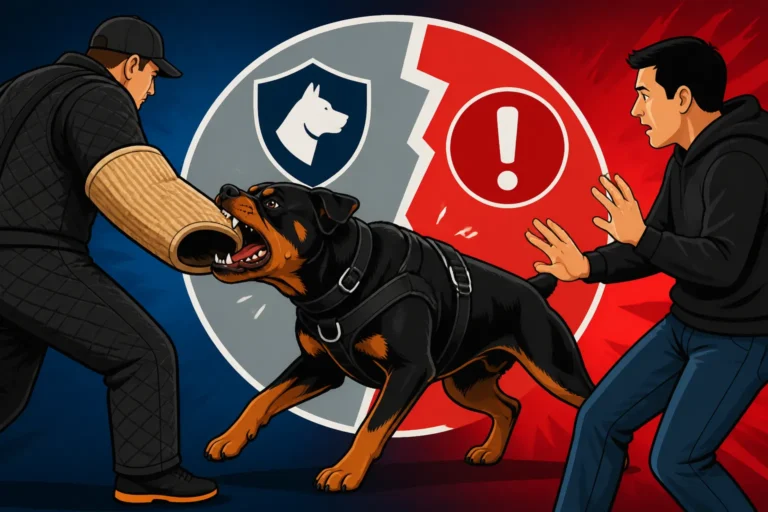
Imagine a security guard standing silently, watching a crowd. On the surface, they appear calm, unruffled, perhaps even bored. But internally, they are processing every movement, every sound, every potential deviation from the norm. This is very much how a Rottweiler operates. Their powerful presence and often still demeanor give the impression of tranquility, but their senses are on high alert. They register changes in air currents, distant sounds, subtle shifts in human body language, and even the faintest of new scents. This internal processing happens without any outward display of anxiety or aggression, making it incredibly easy for an unsuspecting owner to misinterpret their dog's state. They are calm because they are in control, but alert because it's their nature to protect.
Historical Roots of Their Calm Alertness
To truly appreciate this trait, it helps to look back at the Rottweiler's history. They were originally bred in Germany as drover dogs, guarding cattle and their butchers' money on long drives to market. Their job wasn't to bark wildly at every shadow; it was to remain watchful, capable of decisive action when truly needed, but otherwise a calm, intimidating presence that deterred trouble. This selective breeding for quiet confidence and unwavering vigilance cemented the "calm but alert" disposition we see today. They needed to be able to assess a situation quickly and act appropriately, whether it was moving a stubborn cow or defending against a thief. This deep-seated working heritage means that even a Rottweiler who has never herded a cow still carries that watchful protector instinct within them.
Subtle Physical Cues of Alertness in a "Calm" Rottweiler
The trick to understanding your Rottweiler's true state lies in paying close attention to the small, often fleeting, physical signals they give. These are not grand gestures like barking or lunging, but rather micro-expressions and subtle shifts in posture that communicate a great deal to those who know how to read them. Learning these cues is crucial for preventative management and fostering a deeper bond.
Eye Movement and Focus
A truly relaxed Rottweiler will have soft eyes, perhaps a slight squint, and their gaze might wander without intense focus. However, an alert Rottweiler, even one appearing calm, will often exhibit a change in their eyes. You might notice their eyes fixate intensely on a specific target, perhaps a person approaching in the distance or another dog across the park. The eyes might widen slightly, or you might even catch a glimpse of the whites of their eyes on the outer edges, a phenomenon often referred to as "whale eye." This intense focus, combined with a still body, indicates a dog that is processing deeply and preparing for a potential interaction. If their gaze hardens and follows every move, they are definitely in an alert state, regardless of how still the rest of their body is. This can be a very important indicator, as detailed in Rottweiler Whale Eye and Other Warning Signs.
Ear Position and Head Carriage
Rottweilers have drop ears, which can sometimes make reading their ear signals a bit harder than with prick-eared breeds. However, subtle shifts are still evident. In a relaxed state, their ears might be held softly against their head or slightly out to the sides, perhaps moving idly to catch ambient sounds. When they become alert, even if calm, those ears will often come forward slightly, perhaps even rotating independently like little radar dishes, trying to pinpoint the source of a sound. Their head carriage might also shift. Instead of a relaxed posture, the head might raise slightly, becoming more upright and still, indicating increased attention and readiness. They are literally lifting their head to better take in the environment, trying to process every piece of information.
Body Tension and Stance
This is perhaps one of the most important, yet easily missed, indicators. A truly relaxed Rottweiler will have a loose, fluid body. Their muscles will be soft, their weight evenly distributed, and they might even lean or slouch slightly. When a Rottweiler is calm but alert, their body will often appear perfectly still, but with an underlying tension. Their muscles might be subtly taut, their stance more upright and rigid, as if coiled and ready to move. Their weight might subtly shift forward or backward, preparing for action. They won't necessarily be stiff or showing classic "fear" signals, but they will be less fluid, more statuesque. It's the difference between a dog truly sleeping soundly and one "napping with one eye open." If you try to pet them in this state, you might feel the underlying tension in their shoulders or along their back. Reading a Still Rottweiler That Is Not Relaxed goes into more detail about these subtle tension cues.
Tail Position and Movement (Even if Docked)
While many Rottweilers have docked tails, which removes some of the more obvious tail-wagging communication, there are still signals to be read. Even a docked tail stump can communicate volumes. In a relaxed dog, the tail might hang naturally, or if there's a stump, it might be still or give a soft, slow wag. An alert Rottweiler, even if calm, might hold their docked tail higher, stiffer, or give short, rigid wags, rather than wide, loose sweeps. It's a subtle but distinct difference. For Rottweilers with natural, undocked tails, the shift is more pronounced. A relaxed tail might be carried in a gentle curve or hang low. An alert one might rise to a more horizontal or even slightly curved-up position, moving with deliberate, often stiff, sweeps rather than loose, happy wags. Even with a docked tail, a slight quiver or a very subtle, quick flick of the stump can indicate heightened awareness. Rottweiler Tail Language After Docking offers further insights.
Environmental Factors That Trigger Heightened Alertness
Rottweilers are highly attuned to their environment, and certain external stimuli are much more likely to activate their inherent alertness, even when they outwardly appear calm. Understanding these triggers can help you anticipate your dog's reactions and manage situations more effectively. It's not about them being "bad" or "aggressive," but about their natural instincts kicking in.
Unfamiliar People or Dogs
This is perhaps the most common trigger. A Rottweiler, by nature, is reserved with strangers. While they may not bark or lunge, their "calm" demeanor can quickly become alert when new individuals enter their space, whether at home, on a walk, or in a public setting. They will observe, as discussed, and their internal assessment will be in full swing. A new person might present an unknown variable, and your Rottweiler's job, in their mind, is to figure out if this variable is benign or a potential threat. The same goes for unfamiliar dogs. They'll study their body language, their scent, their approach, all while appearing perfectly still and composed. This isn't rudeness; it's self-preservation and a protective instinct, which is why Introducing a Rottweiler Puppy to Strangers Safely emphasizes controlled, positive exposure.
Unusual Sounds or Scents
Rottweilers have incredibly keen senses. A sound that you might barely register, like a distant siren, a car door slamming several blocks away, or even the subtle crunch of footsteps approaching your property, can put your Rottweiler on immediate alert. Their ears will swivel, their head will cock, and their body might subtly tense. Similarly, new or unusual scents can trigger their investigative instincts. The smell of a strange animal, a new person's perfume, or even a sudden change in the wind carrying novel odors can cause them to become very still and focused, trying to identify the source. This is especially true within their own home or yard, where any anomaly in their established scent landscape is immediately noted. They are constantly auditing their environment with their nose and ears.
Changes in Routine or Territory
Rottweilers thrive on routine and clear boundaries. Any deviation from their established daily rhythm or a perceived infringement on their territory can trigger their alert state. Moving furniture, having repairmen in the house, a neighbor building a new fence, or even just guests staying longer than usual can all contribute to an elevated sense of watchfulness. They might seem to take it all in stride, lying quietly in their usual spot, but internally, they are processing the changes and adjusting their mental map of what's "normal." This inherent need for structure is a big part of Rottweiler Puppy Training Through the First Year, as it establishes expectations early on. If their territory feels threatened, such as an unfamiliar dog passing too close to the yard perimeter, their "calm" can quickly shift to a focused, ready stance.
Perceived Threats to Their "Pack"
At the heart of a Rottweiler's protective nature is their loyalty to their family, their "pack." If they perceive any member of their family to be in danger or even uncomfortable, their alert state will be immediate and profound. This could be anything from a child crying too loudly, another dog being overly boisterous with a family member, or even a perceived roughhousing game between family members that they misinterpret as aggression. They might stand between the perceived threat and their family member, or position themselves to observe closely, all while maintaining an outward calm. This silent, watchful protection is often the most profound expression of their alert state, and it’s a powerful reminder of why understanding their signals is so critical.
Misinterpreting Calmness: Common Owner Mistakes
It’s easy to look at a large, quiet Rottweiler and think, "He's fine, he's just calm." But this assumption can lead to serious missteps. Many owners inadvertently put their dogs, or others, into difficult situations because they haven't learned to read the subtle signs of alertness that lie beneath the surface. This isn't a fault of the dog, but a gap in communication that needs to be bridged.
Assuming Friendliness from a Lack of Barking
One of the biggest mistakes owners make is equating a lack of barking or overt aggression with friendliness or complete relaxation. Just because your Rottweiler isn't growling or lunging doesn't mean they are comfortable or happy with a situation. Their "wait and see" demeanor means they often absorb a lot before reacting. They might be perfectly still, observing a stranger who is trying to pet them, and the owner might interpret this as acceptance. In reality, the dog might be feeling immense pressure, scanning for an exit, or on the verge of making a decision. Pushing them too far in this silent, alert state can lead to an unexpected snap or withdrawal, because their subtle signals were missed. It's vital to remember that a quiet dog isn't necessarily a happy dog. This is especially true during early socialization, as discussed in Rottweiler Socialization Before Sixteen Weeks.
Overlooking Subtle Stress Signals
Beyond the physical cues of alertness, there are also subtle stress signals that are often overlooked in a "calm" Rottweiler. These can include lip licking (not after eating), yawning (when not tired), head turning away, sniffing the ground intently, or even a sudden urge to scratch. A truly relaxed dog won't exhibit these. When a Rottweiler is quietly processing a stressful situation, they might use these appeasement gestures to signal their discomfort. An owner who only sees a "calm" dog might miss these crucial indicators, believing their Rottweiler is perfectly content when in fact, they are internalizing stress. This can build up, and eventually, the dog might reach a threshold where they do react overtly, much to the owner's surprise. Understanding these nuanced signals can prevent escalating tension.
Pushing Too Far in Social Situations
Because of their impressive size and powerful presence, Rottweilers often get a lot of attention. People want to pet them, children want to run up to them, and other dog owners might assume they're friendly because they're not overtly reactive. If an owner misinterprets their Rottweiler's calm vigilance as an open invitation, they might push their dog into social interactions the dog isn't ready for or doesn't want. Forcing a Rottweiler to "meet and greet" when they are showing signs of quiet alertness—like a fixed gaze or slight body tension—is a recipe for disaster. It teaches the dog that their subtle signals are ignored, and they may eventually feel the need to use more obvious communication, like a growl or snap, to be heard. This applies to both human and canine interactions. Rottweiler Leash Manners at a Hundred Pounds emphasizes that control doesn't just mean preventing pulling, but also managing interactions.
The Danger of "He's Fine" Mentality
The "he's fine" mentality is born from complacency and a lack of critical observation. It's the belief that because your Rottweiler isn't actively doing anything "bad," everything must be okay. This mindset is dangerous because it blinds owners to the escalating stress and subtle communications their dog is constantly providing. A Rottweiler often gives many small warnings before a big one. Missing these small warnings means you're effectively missing the conversation your dog is trying to have with you. This can lead to your dog being overwhelmed, feeling unheard, and ultimately resorting to more extreme measures to communicate their discomfort. It's a critical reason why understanding Rottweiler Behavior Problems That Start Small is so important—they don't usually appear out of nowhere.
Proactive Training and Management for a Safely Alert Rottweiler
Recognizing your Rottweiler's calm but alert state is only half the battle. The other half involves proactive training and management strategies to ensure that their natural vigilance is channeled safely and constructively. You want your Rottweiler to be aware, not reactive, and to trust you to handle situations appropriately.
Early Socialization and Exposure
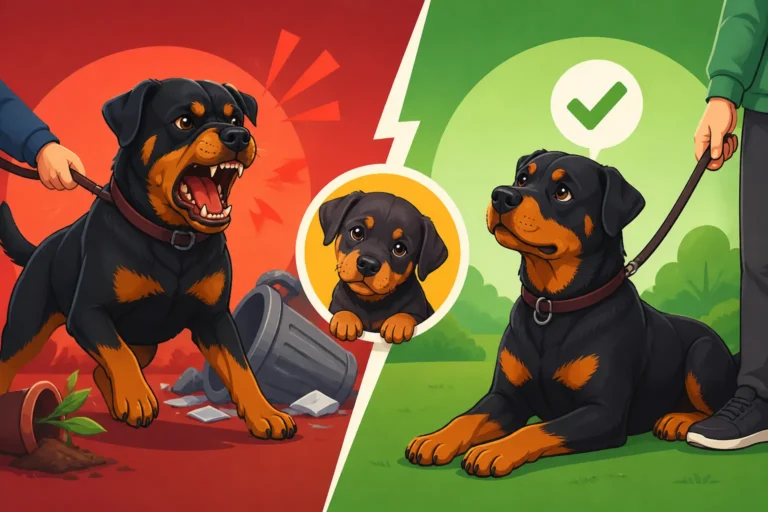
Starting early and doing it right is paramount for a Rottweiler. Proper socialization before they are 16 weeks old is critical. This means controlled, positive exposure to a wide variety of sights, sounds, people, and other calm, vaccinated dogs. The goal isn't to make them overly friendly with everyone, but to teach them that the world isn't a constant threat. A well-socialized Rottweiler learns to assess new stimuli without immediately defaulting to a protective or fearful response. They learn that unfamiliar doesn't necessarily mean dangerous. This foundational work helps them maintain their inherent calm while still being alert, allowing them to make better decisions in novel situations. Socializing a Rottweiler Puppy Properly offers a comprehensive guide on this crucial period.
Teaching a "Place" or "Settle" Command
A solid "place" or "settle" command is an invaluable tool for managing a Rottweiler's alertness, especially in a home environment with guests or during busy times. This command teaches your dog to go to a designated spot (like a mat or bed) and remain there calmly until released. It allows you to control the environment and give your Rottweiler a job to do that is less stressful than constantly monitoring people. It gives them a safe space to be observant without feeling the need to be actively involved. Practicing this in various scenarios, starting simple and gradually adding distractions, helps build their impulse control and reinforces their ability to be calm, even when alert. Consider resources like BAXTER & Bella's online puppy school, which often feature programs designed to teach these foundational commands through positive reinforcement.
Controlled Introductions and Observation Skills
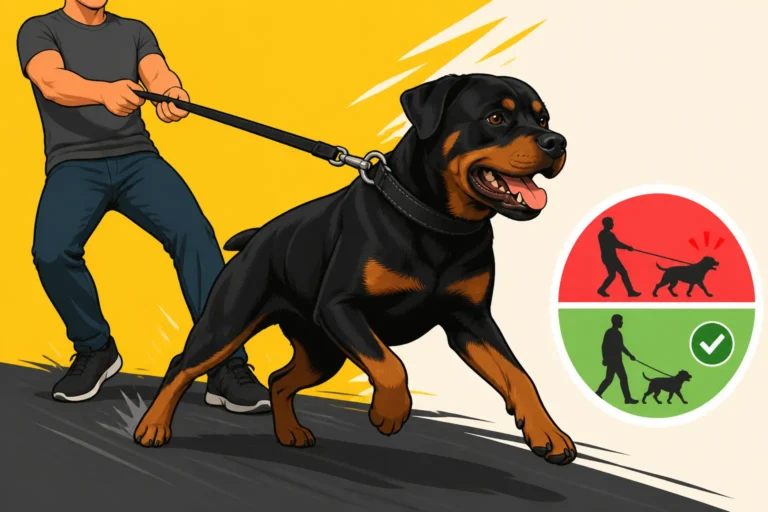
When introducing your Rottweiler to new people, dogs, or situations, always maintain control. Use a sturdy leash and harness (a front-clip harness or a head halter can be very effective for a large, strong dog). Allow them to observe from a distance first, giving them time to process before any direct interaction. Watch their subtle cues intently. If you see signs of heightened alertness – fixed gaze, body tension, subtle ear shifts – respect those signals. Don't force an interaction. Instead, create distance or change direction. Teach yourself to be a skilled observer of your own dog. The more you watch, the better you'll become at anticipating their needs and preventing uncomfortable situations. This is where you become your Rottweiler's advocate and guide.
Tools to Help Manage and Observe
Having the right tools can make a significant difference. A strong, reliable leash and harness are non-negotiable for a Rottweiler of any size. For puppies, a comfortable, well-fitting harness will help with early leash manners. As they grow, you might consider something like a durable front-clip harness or a head halter (like a Gentle Leader) for better control during walks, especially if they are strong pullers. For managing their environment at home, a sturdy crate is invaluable, not as punishment, but as a safe den. Remote cameras, easily found on Amazon, can also be useful for observing your Rottweiler's behavior when you're not actively present, helping you understand their patterns of alertness and relaxation. These tools facilitate management without suppressing their natural tendencies, allowing you to guide them safely.
| Cue/Behavior | Truly Relaxed Rottweiler | Calm But Alert Rottweiler |
|---|---|---|
| Eyes | Soft, often slightly squinted, gaze wanders | Fixed, intense stare, eyes wide, "whale eye" possible |
| Ears | Soft, relaxed, held loosely against head | Forward, slightly raised, rotating towards sounds |
| Head Carriage | Relaxed, slightly lowered or neutral | Upright, still, perhaps slightly raised |
| Body Musculature | Loose, fluid, soft to the touch | Still, but subtly taut, coiled, underlying tension |
| Stance/Weight | Evenly distributed, might lean or slouch | Rigid, upright, weight subtly shifted (forward/back) |
| Tail (Docked) | Still, hangs naturally, or soft, slow stump wag | Held slightly higher, stiff, short, rigid stump wags |
| Mouth/Face | Soft, sometimes open pant, no lip tension | Closed, tight lips, slight tension around muzzle, yawning |
| Overall Posture | Relaxed, ready to engage or rest | Still, statuesque, observing, ready to react |
Building Trust and Understanding Through Observation
Ultimately, effectively managing a Rottweiler's calm but alert nature comes down to building a deep level of trust and understanding. Your Rottweiler needs to know that you are a reliable leader who can assess situations and protect them, allowing them to relax more often. This requires consistent effort and a willingness to truly "listen" to what your dog is telling you.
Consistent Routine and Clear Boundaries
Rottweilers thrive on predictability. A consistent daily routine provides them with a sense of security, allowing them to relax into their role within the family. Knowing when they will eat, go out, and have dedicated training or play time helps reduce anxiety and the need for constant vigilance. Equally important are clear, consistent boundaries. What are the rules of the house? Who is allowed where? When are greetings permitted? When these are consistently reinforced, your Rottweiler understands their place and trusts that you will manage the unknowns. This stability allows their alert tendencies to be channeled appropriately, rather than becoming a source of stress or confusion.
Recognizing Individual Rottweiler Quirks
While there are general breed characteristics, every Rottweiler is an individual. One might be more sensitive to sound, another to unfamiliar people, and a third might have a higher prey drive. Spend time observing your specific dog's reactions in various scenarios. What are their unique "tells" when they shift from relaxed to alert? Do they always fixate on eyes? Do their ears twitch a certain way? Do they emit a particular The Rottweiler Grumble That Is Not a Growl that signals mild concern rather than aggression? The more you learn your dog's specific communication style, the better you can respond to their needs. This individual attention reinforces their trust in you as their primary interpreter and protector.
Seeking Professional Guidance When Needed
Don't hesitate to seek help from a qualified professional if you're struggling to understand your Rottweiler's signals or manage their reactions. A certified professional dog trainer or a veterinary behaviorist experienced with powerful guardian breeds can offer invaluable insights and practical strategies. They can help you identify subtle cues you might be missing, develop specific training plans for challenging situations, and provide guidance on socialization and behavior modification. This isn't a sign of failure; it's a responsible step towards ensuring your Rottweiler is a well-adjusted, safely managed member of your community. Finding a trainer who understands the breed's unique needs, as suggested in Finding a Rottweiler-Experienced Trainer Near You, is crucial. Their expertise can be the key to unlocking a deeper, more harmonious relationship with your calm, alert, and devoted Rottweiler.
Disclaimer
This article is for general informational purposes only and does not constitute professional advice. Laws, prices and regulations vary by location and change over time. Consult a qualified professional for guidance on your specific situation.