Rottweiler Tail Language After Docking
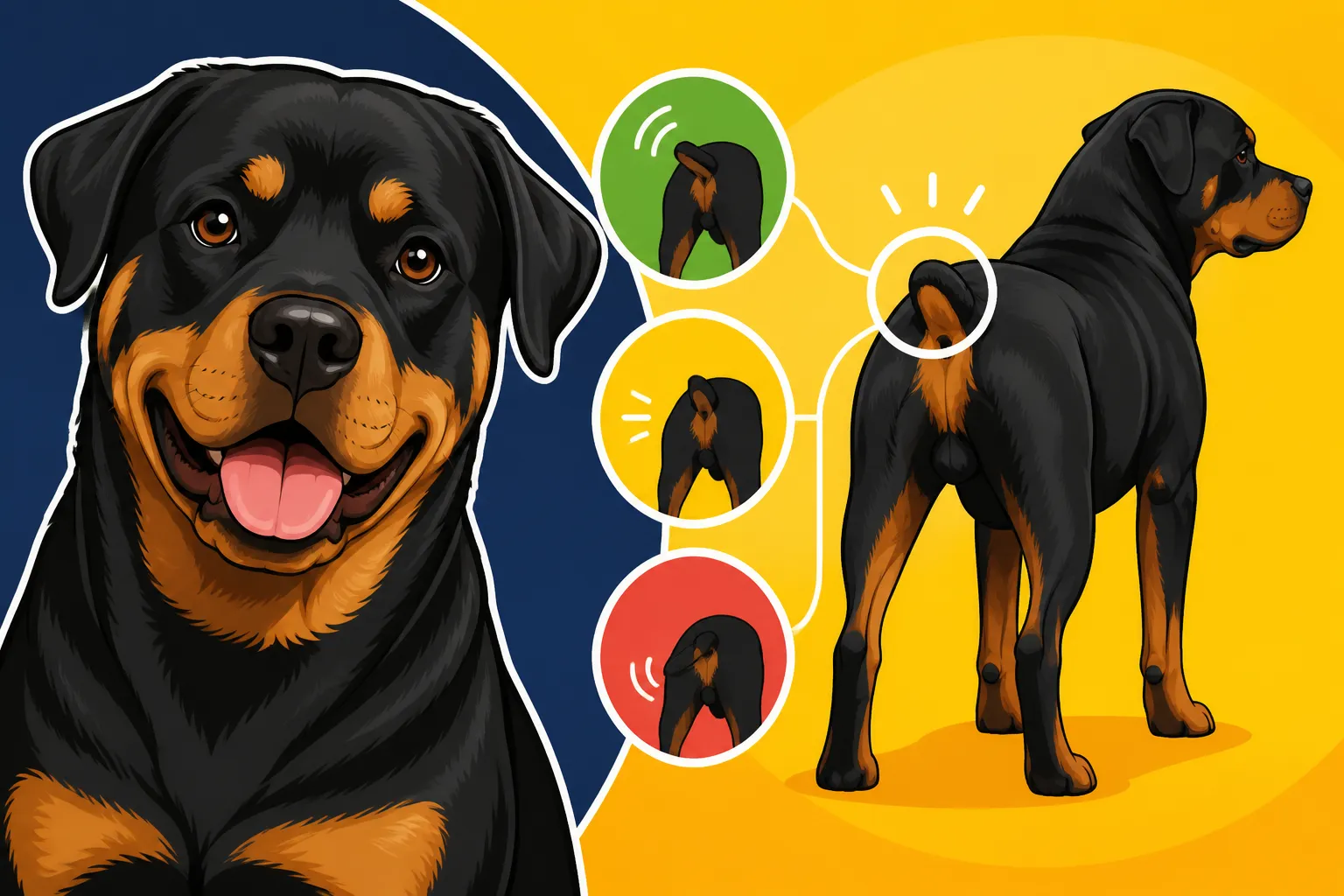
It's a common dilemma, isn't it? You love your Rottweiler fiercely, but when their tail is docked, it feels like you're missing a key piece of their communication puzzle. Many owners find themselves constantly wondering, "Is that a happy stance, or are they feeling anxious?" You're not alone in that frustration, and it's completely understandable to feel like you're playing charades with your best friend. This guide is here to help you navigate the nuanced world of Rottweiler body language when their tail isn't there to tell the full story, empowering you to understand your dog's moods and intentions more clearly than ever.
The Historical Context of Rottweiler Tail Docking
Before we dive into the nitty-gritty of reading your Rottweiler's communication signals, it's helpful to understand why tail docking became a tradition for the breed in the first place. This isn't just a stylistic choice; it's rooted deeply in their history as working dogs. However, like many traditions, it's also a practice that's evolved and changed significantly over time, leaving many modern owners with questions and a desire to connect with their dogs in every way possible.
Why Rottweilers Traditionally Had Docked Tails
Think back to the origins of the Rottweiler. They were the original "Metzgerhund," or "butcher's dog," originating from the town of Rottweil in Germany. Their primary job was driving cattle to market, protecting the herds from rustlers, and guarding the butcher's money satchel on the long journey home. Imagine a powerful, dedicated dog working in close quarters with large, often unpredictable livestock. A long, undocked tail could easily get stepped on, caught in gates, or injured in a scuffle with a cow or a thief. Such an injury could be debilitating for a working dog, leading to infection and putting them out of commission.
For these practical, working-dog reasons, tail docking became a standard practice. It was seen as a way to prevent injury and ensure the dog's longevity and effectiveness in its demanding role. This tradition was carried forward for generations, embedded in the breed standard by various kennel clubs, and became an expected characteristic of the Rottweiler's appearance. It was simply "what a Rottweiler looked like," a visual shorthand for its working heritage. This practical aspect of their history is fascinating when you consider The Rottweiler From Roman Cattle Drives to the AKC.
The Changing Landscape of Tail Docking Today
Fast forward to the modern era, and the world's perspective on animal welfare and cosmetic procedures has shifted dramatically. What was once a practical necessity for a working dog has become a controversial topic. Many countries, particularly across Europe and Australia, have outright banned cosmetic tail docking. This means that a Rottweiler born in Germany or the UK today will almost certainly have a full, natural tail, as the practice is illegal there unless medically necessary.
Even in regions where docking is still permitted, like parts of the United States, there's a growing movement among breeders and enthusiasts to preserve the natural tail. The American Kennel Club (AKC) still allows docked tails in the show ring, but you'll increasingly see stunning Rottweilers with full tails competing successfully. This shift means that while you might encounter an older Rottweiler or one from a region with different regulations that has a docked tail, future generations are much more likely to sport their magnificent natural tails. For owners, this evolution underscores the importance of being able to read all of a dog's body language, not just the tail.
Decoding Body Language Beyond the Tail
When you live with a Rottweiler whose tail is docked, it might initially feel like you're missing a vital piece of their communication. After all, a wagging tail is often the most obvious sign of a dog's happiness or excitement. However, Rottweilers are incredibly expressive creatures, and once you learn to look beyond the tail, a whole world of subtle (and not-so-subtle) cues opens up. It requires a bit more intentional observation, perhaps, but it’s a deeply rewarding skill that strengthens your bond and understanding.
The Importance of the Entire Body
Think of your Rottweiler's body as a complete orchestra, where the tail might be the conductor's baton, but every instrument plays a crucial role in the symphony. Without the baton, you still have the full sound, you just need to listen more carefully to the individual instruments and how they interact. The truth is, the tail is only one part of a dog's overall communication system. Their eyes, ears, mouth, posture, weight distribution, and even the hair on their back all contribute to the message they're sending.
For Rottweilers, in particular, this holistic reading is vital. They are naturally self-assured and can appear quite serious or "aloof" to strangers. Their body language is often more subtle than, say, a golden retriever's. This is why it’s imperative to learn to read the whole picture, especially when a key component like the tail is absent. It validates your feeling that it requires more effort – it does! – but it’s absolutely possible to become fluent in your Rottie's non-verbal language. Just like understanding Rottweiler Aloofness and Why It Reads as Cold, you learn to see the nuanced expressions that hint at deeper feelings.
Reading the Rottweiler's Eyes and Ears
Your Rottweiler's eyes are truly windows to their soul, offering a wealth of information about their emotional state. A soft, slightly squinted gaze, often accompanied by blinking, usually indicates a relaxed, happy, and trusting dog. If their eyes are wide and round, with a hard stare, it can signal alertness, arousal, or even a challenge. Darting eyes, combined with a slightly averted head, might mean they're feeling nervous, unsure, or trying to avoid confrontation. When you see the whites of their eyes, sometimes referred to as "whale eye" (though it's usually less pronounced in a dark-eyed Rottweiler), it's a definite stress signal, indicating discomfort or fear. Understanding this is key to recognizing Rottweiler Whale Eye and Other Warning Signs.
The ears, too, are powerful communicators, even under that characteristic heavy flap. When your Rottweiler's ears are relaxed, they'll often be held naturally, framing their face. If they perk up and rotate forward, it shows intense focus and alertness – they're listening and assessing. Conversely, ears that are flattened tightly back against the head can indicate fear, submission, or anxiety. Sometimes, one ear might be forward and the other slightly back, suggesting a curious but cautious assessment of a situation. Paying attention to these subtle ear movements, as described in the breed standard for Rottweiler Ear Set and How They Are Carried, will greatly enhance your understanding.
Understanding Facial Expressions and Mouth Posture
Beyond the eyes and ears, the entire facial area, especially the mouth, provides critical clues. A relaxed Rottweiler will often have a soft, slightly open mouth, perhaps even a gentle "smile" with the corners pulled back, or be panting with a loose tongue if they're warm or excited. A tightly closed mouth with lips pulled back so you can see the teeth (but not necessarily a snarl) can be a sign of tension, stress, or discomfort. Lip licking, especially when no food is present, is a common calming signal or stress indicator. Frequent yawning, outside of being sleepy, can also signal stress or anxiety.
Don't forget the whiskers, either; while not as dramatic as some breeds, they can subtly flare when a Rottweiler is highly alert or curious. And of course, there's the incredibly clear signal of piloerection – when the hair along their spine (often from the shoulders down to the rump) stands on end. This isn't always a sign of aggression; it simply indicates arousal, which can stem from fear, excitement, or a strong protective instinct. If you see hackles up, it means your dog is highly aware and processing something significant, and you need to pay close attention to the rest of their body.
Torso, Stance, and Movement as Communication Cues
While the tail is often the star of the show for many dog owners, when it's docked, the rest of your Rottweiler's robust physique takes center stage in communication. Their entire body, from the way they stand to how they move, offers a rich tapestry of signals that can tell you everything from their level of confidence to their readiness to play. Learning to interpret these larger body signals is crucial for truly understanding your Rottie.
The Power of Stance and Weight Distribution
A Rottweiler's stance alone can speak volumes. When a Rottweiler is relaxed and comfortable, their weight will be evenly distributed, their muscles will appear soft, and their posture will be loose and fluid. They might stand in a balanced, ready-to-move way, but without any tension. However, if they become alert or feel threatened, you'll see a shift. Their weight might subtly move forward, their legs could stiffen, and their body might appear more rigid, coiled and ready to act. This is often accompanied by a focused stare and possibly even a slight lowering of the head, almost like they're bracing themselves.
Conversely, a fearful or submissive Rottweiler will try to make themselves appear smaller. They might shift their weight backward, lower their entire body, or even crouch down close to the ground. Their head might be lowered, and their gaze averted. This "cowering" posture is an attempt to de-escalate a situation or signal that they are not a threat. Then there's the unmistakable play bow: front legs extended and lowered, rear end high in the air, often with some playful bouncing. This is a clear invitation to engage in fun and frolic. You might also notice their habit of Rottweiler Leaning and Body Blocking when they feel particularly affectionate and trusting, which is a big, physical sign of their bond with you.
Interpreting Movement and Speed
The way your Rottweiler moves through space is another huge indicator of their mood. Loose, bouncy, and exaggerated movements are classic signs of happiness and playfulness. A dog bounding around with an open mouth and relaxed muscles is a dog enjoying life. On the other hand, slow, deliberate, or stiff movements can signal caution, uncertainty, or even a defensive posture. If your Rottweiler moves with stiff legs or a slightly hunched back, it could indicate discomfort, pain, or anxiety about a situation.
One of the most critical movement cues is "freezing." This is when a dog suddenly stops all movement, becoming completely still and often holding its breath. This is a sign of intense focus and can mean they are highly uncomfortable, assessing a potential threat, or preparing to react. When a dog freezes, it's a clear signal that you need to intervene and assess the situation immediately. This is closely related to Reading a Still Rottweiler That Is Not Relaxed, where outward stillness belies inner tension. Additionally, avoidance behaviors, like turning their head or entire body away, trying to walk in a wide arc, or simply trying to increase distance from something, are strong signs that your Rottweiler is uncomfortable and wants to disengage.
Vocalizations as Part of the Language
While not strictly "body" language, vocalizations are inextricably linked to physical cues and offer invaluable insight, especially when visual signals are less clear. Your Rottweiler's barks, growls, and whines are all part of their communication repertoire.
Growls, for instance, are often misunderstood. While they can certainly be a warning of aggression, they are also used during play, as a sign of frustration, or even as a low, rumbling protest when you stop petting them. It's vital to learn the context of the growl and never punish it outright, as this removes a crucial warning signal. As detailed in Why You Should Never Punish a Rottweiler Growl, silencing a growl doesn't remove the underlying emotion.
Barks can be sharp and urgent (alerting you to something), repetitive and playful (inviting interaction), or distressed and high-pitched (seeking attention or expressing fear). Whines typically communicate a need or desire – perhaps they need to go out, want a toy, or are feeling anxious.
And then there's the famous "Rottie grumble," a unique, low, rumbling sound that many Rottweiler owners adore. This isn't a growl of aggression but often a sound of deep contentment, mild complaint about being disturbed, or an expression of pure joy during a good scratch. It's a special sound, as explored in The Rottweiler Grumble That Is Not a Growl, and knowing its meaning strengthens your bond with your dog.
Practical Tips for Reading Your Docked Rottweiler
You've learned to look at all the pieces of the puzzle; now it's time to put it into practice. Reading a docked Rottweiler effectively isn't just about knowing what each individual signal means, but how they combine and change in different situations. It's an ongoing process of observation, learning, and developing a deeper connection with your dog.
Observe in Different Contexts
The best way to become fluent in your Rottweiler's body language is to observe them in a wide variety of situations. Watch them when they are:
- Alone and relaxed: What does their neutral, happy resting state look like?
- Interacting with family members: How do they greet different people? Do they use Rottweiler Leaning and Body Blocking as a sign of affection?
- Meeting strangers: Do they approach with a loose body and soft eyes, or are they more stiff and watchful? Remember their tendency for Rottweiler Aloofness and Why It Reads as Cold.
- Playing with other dogs: Are their movements fluid and exaggerated (playful), or stiff and hesitant (nervous)?
- Encountering new objects or sounds: Do their ears perk up, do they freeze, or do they try to create distance?
Consider keeping a mental (or even written) journal. For example, "When the delivery driver comes, Fido's ears go forward, his body stiffens slightly, and his mouth closes tight, but his eyes stay soft – he's alert but not upset." Or, "When I get his leash, he does a little play bow, wiggles his butt intensely, and has a loose, open mouth – he's super excited!" The more you intentionally observe and correlate these full-body signals to the known context, the better you'll become at predicting and understanding their mood.
Use Training and Engagement
A well-trained dog is often a more confident dog, and confidence can lead to clearer communication. Early and consistent socialization and positive reinforcement training are absolutely critical for all Rottweilers, but especially those whose tail might offer fewer overt cues. Socializing a Rottweiler Puppy Properly ensures they are exposed to a variety of sights, sounds, and experiences in a positive way, helping them develop into well-adjusted adults who are less likely to be fearful or anxious.
Ongoing training, like the kind offered by programs such as BAXTER & Bella, provides structure and a shared language between you and your dog. When your Rottweiler understands commands and trusts your guidance, they are often less stressed in new situations, making their overall body language more transparent. Furthermore, engagement with puzzle toys or structured play can fulfill their mental needs, leading to a calmer, more communicative dog. You can find a huge variety of training tools, puzzle feeders, and books on canine body language on platforms like Amazon, which can further aid your understanding and training efforts. Consistency in training, particularly during formative periods like those outlined in Rottweiler Puppy Training Through the First Year, sets the foundation for excellent communication.
Recognizing Stress Signals
Perhaps the most important aspect of reading a docked Rottweiler is being hyper-aware of subtle stress signals. Without a clear "tail tucked" indicator, you need to rely on other cues that your dog is feeling uncomfortable, fearful, or anxious. Missing these can lead to misunderstandings and potentially escalate situations.
Here's a table to help you identify common stress signals in a Rottweiler, comparing them to what a wagging tail might obscure:
| Typical Undocked Tail Cue (If Present) | Docked Tail Equivalent / Other Key Cues | Meaning |
|---|---|---|
| High, loose, fast wag | Loose, bouncy body; wiggly rump; soft, relaxed eyes; open, relaxed mouth; soft grumbles (The Rottweiler Grumble That Is Not a Growl) | Happy, excited, playful, content |
| Low, slow wag or tucked slightly | Low body posture; averted gaze; slight crouch; repeated yawning or lip licking (displacement behaviors); ears slightly back | Nervous, unsure, mildly submissive, cautious |
| Tail tucked tight against belly | Body crouching low; ears flattened back; wide, darting eyes (whale eye); frequent lip licking; excessive panting when not hot/exercising; trembling; trying to hide | Fearful, stressed, anxious, uncomfortable, submissive |
| Stiff, erect tail | Stiff body, weight shifted forward; focused, hard stare; piloerection (hackles up); tight mouth, lips pulled back; stillness/freezing (Reading a Still Rottweiler That Is Not Not Relaxed) | Alert, aroused, potentially defensive, highly focused, assessing threat |
| Play bow, tail wagging | Play bow (front down, rear up); bouncy movements; soft, open mouth; often a "play face" (wrinkled nose, slight grin) | Inviting play, friendly, energetic |
| Fast, frantic wag (over-aroused) | Frantic, bouncy movements; high-pitched barks or whines; difficulty settling; pupils dilated; intense focus | Over-excited, over-aroused, may be difficult to control |
Remember that these signals rarely appear in isolation. A dog that is lip licking and yawning and has their ears back and is trying to avert their gaze is much more stressed than a dog just performing one of those actions briefly. Learning to piece together these subtle cues is paramount. Being vigilant about recognizing these signs will allow you to intervene, remove your dog from an uncomfortable situation, or offer reassurance before their stress escalates.
Reading your Rottweiler's body language when they have a docked tail might feel like learning a new dialect, but it's a dialect you can absolutely master. By focusing on their entire body – their eyes, ears, mouth, posture, and movement – and understanding the context of their vocalizations, you'll gain an incredibly rich understanding of their inner world. This dedicated observation not only helps you interpret their moods but deepens the powerful, unspoken bond you share. Your Rottweiler is communicating constantly; it's simply a matter of learning to listen with your eyes.
Disclaimer
This article is for general informational purposes only and does not constitute professional advice. Laws, prices and regulations vary by location and change over time. Consult a qualified professional for guidance on your specific situation.