Why a Rottweiler Does Not Greet Everyone
It's a common scenario: you're out with your magnificent Rottweiler, perhaps on a leash at a park or during a quiet walk, and someone approaches, eager to pet your beautiful dog. They reach out, expecting a wagging tail and an enthusiastic greeting, only to be met with a calm, sometimes seemingly indifferent, stare. This lack of immediate exuberance can feel a bit awkward, even making you wonder if your Rottweiler is "unfriendly" or "antisocial." But the truth is, a Rottweiler's reserved nature, especially towards strangers, is often a perfectly normal and characteristic trait, deeply rooted in their history and temperament. This guide will explore exactly why your Rottweiler might not greet everyone with open paws and how to understand, manage, and appreciate this unique aspect of their personality.
Understanding the Rottweiler's Core Temperament
To truly grasp why your Rottweiler isn't bounding up to every passerby, we need to delve into the very essence of what makes a Rottweiler a Rottweiler. Their temperament isn't an accident; it's a carefully cultivated set of traits that served a specific purpose for centuries.
A History of Purposeful Aloofness
The Rottweiler's story begins in ancient Rome, where their ancestors were robust drover dogs, accompanying legions across Europe. They were bred to move and guard cattle, and later, in the German town of Rottweil, they became the revered "Metzgerhund" or "butcher's dog." Their job wasn't to make friends with every person or animal they encountered. Quite the opposite. They needed to be discerning, watchful, and protective of their charges – whether that was a herd of cattle, a butcher's wagon full of meat, or his hard-earned cash.
This history instilled in them a self-assuredness and a natural tendency to observe rather than immediately engage. They weren't bred for indiscriminate friendliness like some companion breeds. Instead, they were valued for their steadfast loyalty to their family and their protective instincts. A good Rottweiler was calm, confident, and reliable, but also capable of assessing a situation and acting if a threat emerged. This meant they had to be selective about who they deemed trustworthy, and that meant not greeting everyone like a long-lost friend. Their ancestors knew that a quick judgment could mean the difference between keeping their herd safe and losing it. For a deeper dive into their origins, check out The Rottweiler From Roman Cattle Drives to the AKC.
The "Wait and See" Approach
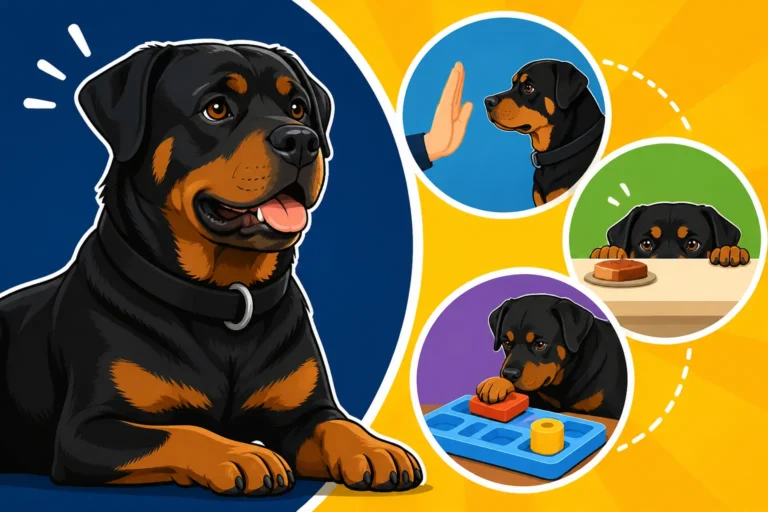
One of the most defining characteristics of the Rottweiler temperament, and one that often leads to misunderstandings, is their "wait and see" approach to new people and situations. When a stranger approaches, a Rottweiler typically won't rush in for pats and hellos. Instead, they'll often stand or sit calmly, observing the person with an almost regal stillness. Their body might be relaxed, but their mind is actively working, taking in scent, body language, and tone of voice.
This isn't shyness or fear, nor is it necessarily aggression. It's a highly intelligent form of assessment. They are sizing up the individual, deciding if they pose any threat, if they are neutral, or if they might be a welcome addition to their immediate circle (though this is rare with true strangers). This behavior is part of their inherent protective nature; they don't give their trust or affection away cheaply. Once they decide someone is non-threatening, they might ignore them completely, or perhaps offer a soft nudge or a brief head rub – but never with the effusive, full-body wiggles you might see from a Labrador or a Golden Retriever. Understanding The Rottweiler Wait-and-See Response Explained can help owners manage these interactions more gracefully. This measured response is actually a sign of a well-balanced Rottweiler, not an unfriendly one. They are simply doing what comes naturally to them: evaluating their environment and the people in it.
Instincts Over Impressions: Why Your Rottweiler Isn't a Social Butterfly
It's easy to anthropomorphize our dogs and expect them to behave like polite humans, but a Rottweiler's behavior is guided by deep-seated instincts that prioritize security and discernment above all else.
The Guarding Instinct
At the heart of the Rottweiler's reserved nature is their powerful guarding instinct. For generations, their job was to protect. This wasn't about being aggressive, but about being vigilant and capable. This instinct manifests today as a natural wariness towards anything new or unfamiliar, especially people entering their perceived territory or approaching their family. When someone new approaches, their brain isn't thinking, "Oh, a new friend!" It's thinking, "Who is this, what are their intentions, and do they belong here?"
This doesn't mean your Rottweiler is constantly on high alert, ready to defend. Rather, it means their baseline setting is one of quiet observation. They are constantly scanning their environment, assessing potential threats or anomalies. This quiet vigilance is often mistaken for unfriendliness or even aggression, but in most cases, it's simply a Rottweiler doing what it was historically bred to do: guard. They don't need to bark or growl to do it effectively; often, their imposing presence and quiet watchfulness are enough. Shaping this instinct appropriately from a young age is crucial, as discussed in The Rottweiler Guarding Instinct and How to Shape It.
Limited Social Repertoire with Strangers
Unlike some breeds that have an expansive "social repertoire" for interacting with a wide variety of people, Rottweilers typically reserve their overt affection, excitement, and playful antics for their immediate family. This isn't to say they can't be charming or even silly with those they trust deeply; anyone who lives with a Rottweiler knows their goofy, loving side. But with strangers, their interactions are usually minimal and functional.
They might allow a quick pat on the head, but they're unlikely to solicit prolonged attention. They won't usually jump up, offer kisses, or lean into strangers looking for affection. Their idea of a successful interaction with an unfamiliar person is often one where the stranger respects their space, and they are allowed to quietly observe without being forced into an interaction they don't desire. This reserved demeanor can sometimes be a relief, actually, preventing accidental knocks or slobbery greetings that some people might find overwhelming. It's about quality over quantity when it comes to social engagement for a Rottweiler. They choose their circle carefully, and once you're in it, you're in for life.
Misinterpretations and Management
Understanding why your Rottweiler behaves this way is the first step. The next is learning how to navigate public interactions and manage common misinterpretations.
Why People Misunderstand Rottweiler Behavior
One of the biggest hurdles Rottweiler owners face is managing public perception. Many people expect all dogs to be universally friendly and outwardly happy to greet everyone. When a large, powerful-looking dog like a Rottweiler doesn't fit this mold, it can immediately lead to assumptions of aggression or ill-temperament. People might see the reserved posture and lack of a wagging tail as a sign of danger, rather than simply a reflection of the breed's natural disposition. This is particularly challenging given the unfair stereotypes that sometimes plague the breed.
A calm, quiet Rottweiler is not only normal but often indicative of a well-trained and stable individual. They aren't trying to be rude; they're simply being true to their nature. It's important for owners to confidently explain that their dog is simply discerning or prefers not to be petted, rather than allowing their dog's natural behavior to be misconstrued. Learning to recognize the subtle cues your Rottweiler gives, and understanding that a still, watchful dog might actually be a calm one, not an aggressive one, is key to this. Sometimes, what looks like aloofness is actually a relaxed state of observation, as detailed in Reading a Calm Rottweiler That Is Actually Alert.
Setting Your Rottweiler Up for Success in Public
Managing public interactions with a reserved Rottweiler requires proactive effort and clear communication, both with your dog and with strangers. The goal is not to force your Rottweiler into being outgoing, but to ensure they feel safe and comfortable while maintaining polite boundaries.
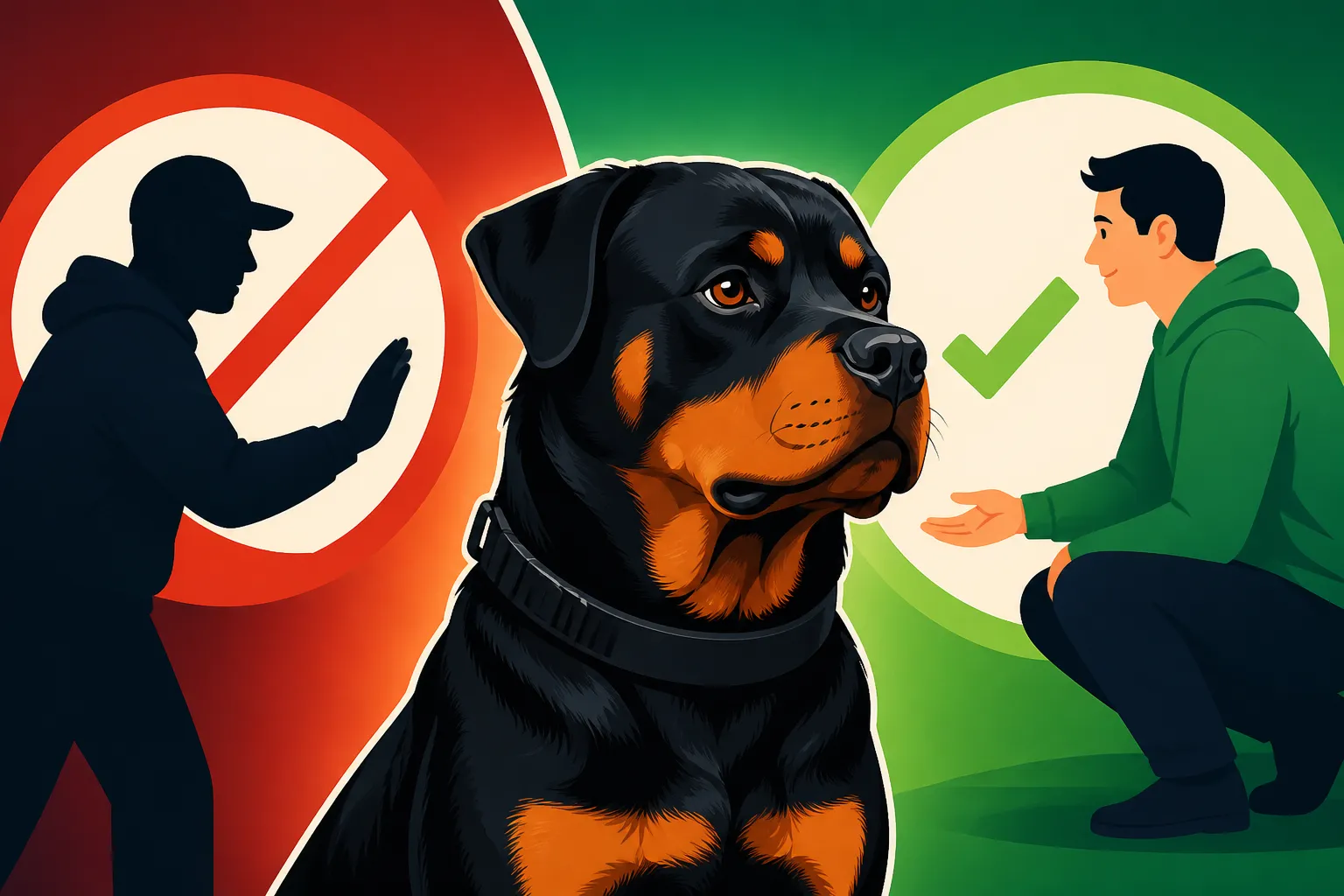
Firstly, always be an advocate for your dog. If someone asks to pet your Rottweiler, it's perfectly acceptable to politely decline, stating, "He's not really a greet-everyone kind of dog," or "She prefers her space." Don't feel pressured to allow interactions that make your dog uncomfortable. Secondly, control the environment as much as possible. Keep your Rottweiler on a secure leash and harness in public, giving you control over their movement and preventing unwanted approaches from well-meaning but oblivious strangers. There are many robust harnesses designed for large, powerful dogs that you can find on platforms like Amazon, providing excellent control without discomfort. Having your dog walk calmly by your side, even if not engaging with others, projects an image of a well-controlled animal. Using a comfortable, well-fitting harness can make a huge difference, as explored in Harnesses and Head Halters Sized for a Rottweiler. Finally, reward your Rottweiler for simply being calm and neutral in the presence of strangers. This teaches them that calm observation is the desired behavior, not stress or an attempt to engage.
Here’s a simple table to help differentiate typical Rottweiler greeting behavior from a more common, universally friendly dog:
| Behavior Trait | Universally Friendly Dog (e.g., Labrador) | Typical Rottweiler (Aloof/Reserved) |
|---|---|---|
| Initial Approach | Rushes, wags tail vigorously, seeks attention | Observes from a distance, calm body language |
| Eye Contact | Eager, direct, seeking engagement | Direct, steady, assessing, less eager |
| Physical Contact | Leans in, nudges, seeks pets/scratches | Tolerates brief pats, may move away if prolonged |
| Vocalizations | Excited yips, barks, happy panting | Quiet, may offer a low "ruff" or grumble (not aggressive) |
| Tail Wag | High, broad, constant wag | Low, subtle wag (if at all), often still |
| Response to Strangers | Generally enthusiastic, seeks interaction | Reserved, neutral, typically ignores unless engaged by owner |
Training and Socialization Strategies
While you can't fundamentally change a Rottweiler's inherent temperament, you can certainly guide and shape their behavior through proper training and socialization, ensuring they are confident and well-adjusted, even if they're not overtly friendly.
Early and Ongoing Socialization
Socialization is absolutely crucial for a Rottweiler, but it often needs to be reframed for this breed. For a Rottweiler, socialization isn't about making them love every person they meet; it's about teaching them to be confident, comfortable, and neutral in a wide variety of environments and around different types of people, sounds, and experiences. The goal is to prevent fear-based reactions, which can lead to aggression, not to turn them into a social butterfly.
This means providing positive, controlled exposures to many different sights, sounds, smells, and people from a young age. Think about introducing them to people of all ages, sizes, and appearances (wearing hats, glasses, uniforms, etc.), but always on their terms. Allow them to observe from a safe distance, rewarding calm behavior. Never force interactions or allow strangers to rush your puppy. Focus on building their confidence in new situations so they don't feel the need to be overly reactive or defensive. A well-socialized Rottweiler understands that most strangers are not a threat, even if they aren't going to be best friends. The foundational period for this is vital, as highlighted in Rottweiler Socialization Before Sixteen Weeks. Ongoing, positive exposure throughout their lives reinforces these lessons.
Reinforcing Desired Behavior
Positive reinforcement is your best friend when training a Rottweiler to be calm and respectful in public, regardless of how many strangers are around. When your Rottweiler encounters a new person and remains calm, quiet, and observant – even if they don't engage – that's a huge win! Mark that moment with a clicker or a verbal marker like "yes!" and immediately reward them with a high-value treat or praise. You can carry a treat pouch for easy access to rewards; many practical options are available on platforms like Amazon.
The key is to reward the absence of unwanted behavior (like barking, lunging, or excessive excitement) and the presence of calm, neutral behavior. This teaches your Rottweiler that the best way to handle strangers is to simply exist peacefully alongside them. If you're looking for structured guidance on this, online training resources like BAXTER & Bella offer comprehensive puppy and dog training programs that can help you implement these positive reinforcement techniques effectively, guiding you through different scenarios and how to reward the right responses from your Rottweiler. Building on Rottweiler Puppy Training Through the First Year with these positive interactions will foster a well-adjusted adult.
When "Aloof" Becomes "Concerning"
While a reserved demeanor is normal for a Rottweiler, it's crucial for owners to distinguish between natural aloofness and behaviors that might signal underlying fear, anxiety, or true aggression.
Distinguishing Normal Aloofness from Fear or Aggression
A normally aloof Rottweiler will typically appear calm and collected, even if they're not engaging. Their body language will be relaxed – a soft gaze, an unwrinkled brow, a neutral tail carriage (or a very subtle low wag). They might turn their head away slightly, but their overall posture won't be tense or frozen. They might choose to ignore the stranger entirely. This is a dog that is comfortable with its boundaries.
However, if your Rottweiler's "aloofness" is accompanied by other signs, it might be something more concerning. Look for subtle indicators of discomfort: a stiff or rigid body, a low tail tucked between the legs, lip licking, yawning, excessive panting when not hot, turning their head sharply away, or avoiding eye contact. More overt signs of fear or anxiety can include trembling, cowering, trying to hide behind you, or attempting to flee. Aggression, on the other hand, might show as a hard stare, tense body, growling, snarling, snapping, or lunging. It's critical to know your dog's baseline behavior so you can spot deviations. Understanding signals like Rottweiler Whale Eye and Other Warning Signs can be incredibly helpful in this assessment. Never dismiss these signs as simply "being a Rottweiler"; they warrant closer investigation.
Seeking Professional Help
If you observe any signs that your Rottweiler's reserved behavior is tipping into fear, anxiety, or aggression, it's time to seek professional help. Do not try to "fix" aggression on your own, especially with a powerful breed like a Rottweiler. An untrained or inexperienced person attempting to correct these behaviors can inadvertently make them worse, or even put themselves or others at risk.
The first step is often to consult your veterinarian to rule out any underlying medical conditions that could be contributing to behavioral changes. Pain, thyroid issues, or neurological problems can all manifest as behavioral shifts, including increased irritability or fear. After a clean bill of health, seek out a certified professional dog trainer or a veterinary behaviorist who has experience with large guardian breeds like Rottweilers. They can help you accurately assess your dog's behavior, identify triggers, and develop a safe and effective management and modification plan using positive reinforcement techniques. Early intervention is key. Remember, Rottweiler Behavior Changes That Mean Pain are a real possibility and shouldn't be overlooked. A professional can provide the guidance needed to help your Rottweiler feel more comfortable and confident in the world.
Disclaimer
This article is for general informational purposes only and does not constitute professional advice. Laws, prices and regulations vary by location and change over time. Consult a qualified professional for guidance on your specific situation.