Rottweiler Carting and Draft Work
For many Rottweiler owners, the image of their powerful, loyal companion is often limited to a furry family member lounging on the couch or enjoying a walk in the park. But beneath that calm exterior lies a deep-seated instinct for work, a heritage stretching back centuries. If you've ever wondered how to tap into that incredible drive and provide enriching, purposeful activity for your Rottweiler, then exploring the world of carting and draft work might just be your answer. This comprehensive guide will walk you through the history, the how-to, and the immense rewards of engaging your Rottweiler in this truly unique and fulfilling discipline.
Understanding the Rottweiler's Working Heritage
Before we dive into the nuts and bolts of hitching up a wagon, it's really important to understand why Rottweilers are so well-suited for draft work. It's not just about their size; it's etched into their very DNA, a part of their purpose for centuries. When you connect with this historical context, your approach to training and your appreciation for your dog's capabilities will deepen considerably.
From Drover to Draft Dog: The Historical Role
Imagine ancient Rome, where powerful dogs accompanied legions, driving cattle to feed the empire's armies. These were the ancestors of our modern Rottweilers, hardy drover dogs that eventually made their way to Germany. The town of Rottweil, nestled in the heart of Germany, became a bustling cattle market, and it was here that these dogs truly found their calling and earned their enduring name: "Rottweiler Metzgerhund," or "butcher's dog of Rottweil."
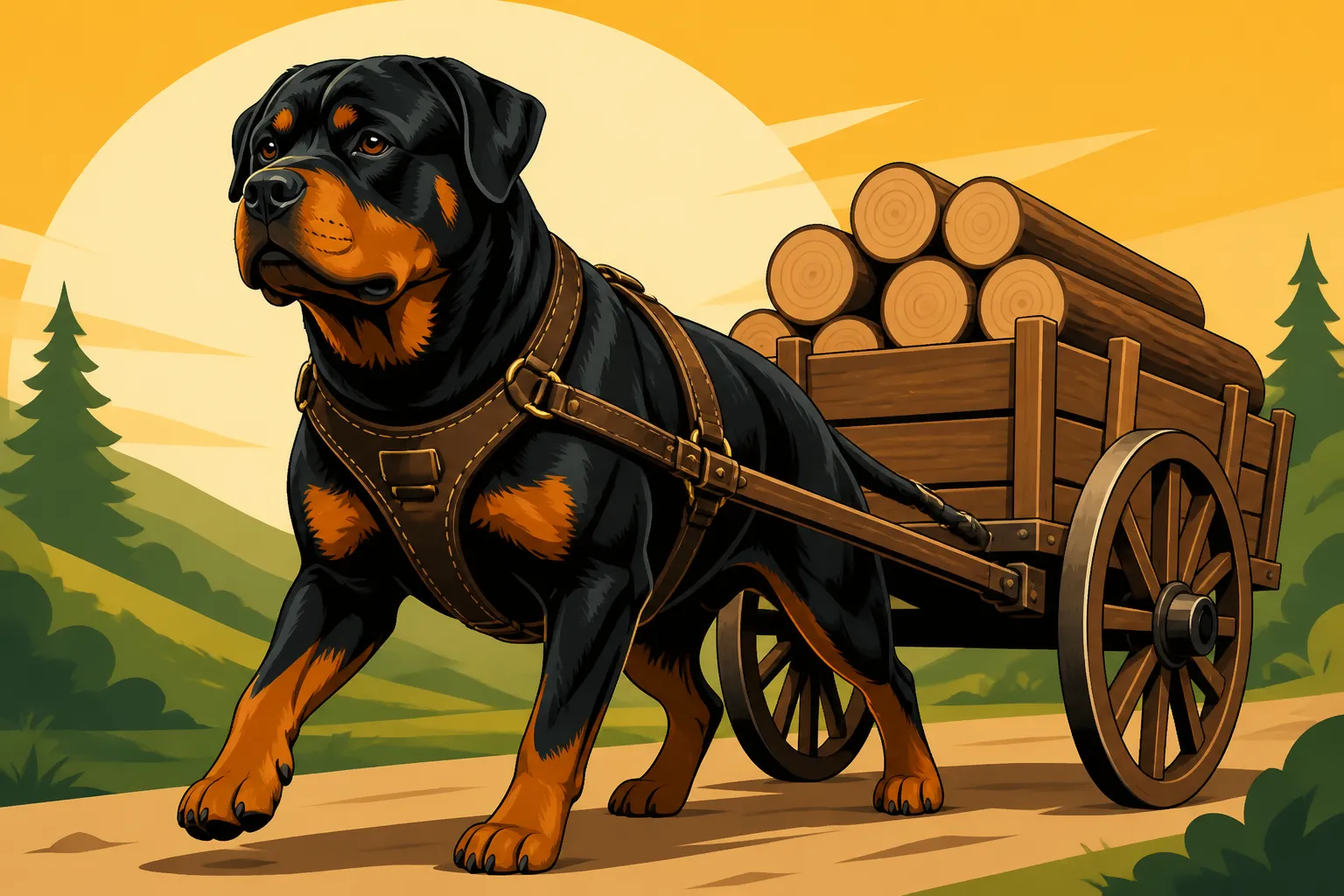
These weren't just guardians; they were working partners. Butchers relied on them not only to drive cattle to market but also to pull heavy carts laden with meat. Picture a strong, confident Rottweiler navigating crowded market streets, pulling a cart, with the day's takings sometimes even tied around its neck for safekeeping. They were trusted, capable, and indispensable. This history of pulling is not just anecdotal; it's well-documented, showing a clear lineage of these dogs performing Rottweilers Pulling Meat Carts Through Town. Understanding The Roman Drover Dogs Behind the Rottweiler gives us a glimpse into the raw power and intelligence that has been carefully cultivated in the breed for generations. This wasn't a casual task; it required immense strength, unwavering focus, and a willingness to work collaboratively with their human partners.
The Physical and Mental Aptitude for Work
A quick glance at a well-bred Rottweiler reveals a powerful, muscular physique, a deep chest, and strong bones. These physical traits aren't just for show; they are built for strenuous activity, for enduring long days of work. Their compact, sturdy build provides a low center of gravity, which is advantageous for pulling. But it's not just brute strength that makes them excel. Rottweilers possess a remarkable combination of intelligence, a strong desire to please, and that characteristic calm, self-assured temperament.
This mental fortitude is absolutely crucial for draft work. A Rottweiler isn't easily flustered by new sights or sounds, and their innate confidence allows them to focus on the task at hand. While they might display Rottweiler Aloofness and Why It Reads as Cold with strangers, this trait often translates into a dedicated focus when working with their trusted human. They thrive on having a purpose, a job to do, which channels their powerful energy into constructive activities. Without adequate mental and physical outlets, a Rottweiler, like any intelligent working dog, can become bored, frustrated, and even destructive. Draft work offers a fantastic way to fulfill that intrinsic need for meaningful engagement, transforming their natural capabilities into a rewarding partnership.
Getting Started with Rottweiler Carting and Draft Work
So, you're excited to harness your Rottweiler's heritage and get them pulling? That's fantastic! But jumping right in can be overwhelming for both of you. Like any new skill, it requires the right tools and a patient, step-by-step approach. Rushing things is a recipe for frustration, not success, so let's break down how to properly begin this journey.
Essential Equipment and How to Choose It
Getting the right gear is non-negotiable for safety and comfort. You wouldn't run a marathon in flip-flops, and your Rottweiler shouldn't attempt draft work in an ill-fitting harness.
- The Draft Harness: This is the most critical piece of equipment. Forget those standard walking harnesses you might find; they are simply not designed to distribute weight properly. A good draft harness is heavily padded and designed to pull from the chest and shoulders, allowing the dog's rear legs to drive forward efficiently. It must be custom-fitted or adjustable to fit your Rottweiler perfectly. Look for wide straps, ample padding, and durable, heavy-duty hardware. You'll often find options from specialized draft dog equipment suppliers. You can explore a variety of well-reviewed options on platforms like Amazon, but always prioritize fit and function over price.
- The Cart or Wagon: For beginners, start with a lightweight two-wheel cart or even a simple plastic wagon. The goal isn't to pull maximum weight initially, but to get your dog comfortable with the sensation of pulling something behind them. As your dog progresses, you can move to more robust two-wheel or four-wheel carts designed for heavier loads. Consider materials like wood, metal, or durable plastic, and ensure the wheels are appropriate for the terrain you'll be training on.
- Shafts/Lines: These are the connecting pieces between the harness and the cart. Shafts typically run along the dog's sides, while lines attach to a spreader bar behind the dog. They must be strong and of the correct length to allow natural movement without rubbing or inhibiting the dog's stride.
Here's a quick look at key equipment considerations:
| Equipment Type | Key Features to Look For | Why It Matters |
|---|---|---|
| Harness | Padded, broad chest plate, adjustable, heavy-duty buckles | Distributes weight evenly, prevents injury, comfortable |
| Cart/Wagon | Lightweight for beginners, sturdy wheels, appropriate size | Easy to maneuver, safe, allows gradual progression of weight |
| Shafts/Lines | Durable material, correct length, secure attachment points | Connects dog to cart safely, allows natural gait |
| Leash/Lead | Strong, non-restrictive, often a longer line for control | Handler control, communication, safety |
| Treats | High-value, small, easily digestible | Positive reinforcement, motivation for learning |
Foundation Training: Building Strength and Confidence
You wouldn't ask your Rottweiler to run a marathon without building up their endurance, right? The same goes for draft work. It's a gradual process, focusing on building both physical strength and confidence. Remember, patience is key here, especially for a powerful breed like the Rottweiler. Don't push too fast, or you risk turning your dog off the activity entirely.
- Obedience is Paramount: Before even thinking about a harness, your Rottweiler needs solid obedience skills. Commands like "stay," "wait," "halt," "come," and "forward" are not just helpful; they are absolutely essential for safety and control when your dog is hitched to a cart. Think about it: a powerful dog pulling a cart needs to be responsive to your voice instantly. If you haven't already, consider enrolling in a good obedience program or using resources like BAXTER & Bella, which offers online training that can help solidify these crucial foundation behaviors. A well-trained Rottweiler is a joy to work with, whether on the leash or pulling a wagon.
- Harness Acclimation: Start by simply letting your Rottweiler wear the draft harness around the house for short periods, then for brief walks without anything attached. Make it a positive experience with treats and praise. The goal is for them to associate the harness with good things and feel completely comfortable in it.
- Introducing the Drag: Once comfortable in the harness, attach a very light object to the harness – a small, empty plastic bucket or a lightweight chain. Let them drag it around the yard while on a leash. This gets them used to the sensation of something trailing behind them and feeling slight resistance. Again, keep it short, positive, and praise lavishly.
- Connecting to the Cart: Introduce the cart itself. Let your Rottweiler sniff it, get used to its presence. Once they are comfortable, attach them to the stationary cart. Praise, treat, and allow them to just stand there. Then, take a few steps, praising them for moving with the cart. Start on flat, familiar ground, in a quiet area. Build up the distance and the time slowly. Remember, for young Rottweilers, Rottweiler Growth Plates Closing at Eighteen to Twenty-Four Months means you need to be very careful with strenuous or heavy work to avoid injury. Focus on light conditioning and foundational skills until they are fully mature.
The Benefits and Challenges of Draft Work
Once you've got the basics down, the world of Rottweiler carting and draft work opens up, offering a unique blend of physical activity and mental stimulation. It's more than just a hobby; it's a way to truly connect with your dog's inherent abilities. However, like any engaging activity, it comes with its own set of rewards and hurdles.
Strengthening the Bond and Providing Enrichment
The benefits of engaging your Rottweiler in draft work extend far beyond just exercise. This is an activity that builds a profound partnership between you and your dog, based on trust, communication, and shared accomplishment.
- Mental Stimulation: Rottweilers are incredibly intelligent dogs. They thrive on having a job to do, a purpose that engages their minds. Draft work requires them to think, to respond to commands, to navigate obstacles, and to maintain focus. This kind of mental workout can be just as tiring, if not more so, than physical exertion, leaving your dog feeling satisfied and fulfilled. It taps into their natural instincts in a way that regular walks often can't.
- Physical Exercise and Fitness: Naturally, pulling a cart provides excellent physical exercise. It helps build muscle, increases stamina, and contributes to maintaining a healthy weight for your powerful companion. Instead of aimlessly wandering, your Rottweiler is actively using their body in a structured, purposeful way. This kind of controlled, sustained exertion is fantastic for Building Adult Rottweiler Fitness Safely, promoting overall health and preventing boredom-related behaviors that can arise from insufficient activity.
- Deepening the Bond: Working together as a team to accomplish a task fosters an incredible bond. You are relying on your dog, and they are relying on your guidance. The clear communication, shared successes, and mutual effort create a strong sense of partnership and trust. There's a unique satisfaction in seeing your Rottweiler proudly pulling a cart, knowing you've both worked hard to achieve that goal.
- Confidence Building: For some Rottweilers, especially those who might be a bit reserved or unsure in new situations, having a "job" can significantly boost their confidence. Successfully navigating a course or pulling a load gives them a sense of accomplishment, reinforcing their self-assurance and making them feel more capable in the world.
Common Hurdles and How to Overcome Them
While the rewards are immense, it would be unrealistic to pretend it's always smooth sailing. There will be challenges, moments of frustration, and times when you feel like you're taking two steps back. But remember, persistence and a positive attitude are your best tools.
- Distractions: The world is full of interesting sights, sounds, and smells – other dogs, squirrels, children, loud noises. These can be major distractions for a working dog, especially one still learning.
- Solution: Start training in quiet, familiar environments. Gradually introduce controlled distractions as your dog gains confidence and focus. High-value treats and consistent, clear commands are your best friends here. Don't be afraid to take breaks if your dog is becoming overwhelmed.
- Fear or Hesitation with Equipment: Some dogs are naturally wary of new objects, and a harness, shafts, or a cart can seem intimidating at first.
- Solution: Go slowly, even slower than you think you need to. Break down each step into tiny, manageable pieces. Associate every piece of equipment with positive reinforcement – treats, praise, gentle handling. Let them explore the cart at their own pace. Never force them or make it a negative experience. If your Rottweiler is showing signs of fear or Rottweiler Behavior Problems That Start Small like growling or backing away, immediately ease off and revisit a previous, more comfortable step.
- Improper Pulling Form: A dog might pull by leaning their head back, or twist their body, rather than using their chest and shoulders efficiently.
- Solution: This often comes down to the harness fit and consistent verbal cues. Ensure the harness allows free movement of the shoulders and doesn't restrict breathing. Use clear commands like "forward" or "pull" and reward proper engagement. Sometimes, an experienced mentor can spot subtle issues in form that you might miss.
- Over-excitement: A highly motivated Rottweiler might become too excited, rushing forward or pulling erratically.
- Solution: This is where your foundational obedience really shines. Practice calm "wait" and "stay" commands before starting. Use a calm, steady voice. If they start to rush, halt them, wait for them to calm down, and then restart. It's about channeling that energy into focused work, not squashing their enthusiasm entirely.
- Frustration (for both of you!): There will be days when nothing seems to click, or your dog just isn't "getting it."
- Solution: Take a break! Training sessions should always end on a positive note, even if it's just practicing a simple "sit." Don't let frustration fester. Revisit easier exercises, shorten sessions, and celebrate small victories. Remember why you started this journey – to build a bond and provide enrichment, not to achieve perfection overnight.
Safety First: Protecting Your Working Rottweiler
Your Rottweiler's well-being is always the top priority, especially when engaging in activities that require physical exertion. Just like any athlete, they need to be physically sound and properly conditioned to avoid injury. Overlooking these critical safety considerations would be a disservice to your powerful companion.
Health Clearances and Physical Readiness
Before you even think about putting a serious load on your Rottweiler, a thorough health check is absolutely crucial. These dogs are powerful, but they also have specific breed predispositions that must be addressed.
- Veterinary Examination: Schedule a comprehensive check-up with your veterinarian. Discuss your plans for draft work and ask them to assess your dog's overall physical condition, joint health, and cardiac function. Your vet can advise if your Rottweiler is physically ready for this kind of activity.
- Joint Health Clearances: Rottweilers are a large breed known for certain orthopedic issues. It is absolutely vital that your dog has appropriate health clearances for their hips and elbows. This typically means waiting until your Rottweiler is at least 24 months old for official evaluations, as recommended for Rottweiler Hips and Elbows and the 24-Month Rule. Understanding potential issues like Rottweiler Hip Dysplasia and the OFA Grade or Rottweiler Elbow Dysplasia and Front Leg Lameness is critical. Never engage a dog with known or suspected joint problems in strenuous pulling activities without explicit veterinary approval. Even mild dysplasia can be exacerbated by incorrect or excessive draft work.
- Cardiac Health: Given the breed's susceptibility to certain heart conditions, like Rottweiler Heart Disease and Subaortic Stenosis, a cardiac clearance from a veterinary cardiologist is highly recommended, especially before engaging in any intense physical activity. This involves an echocardiogram to assess heart structure and function.
- Gradual Conditioning: Even with a clean bill of health, you cannot simply throw your Rottweiler into heavy draft work. Just like a human athlete, they need to be conditioned gradually. Start with very light loads and short distances on flat, even terrain. Slowly increase the weight and duration over weeks and months, allowing their muscles, ligaments, and joints to strengthen and adapt. Think of it as a long-term fitness plan, not a crash course.
Proper Weight Limits and Terrain Considerations
Knowing how much weight your Rottweiler can safely pull and what kind of surfaces they should work on are vital components of safe draft work. This isn't about pushing limits; it's about respectful partnership.
- Understanding Weight Ratios: A general rule of thumb for conditioned dogs on level, smooth ground is that they can comfortably pull 1 to 3 times their own body weight. For example, a 100-pound Rottweiler might eventually be able to pull 100-300 pounds. However, this is a maximum for experienced dogs. Beginners should start with loads that are barely noticeable – perhaps just the weight of the empty cart itself. Factors like incline, terrain, and the dog's individual fitness level dramatically reduce this capacity. Uphill pulling, for instance, should always involve significantly lighter loads. When in doubt, always err on the side of caution and pull less weight.
- Surface Safety: The ground you train on plays a huge role in preventing injury.
- Ideal Surfaces: Smooth, level, non-slippery surfaces like paved paths (not scorching hot!), packed dirt trails, or well-maintained grass are ideal for starting out.
- Avoid:
- Hot Pavement: Black coats absorb heat quickly. Hot pavement can burn paw pads and lead to overheating. Always check the pavement temperature with your hand before walking your dog. Rottweiler Paw Pad Care on Rough Ground is essential.
- Rough/Uneven Terrain: Rocky trails, deep sand, or very bumpy ground can cause strains, sprains, or sudden jolts to the joints and spine.
- Slippery Surfaces: Ice, wet leaves, or slick asphalt can lead to falls and injuries.
- Busy Roads: Distractions and traffic noise are dangerous for a dog pulling a cart.
- Hydration and Rest: Always bring plenty of water for your Rottweiler, especially during longer sessions or in warmer weather. Offer frequent water breaks. Watch for signs of overheating, such as excessive panting, drooling, or lethargy – Rottweiler Heat Exhaustion Warning Signs are serious and require immediate action. Rest is just as important as work; don't push your dog to exhaustion. Shorter, more frequent sessions are better than long, grueling ones.
- Recognizing Fatigue: Your dog can't tell you in words that they're tired or sore. Learn to read their body language. Signs of fatigue include lagging, decreased enthusiasm, stumbling, excessive panting even after a break, or a change in gait. If you see these signs, stop the session immediately. Overworking your Rottweiler can lead to injuries, loss of enthusiasm for the activity, or even serious health complications.
Disclaimer
This article is for general informational purposes only and does not constitute professional advice. Laws, prices and regulations vary by location and change over time. Consult a qualified professional for guidance on your specific situation.