Drying a Rottweiler After a Bath at Size
You’ve just given your majestic Rottweiler a bath, and now comes the truly Herculean task: drying that dense, water-logged coat. It’s not just about getting them superficially dry; a damp undercoat on a large dog like a Rottweiler can lead to uncomfortable skin issues and that dreaded "wet dog" smell that seems to cling forever. This guide is here to walk you through the most effective and safe ways to dry your big, beautiful Rottie, ensuring they’re clean, comfortable, and healthy from nose to tail.
The Unique Challenges of Drying a Rottweiler
Drying a Rottweiler isn't quite like drying a smaller, single-coated breed. Their specific coat type and sheer size present a few hurdles that owners often underestimate until they're knee-deep in soggy towels. Understanding these challenges is the first step to conquering bath time.
The Double Coat and Its Water-Holding Power
One of the biggest reasons drying a Rottweiler is such a monumental task is their magnificent double coat. They have a coarse, medium-length outer coat that provides protection, but beneath that lies a soft, dense undercoat. This undercoat is designed to insulate them from both cold and heat, but it's also incredibly efficient at trapping water. When your Rottweiler steps out of the tub, that undercoat acts like a giant sponge, holding onto an astonishing amount of moisture.
Imagine trying to wring out a thick wool blanket by hand – that's somewhat akin to what you're dealing with. This trapped moisture isn't just an inconvenience; it can create a breeding ground for bacteria and yeast, leading to hot spots, skin infections, and general discomfort for your dog. If you simply towel-dry, you might only get the outer layer, leaving the undercoat stubbornly damp for hours, or even days, in humid weather. It’s a common frustration for many Rottweiler owners, especially those who live in climates where humidity is a constant companion. You'll soon discover the effort involved in properly drying that thick coat. This is especially important as you manage their seasonal shedding, as described in Rottweiler Undercoat Shedding Twice a Year.
Temperature Regulation and the Risk of Skin Issues
A persistently damp coat can throw off your Rottweiler's natural temperature regulation. In cooler weather, a wet coat can lead to them getting chilled, even indoors. In warmer, humid conditions, that dampness, combined with their body heat, can create the perfect environment for skin problems. Hot spots, specifically, are a common and painful issue that arises when moisture gets trapped against the skin, allowing bacteria to multiply rapidly. These can flare up quickly, turning a small damp patch into an inflamed, itchy, and painful lesion.
Beyond hot spots, a damp coat can also contribute to general skin irritation and a dull coat if the skin underneath isn't able to breathe properly. Ensuring thorough drying is an act of care that directly impacts their skin and coat health. It's not just about aesthetics; it's about preventing discomfort and potential veterinary visits for uncomfortable skin conditions. Addressing these concerns proactively goes hand-in-hand with Rottweiler Skin Checks During a Rottweiler Grooming Session.
The Sheer Size and Strength of a Wet Rottweiler
Let's be real: Rottweilers are big, powerful dogs. An adult male can easily top 100 pounds, and a wet dog of that size is a force to be reckoned with. After a bath, most dogs want to shake vigorously, spraying water everywhere, and a Rottweiler is no exception. While a good shake helps, it doesn't get them dry enough, and trying to hold a damp, happy (or perhaps tolerant) Rottweiler still for extended drying can be a workout in itself. Their enthusiasm, even if well-intentioned, can make the drying process longer and messier than it needs to be. This is where good handling skills, as discussed in Rottweiler Handling Practice for Grooming, become invaluable.
Essential Tools for an Effective Drying Session
You wouldn't try to build a house with just a hammer, and you shouldn't try to dry a Rottweiler with just one flimsy towel. Having the right tools makes all the difference, transforming a potentially frustrating chore into a manageable part of your dog's routine.
High-Quality Absorbent Towels
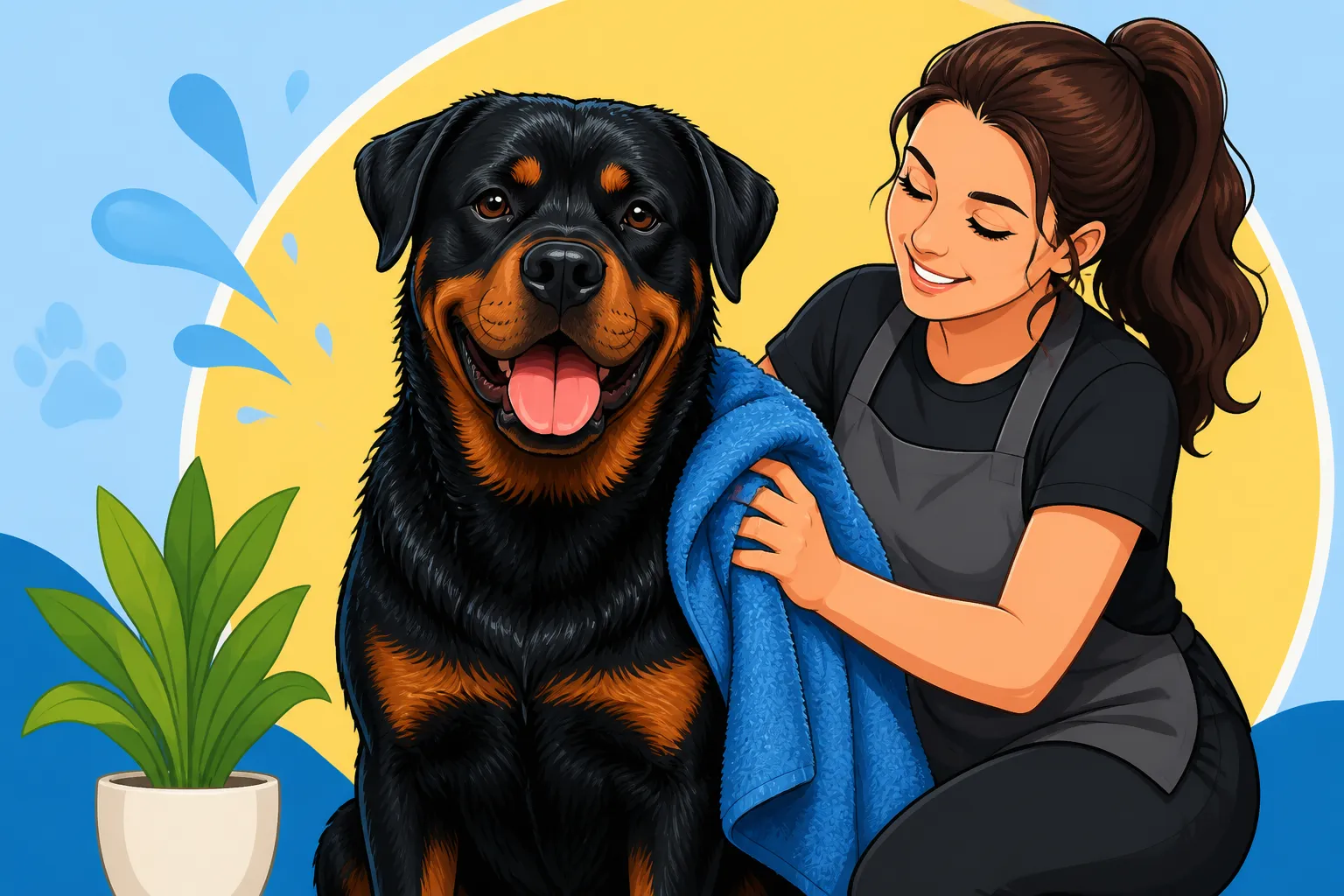
Forget your old bath towels. For a Rottweiler, you need heavy-duty absorbency. Microfiber towels are an absolute game-changer. These towels are specifically designed to absorb several times their weight in water and dry faster than traditional cotton. You'll want at least two large ones, possibly three, ready for action.
- Initial Blotting: The first towel will be used immediately after the bath to get the bulk of the dripping water off. Blot, don't rub vigorously, which can tangle the undercoat and create mats. Gently squeeze the fur, especially on the legs, belly, and undercarriage.
- Targeted Drying: The second towel can be used to follow up, working on specific areas. Even with a high-velocity dryer, a good towel can still pull out a surprising amount of moisture. Think of it as the first line of defense before the heavy artillery comes out. You can find excellent, large microfiber towels readily available on platforms like Amazon or Chewy.
The Power of a High-Velocity Dog Dryer
This is, without a doubt, the most crucial tool for anyone bathing a Rottweiler at home. A high-velocity dryer (often called a force dryer) is not like a human hairdryer. It uses powerful, concentrated airflow, without heat, to literally blast water out of the coat. Human hairdryers get too hot, can burn your dog's skin, and only evaporate moisture, which takes forever on a thick double coat.
- How it Works: The force dryer physically separates the fur strands, pushing water off the dog rather than just heating it up. This significantly reduces drying time and, more importantly, ensures that the dense undercoat gets thoroughly dry. It also helps to "deshed" loose hair, making cleanup easier and reducing shedding around the house later.
- Types: You can find handheld models, which offer more maneuverability, or stand dryers, which free up your hands. For a large dog like a Rottweiler, many owners find a stand dryer or a powerful handheld model indispensable. When selecting one, look for adjustable speed settings, which are crucial for acclimating your dog to the noise and force. Starting on a low setting and gradually increasing it is key to a positive experience.
- Acclimation: The noise and force can be startling at first. Introduce it slowly, perhaps by turning it on in another room while your dog gets treats, then gradually bringing it closer. Many dogs learn to tolerate, and even enjoy, the sensation once they realize it helps them get dry faster. Make sure to have ear protection for your dog, like happy hoodies or cotton balls, to reduce the noise impact.
Grooming Aids: Brushes and Deshedding Tools
Incorporating brushing into your drying routine isn't just for aesthetics; it helps to further open up the coat, allowing air to penetrate and moisture to escape.
- Slicker Brush or Pin Brush: As you dry, use a slicker or pin brush to gently brush sections of the coat against the direction of growth. This lifts the fur, ensuring the air from the dryer reaches the very base of the hair shaft.
- Deshedding Tools: If your Rottweiler is shedding, a deshedding tool like a Furminator or similar rake can be used after the dog is mostly dry, or during the drying process, to remove loose undercoat. This not only speeds up drying but also helps manage shedding around your home. Remember, proper grooming tools are essential for maintaining your Rottweiler's coat health, and you can learn more about them in Rottweiler Grooming and Deshedding Tools.
A Step-by-Step Guide to Drying Your Rottweiler
Now that you have your tools ready, let's walk through the drying process. Patience and consistency are your best friends here.
Step 1: The Initial Towel-Off
Immediately after rinsing your Rottweiler thoroughly (you want to make sure all shampoo is out, as discussed in Bathing a Rottweiler Without Stripping the Coat Oil), allow them to shake once or twice if they insist. Then, grab your first super-absorbent microfiber towel.
- Blotting, Not Rubbing: Instead of rubbing frantically, which can cause mats and static, gently squeeze and blot the water from their coat. Start with their back and sides, moving down to their legs, chest, and belly. Pay extra attention to their paws and tail, which can hold a surprising amount of water.
- Head and Face: For their head and face, use a smaller, softer towel. Gently pat dry around their eyes, muzzle, and inside their ear flaps. Be very careful around their sensitive ears; dampness here can lead to ear infections, a common issue for drop-eared breeds, as highlighted in Rottweiler Ear Infections Under That Drop Ear.
- Standing Water: The goal here is to remove as much standing water as possible before introducing the dryer. You want them damp, not dripping.
Step 2: Introducing the High-Velocity Dryer
This is where the real work begins, and it's also where your Rottweiler might need some extra reassurance.
- Acclimation is Key: If your dog isn't used to a force dryer, start slowly. Let them see and sniff the dryer while it's off. Then, turn it on in a different room so they get used to the sound from a distance. Gradually move closer, offering high-value treats (like those from Ollie, perhaps) and praise.
- Ear Protection: Before you start, place cotton balls gently in their ears or use a "happy hoodie" (a soft, stretchy band that covers their ears and reduces noise). The sound can be very loud and uncomfortable for their sensitive hearing.
- Start Low and Slow: Begin with the dryer on its lowest setting, directing the airflow away from their face. Many groomers start with the hindquarters or legs, as these areas are less sensitive.
- Technique: Hold the nozzle a few inches from their coat and move it constantly. Work in sections, lifting the fur against the growth direction to ensure the air reaches the skin. You'll actually see water droplets flying off the coat – that's how you know it's working! Don't focus on one spot for too long, as this can cause discomfort or even friction burns if the nozzle gets too close.
- Paws and Belly: These areas are often overlooked but crucial. Lift each paw and direct airflow between the pads. Turn your Rottweiler over to get their belly and chest thoroughly dry.
- Breaks and Praise: Take frequent breaks. Offer water, a quick stretch, and plenty of praise and treats. Make it a positive, calm experience. It might take 30-60 minutes, or even longer, for a truly thorough dry, depending on your dog's coat and size.
Step 3: Brushing and Finishing Touches
As your Rottweiler gets progressively drier, incorporate your brush to help lift the coat and check for any damp spots.
- Brush While Drying: Use a slicker or pin brush to brush through the coat, especially in areas with denser undercoat. This helps separate the hairs and allows the dryer's air to penetrate more effectively. You’ll be surprised how much loose hair comes out – a bonus deshedding session!
- Final Check: Once you believe your Rottweiler is dry, do a thorough "pat and feel" test. Run your fingers deep into their coat, particularly along their back, neck, chest, armpits, and groin. Feel for any residual dampness. A truly dry Rottweiler's coat will feel fluffy and lightweight at the base, not cool or damp.
- Cool Down: If the air temperature in your drying area has become warm, allow your Rottweiler to cool down in a comfortable spot, especially important for black-coated dogs as covered in Keeping a Black-Coated Rottweiler Cool.
Common Pitfalls and Troubleshooting
Even with the right tools and technique, drying a large dog can have its challenges. Here are some common issues and how to navigate them.
Avoiding Hot Spots and Skin Irritation
The biggest risk of improper drying is leaving moisture trapped against the skin, which can quickly lead to painful hot spots or fungal infections.
- Be Diligent: Never assume a dog is dry just because the topcoat feels that way. Always perform a thorough check of the undercoat. Areas like the armpits, groin, base of the tail, and behind the ears are notorious for remaining damp.
- Air Circulation: After drying, ensure your Rottweiler isn't immediately confined to a small, poorly ventilated space. Allow them to air out in an open area for a bit, especially if it's warm. If you notice any redness, itching, or excessive licking in the days following a bath, consult your vet promptly. Early detection of skin issues can prevent them from becoming severe.
Managing Overheating and Stress
A powerful dryer can generate some warmth (even if it's heatless, the friction of air can make the dog feel warm), and the entire process can be stressful for some dogs.
- Monitor Your Dog: Watch for signs of overheating (excessive panting, lethargy, bright red gums) or stress (tucked tail, flattened ears, trying to escape). If you see these, take a break. Offer water.
- Cool Air Flow: Most good force dryers have a "no heat" setting. Always use this. If your dryer only has warm settings, keep the nozzle further away and take more frequent, longer breaks.
- Positive Reinforcement: Keep the atmosphere light and positive. Use a calm, reassuring voice. Offer treats frequently. If your dog finds the experience truly overwhelming, consider spreading the drying process out over shorter sessions, or seeking help from a professional groomer to get them accustomed to the dryer. Building up positive associations is crucial, similar to how you approach Rottweiler Impulse Control Games in training.
Dealing with a Reluctant Rottweiler
Not all Rottweilers are thrilled about the dryer. Some may be initially frightened by the noise or the sensation.
- Gradual Introduction: As mentioned, start with small steps. Introduce the dryer far away, then closer, associating it with positive things like treats and praise.
- Consistency is Key: The more frequently they're bathed and dried, the more accustomed they'll become. Make it a routine.
- Professional Help: If your Rottweiler is genuinely terrified or shows signs of aggression towards the dryer, it might be worth consulting a professional groomer or a certified dog trainer. They have experience with nervous dogs and specialized equipment that might make the process easier. Sometimes, Muzzle Training a Rottweiler Before You Need It can be a valuable tool for these situations, ensuring safety for both you and your dog during grooming.
Drying Methods Comparison
To give you a clearer picture, here’s a quick comparison of different drying approaches for your Rottweiler:
| Feature | Towel Drying Only | Human Hairdryer | High-Velocity Dog Dryer |
|---|---|---|---|
| Effectiveness | Superficial; leaves undercoat damp; takes forever. | Evaporates water; very slow; risky due to heat. | Blasts water out; dries thoroughly and quickly. |
| Drying Time | Extremely long (hours). | Long (can still be damp for hours). | Short (30-60 minutes for a full dry). |
| Risk of Skin Issues | High (hot spots, fungal infections from dampness). | Moderate (burns, hot spots from residual dampness). | Low (if used correctly, ensures full dryness). |
| Safety for Dog | Low risk, but can cause matting if rubbed too hard. | High risk (burns, overheating). | Low risk (if used with no heat, ear protection, acclimation). |
| Noise Level | Silent. | Moderate to loud (can be stressful). | Loud (requires ear protection and acclimation). |
| Deshedding Benefit | Minimal. | Minimal. | Excellent (removes significant loose undercoat). |
| Cost | Very low (towels). | Low (often already owned). | Moderate to high initial investment. |
In summary, while towels are essential for the initial blot, and human hairdryers are a definite no-go, a high-velocity dog dryer is truly the best investment for keeping your Rottweiler clean, dry, and healthy after a bath. It might seem like an extra step, but for a breed with such a dense coat, it’s a game-changer that pays dividends in comfort and skin health for your beloved companion.
Disclaimer
This article is for general informational purposes only and does not constitute professional advice. Laws, prices and regulations vary by location and change over time. Consult a qualified professional for guidance on your specific situation.