Bathing a Rottweiler Without Stripping the Coat Oil
Bathing a Rottweiler can feel like wrestling a small bear, and the last thing any of us wants after all that effort is to see their beautiful, protective coat turn dry, dull, or worse, develop flaky skin. The challenge is keeping them clean without inadvertently stripping away the natural oils that are so vital to their skin health and the luster of their magnificent black and rust coat. This guide will walk you through the careful steps to bathe your big Rottweiler while safeguarding those essential protective oils.
Understanding Your Rottweiler's Natural Coat and Its Purpose
Before we even think about turning on the water, it's crucial to understand what makes a Rottweiler's coat so special and why those natural oils are non-negotiable for their health. It’s not just about looking good; it’s about their overall well-being.
The Double Coat and Essential Oils
Rottweilers possess a distinctive double coat, which serves as a natural defense system against the elements. You have the short, dense outer coat, often described as coarse to the touch, which repels water and protects against debris and minor abrasions. Beneath this lies a softer, downy undercoat, which acts as insulation, keeping them warm in winter and helping to regulate their body temperature in summer. Both layers are essential, but it's the skin beneath that produces the critical oils we need to protect.
These natural oils are generated by sebaceous glands in the skin, forming a delicate lipid barrier. This barrier is like your Rottweiler's built-in moisturizer and protective shield. It helps to keep their skin hydrated, supple, and less prone to irritation. It also gives their coat that characteristic sheen and helps to waterproof it, preventing their skin from becoming waterlogged during rain or a quick dip. Think of it as nature's perfect conditioner, meticulously crafted for a hardworking breed.
Why Stripping Oils is Detrimental
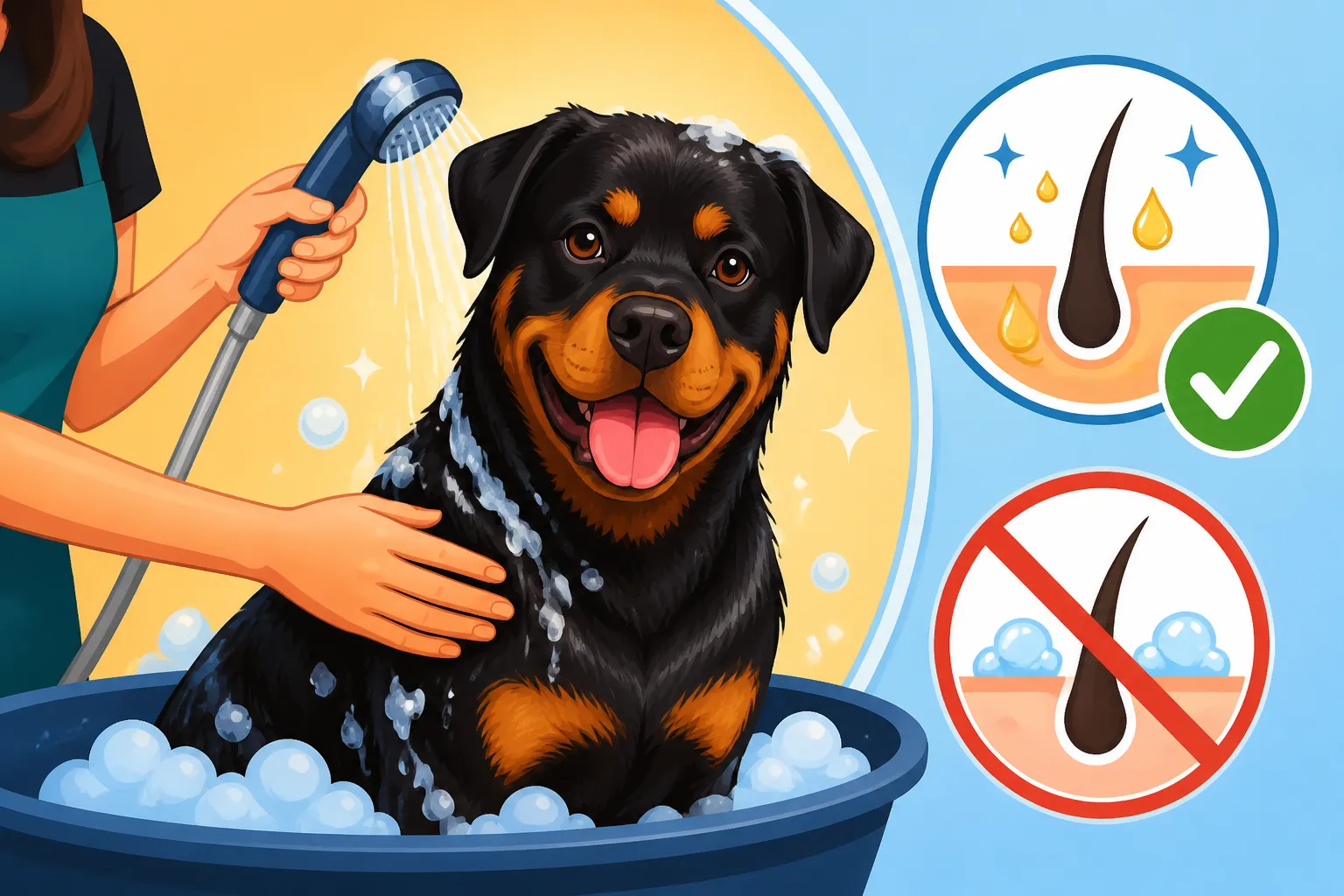
When we use harsh shampoos, very hot water, or bathe too frequently, we risk disrupting this natural lipid barrier. "Stripping" the coat oils means washing away too much of this protective layer, leaving the skin vulnerable. The immediate consequence is often dry, itchy, and flaky skin. Imagine how your own skin feels after using a harsh soap; it's similar for your dog, but their skin is more delicate and has a different pH balance.
Beyond immediate discomfort, stripped oils can lead to a host of other issues. A dry coat loses its natural luster, becoming dull and brittle. It can also exacerbate shedding, as the weakened hair follicles struggle to hold onto healthy strands. Perhaps most concerning, a compromised skin barrier is less effective at fending off environmental allergens, bacteria, and yeast. This can open the door to recurring skin infections, hot spots, and chronic itchiness, turning what should be a simple bath into a trigger for ongoing problems. A healthy coat is a sign of a healthy Rottweiler, and protecting those oils is key.
The Art of Gentle Bathing: Techniques to Preserve Coat Health
Bathing your Rottweiler doesn't have to be a battle against nature. With the right approach and tools, you can get them sparkling clean while preserving their skin's natural balance. It’s all about working with their coat, not against it.
Pre-Bath Preparation: Brushing and Detangling
Before a single drop of water touches your Rottweiler, a thorough pre-bath brushing is absolutely non-negotiable. This step is often overlooked, but it's one of the most effective ways to ensure a successful, oil-preserving bath. Your Rottweiler, despite their short coat, can shed quite a bit, especially during their seasonal "blows" where they shed their undercoat. Rottweiler Undercoat Shedding Twice a Year is a real phenomenon that demands attention.
Using a good quality deshedding tool or an undercoat rake can remove a surprising amount of loose hair and embedded dirt, dander, and debris. This isn't just about cleaning; it allows the shampoo to penetrate more effectively to the skin and helps prevent matting in the undercoat, which can trap moisture and lead to skin irritation. When you remove all that extra fluff beforehand, you’ll find you need less shampoo, and the bathing process itself becomes much quicker and more efficient. Think of it as clearing the path so the water and shampoo can do their job without getting bogged down. For robust tools that stand up to a Rottweiler’s coat, many owners find great options on sites like Chewy or Amazon, offering a range of undercoat rakes and sturdy brushes.
Choosing the Right Shampoo and Conditioner
This is perhaps the most critical decision you'll make in the bathing process when it comes to preserving your Rottweiler's coat oils. The wrong product can undo all your good intentions in one wash. Steer clear of human shampoos – our skin's pH is vastly different from a dog's, and products formulated for us can be far too harsh for them, inevitably stripping those precious oils.
Instead, invest in a high-quality, pH-balanced dog shampoo specifically designed for moisturizing, sensitive skin, or shedding control. Look for formulas that are sulfate-free, paraben-free, and ideally contain natural soothing ingredients like oatmeal, aloe vera, or essential fatty acids. These ingredients help to cleanse gently without stripping, and they replenish moisture rather than remove it. Many excellent options are available from brands widely sold at pet specialty retailers or online. Following up with a good dog-specific conditioner is also highly recommended. A conditioner helps to close the hair cuticles, lock in moisture, and further protect the coat, making it softer and shinier. It acts as a final protective layer, enhancing the natural oil barrier.
The Washing Process: Less is More
When it comes to actually washing your Rottweiler, remember the mantra: "less is more." You don't need a huge amount of shampoo to get a large dog clean, especially if you've done a thorough pre-bath brush.
- Dilute the Shampoo: A great trick is to dilute your chosen shampoo with water, typically at a 1:10 ratio (one part shampoo to ten parts water) in a squeeze bottle. This helps distribute the shampoo evenly, makes it easier to rinse out, and reduces the concentration of detergents on their skin.
- Wet Thoroughly with Lukewarm Water: Start by thoroughly wetting your Rottweiler's coat from head to tail with lukewarm water. Hot water can be drying and uncomfortable. Ensure the water penetrates all the way to the skin.
- Apply Shampoo Gently: Apply the diluted shampoo, focusing on the dirtiest areas first, like their paws, belly, and behind the ears. Gently massage it into the coat and skin using your fingertips, rather than scrubbing vigorously. Avoid getting shampoo directly into their eyes or ears. For ear cleaning, separately, a product specifically designed for Rottweiler Ear Care Under a Drop Ear is crucial.
- Rinse, Rinse, Rinse: This is where many owners fall short, leading to residue buildup that can irritate the skin and dull the coat. Rinse your Rottweiler meticulously, until you can no longer see any suds or feel any sliminess on their coat when you squeeze a section of hair. Then, rinse again for good measure. Any shampoo left behind will attract dirt faster and can cause itching and flaking.
Post-Bath Care: Drying and Maintaining the Luster
The bath itself is only half the battle. How you dry and maintain your Rottweiler's coat afterward is just as important for preserving those vital natural oils and ensuring a healthy, shiny finish. Rushing this stage can lead to more problems than it solves.
Gentle Drying Techniques
Given a Rottweiler's size and dense double coat, drying can be a significant undertaking, but it's crucial to do it right. Aggressive rubbing with a towel can actually damage the hair follicles and irritate the skin, so think more about blotting and squeezing.
Start by gently squeezing excess water from their coat with your hands. Then, use several large, absorbent towels to blot and pat them dry. Don't rub back and forth vigorously; this can create tangles and static, and potentially disrupt the natural oil distribution. For a really thorough dry, especially if your Rottweiler has a thick undercoat, a high-velocity forced-air dryer designed for dogs can be a game-changer. These dryers use air volume, not heat, to blast water out of the coat quickly and efficiently. Always use the coolest setting if your dryer has a heat option, as excessive heat can be very drying to both skin and coat. Holding the nozzle several inches away from their body and keeping it moving will prevent any one spot from getting too hot. This methodical approach ensures your big dog is properly dry without causing any damage, preventing skin issues and odors that can arise from damp undercoats. More tips on this can be found in Drying a Rottweiler After a Bath at Size.
Brushing After the Bath
Once your Rottweiler is mostly dry, a final brushing session is incredibly beneficial. This isn't just about tidying up; it plays a vital role in redistributing the natural oils that have been cleansed, helping them spread evenly across the skin and coat. This ensures a consistent protective barrier and enhances the coat's natural sheen.
Use a soft bristle brush or a rubber curry comb. The gentle massage of the brush stimulates blood circulation to the skin, which in turn promotes healthy oil production and overall coat health. As you brush, you'll also catch any lingering loose hairs that might have been loosened by the wash but not fully removed during drying. This practice contributes to a softer, healthier, and better-looking coat, and it also reduces the amount of hair that ends up on your furniture! For the best tools, considering your Rottweiler's shedding pattern, you might want to review options in Rottweiler Grooming and Deshedding Tools.
How Often is Too Often? Establishing a Bathing Schedule
One of the most common mistakes people make is bathing their Rottweiler too frequently. Unless there's a specific medical reason or they've rolled in something truly offensive, a Rottweiler generally doesn't need a bath more than once every 1 to 3 months. For many, a bath every other month or even quarterly is perfectly sufficient.
Over-bathing, even with gentle products, can still disrupt the skin's natural oil production and lead to dryness and irritation over time. Their coat is designed to be self-cleaning to a certain extent. For routine dirt or mud, simply brushing it off once dry, or a targeted wipe-down with a damp cloth or dog-specific grooming wipe, is often all that's needed. If your Rottweiler has a specific skin condition or allergies, your veterinarian might recommend a different bathing frequency or medicated shampoo. In such cases, managing Rottweiler Allergies and Recurring Skin Infections will be paramount, and your vet's guidance should always be followed. For general maintenance, however, err on the side of less frequent, higher-quality baths to maintain that healthy, protective coat.
Common Pitfalls and Troubleshooting
Even with the best intentions, things can sometimes go awry. Understanding common issues and how to tackle them without resorting to harsh measures is part of becoming a savvy Rottweiler owner.
Dealing With Stubborn Dirt Without Over-Washing
Life with a Rottweiler often means encountering mud puddles, dusty trails, or even the occasional questionable roll in the yard. When your big companion gets truly messy, it's tempting to throw them straight into the tub. However, a full bath isn't always necessary for localized grime. For instance, if your Rottweiler only has muddy paws and legs, a quick rinse in the utility tub or with a hose outside is often enough. You can use a paw washer or a gentle, localized shampoo application only on the affected areas, followed by a thorough rinse.
For general dustiness or light dirt, a brisk brushing session, perhaps followed by a damp cloth wipe-down, can work wonders. There are also waterless shampoos and grooming sprays available, which can be fantastic for freshening up a Rottweiler between full baths without disturbing their coat oils. These products typically contain gentle cleansing agents that don't require rinsing and can absorb odors or lift surface dirt. Always read the labels carefully to ensure they are dog-safe and formulated to be non-drying. Remember, the goal is to clean efficiently rather than excessively.
Recognizing Signs of Dry Skin or Coat Issues
Despite your best efforts, sometimes environmental factors, diet, or underlying health issues can still lead to dry skin or coat problems. It's important to be vigilant and recognize the signs early so you can address them before they escalate.
Look out for excessive scratching, licking, or chewing, especially if it seems localized to certain areas. Flaky skin or dandruff, a dull or brittle coat, redness, bumps, or any unusual odors are also red flags. While bathing practices are one piece of the puzzle, a healthy coat truly starts from the inside out. Ensuring your Rottweiler is on a high-quality, balanced diet is fundamental. Some owners explore options like fresh food services, such as Ollie, which can provide optimal nutrition designed to support skin and coat health. If you're providing excellent external care and still seeing issues, it's time to consult your veterinarian. They can rule out underlying medical conditions, such as allergies, thyroid issues, or parasites, which might be contributing to the problem. Don't hesitate to seek professional advice if you're concerned about your Rottweiler's skin and coat health; they can provide targeted solutions and perhaps even suggest supplements like fish oil, which are beneficial for Senior Rottweiler Feeding and Mobility as well as general coat health.
Here’s a quick overview of what to embrace and what to avoid when bathing your Rottweiler:
| Practice / Product | Recommended for Oil Preservation | Why It Matters |
|---|---|---|
| Pre-bath Brushing | Yes | Removes loose hair/dirt, allows shampoo penetration, reduces scrubbing. |
| Human Shampoo | No | Incorrect pH, too harsh, strips natural oils. |
| Dog-Specific Shampoo | Yes (moisturizing, pH-balanced) | Formulated for dog skin, cleans gently, preserves oil barrier. |
| Diluting Shampoo | Yes | Easier distribution, gentler, simpler to rinse. |
| Hot Water | No | Dries out skin and coat, uncomfortable for dog. |
| Lukewarm Water | Yes | Comfortable, less drying. |
| Aggressive Rubbing | No | Irritates skin, damages hair follicles, creates tangles. |
| Blotting/Squeezing | Yes | Gentle drying, less damaging to coat. |
| Forced-Air Dryer | Yes (cool setting) | Efficiently removes water without harsh heat. |
| Frequent Baths (weekly) | No | Over-strips oils, leads to dry skin and irritation. |
| Every 1-3 Months / As Needed | Yes | Allows natural oils to replenish, maintains skin health. |
| Dog Conditioner | Yes | Locks in moisture, closes hair cuticles, adds protection. |
Disclaimer
This article is for general informational purposes only and does not constitute professional advice. Laws, prices and regulations vary by location and change over time. Consult a qualified professional for guidance on your specific situation.