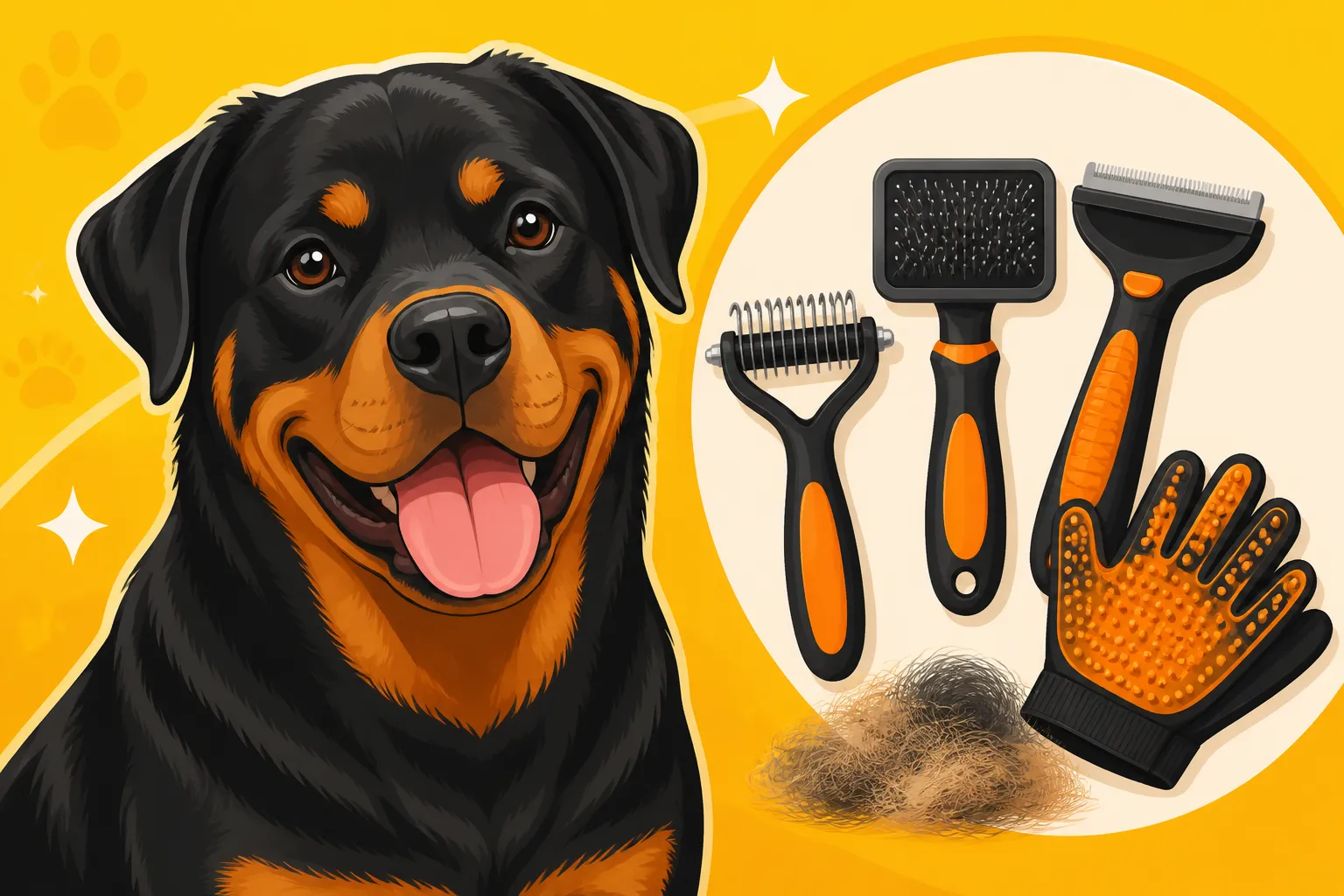
Rottweiler Grooming and Deshedding Tools
It's easy to look at a Rottweiler's short, sleek coat and assume they don't shed much, only to find black hair clinging to everything in your home. This common misconception often leaves new owners frustrated and unprepared for the reality of Rottweiler grooming. This comprehensive guide will walk you through the essential tools and techniques you need to manage your Rottweiler's coat, minimize shedding, and keep them looking their best.
Understanding Your Rottweiler's Coat and Shedding Cycle
Many people are surprised by just how much hair a Rottweiler can shed. Their short coat often gives the impression of low maintenance, but that's far from the truth. Understanding the unique characteristics of their coat is the first step in effective grooming.
The Double Coat Myth vs. Reality
The common perception is that a short-haired dog equates to a low-shedding dog. For Rottweilers, this couldn't be further from the truth. While their outer coat is indeed short, coarse, and lies flat, it overlays a surprisingly dense undercoat. This undercoat is designed to provide insulation, protecting them from both cold and heat, a trait inherited from their ancestors who worked in varied climates.
This double coat means that Rottweilers do, in fact, shed quite a bit, especially during certain times of the year. The coarse outer hairs are stiff and prone to embedding themselves in carpets, upholstery, and clothing, making them particularly difficult to remove. The finer undercoat, when shed, can create a fluffy layer of hair that seems to multiply overnight. It's a common lament among Rottweiler owners to feel like they're constantly battling a tide of black hair, even after a thorough grooming session. This reality can be quite a shock if you've only ever owned single-coated breeds or expected a "wash and wear" experience.
Seasonal Shedding: Twice a Year "Coat Blows"
Rottweilers experience what's often referred to as a "coat blow" twice a year, typically in the spring and fall. These are periods of intense shedding where your dog will shed a significant portion of their undercoat to prepare for the changing seasons. In the spring, they shed their heavy winter coat to make way for a lighter one, allowing for better cooling in warmer weather. Come fall, they'll shed the lighter summer coat to grow in a denser, warmer layer for winter.
During these coat blows, the amount of hair your Rottweiler sheds can be truly astounding. It's not uncommon to fill a grocery bag with loose fur over a few days of dedicated grooming. Even outside of these peak seasons, they will still shed moderately year-round. This constant, albeit fluctuating, shedding means that regular grooming isn't just an aesthetic choice; it's a necessity for their comfort and the cleanliness of your home. Without consistent intervention, the dead hair can matt, especially in denser areas, lead to skin irritation, and, of course, blanket your entire living space in a fine layer of black and rust. Understanding this natural cycle helps you prepare with the right tools and schedule. If you're wondering how to cope, we have a whole article dedicated to Rottweiler Undercoat Shedding Twice a Year.
Essential Grooming Tools for a Rottweiler
Having the right tools is half the battle when it comes to keeping your Rottweiler's coat healthy and your home manageable. Forget flimsy brushes designed for tiny lapdogs; your Rottweiler needs robust tools that can handle their size and coat density.
Brushes for Everyday Maintenance
Daily or every-other-day brushing is your first line of defense against excessive shedding and keeping your Rottweiler's skin healthy. These aren't just for removing loose hair; they also help distribute natural skin oils, preventing dryness and promoting a shiny coat.
The rubber curry brush or a rubber grooming glove is an absolute staple. These are fantastic for daily use, especially on short, dense coats like a Rottweiler's. The rubber nubs gently massage the skin, stimulating circulation and bringing loose hair to the surface. It's also an excellent tool to use during bath time, as it helps work shampoo through the coat and remove dead hair. Your Rottweiler will often enjoy the massage-like feel, turning grooming into a pleasant bonding experience.
A slicker brush can be surprisingly effective for Rottweilers, despite their short coats. Look for one with fine, bent wire bristles. While not for deep undercoat removal, it excels at grabbing loose surface hair and helping to detangle any minor mats that might form, particularly around the chest or hindquarters where the coat can be a bit longer. Use gentle, sweeping strokes, being careful not to press too hard, as the wire bristles can scratch their skin if you're not mindful. It’s also great for feathering out the coat around the legs.
Finally, a good quality bristle brush (often made with natural boar bristles) is perfect for finishing. After you've removed the bulk of the loose hair with other tools, a bristle brush will smooth the coat, removing any fine dust or dander, and enhance its natural shine by spreading those healthy skin oils. It's the equivalent of a final polish for their handsome black and rust coat, making them look their absolute best.
Here's a quick overview of some essential brushes and their primary uses:
| Brush Type | Primary Use | Frequency | Benefits | Cautions |
|---|---|---|---|---|
| Rubber Curry Brush | Daily loose hair removal, skin massage, bathing aid | Daily/Every other day | Stimulates skin, distributes oils, Rottweilers often enjoy it | None, very gentle |
| Slicker Brush | Removing surface loose hair, minor detangling | 2-3 times a week | Grabs fine loose hairs, adds volume (if needed) | Use gently; bristles can scratch skin if too much pressure |
| Undercoat Rake | Deep undercoat removal, especially during shedding seasons | 1-2 times a week (more during coat blows) | Penetrates topcoat to remove dense undercoat, reduces shedding | Don't overdo it; can irritate skin if used too frequently or aggressively |
| Deshedding Blade/Tool | Significant undercoat removal during heavy shedding | As needed (weekly during coat blows) | Highly effective at removing large amounts of dead undercoat | Can damage topcoat or irritate skin if overused; follow instructions |
| Bristle Brush | Finishing, smoothing coat, adding shine, distributing oils | Daily | Polishes coat, removes fine dust, enhances natural luster | None, very gentle and good for sensitive areas |
Deshedding Tools for Heavy Shedding Seasons
When those seasonal coat blows hit, you'll need to bring out the heavy artillery. Deshedding tools are specifically designed to tackle the dense undercoat that sheds in copious amounts.
An undercoat rake is a game-changer. These tools have widely spaced, blunt teeth that are long enough to reach through the topcoat and pull out the loose, dead undercoat without damaging the guard hairs. During spring and fall, using an undercoat rake once or twice a week, or even more frequently if your dog is shedding heavily, will make a remarkable difference. Work in the direction of hair growth, using long, steady strokes. Be prepared for the sheer volume of hair this tool will remove – it's truly satisfying, and your vacuum cleaner will thank you. Many owners find specific Undercoat Rakes for a Short Rottweiler Coat to be indispensable during these times.
You might also consider a deshedding blade or a specialized deshedding tool like the popular brands you see on the market. These tools typically have a finely toothed edge that works by grabbing and pulling out the loose undercoat. They can be incredibly effective at reducing shedding significantly. However, it's crucial to use these tools sparingly and according to instructions. Overuse can strip too much of the undercoat, which is vital for insulation, or even irritate your Rottweiler's sensitive skin. Always be gentle, pay attention to your dog's reactions, and avoid using them on matted areas.
For those who really want to minimize airborne hair, some innovative tools even connect directly to your vacuum cleaner. These vacuum attachments allow you to brush and simultaneously suck up the loose hair, drastically reducing the mess. While some dogs might be initially wary of the vacuum's noise, many can be conditioned to accept it with positive reinforcement, making cleanup significantly easier.
Nail Trimmers and Paw Care
Beyond the coat, your Rottweiler's nails and paws also require diligent attention. Overly long nails can cause discomfort, affect their gait, and lead to more serious orthopedic issues over time, especially for a heavy breed.
For nail trimming, you generally have two main options: guillotine-style clippers or scissor-style clippers. Given a Rottweiler's thick, strong nails, you'll need large, sturdy clippers that can make a clean cut without splintering the nail. Many owners find scissor-style clippers, which resemble a pair of pliers, offer more control and leverage for such substantial nails. Always keep a styptic powder nearby in case you accidentally cut too close to the quick (the sensitive blood vessel within the nail).
An alternative, and often preferred method for many large dog owners, is a dremel-style grinder. Grinders slowly file the nail down, allowing for more precise control and a smoother finish. This significantly reduces the risk of cutting the quick and often makes dogs more tolerant of nail trims, especially if introduced positively as a puppy. The sound and vibration can take some getting used to, but the results are worth the effort – neatly rounded nails that won't scratch you or your floors. For more detailed guidance, consider reading about Rottweiler Nail Trimming at Size.
Finally, don't forget paw care. Rottweilers are active dogs, and their paw pads can take a beating, especially on hot pavement, rough terrain, or in cold, icy conditions with road salt. A good quality paw balm can help moisturize and protect their pads, preventing cracking and dryness. Regularly inspect their paws for cuts, thorns, or irritation. If your Rottweiler frequently walks on abrasive surfaces, looking after their paw pads is crucial to their comfort and mobility. Taking care of their feet is just as important as their coat, and you can find more tips on Rottweiler Paw Pad Care on Rough Ground.
Making Grooming a Positive Experience
Grooming isn't just about cleanliness; it's a vital part of your bond with your Rottweiler and an opportunity to regularly check for any health issues. Turning it into a positive experience from the start will make it easier for both of you throughout their life.
Starting Early and Positive Reinforcement
The key to a well-behaved Rottweiler during grooming is starting early. As soon as you bring your Rottweiler puppy home, begin introducing them to short, positive grooming sessions. Even if it's just a minute or two of gentle brushing with a soft rubber brush, followed by generous praise and high-value treats, it sets the foundation for a lifetime of comfortable grooming.
Gradually increase the duration and introduce new tools, always keeping it positive. Touch their paws, ears, and mouth regularly, rewarding calm acceptance. This desensitization not only makes grooming easier but also helps prepare them for vet visits and other necessary handling. A Rottweiler who trusts you to handle their body parts calmly is a much safer, happier dog. This foundational work is crucial, as a fully grown, strong Rottweiler who resists grooming can be a real challenge. You can learn more about this general approach in our guide to Rottweiler Puppy Training Through the First Year. Consistency is paramount; even short, daily sessions are more effective than infrequent, hour-long struggles.
Bathing and Drying Your Large Rottweiler
Bathing a Rottweiler isn't an everyday affair, and usually shouldn't be. Over-bathing can strip their skin of essential natural oils, leading to dry, flaky skin or even aggravating conditions like Rottweiler Skin Allergies and Summer Hot Spots. Generally, a bath every 1-3 months, or when they're visibly dirty, is sufficient.
When it's bath time, choose a high-quality dog-specific shampoo. Human shampoos are too harsh for a dog's skin pH. Consider deshedding shampoos during coat blows, or sensitive skin formulas if your Rottweiler has allergies. Wet their coat thoroughly with lukewarm water – their dense undercoat can repel water, so take your time. Lather well, ensuring you reach the skin, and then rinse, rinse, rinse! Any shampoo residue left on the skin can cause irritation. This process for Bathing a Rottweiler Without Stripping the Coat Oil is key.
Drying a large dog like a Rottweiler effectively is just as important as the wash. Start with vigorous towel drying to remove as much water as possible. For deeper drying, especially during heavy shedding, a high-velocity dog dryer (like those used by professional groomers) can be a fantastic investment. It not only dries them much faster than air drying but also helps to blast out even more loose undercoat, significantly reducing shedding indoors afterward. If you don't have a professional dryer, ensure they are completely dry to the skin, especially in cooler weather, to prevent skin issues.
Managing Hair in Your Home
Even with the most diligent grooming routine, a Rottweiler will shed hair in your home. It’s an unavoidable reality of living with this wonderful breed. However, there are strategies and tools you can employ to keep the hair manageable and your home relatively clean.
First, regular vacuuming is your best friend. Invest in a powerful vacuum cleaner designed for pet hair, ideally one with good attachments for upholstery and tight corners. Daily or every-other-day vacuuming during peak shedding seasons will prevent hair from building up and becoming embedded in carpets and fabrics. For quick clean-ups, a handheld pet vacuum can be a lifesaver.
Lint rollers are indispensable for clothes, furniture, and even car interiors. Keep one in every key area of your home and car. Another tip is to use blankets or slipcovers on your furniture that can be easily removed and washed. This provides a barrier against shedding hair and protects your upholstery. You might even consider specialized pet hair removal sponges or brushes that effectively gather hair from fabric surfaces. You'd be surprised how much hair can be picked up with these simple tools. For a comprehensive battle plan, check out our guide on Rottweiler Hair Everywhere and How to Manage It. Companies like Chewy offer a wide array of specialized tools and products designed specifically for managing pet hair, making it easy to stock up on everything you need. While diet isn't a direct grooming tool, remember that good nutrition, like that offered by a quality dog food brand such as Ollie, can contribute to a healthier coat, which in turn might shed a bit less and be easier to groom.
Regular ear cleaning is also a crucial part of grooming that prevents issues. Their drop ears can trap moisture and debris, creating a breeding ground for infections. A good ear cleaning solution and cotton balls can help keep those ears fresh and healthy. You can find more specific advice on Rottweiler Ear Care Under a Drop Ear. And while you're at it, don't forget their dental health. Though not directly grooming, keeping their teeth clean can prevent serious issues and bad breath, a topic thoroughly covered in our article on Rottweiler Dental Disease and Cracked Teeth. A holistic approach to care means looking at the whole dog!
Disclaimer
This article is for general informational purposes only and does not constitute professional advice. Laws, prices and regulations vary by location and change over time. Consult a qualified professional for guidance on your specific situation.