Garden Plants a Rottweiler Should Not Reach
As a Rottweiler owner, you know all too well how their boundless curiosity often leads them to investigate everything with their powerful noses and discerning mouths. That beautiful garden you've meticulously cultivated, a source of peace and beauty for you, can unfortunately hide unexpected and serious dangers for your beloved big dog. This guide will walk you through the common garden plants that are surprisingly toxic to Rottweilers, explain how to proactively make your outdoor space a safe haven, and outline the critical steps you must take if you ever suspect your Rottweiler has ingested something harmful.
Common Toxic Plants Hiding in Plain Sight
It's easy to assume that if a plant is common, it must be harmless. But for a Rottweiler, many seemingly innocuous garden staples can pose a significant threat. Their large size means they might ingest more of a toxic substance, potentially leading to a more severe reaction. Knowing which plants to watch out for is the first line of defense in keeping your furry family member safe.
Everyday Floral Threats
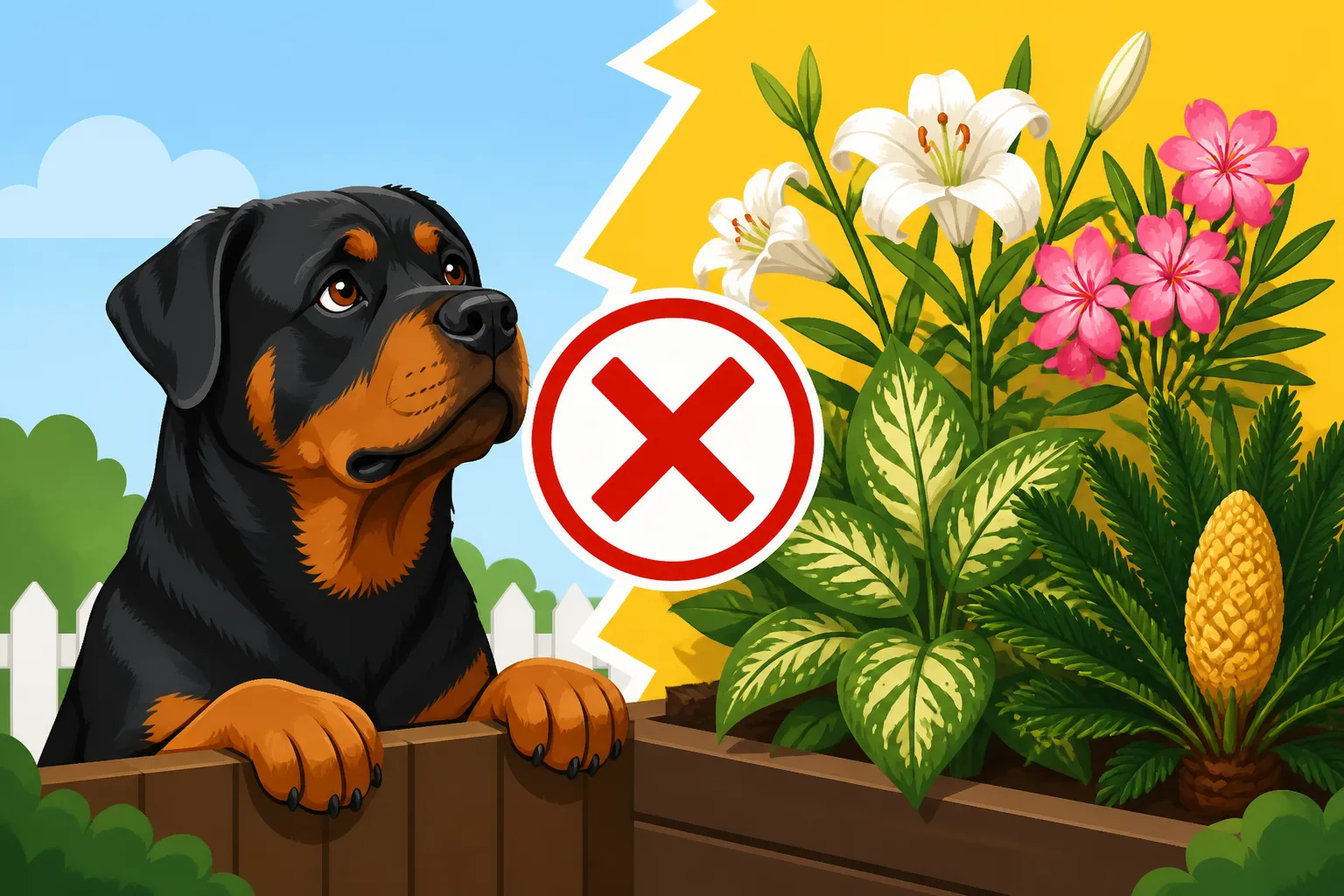
Many of the flowers we love to plant for their vibrant colors and pleasant scents are, sadly, quite dangerous to dogs. Take tulips and daffodils, for example; their bulbs are highly toxic, containing alkaloids that can cause severe gastrointestinal upset, drooling, central nervous system depression, and even cardiac abnormalities if a curious Rottweiler decides to dig them up. Lilies, a favorite in many floral arrangements, are particularly insidious. While certain types, especially true lilies and daylilies, are infamous for causing acute kidney failure in cats, some varieties can still cause significant gastrointestinal distress in dogs. Even seemingly innocent plants like hyacinths and irises can lead to intense vomiting, diarrhea, and lethargy.
Think about a spring afternoon: your Rottweiler is enjoying the sun, and suddenly you see them digging near your flower bed. If they unearth and chew on a tulip bulb, the consequences can be rapid. The sheer volume of material a large dog like a Rottweiler can ingest in a short time makes these common garden plants a serious concern. It's not just about a nibble; it's about their ability to consume a significant portion before you even notice.
Shrubs and Ornamental Plant Dangers
Beyond the flowers, many popular shrubs and ornamental plants can also be hazardous. Rhododendrons and azaleas, beautiful as they are, contain grayanotoxins that can affect cardiac muscle and skeletal muscle function, leading to vomiting, diarrhea, weakness, and potentially fatal heart issues. Oleander, often used in warmer climates for its drought tolerance and continuous blooms, is another extremely toxic plant, with every part of it — leaves, flowers, stems — containing cardiac glycosides that can cause severe heart problems, tremors, and even death.
Even plants with a more "natural" or "wild" appearance can be deceptive. Foxglove, with its tall spires of bell-shaped flowers, contains digitoxin, a potent cardiotoxic agent. Yew bushes, often used for hedging, are also highly toxic, particularly their needles and seeds, causing sudden collapse and heart failure. Imagine your Rottweiler, exploring the perimeter of your yard, deciding to sample some of the foliage. What might seem like a small bite to them could be a critical dose of a dangerous toxin. The First Limp That Turns Out to Be Bone Cancer might be an entirely different type of concern, but accidental ingestion can be just as devastating.
Vegetables and Herbs That Can Harm
While many garden vegetables and herbs are perfectly safe, and even beneficial, some common culinary plants can be harmful to dogs if ingested in large quantities or in certain forms. Onions, garlic, chives, and leeks, all members of the Allium family, can cause damage to a Rottweiler's red blood cells, leading to anemia. While a tiny amount might not cause an issue, a Rottweiler could easily chew on a whole onion bulb or a patch of chives, leading to significant problems.
Rhubarb leaves are another example; while the stalks are used in pies, the leaves contain oxalic acid, which can cause kidney issues, tremors, and drooling. Even tomato and potato plants (the green parts, leaves, and unripe fruit) contain solanine, a glycoalkaloid that can cause gastrointestinal upset, lethargy, and weakness. A Rottweiler might be drawn to the garden, not just by curiosity, but perhaps by the scent of a ripening tomato, and inadvertently chew on the plant itself. It's crucial to distinguish between the safe, ripe fruit and the dangerous plant material.
Creating a Rottweiler-Safe Garden Oasis
Ensuring your garden is a safe place for your large, powerful Rottweiler requires proactive planning and consistent effort. It's not just about knowing what's bad; it's about structuring their environment to prevent access and offering appropriate alternatives.
Strategic Planting and Exclusion
The most straightforward way to protect your Rottweiler is to simply not plant toxic species. If you're planning a new garden or revamping an existing one, choose pet-safe alternatives. Many nurseries and garden centers now label plants as pet-friendly, or you can consult reliable online resources. For plants you absolutely cannot part with, the key is exclusion. Physical barriers are your best friend. Sturdy fencing, raised garden beds with robust edges, or even decorative cloches can prevent your Rottweiler from accessing dangerous areas.
Consider your Rottweiler's size and strength. A small, flimsy fence might deter a Chihuahua, but a Rottweiler can easily push through or jump over it. For areas containing highly toxic plants, you might need to install a section of strong, dog-proof fencing that's tall enough to discourage jumping and secure enough at the base to prevent digging. Think about a durable, heavy-gauge wire fence or even a low wall that clearly delineates safe zones from off-limits areas. You can find robust fencing supplies on platforms like Amazon that are designed to withstand larger breeds. Fencing Requirements That Apply to a Rottweiler provides more details on securing your yard effectively.
| Plant Name | Common Toxic Parts | Typical Symptoms (Rottweiler) | Severity |
|---|---|---|---|
| Tulips/Daffodils | Bulbs | Vomiting, diarrhea, drooling, lethargy, cardiac issues | Moderate to High |
| Azaleas/Rhododendrons | All parts | Vomiting, diarrhea, weakness, tremors, heart problems, coma | High |
| Oleander | All parts | Vomiting, diarrhea, severe heart abnormalities, death | Extreme |
| Sago Palm | Seeds, leaves, trunk | Vomiting, diarrhea, liver failure, seizures, death | Extreme |
| Lily (True/Day) | All parts (especially for cats) | Vomiting, anorexia, lethargy, kidney failure (less common in dogs but possible) | High |
| Yew | Needles, seeds | Sudden collapse, tremors, difficulty breathing, cardiac arrest | Extreme |
| Foxglove | All parts | Vomiting, diarrhea, irregular heartbeat, tremors, death | High |
| Rhubarb | Leaves | Drooling, vomiting, diarrhea, tremors, kidney damage | Moderate to High |
| Onions/Garlic | Bulbs, leaves | Vomiting, diarrhea, lethargy, anemia (pale gums, weakness) | Moderate to High |
| Tomato/Potato Plants | Green parts, unripe fruit | Gastrointestinal upset, lethargy, weakness, neurological signs | Moderate |
Providing Safe Enrichment and Supervision
Even in a meticulously planned garden, supervision remains paramount, especially with a curious Rottweiler. When your Rottweiler is outside, keep a watchful eye on them. Their natural instinct to investigate with their mouths means even a "safe" garden can have temptations like fallen branches or an interesting bug. Engaging them in structured play or training sessions can keep their minds and bodies busy, diverting their attention away from potential botanical misadventures.
Offer plenty of appropriate chew toys and puzzle toys to satisfy their natural urge to mouth and chew. Look for durable, Rottweiler-proof options from pet supply retailers like Chewy or Amazon. Providing these safe outlets helps prevent them from seeking out less desirable items, like your prize-winning petunias or a rogue rhododendron leaf. Consider games like "find it" with their favorite treats hidden in a designated safe area, or a sturdy chew bone that can withstand their powerful jaws. Rottweiler Chew Toys That Survive the Jaw offers some great suggestions for toys that can stand up to your dog's strength.
Regular training also plays a huge role. Teach your Rottweiler a solid "leave it" command, which can be invaluable for stopping them from sniffing or ingesting something questionable. Practice this command frequently in various environments, including the garden, so it's second nature. This kind of consistent, positive reinforcement training can make all the difference.
Emergency Response: When Your Rottweiler Eats a Dangerous Plant
Despite all your best efforts, accidents can happen. If you suspect your Rottweiler has ingested a toxic plant, knowing what to do immediately can be life-saving. Time is often of the essence.
Immediate Actions and Vet Contact
Do not wait to see if symptoms develop. As soon as you suspect or witness your Rottweiler eating a potentially toxic plant, contact your veterinarian or an emergency animal hospital immediately. Have the name of the plant ready if you know it, or be prepared to describe it in detail. If possible, collect a sample of the plant material they ingested, including leaves, flowers, or berries, as this can greatly assist the veterinary team in identification.
The vet will guide you on the next steps. They might instruct you to induce vomiting at home in very specific circumstances, but never do this without direct veterinary advice. Inducing vomiting inappropriately can cause more harm, especially with certain toxins or if your dog is already showing symptoms like lethargy or difficulty breathing. Instead, focus on getting your Rottweiler to the clinic as quickly and safely as possible. Remember, because of their size, a Rottweiler may absorb a larger dose of toxins more quickly. The First Call When a Rottweiler Swallows Something details how to prepare for this crucial conversation with your vet.
What to Expect at the Vet and Follow-Up Care
Once at the veterinary clinic, the team will work swiftly. They'll typically try to identify the plant (if you haven't already), assess your Rottweiler's condition, and determine the best course of action. This might involve inducing vomiting (if appropriate and safe), administering activated charcoal to absorb toxins in the digestive tract, or providing intravenous fluids to support organ function and flush toxins from the system. Blood tests may be run to check for organ damage, especially to the liver or kidneys, which some toxins can affect.
Depending on the plant and the severity of the ingestion, your Rottweiler might need to stay for observation, often overnight, to monitor for delayed symptoms or complications. They'll receive supportive care to manage any symptoms like vomiting, diarrhea, or tremors. The recovery process will vary, but your vet will provide detailed instructions on post-care, including dietary adjustments, medication, and follow-up appointments. Always adhere strictly to these instructions to ensure a full recovery. Early intervention is key, so don't hesitate to seek professional help. Your Rottweiler's health and longevity depend on it.
Disclaimer
This article is for general informational purposes only and does not constitute professional advice. Laws, prices and regulations vary by location and change over time. Consult a qualified professional for guidance on your specific situation.