How Rottweiler Weight Multiplies the Load on Its Hips
It’s a tough truth that our beloved Rottweilers, with their magnificent size and powerful build, are inherently prone to certain joint issues, particularly in their hips. Even with the best genetics, the sheer mass they carry places a significant burden on their skeletal structure. But when you add extra weight into the equation, what might start as a genetic predisposition can quickly escalate into a painful, debilitating reality. This guide is here to unravel the complex physics behind how every extra pound dramatically amplifies the stress on your Rottweiler's hips and offers practical advice to protect their long-term mobility and comfort.
The Fundamental Physics of Weight and Joint Stress
It’s easy to think of a few extra pounds as just that – a few extra pounds. But for a dog the size of a Rottweiler, especially concerning their joints, it’s a far more insidious problem. The physics at play mean that seemingly small increases in body mass translate to exponentially greater forces acting on the delicate structures of their hips and other joints. It’s not a simple one-to-one relationship; rather, it’s a multiplier effect that can silently wear down their bodies.
Understanding Leverage and Impact on Rottweiler Hips
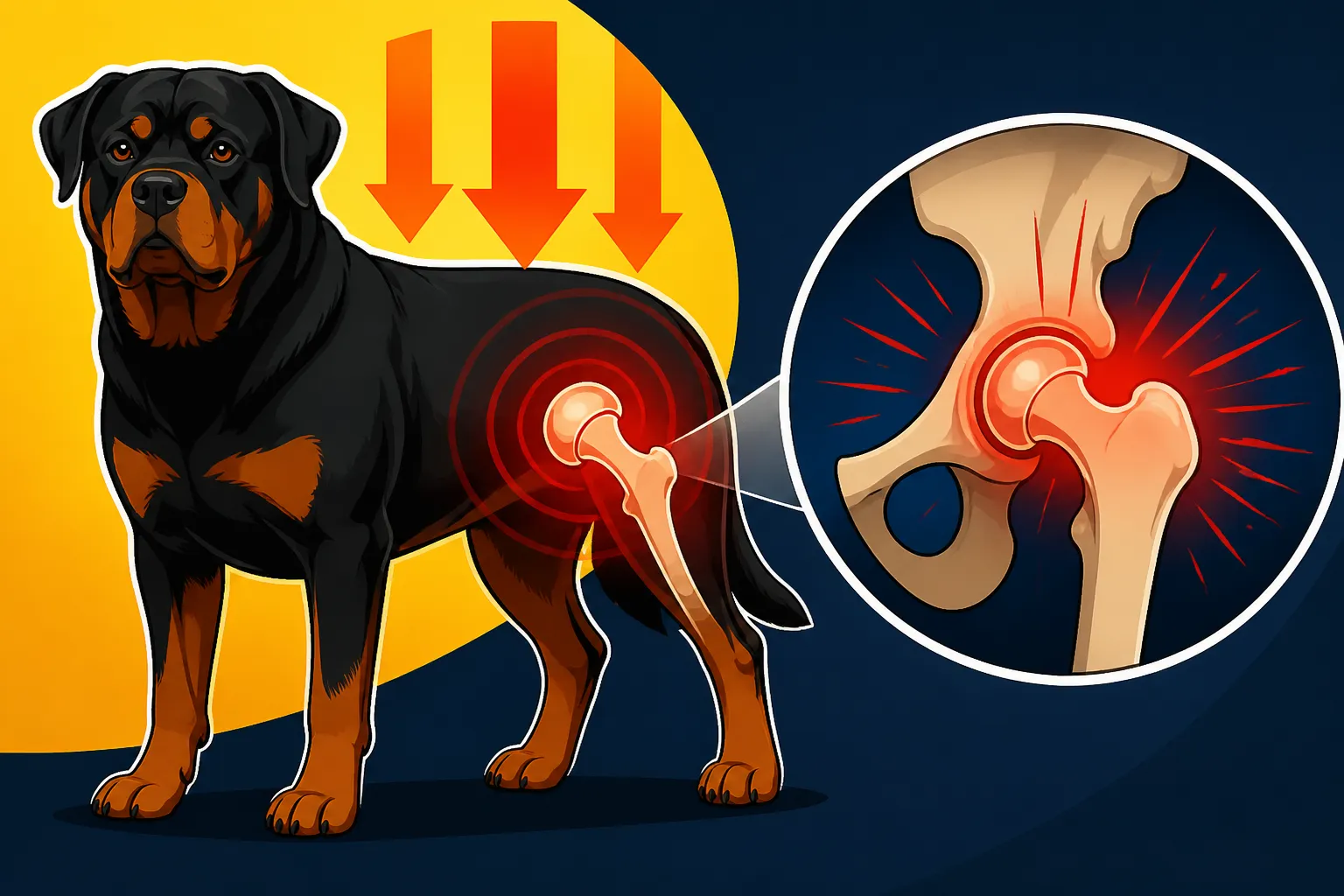
Imagine trying to carry a heavy backpack all day, every day. Now imagine that backpack weighs 10% more than it should. You’d feel it in your knees, your back, and your hips. For a Rottweiler, their own excess body fat acts like that permanent, heavy backpack. Every time they stand up, walk, run, or jump, their joints bear the brunt of their body weight. The hip joint, a ball-and-socket mechanism, is designed to articulate smoothly under a specific load. When that load increases, the pressure on the articular cartilage – the smooth, protective tissue covering the ends of the bones – increases disproportionately.
Think about a seesaw. If you put a little extra weight at the very end, it has a much larger effect than if you put it closer to the pivot point. A Rottweiler’s long limbs and powerful build mean that their weight is distributed in a way that creates significant leverage. An extra five or ten pounds around their middle isn't just five or ten pounds pressing straight down; it creates torque and shearing forces on the hip joint capsule and surrounding ligaments that are much greater than the static weight itself. This is particularly true during dynamic movements, such as a quick turn, a sudden stop, or a jump off the couch, where the forces can be many times their body weight. This constant, amplified stress can lead to micro-traumas that accumulate over time. You might want to consider Why a Rottweiler Should Not Jump Down From the Car to understand more about avoiding these impacts.
The Cumulative Effect on Cartilage and Bone
The articular cartilage in a Rottweiler's hip joint is remarkable, but it's not indestructible. Its job is to provide a low-friction surface and act as a shock absorber. When consistently overloaded due to excess weight, this cartilage begins to degrade. It can thin, crack, and lose its elasticity. Without this smooth cushioning, the underlying bone starts to rub against bone, leading to inflammation, pain, and further structural damage. This process is chronic and progressive.
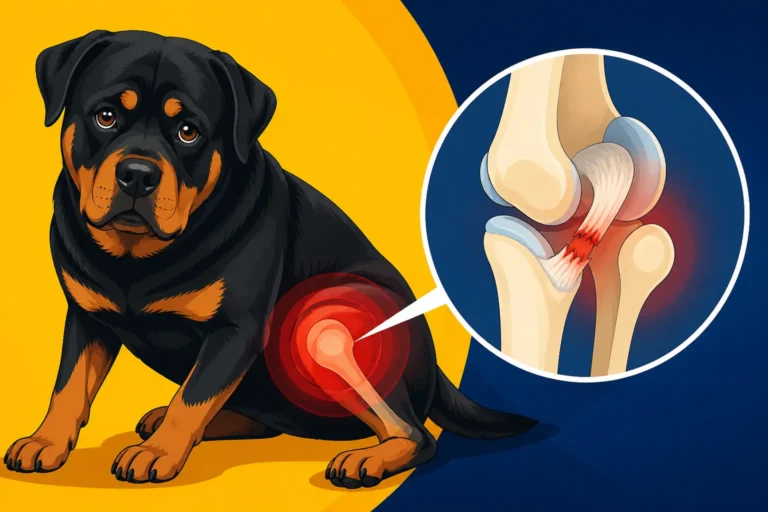
Over time, the body tries to compensate for this instability and damage by laying down new bone, leading to osteophytes, or bone spurs. These spurs further restrict movement and increase pain. This is the hallmark of osteoarthritis, a debilitating condition. The cumulative effect isn't just about pain; it’s about a gradual loss of function, reduced range of motion, and a significant impact on your Rottweiler's quality of life. What started as a little extra fluff can become a painful, irreversible joint condition, accelerating the natural aging process of their hips and potentially impacting their overall Rottweiler Lifespan and the Eight to Ten Year Average.
The Real-World Impact of Extra Pounds on Rottweiler Hips
It's one thing to understand the physics; it's another to see how it plays out in your Rottweiler's daily life. Extra weight doesn't just make them a bit chubbier; it profoundly affects their movement, comfort, and the progression of common health issues, particularly those related to their hips. This isn't just about future problems; it can actively worsen conditions they might already be quietly dealing with.
Exacerbating Existing Hip Dysplasia
Rottweilers are a breed known for being predisposed to hip dysplasia, a condition where the hip joint doesn't form correctly, leading to a loose or unstable fit of the ball and socket. While genetics play a primary role, environmental factors, especially weight, are huge accelerators of symptoms and progression. A Rottweiler with mild hip dysplasia that is kept at an ideal weight might live a relatively comfortable life with minimal symptoms well into their senior years. However, add even 10-15 pounds of excess weight, and that mild dysplasia can transform into severe, painful lameness much earlier.
The increased load forces the already malformed joint to work harder, grinding away at the imperfectly aligned surfaces. This accelerates the cartilage breakdown and the development of painful osteoarthritis. It means your dog might experience stiffness, difficulty getting up, reluctance to climb stairs, and a visible limp years sooner than they otherwise would have. It's truly heartbreaking to watch a dog, especially a strong Rottweiler, struggle with basic movements because their body is fighting against its own weight. Understanding more about Rottweiler Hip Dysplasia and the OFA Grade can help you recognize this condition and its management.
Accelerating Arthritis and Degenerative Joint Disease
Beyond outright dysplasia, many Rottweilers will develop some degree of arthritis as they age, simply due to the wear and tear of being a large, active dog. However, excess weight dramatically speeds up this process and makes the condition far more severe. Every step an overweight Rottweiler takes contributes more to the breakdown of joint cartilage, pushing them closer to bone-on-bone pain.
The inflammation associated with arthritis is also amplified by the presence of excess fat tissue. Adipose tissue (fat) is not just inert storage; it's metabolically active and produces pro-inflammatory chemicals called adipokines. These chemicals circulate throughout the body, including the joints, contributing to systemic inflammation that makes arthritic pain worse. So, an overweight Rottweiler is dealing with both the mechanical stress of extra pounds and the biological stress of increased inflammation. This double whammy can turn what might have been manageable, age-related stiffness into chronic, debilitating pain, significantly impacting their quality of life in their middle to senior years. You can learn more about managing this in Managing Arthritis in an Older Rottweiler.
Managing Your Rottweiler's Weight for Optimal Hip Health
The good news is that weight management is one area where you, as a Rottweiler owner, have significant control. Taking proactive steps to maintain an ideal body condition can make a world of difference in protecting their hips, easing existing conditions, and ensuring a longer, more comfortable life. It requires diligence, but the payoff in their health and happiness is immense.
Accurate Weight Assessment and Ideal Body Condition
The first step is knowing what an ideal weight looks like for your Rottweiler. Breed standards provide a general range (e.g., a male Rottweiler typically 95-135 lbs), but every dog is an individual. A much more effective tool is the Body Condition Score (BCS) system, which vets use to assess a dog's fat reserves. This isn't just about looking at a number on a scale; it's about feeling their body.
You should be able to easily feel your Rottweiler's ribs without pressing hard, like feeling the back of your hand. Their waist should be clearly visible when viewed from above, creating an hourglass shape, and there should be an abdominal tuck when viewed from the side. If you can't easily feel their ribs, or if their waist is absent and they look more like a barrel, they are likely overweight. Consult your vet to get an accurate BCS assessment. They can help you determine a healthy target weight for your specific dog. Learning Feeling for Ribs Under a Rottweiler's Coat is a great skill to develop for regular home checks.
Here’s a simplified Body Condition Score guide:
| Score | Description | Ribs | Waist/Tuck |
|---|---|---|---|
| 1 | Emaciated | Ribs, spine, pelvis easily visible, no fat | Severe abdominal tuck, prominent bony structures |
| 2 | Underweight | Ribs easily palpable, minimal fat cover | Marked abdominal tuck, bony prominences still visible |
| 3 | Ideal | Ribs easily palpable with slight fat cover | Well-proportioned waist, obvious abdominal tuck |
| 4 | Overweight | Ribs palpable with difficulty, moderate fat | No obvious waist, slight or no abdominal tuck |
| 5 | Obese | Ribs not palpable under heavy fat cover | Abdomen distended, no waist or abdominal tuck |
Tailored Nutrition Plans for Weight Management
Once you know your Rottweiler's ideal body condition, you can create a nutrition plan. This usually means carefully measured portions of a high-quality, large-breed adult dog food. Avoid free-feeding, where food is left out all day, as this is a common culprit for weight gain. Instead, feed two measured meals a day. For adult Rottweilers, understanding Daily Calories for a Hundred Twenty Pound Rottweiler is crucial for proper portioning.
If your Rottweiler is already carrying too much weight, your vet might recommend a prescription weight-loss diet, which is typically lower in calories but higher in fiber to help them feel full. Otherwise, simply reducing their current food intake by 10-20% and switching to lower-calorie treats can make a significant difference. Remember, treats count! Those extra biscuits or table scraps can quickly add up. For dogs needing to lose a substantial amount of weight, such as Taking a Rottweiler From 140 Back to 120, a slow and steady approach is vital to ensure their health and prevent rapid, unhealthy weight loss. Sometimes, adding joint supplements, like those mentioned in Joint Supplements Started Early in a Rottweiler, can also support their joint health during this process, though they won't cause weight loss on their own.
Appropriate Exercise to Support Joint Health Without Strain
Exercise is vital for weight management and building strong muscles to support the joints, but it needs to be appropriate for a Rottweiler's size and potential joint predispositions. High-impact activities like aggressive fetch, jumping, or long-distance running, especially on hard surfaces, should be limited or avoided, particularly during puppyhood while their Rottweiler Growth Plates and Why They Close So Late are still open. Similarly, for older dogs, intense exercise can worsen existing arthritis.
Instead, focus on moderate, consistent exercise. Daily leashed walks, allowing them to sniff and explore, are excellent. Swimming is a fantastic low-impact option that builds muscle without stressing joints. Consider short, frequent play sessions rather than one long, strenuous one. For puppies, remember the "five-minute rule" – five minutes of exercise per month of age, twice a day, to protect their developing joints. Learn more about safe activity levels in Exercise Limits for a Rottweiler Under Six Months and Building Adult Rottweiler Fitness Safely. Regular, controlled movement helps maintain joint flexibility and strengthens the supporting musculature, which acts like a natural brace for their hips.
The Broader Health Implications Beyond Hips
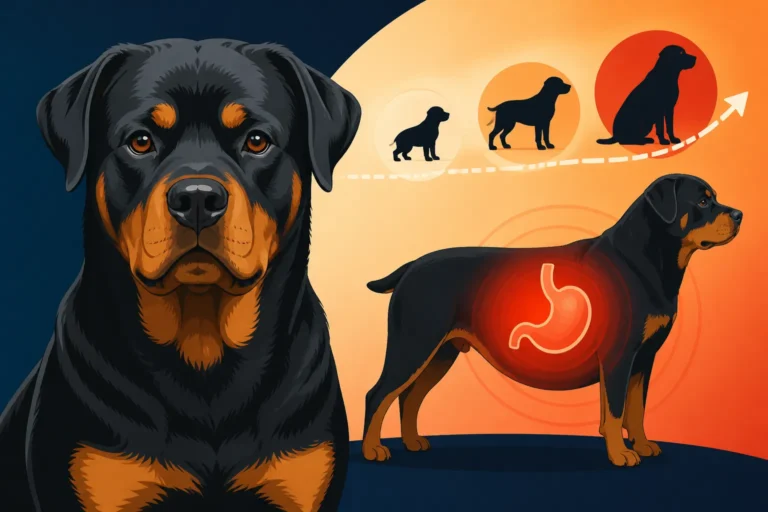
While the focus here is on how weight impacts a Rottweiler's hips, it's crucial to understand that an overweight or obese Rottweiler faces a cascade of health risks throughout their entire body. Their large frame makes them susceptible to many conditions, and excess weight compounds almost all of them, potentially shortening their lifespan and severely diminishing their quality of life.
Beyond the musculoskeletal issues, extra weight significantly strains the cardiovascular system, contributing to heart disease and high blood pressure. Their respiratory system can also be affected, leading to reduced stamina and heat intolerance, particularly with their dense black coats in warmer climates. Overweight dogs are also at a higher risk for certain cancers, diabetes, and even skin issues due to fat folds and reduced grooming flexibility. Managing your Rottweiler's weight isn't just about their comfort; it's about holistic health. It can also save you a lot in vet bills down the line. While having a comprehensive pet insurance plan from providers like Healthy Paws can certainly help mitigate unexpected costs, investing in preventive care, like weight management, is the best investment you can make in your dog's future. Ultimately, proper weight management helps ward off conditions like Senior Rottweiler Mobility Decline and ensures they remain an active, joyful companion for as long as possible.
Disclaimer
This article is intended for informational purposes only and does not constitute professional veterinary advice. Always consult with a qualified veterinarian for any health concerns or before making any decisions about your Rottweiler's diet, exercise, or medical care.