Rottweilers and Backyard Chickens
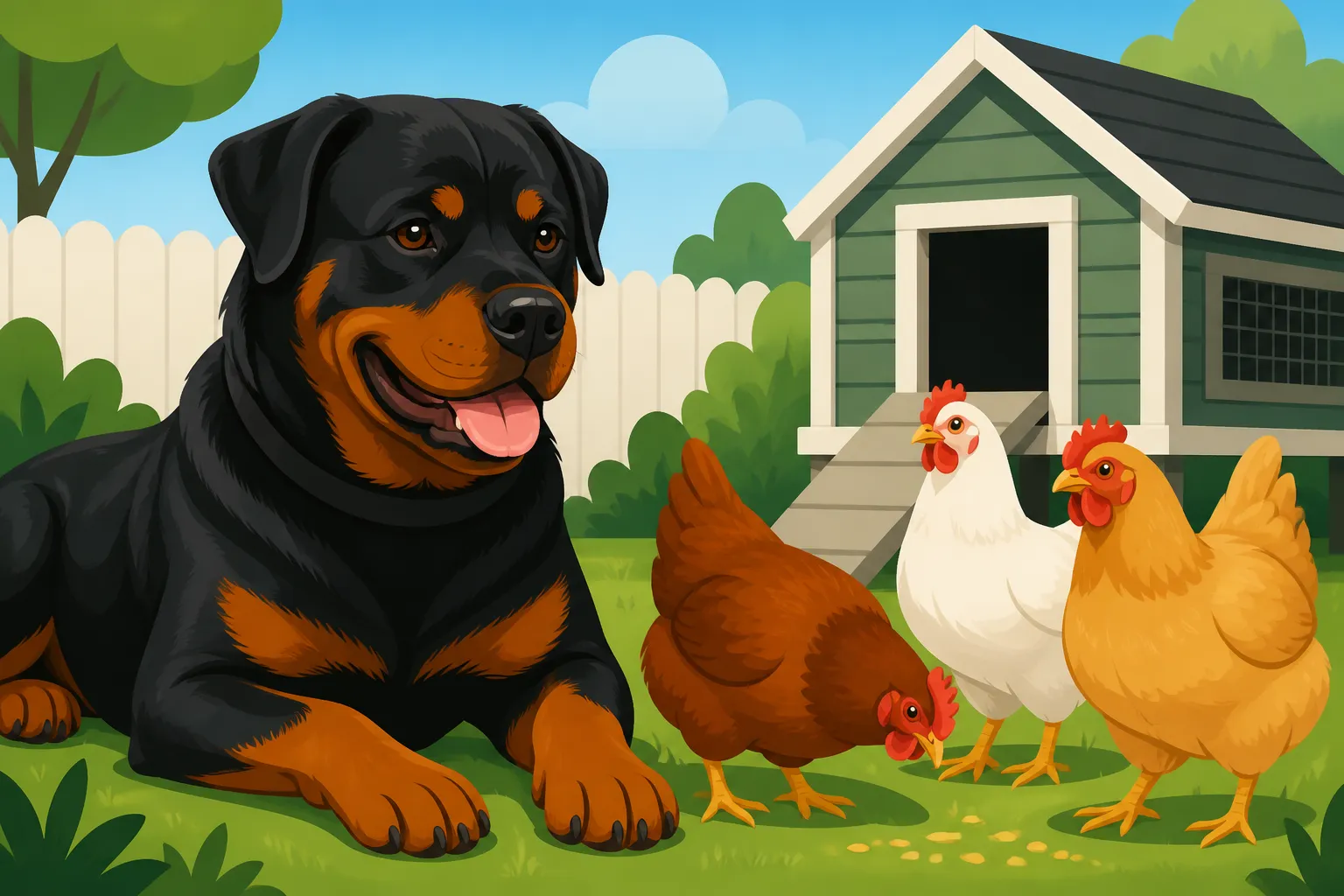
So, you're dreaming of fresh eggs in the morning and the comforting cluck of a backyard flock, but you also have a majestic, powerful Rottweiler patrolling your property. It’s a classic dilemma, one many homesteaders and dog lovers face: how can these two very different species coexist, especially when one is a natural predator and the other, well, a chicken? The truth is, integrating Rottweilers and backyard chickens is not for the faint of heart, nor is it a guaranteed success. It requires an immense amount of planning, unwavering consistency, and a deep understanding of your Rottweiler's inherent drives. This isn't just about teaching "sit"; it's about managing powerful instincts and ensuring the safety of all your beloved animals.
Understanding Your Rottweiler's Instincts Around Poultry
Before you even think about bringing home those adorable chicks, you need to deeply understand the drives that make your Rottweiler, well, a Rottweiler. These aren't just quirks; they're hardwired behaviors honed over centuries.
The Prey Drive: It's Deeper Than You Think
Let's talk about prey drive. Every dog has some level of it, but in working breeds like the Rottweiler, it can be particularly strong. Remember, these dogs descended from Roman drover dogs, powerful animals bred to manage and protect livestock. While modern Rottweilers are far removed from their ancient ancestors, that instinct to chase, grab, and "dispatch" smaller, moving creatures is often still very much alive, lurking just beneath the surface.
Chickens, with their sudden movements, fluttering wings, and high-pitched vocalizations, are practically designed to trigger a dog's prey drive. It's not malice; it's instinct. Your Rottweiler isn't thinking, "I want to hurt that chicken." It's thinking, "Movement! Chase! Catch!" For some Rottweilers, this might manifest as a playful chase, but for a 100-plus pound dog, even "play" can be lethal for a fragile bird. A quick shake of the head, a natural response to catching something, can break a chicken's neck instantly. Some individual Rottweilers will have a lower prey drive than others, but it's a gamble you can't afford to take with live animals. You might have seen your dog ignore squirrels or rabbits in the park, but the constant presence of chickens in "their" yard can change that dynamic entirely.
The Guarding Instinct: Friend or Foe?
Rottweilers are renowned for their guarding instincts. They are loyal protectors of their home and family, and they take that job seriously. This instinct is often what draws people to the breed. The question then becomes: will your Rottweiler perceive the chickens as part of "their flock" to be protected, or as intruders/prey? This is where it gets tricky.
Ideally, you'd want your Rottweiler to see the chickens as members of the family unit, under their protective umbrella. However, this is a nuanced behavior and far from guaranteed. A Rottweiler might guard the perimeter of the yard from outsiders, but still view the chickens within that perimeter as fair game for their prey drive. It's a fine line. There's also the potential for resource guarding. If your dog starts to "guard" the chickens, it might not be protection, but rather an assertion of ownership, potentially leading to aggression towards other pets or even people who approach the flock. Teaching your dog about Rottweiler Resource Guarding at Home is crucial, even if it's not directly related to chickens. It helps them understand boundaries and ownership in a broader sense.
Assessing the Risks and Realities of Coexistence
It’s easy to romanticize the idea of your noble Rottweiler gently overseeing a flock of happy hens, but the reality can be far more complex and, frankly, dangerous. You need to be brutally honest with yourself about the potential downsides.
The Immediate Dangers Chickens Face
For chickens, living alongside a large, powerful dog like a Rottweiler presents immediate, life-threatening risks.
- Chasing and Stress: Even if your Rottweiler never lays a tooth on a chicken, the constant stress of being chased or even just feeling threatened can be detrimental to a flock's health, egg production, and overall well-being. Chickens are prey animals; constant perceived danger will wear them down.
- Accidental Harm: A Rottweiler’s sheer size and strength mean that even an accidental bump, a playful paw swat, or an excited bark can cause serious injury or death to a chicken. Their skulls are delicate, their bones fragile. What feels like a nudge to your dog can be a catastrophic blow to a hen.
- The Lethal "Play Bite": As mentioned, a Rottweiler's bite force is substantial. Even if the intention isn't to kill, a natural instinct to "catch" or "hold" a struggling bird can easily result in fatal injuries. They don't understand the fragility of a chicken the way they might understand playing with another dog. Teaching Rottweiler Bite Inhibition and the Adult Mouth in puppyhood is important, but it's designed for interaction with other dogs and humans, not small prey animals.
Potential Problems for Your Rottweiler
It's not just the chickens at risk; your Rottweiler faces potential problems too.
- Ingestion Hazards: If your dog does catch and kill a chicken, there's a risk of them ingesting bones, feathers, or other parts that can cause choking, internal punctures, or blockages requiring emergency veterinary intervention. Even smaller quantities of raw chicken or feces can transmit parasites or bacteria like Salmonella, which can make your dog very sick.
- Injury from Pecking: While less common, a brave or desperate chicken might peck at your Rottweiler, especially if cornered. While unlikely to cause serious harm, a peck to a sensitive area like the eye or nose can be painful and lead to infection.
- Behavioral Regression and Stress: Constant management and correction around chickens can be stressful for your Rottweiler. It might lead to frustration, or even cause them to associate your presence with punishment. This can also undo other training, creating a dog that feels constantly under scrutiny in its own yard. This is particularly relevant if your dog is prone to Rottweiler Reactivity Toward Other Dogs or other behavioral challenges. You don't want to add another layer of stress to their environment.
Strategies for Safe Introduction and Management
If you're determined to try, the key words here are "safe introduction" and "management." This isn't a passive endeavor; it's an active, ongoing commitment.
Secure Enclosures: Your First Line of Defense
This is non-negotiable. Your chickens must have a secure enclosure that is impenetrable to your Rottweiler. This isn't just about keeping your dog out; it's also about keeping the chickens safely contained and protected from other predators.
- Robust Coop and Run: Invest in a high-quality, sturdy chicken coop and a fully enclosed run. Think hardware cloth (not chicken wire, which a Rottweiler can easily break) buried at least 6-12 inches deep to prevent digging underneath. The run needs to be tall enough that your Rottweiler cannot jump over it, and preferably covered on top to deter aerial predators and prevent your dog from jumping in. Check sturdy fencing options on sites like Amazon.
- Double Fencing: Consider creating a double-fenced area. This means an outer fence that defines your yard, and then a separate, inner fence specifically for the chicken run. This creates a buffer zone, adding another layer of security and separation. Even if your dog somehow breaches the first layer, there's still a barrier before they reach the chickens.
- No Free-Ranging Without Supervision: Even with a secure run, you might want your chickens to free-range occasionally. This should never happen when your Rottweiler has unsupervised access to the same area. Ever. This is a recipe for disaster.
Structured Training and Supervision
Training is paramount, but it must be realistic about overcoming instinct. You're not eliminating prey drive; you're managing it.
- Foundation Obedience: Your Rottweiler needs rock-solid obedience commands, particularly "leave it," "stay," and a reliable recall. These commands must be proofed in highly distracting environments. Start indoors, move to the yard without chickens, then eventually to the yard with chickens securely in their run.
- "Leave It": This command needs to be absolute. Practice with high-value distractions. If your dog can't "leave" a dropped piece of cheese, they certainly won't "leave" a fluttering chicken.
- "Stay": Your dog should be able to hold a long "stay" command, even when chickens are moving nearby.
- Reliable Recall: This is your emergency brake. If a chicken gets out, or your dog slips through a gate, you need to know they will come back to you immediately, no matter what.
- Controlled Introductions: Once your chickens are securely penned, begin controlled introductions. Keep your Rottweiler on a strong leash and harness (a walking harness designed for a large breed is crucial here, not just a collar, to prevent injury from pulling) and observe their reaction from a distance. Reward calm behavior. Gradually decrease the distance only if your dog remains calm and responsive to your commands. This process could take weeks or even months. A reputable online training resource like BAXTER & Bella can provide structured courses to help build these critical obedience skills.
- Constant Supervision: For any time your Rottweiler and chickens are in the same general area (even with a secure fence between them), you must be present and actively supervising. This means no quick dashes inside for a coffee, no checking your phone. Your eyes must be on your dog and the chickens. A lapse in judgment, even for a moment, can have tragic consequences.
- Muzzle Training: For early stages of supervised coexistence, or if your dog's prey drive is particularly strong, consider muzzle training your Rottweiler. A well-fitted basket muzzle allows the dog to pant, drink, and even take treats, but prevents them from biting. This is a temporary safety measure, not a permanent solution, but it can provide immense peace of mind during crucial training phases. Learn about Muzzle Training a Rottweiler Before You Need It to make it a positive experience for your dog.
Managing Expectations and Daily Routines
Even with the best training and security, you need to manage your own expectations.
- Realistic Assessment: Not every Rottweiler can safely coexist with chickens. Some dogs' prey drives are simply too strong to reliably manage. Be prepared to accept that permanent separation might be the only safe solution for your animals. It's not a failure on your part, but an acknowledgment of your dog's nature.
- Strict Rules and Separation: For the safety of everyone, you might need to establish strict routines where the chickens and your Rottweiler never have unsupervised access to the same outdoor space simultaneously. This might mean your dog gets yard time in the morning, and the chickens get free-range time in the afternoon, or vice-versa.
- Enrichment for Both: Ensure both your Rottweiler and your chickens have plenty of mental and physical enrichment in their separate spaces. A bored Rottweiler is more likely to create its own "fun," which could involve finding ways to get to the chickens. Provide plenty of appropriate chew toys for your Rottweiler, and Puzzle Feeders Built for a Rottweiler can keep their minds engaged. For chickens, provide dust baths, roosts, and space to forage.
| Factor | Risk to Chickens | Risk to Rottweiler | Mitigation Strategy |
|---|---|---|---|
| Prey Drive | Chasing, injury, death | Ingestion of harmful parts, stress | Secure enclosures, rock-solid obedience, constant supervision |
| Accidental Contact | Crushing, broken bones, internal injury | Minor pecks, stress | Strict physical separation, distance training |
| Resource Guarding | Potential aggression if dog 'claims' chickens | Stress, potential for injury if challenged | Early and consistent training, clear boundaries, separate resources |
| Boredom/Frustration | Increased attempts to access chickens | Destructive behavior, anxiety | Ample enrichment, structured exercise, mental stimulation |
| Contamination | Spread of disease from dog to chickens (unlikely) | Ingestion of chicken feces/pathogens, injury from coop | Regular cleaning, separate feeding/water areas, vet checks |
When Coexistence Isn't Possible: Alternative Solutions
Sometimes, despite your best efforts, it becomes clear that your particular Rottweiler and your chickens cannot safely share the same space. Recognizing this is not a failure, but responsible pet ownership.
Permanent Separation and Management
If true coexistence proves too risky, the most responsible approach is to maintain permanent, strict separation.
- Dedicated, Secure Areas: This means ensuring the chickens have a completely enclosed, predator-proof run and coop that your Rottweiler cannot access, even accidentally. Similarly, your Rottweiler needs their own secure yard or designated outdoor space where they can exercise and play without any chance of encountering the chickens. This might mean investing in additional fencing or using existing structures creatively. Think of it as having two distinct outdoor zones that never overlap.
- Rotational Access: If you only have one large yard, this might mean carefully managing rotational access. For example, your chickens free-range for a few hours in the morning while your Rottweiler is indoors or on a walk, then the chickens are secured, and your Rottweiler gets their yard time. This requires meticulous scheduling and adherence. It's a commitment that never lets up, much like managing a dog's general outdoor safety; you always need to be aware of what's happening outside.
- Continuous Vigilance: Even with separate areas and rotational access, you need to maintain continuous vigilance. Gates must always be latched, fences inspected regularly for damage, and routines strictly followed. A momentary lapse could still lead to a tragic encounter. This might involve additional training to ensure your Rottweiler understands and respects barriers, even when you're not actively supervising from inches away.
Rehoming or Choosing One Over the Other
This is the hardest conversation, but it's one that responsible pet owners must be willing to have. If, after all efforts, the safety of either your chickens or your Rottweiler (or both) is compromised, you must consider the difficult decision of choosing one over the other, or finding a more suitable home for one of them.
- Prioritize Safety: The welfare and safety of all living creatures in your care must be the top priority. If the stress of constant guarding, the risk of injury, or the perpetual fear for your chickens' lives is too high, then a change is necessary. No amount of fresh eggs is worth the life of a beloved pet, whether feathered or furred.
- Finding Good Homes: If you decide that you cannot safely keep both, research options for rehoming either your chickens (many farms are happy to take well-cared-for hens) or your Rottweiler. Contact Rottweiler rescues, breed clubs, or trusted animal welfare organizations who can help place your dog in a home better suited to their needs. Similarly, if your dog is the established family member, consider whether a backyard flock is truly a viable option for your current home. This could be a particularly hard decision if your Rottweiler is older, or if you've already had to make hard calls, like Making End-of-Life Decisions for a Rottweiler. It's always about their well-being.
Living with a Rottweiler and wanting to expand into backyard chickens can be a dream combination, but it's a dream that demands immense responsibility, a deep understanding of animal behavior, and a readiness for constant management. It’s certainly possible, but never easy, and always requires putting safety first.
Disclaimer
This article is for general informational purposes only and does not constitute professional advice. Laws, prices and regulations vary by location and change over time. Consult a qualified professional for guidance on your specific situation.