Door Manners for a Rottweiler That Barges
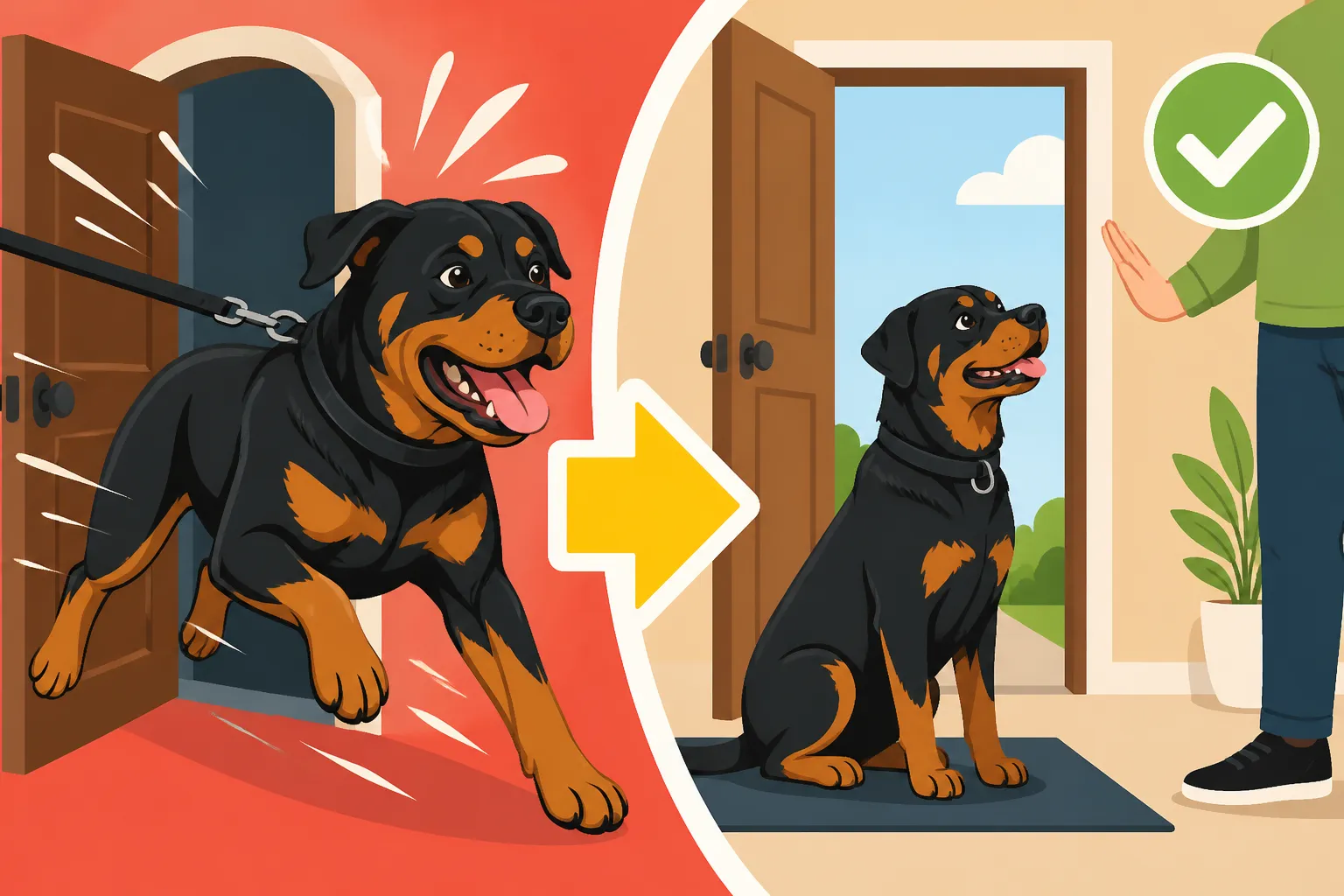
Few things are as jarring as a hundred-pound Rottweiler suddenly barreling through a doorway, nearly knocking you off your feet or escaping into the street. It’s not just a minor annoyance; it’s a genuine safety hazard for everyone involved, especially when guests or small children are present. This comprehensive guide will walk you through proven strategies and practical steps to transform your powerful Rottweiler's door manners, cultivating calm and controlled entries and exits.
Why Your Rottweiler Barges Through Doors and Why It's More Than Just Annoying
It’s easy to get frustrated when your big, beautiful Rottweiler shoves past you at every door, but understanding why they do it is the first step toward changing the behavior. Often, it's a mix of their natural drives, learned habits, and pure, unadulterated enthusiasm. Dismissing it as just "being a dog" can be a disservice to both you and your companion, as this behavior carries real risks.
The Instinctual Drive and Learned Behavior
Rottweilers, by nature, are powerful, confident dogs. Historically, they were bred for cattle droving, which meant moving large, often resistant, animals. This background instilled a strong forward momentum and a desire to be in control of movement. While your modern Rottweiler isn't herding cows through your kitchen, that inherent drive can manifest as a tendency to push boundaries, literally, when it comes to doorways. If a dog learns that barging gets them what they want – outside, to a person, to an exciting event – they will continue to do it. It's a self-reinforcing behavior. They push, the door opens, they get to the good stuff. From their perspective, it’s a highly effective strategy.
Think about it: every time you allow your Rottweiler to push their way out first, or if you simply open the door because they're pushing their nose into it, you're inadvertently teaching them that their pushy behavior is the key to unlocking the exciting world beyond. It’s not a malicious act; it’s simply a dog optimizing their actions based on the results they get. Breaking this learned pattern requires a conscious effort to change the "rules of the door."
The Safety Concerns for Both Dog and Human
A barging Rottweiler isn't just rude; it's genuinely dangerous. Imagine a child, elderly family member, or even yourself, being knocked off balance by a dog that can weigh upwards of 120 pounds. The force behind a charging Rottweiler is significant, and accidental injuries are a very real possibility. Beyond the physical impact, there's the risk of escape. An open door, coupled with a dog determined to bolt, can lead to your Rottweiler running into traffic, getting lost, or encountering situations that could put them or others at risk. A Rottweiler Leash Manners at a Hundred Pounds is vital, but door manners are the first line of defense before the leash even comes into play.
Consider guests arriving. A Rottweiler who barges through the door isn't just a potential tripping hazard; it can also create a startling and intimidating first impression, even if your dog is completely friendly. It undermines your control and can make people wary of interacting with your dog. The simple act of preventing door barging is a crucial step in ensuring the safety and comfort of everyone, two-legged and four-legged alike, who enters or exits your home.
How Excitement Escalates Into Rushing
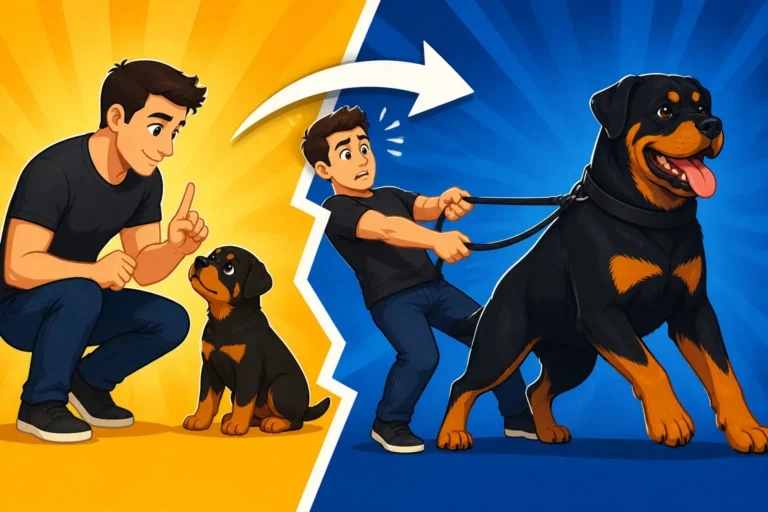
Many Rottweilers aren't trying to be dominant; they're just overwhelmingly excited. The door represents the gateway to all things wonderful: a walk, a car ride, seeing a beloved human, or greeting a visitor. That surge of anticipation can quickly overwhelm any nascent impulse control they might have, leading to a frantic rush. This is especially true for young dogs or those who haven't had consistent training. A puppy who bounces with excitement at the door might seem cute, but when that puppy becomes a powerful adult, that same behavior becomes problematic. This is why Rottweiler Puppy Training Through the First Year is so critical.
The adrenaline rush of approaching the door can override their ability to think calmly. They're so focused on the outcome (getting outside, greeting someone) that they forget any manners they've learned. Our job as their guardians is to teach them that the fastest way to get to the good stuff is actually by being calm and patient, not by plowing ahead. It requires breaking down the behavior into small, manageable steps and rewarding the calm choices, even if they're small at first.
Laying the Groundwork: Core Principles for Polite Door Manners
Teaching door manners to a strong, intelligent breed like a Rottweiler isn't about brute force or punishment. It's about clear communication, consistent boundaries, and making the right choices more rewarding than the wrong ones. This foundation will serve you well, not just at the front door, but for every threshold in your home and life.
The Power of Consistency and Clear Rules
Imagine if sometimes the door opened when you pushed, and sometimes it didn't, with no clear reason. You'd keep pushing! Dogs thrive on predictability. If your Rottweiler sometimes gets to barge through and other times is held back, they will always try to barge, hoping it's one of the "allowed" times. Consistency means every single person in the household, every single time, adheres to the same rules at every door. No exceptions. This means no one opens the door until the dog is calm and waiting, whether you're going out for a walk or just stepping into the backyard.
Establishing clear, consistent rules means everyone who interacts with your Rottweiler understands the "door protocol." This includes family members, dog walkers, and even frequent guests. It's not about being harsh, but about being utterly predictable. When your Rottweiler understands that a calm "wait" is the only way to get through a door, the barging behavior will naturally diminish because it simply stops working. This kind of consistent boundary setting is a cornerstone of effective Training a Rottweiler Before It Outweighs You.
Positive Reinforcement: Rewarding Calmness, Not Chaos
Positive reinforcement is your most powerful tool here. Instead of focusing on punishing the barging, focus on rewarding the absence of barging – the moments of calm, the slight hesitation, the moment they sit or lie down. Keep high-value treats handy by every door. The instant your Rottweiler offers a moment of stillness or eye contact before crossing the threshold, mark that behavior with a verbal "yes!" or a click, and immediately offer a treat. The goal is to make standing calmly at the door far more rewarding than launching through it.
For a dog as physically impressive as a Rottweiler, you need rewards that truly motivate them. This could be tiny pieces of cooked chicken, cheese, or even just a favorite toy. The key is to deliver the reward immediately after the desired behavior, so they make the connection. Over time, the reward becomes the opportunity to go through the door itself, but in the initial stages, those tasty treats are invaluable for shaping the behavior you want to see. Many online training platforms, such as BAXTER & Bella, emphasize positive reinforcement, and their techniques can be easily adapted for a strong breed like a Rottweiler.
Management Tools to Prevent Rehearsal of Bad Habits
While you're actively training, management is critical to prevent your Rottweiler from practicing the bad habit of barging. Every time they get to barge through a door, it reinforces the behavior, making it harder to break. This is where tools like baby gates, leashes, and even crates come into play. Before opening an exterior door, you might clip a leash to your Rottweiler and have them wait a few feet back. This gives you immediate control and prevents an accidental escape.
For interior doors, especially during initial training or when guests are arriving, using baby gates can keep your Rottweiler from rushing the main entry point. You can find sturdy, tall gates on Amazon that can withstand a determined Rottweiler. If your dog is particularly excitable with visitors, using a crate can be a lifesaver. Ensure you have The Crate Size a Hundred Twenty Pound Rottweiler Needs so they are comfortable while contained. This isn't about punishment; it’s about setting up the environment for success and preventing them from making mistakes while they are learning. Management gives you the breathing room to teach, rather than constantly reacting to, unwanted behaviors.
Step-by-Step: Teaching the "Wait" Command at Every Threshold
The "wait" command is going to be your best friend when it comes to door manners. It's a fundamental impulse control exercise that teaches your Rottweiler to pause and defer to your lead before crossing any boundary. This isn't just about doors; it’s about teaching them to control their urges, which is invaluable in many situations.
Starting with a Simple "Wait" at an Open Door
Begin this exercise in a low-distraction environment, perhaps an interior door leading to another room. With your Rottweiler on a leash, approach the door. Before you even touch the knob, ask them to "wait." If they immediately charge forward, stop, close the door, and take a step back. Re-approach, ask "wait," and this time, just slightly open the door. The moment they push their nose into the gap or try to follow, immediately close the door. No yelling, no fuss, just a calm, firm "no" or "uh-uh" as the door closes.
The instant they hesitate, even for a split second, and look at you, open the door a tiny bit more, say "yes!" and give them a treat. Repeat this, gradually increasing the duration the door is open and the amount it’s open before they are allowed to pass. Only when they are calmly waiting with the door fully open should you give them a release cue like "okay" or "free" and allow them to walk through, rewarding them on the other side. This process can take many repetitions, but it teaches them that impatience makes the door close, while calm waiting makes it open. These are crucial Rottweiler Impulse Control Games for a powerful breed.
Progressing to Closed Doors and Leash Work
Once your Rottweiler understands "wait" with an already open door, it's time to tackle closed doors. Start by having them on a leash. Approach a closed door (like your front door, for example). Ask them to "wait" before you even touch the handle. Reward any calmness. Then, reach for the handle. If they lunge or get excited, remove your hand from the handle and wait for them to calm down. Only when they are calm should you touch the handle again. This teaches them that the act of reaching for the handle is a cue for calm behavior, not a race.
Next, open the door slightly. If they push, immediately close it. Repeat the "wait" command. Only when they maintain their "wait" as the door opens wider should you give the release cue. Practice this repeatedly, both with you going through first and with them waiting for your cue to go through. This also applies to car doors! Make sure they "wait" before leaping out. For a detailed guide on patience, considering resources like BAXTER & Bella can provide structure and support for this training.
Practicing with Different Exits and Entrances
Don't limit this training to just one door. Every single doorway in your home – the back door, the garage door, the door to the laundry room, even the gates in your yard – is an opportunity to practice. Each new location will present a slightly different challenge and distraction level. What works perfectly at the kitchen door might need more work at the front door where the smells and sounds of the outside world are far more exciting.
Vary who opens the door and where you go. Sometimes you're just stepping out to get the mail, other times it's a full walk. The more scenarios you expose your Rottweiler to with consistent "wait" expectations, the more solid their understanding will become. Remember, a Rottweiler needs to understand that the rule applies universally, not just to a specific door or person. This broad application is a key component of effective Rottweiler Puppy Training Through the First Year.
| Door Type | Initial Challenge | Training Focus | Key Outcome |
|---|---|---|---|
| Interior Door | Rushing to another room, excitement | Short "wait," body pressure control | Calm entry/exit between rooms |
| Back Yard Door | Bolting for freedom/potty, high anticipation | "Wait" until released, leash management (initially) | Controlled backyard access |
| Front Door (Exiting) | Extreme excitement for walks/car rides | "Wait" with leash in hand, door opening slowly | Waiting politely before stepping outside |
| Front Door (Entering) | Rushing inside after a walk, jumping on guests | "Wait" on threshold, calm entry, no jumping | Calm entry, polite greeting of guests |
| Car Door | Leaping out before safe, knocking people over | "Wait" before jumping down, leash on | Controlled exit from vehicle |
Handling Real-World Scenarios and Advanced Door Etiquette
Once your Rottweiler has a good grasp of the "wait" command in basic scenarios, it's time to test and generalize that training in more challenging, real-world situations. This is where the rubber meets the road, especially when distractions like exciting guests or the lure of the great outdoors come into play.
Managing Guest Arrivals and Departure Excitement
Guest arrivals are often the ultimate test for door manners. The doorbell rings, and suddenly all previous training can go out the window in a flurry of barks and body slams. To manage this, plan ahead. Before guests arrive, have your Rottweiler on a leash, perhaps tethered a short distance from the door, or even in their crate. Practice having them "wait" calmly while the doorbell rings and you approach the door. You might need to ask a friend to ring your doorbell a few times for practice. Reward quiet waiting.
When guests actually arrive, instruct them on how to interact. Ask them not to acknowledge your Rottweiler until your dog is calm. If your Rottweiler still jumps or acts overly excited, have them go back to their "wait" spot or crate until they can settle. Gradually reintroduce them to the guest once calm. This teaches your Rottweiler that calm behavior earns them interaction, whereas frenzied excitement gets them removed from the situation. This will also help with issues like Rottweiler Jumping on Guests at Full Weight. You're essentially teaching them the proper way to conduct themselves when meeting new people, tying into Socializing a Rottweiler Puppy Properly but at an adult level.
Dealing with Multiple Doors and Gates
Life isn't always about a single front door. You might have multiple exits, a garage door, side gates, or even internal baby gates. Each one needs to be treated as a training opportunity. Don't assume that mastery at the front door translates perfectly to the back gate. The distractions, sights, and smells associated with each might be different, triggering a different level of excitement or determination in your Rottweiler.
Work through the "wait" protocol at each new threshold just as diligently as you did with your primary entry points. If your Rottweiler struggles at a particular gate, go back to basics, using the leash for control and high-value treats to reinforce calm behavior. The goal is for "wait" to be a universal command that applies to any opening, regardless of its location or purpose. Consistent application will reinforce the rule that all thresholds require permission to cross.
Troubleshooting Common Setbacks and Relapses
It's completely normal to experience setbacks. You might have a perfect week, and then suddenly your Rottweiler barges through the door again. Don't get discouraged! Re-evaluate what might have gone wrong. Was there a lapse in consistency from a family member? Was the environment too distracting? Or perhaps your Rottweiler was simply having an off day. The key is to calmly and immediately go back to basics. If they barge, simply put them back on a leash, take them away from the door, and restart the "wait" exercise.
For persistent issues, consider consulting with a professional dog trainer experienced with Rottweilers. Sometimes an outside perspective can identify subtle cues or inconsistencies you might be missing. They can also offer specialized techniques for addressing more ingrained habits. Remember that training is an ongoing process, especially with a powerful and intelligent breed like a Rottweiler. Every relapse is an opportunity to reinforce the training and solidify those good manners even further. Keep an eye out for any underlying behavioral changes, as sometimes a sudden shift in behavior, even at the door, can be a subtle sign of pain, as discussed in Rottweiler Behavior Changes That Mean Pain.
Disclaimer
This article is for general informational purposes only and does not constitute professional advice. Laws, prices and regulations vary by location and change over time. Consult a qualified professional for guidance on your specific situation.