Rottweiler Bumping That Comes From Droving Cattle
It’s a scenario many Rottweiler owners know well: you’re walking through your kitchen, perhaps carrying a tray of snacks, and suddenly, you feel a solid, warm pressure against your leg, subtly redirecting your path. Or maybe you're sitting on the couch, and your big, beloved Rottie gently but firmly wedges himself between you and the armrest. This isn't just a clumsy dog; it's a deep-seated behavioral trait, a direct echo of their ancient heritage as droving cattle dogs. This guide will explore exactly what this "bumping" behavior is, why your Rottweiler does it, and most importantly, how to manage and channel this powerful instinct for a harmonious home life.
Understanding the Rottweiler's Droving Heritage
To truly understand why your Rottweiler bumps, you have to look back in time, far beyond the comfortable family couch. These aren't just big, sweet dogs; they carry the genetic blueprint of hard-working herders, protectors, and companions to butchers and cattle drovers. Their history is etched into their very bones and, indeed, their behavioral quirks.
From Roman Cattle Drives to Modern Homes
Imagine ancient Roman legions marching across Europe, needing to move vast herds of cattle to feed their armies. They didn't have fences or modern livestock handling equipment. What they had were powerful, intelligent dogs, likely mastiff-types, that could manage these herds. These dogs were the ancestors of our modern Rottweilers, accompanying the Romans through what is now Germany. The town of Rottweil, where our breed eventually got its name, became a significant cattle trading center, and these dogs became indispensable.
The Roman drover dogs learned to move livestock by using their body. They'd lean into a cow's flank, guiding it in the desired direction, or block its path with their sturdy frames. It was an efficient, effective way to control large, stubborn animals without resorting to nips or bites that could injure the valuable cattle. This method of physical pressure, of "bumping" or "body blocking," became ingrained. It's a primal instinct, a learned behavior passed down through generations, making it a very strong part of who your Rottweiler is today. Understanding The Roman Drover Dogs Behind the Rottweiler helps contextualize many of their unique traits.
The Butcher's Dog and Its "Pushy" Tendencies
Fast forward many centuries, and these dogs were still hard at work, now known as "Metzgerhunds," or "Butcher's Dogs," in Rottweil. Their jobs expanded. They not only drove cattle to market but also guarded the butcher’s money pouch, often tied around their neck, and protected their master's wares. Their imposing presence and willingness to use their body to deter threats or direct livestock were highly valued. What a Metzgerhund Did in a Day's Work wasn't just about strength; it was about intelligent application of that strength.
This history means your Rottweiler isn't just being affectionate when they nudge you off the couch or block your path to the door. They might be trying to "herd" you, direct you, or even "guard" you within a perceived boundary. It's their instinct to control space and movement, a deeply ingrained habit from centuries of managing much larger animals. This isn't aggression; it's a management strategy. For us, it might feel a bit pushy, but for them, it's just being a Rottweiler. This strong instinct means that from the moment you bring a puppy home, Training a Rottweiler Before It Outweighs You is absolutely crucial.
What Rottweiler Bumping Looks Like
Bumping behavior in Rottweilers isn't a single, uniform action. It can manifest in various ways, from subtle nudges to more overt physical interventions. Recognizing the different forms it takes can help you understand your dog's intent and how best to respond.
The Subtle Nudge Versus the Full-Body Block
Sometimes, the bumping is a gentle, almost imperceptible nudge with their head or shoulder, particularly when they want your attention or to guide you somewhere. You might feel a soft pressure against your hand while you're typing, encouraging you to pet them, or a light tap on your leg as you walk past the treat jar. This softer bumping is often a communication tactic, a way for your Rottweiler to "talk" to you without barking.
Then there's the more pronounced full-body block. This is where your Rottweiler uses their substantial weight and solid frame to physically impede your movement or direct you. Imagine trying to walk into another room, and your Rottweiler suddenly stands directly in your path, leaning into you until you shift direction. Or perhaps they'll "herd" you into a corner of the yard, effectively fencing you in with their body. This isn't malicious; it's them using their droving instinct to control your space, much like their ancestors controlled cattle. They're not trying to be dominant in an aggressive way, but rather to manage your movement, just as they would a stray calf. It's also often seen when they want to prevent you from going somewhere they deem "unsafe" or when they want you to stay close.
When Bumping Becomes a Problem
While often benign, this behavior can certainly become problematic, especially given the Rottweiler's size and strength. A playful "bump" from a hundred-pound dog can easily knock over a small child or an elderly person. If your Rottweiler is routinely bumping guests, it can be intimidating and even dangerous. Moreover, if the bumping is paired with other behaviors like barking or growling, it could indicate a deeper issue of resource guarding or discomfort, rather than just a simple droving instinct.
For instance, if your Rottweiler consistently blocks you from approaching their food bowl or a favorite toy, that’s not just a casual bump. That's a form of Bowl Guarding in a Rottweiler Bred to Guard or A Rottweiler Guarding Toys and Chews, which requires a different training approach. Similarly, if your dog tries to block people from approaching you, it might be A Rottweiler That Guards a Person. It's crucial to differentiate between an ingrained instinct played out innocently and a guarding behavior that needs serious modification. The key is context and consistency. If the bumping is constant and impacts daily life, or if it causes safety concerns, it's time for some intentional training.
| Type of Bumping | Intent (Likely) | Potential Problem | Example |
|---|---|---|---|
| Subtle Nudge | Seeking attention, gentle guidance | Can be annoying if constant | Head nudge for pets, paw tap on leg |
| Body Block (Soft) | Herding, directing | Can trip people, inconvenient | Standing in doorway, leaning on legs while sitting |
| Body Block (Firm) | Preventing movement, guarding space/person | Can cause falls, perceived as aggressive | Physically pushing you away from an area/person |
| Bumping with Growl/Stiff Body | Resource guarding, discomfort | Dangerous, requires intervention | Blocking access to food, toy, or specific person with body and vocalization |
Managing and Training the Bumping Behavior
While you can't erase a deeply ingrained instinct, you can absolutely shape it and teach your Rottweiler appropriate ways to express it. The goal isn't to stop them from ever bumping, but to teach them when and how it's acceptable, and when it's not.
Early Intervention for Puppies
The absolute best time to address bumping is when your Rottweiler is a puppy. A little nudge from a 20-pound puppy is cute; the same move from a 110-pound adult is less so. Puppyhood is prime time for Rottweiler Puppy Training Through the First Year. From day one, start teaching boundaries. When your puppy bumps you, gently but firmly redirect them. Step into their space, making them move around you, rather than you moving for them. Use a consistent verbal cue like "off" or "no bump."
Teach them "place" or "stay" commands from a young age. When you're moving through a doorway or preparing a meal, ask your puppy to go to their mat or bed. Reward them heavily for staying. This teaches them that they don't need to be right underfoot, and that you control the space. Consider enrolling in puppy classes where a professional can help you navigate these early behaviors. Brands like BAXTER & Bella offer online puppy training programs that provide structured guidance for these kinds of issues, letting you learn at your own pace from home. Early socialization is also key, helping them learn appropriate interactions with people and other dogs, reducing any potential guarding aspects of bumping. Introducing a Rottweiler Puppy to Strangers Safely is a great start.
Consistency and Positive Reinforcement for Adults
Training an adult Rottweiler requires patience and even greater consistency, but it's entirely possible. Remember, you're working against years of ingrained behavior, so don't get discouraged if progress feels slow. The principles remain the same:
- Identify the trigger: When does the bumping happen most often? Is it when you're going to the kitchen? When you grab your keys? Knowing the trigger helps you anticipate and intervene before the bump occurs.
- Redirect and reward: When your Rottweiler shows signs of wanting to bump (e.g., gets too close, starts to lean), immediately redirect them. Ask for a "sit" or "stay" in a designated spot. When they comply, reward them generously with praise or a high-value treat. The idea is to reward the absence of the unwanted behavior and the presence of a desired one.
- Teach "move" or "out of the way" cues: Train your dog to move out of your path on command. Hold a treat away from them and lure them to step aside, then reward. Practice this frequently in low-distraction environments, then gradually increase the challenge.
- Practice walking through doorways: Doorways are common bumping zones. Before entering a door, have your Rottweiler sit and wait. Only proceed when they are calm and you release them. You go first, always. This reinforces your leadership in navigating shared spaces.
- Never punish a bump with force: Pushing your Rottweiler away or yelling can confuse them or even damage your bond. They don't understand why they're being punished for an instinctual behavior. Instead, focus on redirection and rewarding alternatives.
Consistency from everyone in the household is paramount. If one person allows bumping and another doesn't, your Rottweiler will get mixed signals, making training much harder.
Tools and Techniques to Aid Training
Sometimes, you need a little help to manage a powerful Rottweiler. For walking, especially if the bumping translates to Rottweiler Leash Pulling at Adult Weight, a front-clip harness or a head halter can be incredibly useful. These tools give you better leverage and control, making it easier to guide your dog without a full-on wrestling match. Many good quality options are available on platforms like Amazon, sized specifically for large breeds.
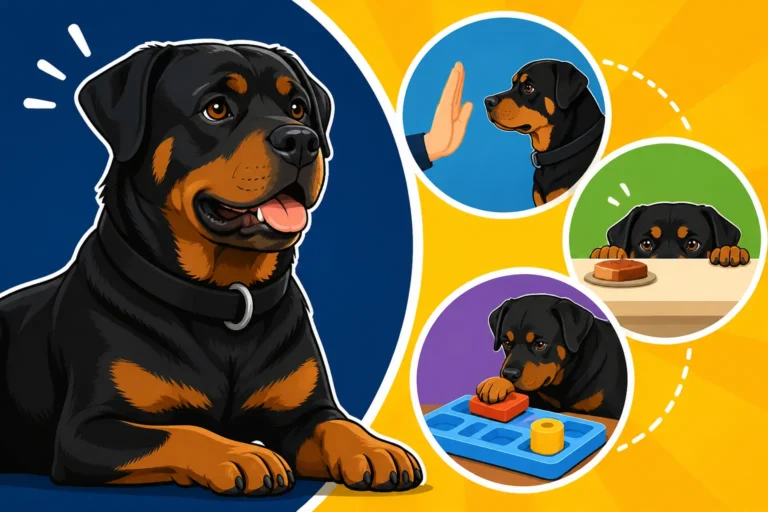
For home use, a long line (a lightweight leash 15-30 feet long) can be great for practicing recall and "stay" commands in the yard, giving your dog freedom while you retain a measure of control and can intervene if they start to "herd" you. Puzzle feeders and enrichment toys can also help redirect some of that mental energy and working drive that often fuels bumping. If your Rottweiler is constantly trying to "manage" you, giving them a "job" to do, like figuring out how to get treats from a toy, can be a wonderful distraction and mental workout. You can find robust, large-breed appropriate puzzle toys and long lines from retailers like Amazon.
Living Harmoniously with a Bumping Rottweiler
Having a Rottweiler means embracing their unique traits, and the droving instinct is one of them. The goal isn't to eradicate it, but to integrate it into your life safely and respectfully.
Setting Clear Boundaries
Clear boundaries are the cornerstone of living with any powerful breed, and especially one with strong instincts like the Rottweiler. Your home is not a free-for-all for their herding tendencies. Establish zones where bumping is strictly off-limits. For example, the kitchen while you're cooking, or specific hallways. Use gates if necessary, especially when guests are over, to prevent accidental knocks or uncomfortable encounters.
Teach your Rottweiler to respect personal space. This means they shouldn't be constantly invading your bubble unless invited. Practice having them sit at a distance while you perform tasks. When you want to invite them closer for a snuggle, use a clear cue like "come say hello" or "up." This teaches them that physical contact and closeness are by invitation, not by forceful initiation. Remember, you are the leader who decides where everyone moves and settles. This relates directly to the importance of Teaching a Rottweiler to Settle Indoors.
Providing Appropriate Outlets for Instincts
Suppressing a strong instinct without providing an alternative outlet is rarely successful and can lead to frustration for your dog. Instead, find constructive ways for your Rottweiler to express their droving or "managing" behaviors. This could involve:
- Structured walks: Instead of aimless meandering, engage in focused walks where your dog has a "job" to do, like heeling precisely. This gives them mental engagement and channels their desire to be useful.
- Targeting games: Teach your Rottweiler to touch specific objects with their nose or paw on command. This uses their focus and body awareness in a controlled way, similar to how they'd target a cow to move it.
- Dog sports: Consider activities like obedience, rally, or even carting. While not true herding, carting taps into their historical role of pulling carts and using their body in a productive way. These sports provide mental stimulation, physical exercise, and a "job" that satisfies their breed drives. The structured environment of these activities can greatly reduce unwanted "managing" behaviors at home. Even simple Rottweiler Impulse Control Games can help channel this energy.
- "Find it" games: Hide treats or toys around the house and have your Rottweiler find them. This engages their powerful nose and gives them a task to complete, fulfilling their innate desire to work and problem-solve.
By providing these outlets, you acknowledge and respect your Rottweiler's heritage while ensuring they are a well-mannered and safe companion in your modern home. It's about working with their instincts, not against them, to build a stronger, more understanding bond.
Disclaimer
This article is for general informational purposes only and does not constitute professional advice. Laws, prices and regulations vary by location and change over time. Consult a qualified professional for guidance on your specific situation.