Rottweiler Exercise Limits Before Eighteen Months
One of the biggest heartbreaks for any Rottweiler owner is seeing their beloved companion struggle with joint issues too soon. It’s a common frustration to want your rambunctious puppy to run and play to their heart's content, but knowing that too much too soon can actually cause lifelong damage. This guide is here to walk you through the crucial exercise limits for your growing Rottweiler, especially before they hit that critical eighteen-month mark, ensuring you foster healthy development without risking their future mobility.
The Unique Growth Trajectory of a Rottweiler Puppy
Rottweiler puppies are undeniably adorable, chunky, and full of boundless energy, but their rapid growth rate sets them apart from smaller breeds, and it demands a completely different approach to exercise. You look at that solid frame and think they're built like tanks, but underneath, their skeletal system is still incredibly vulnerable. This is where many well-meaning owners can inadvertently cause problems.
Rapid Weight Gain Versus Skeletal Maturity
It's easy to forget that while your Rottweiler puppy is packing on pounds at an astonishing rate, turning into a substantial dog almost before your eyes, their bones, joints, and ligaments aren't maturing at the same pace. They get heavy very quickly, often reaching a significant percentage of their adult weight by six to eight months. Imagine a human child gaining eighty pounds in a few months – that's the kind of intense growth your puppy is undergoing. This rapid increase in mass puts immense pressure on developing structures that aren't yet ready to handle high-impact activities. It's a fundamental mismatch between their physical size and their underlying skeletal strength. Their eagerness to play often masks the fact that their bodies are still very much under construction. Ignoring this critical phase can lead to problems like Osteochondrosis From Overfeeding a Rottweiler or even exacerbated Rottweiler Hip Dysplasia Symptoms Before Age Two.
The Dangers of Early Impact and Repetitive Strain
Think about it: a one hundred twenty-pound adult Rottweiler jumping off a deck or repeatedly running on hard pavement is one thing. A sixty-pound, six-month-old Rottweiler puppy doing the same is entirely different. The forces transmitted through their still-soft bones and joints can be damaging. Repetitive strain, like long jogs on concrete or endless games of fetch involving sharp turns and stops, can create micro-traumas in their developing cartilage and bone. These small injuries might not show up immediately, but they contribute to the wear and tear that can lead to debilitating conditions later in life. It's not about preventing them from moving; it's about guiding their movement in ways that support, rather than hinder, healthy growth. This early careful management is key to helping them avoid issues that shorten a Rottweiler's Rottweiler Lifespan and the Eight to Ten Year Average.
Understanding Growth Plates and Their Vulnerability
The concept of growth plates is absolutely central to understanding why exercise limits are so critical for your young Rottweiler. These aren't just abstract veterinary terms; they're vital, temporary structures in your puppy's bones that dictate how they grow.
What Are Growth Plates and Why Are They Different in Large Breeds
Growth plates, also known as epiphyseal plates, are areas of cartilage located near the ends of long bones in young, growing animals. This cartilage is where new bone tissue is generated, allowing the bones to lengthen. Think of them like expansion joints in a bridge – they're where all the action happens. Because they are made of cartilage, they are much softer and more fragile than the mature bone that surrounds them. In a large, heavy breed like a Rottweiler, these growth plates are under significant stress due simply to the puppy's rapidly increasing body weight and the powerful muscles attached to these developing bones. A minor twist, jump, or fall that might barely faze a small terrier could cause a significant injury to a Rottweiler puppy's growth plate, potentially leading to improper bone growth, deformities, or even stunted limbs. This vulnerability is why we talk so much about Rottweiler Growth Plates and Why They Close So Late.
When Do Rottweiler Growth Plates Typically Close
The timing of growth plate closure is crucial because once they've closed, the cartilage has been replaced by solid bone, making the bone much stronger and less susceptible to injury from normal activity. For Rottweilers, these growth plates generally don't fully close until they are between 18 and 24 months of age. That's a long time! Many owners are surprised to learn their dog is still "growing" and therefore vulnerable well into their second year. This is a much longer period than smaller breeds, which often have closed growth plates by 12 months or even earlier. The exact timing can vary slightly from dog to dog, and between males and females, but aiming for that 18 to 24-month window for caution is always the safest bet. During this extended period, activities need to be carefully monitored to prevent damage. Rottweiler Growth Plates Closing at Eighteen to Twenty-Four Months gives more detail on this critical period.
Recommended Exercise Guidelines for Young Rottweilers
Navigating the exercise needs of a growing Rottweiler puppy means finding a balance between physical activity that supports muscle development and mental stimulation, and avoiding anything that risks their vulnerable joints. It's not about restricting them entirely, but rather about controlled, appropriate movement.
The "Five-Minute Rule" and Controlled Activity
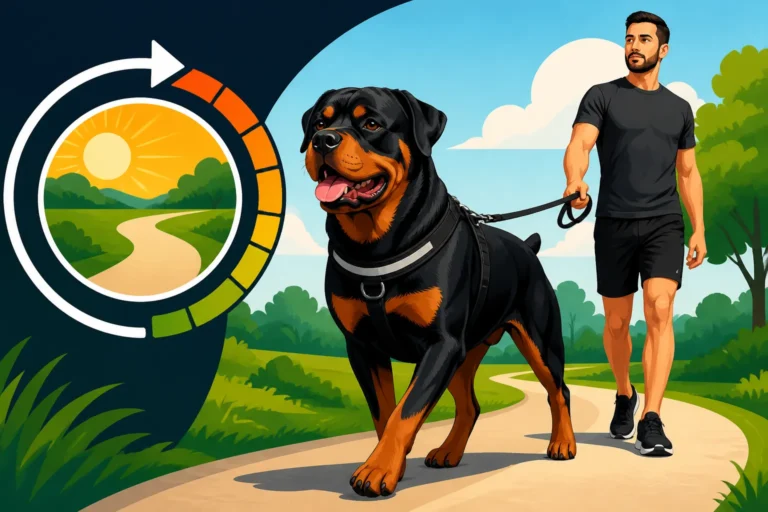
A commonly cited guideline for puppy exercise, particularly for large and giant breeds, is the "five-minute rule." This suggests that a puppy needs approximately five minutes of structured exercise per month of age, twice a day. So, a four-month-old Rottweiler puppy would get about 20 minutes of walks twice a day. This includes leash walks, not free-for-all running or intense play. The key word here is "structured." This rule helps ensure that exercise is kept to a moderate level, preventing exhaustion and strain on developing joints. Think about leisurely strolls around the block, exploring new smells, or short, positive reinforcement training sessions in the yard. It's about quality, not quantity, and making sure the puppy is moving naturally without being pushed to extremes. For a growing Rottweiler, this measured approach is far more beneficial than marathon sessions at the dog park.
Safe Play and Socialization Without Overdoing It
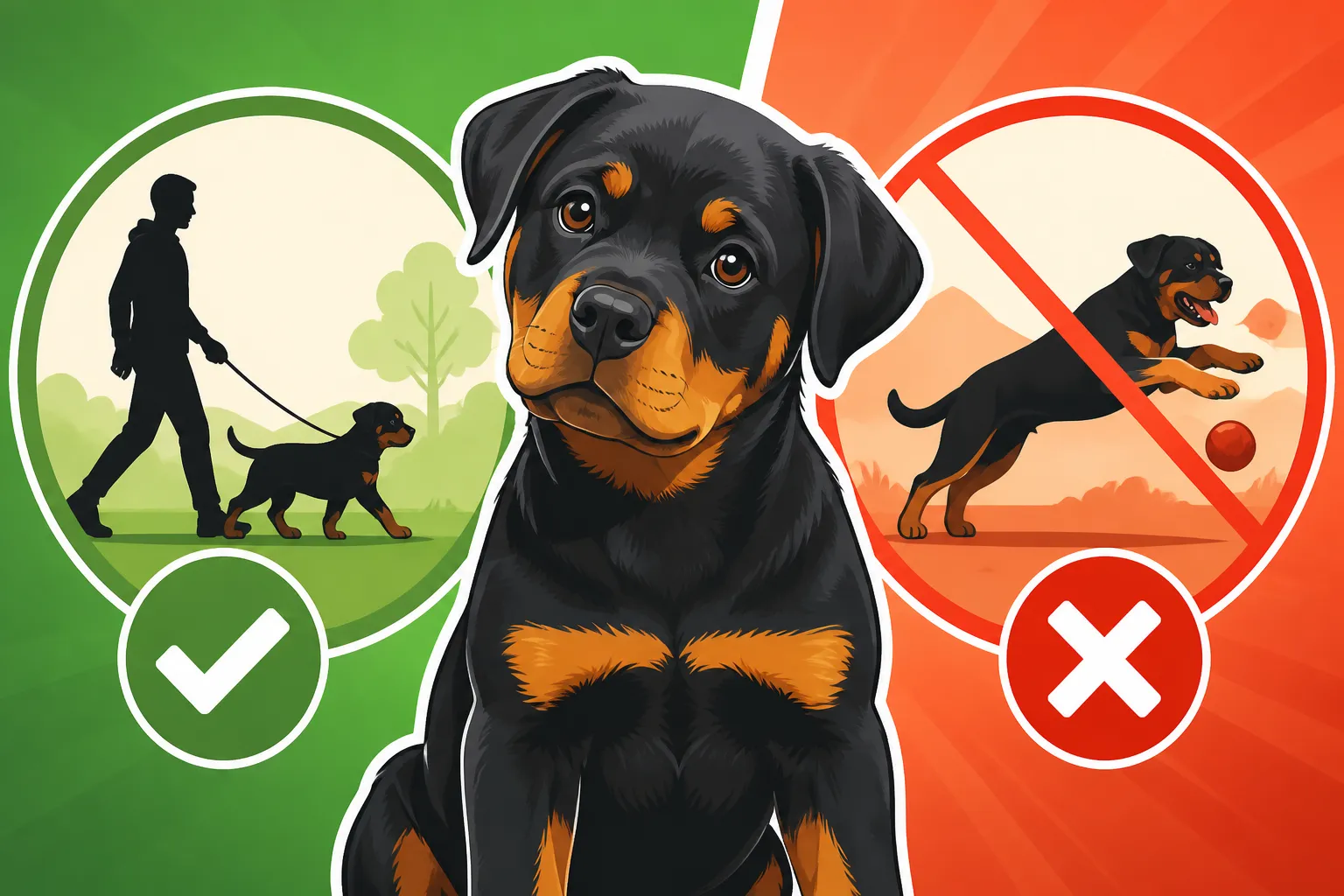
Just because intense exercise is out doesn't mean your puppy should live in a bubble! Socialization is vital for a Rottweiler, as is play. The trick is to manage the type and intensity of that play. Look for soft ground like grass when playing in the yard. Instead of endless games of fetch that involve hard stops and turns, opt for short bursts, or scatter treats for them to "hunt" with their nose. Tug-of-war is okay in moderation, but avoid aggressive pulling or lifting their feet off the ground, which can stress their spine and joints. When it comes to playing with other dogs, supervise closely. A playful romp with a gentle, similarly sized, or slightly older calm dog can be great, but roughhousing with a much larger or overly boisterous dog can lead to accidental injuries. Puppy classes are excellent for supervised play and Socializing a Rottweiler Puppy Properly. Remember that appropriate chew toys, which you can find on sites like Chewy or Amazon, can provide valuable mental and physical stimulation without the impact.
Avoiding High-Impact Activities and Jumping
This is where the hard truth comes in: many of the activities we associate with "dog fun" are actually detrimental to a growing Rottweiler. High-impact activities such as jumping on and off furniture or out of cars, prolonged running on hard surfaces (like asphalt or concrete), intense agility work, or long sessions of fetch where they sprint and slide, are all on the "avoid" list until their growth plates are fully closed. Even going up and down stairs multiple times a day can put undue stress on their developing joints. If you have stairs, consider carrying your young puppy, or using a ramp if they're too heavy for you to lift safely. When they need to get into the car, use a ramp or lift them if possible, especially if it's a higher vehicle. These small efforts in the puppy stage can pay huge dividends in preventing conditions like Cruciate Tears in a Heavy Rottweiler or Rottweiler Elbow Dysplasia and Front Leg Lameness down the line. It's about being proactive, not reactive, when it comes to their long-term health.
Recognizing Signs of Over-Exercised Puppies
Sometimes, even with the best intentions, we might push our puppies a little too far, or they might just be naturally more prone to pushing themselves. It's absolutely crucial to be observant and know the signs that your Rottweiler puppy is experiencing discomfort or has been over-exercised. They can't tell you in words, so you need to learn their language.
Subtle Lameness and Stiffness
One of the clearest indicators of joint discomfort or over-exertion is any change in how your puppy moves. Watch them closely after a play session or a walk. Are they limping, even slightly? Do they seem reluctant to put weight on a particular leg? This might manifest as a slight head bob or an uneven gait. Stiffness, especially after resting or waking up, is another red flag. They might struggle to stand up, move slower than usual, or seem less eager to climb onto a favorite spot. Don't dismiss a "funny step" as just clumsiness. Large breed puppies can be stoic, and a slight limp could indicate a significant issue with a growth plate, muscle strain, or even conditions like Panosteitis in a Growing Rottweiler Puppy. If you notice anything, give them a day or two of strict rest, and if it doesn't resolve, or if it worsens, it's time for a vet visit. Early intervention is key for these kinds of problems.
Behavioral Changes and Fatigue
Beyond physical signs, your puppy's behavior can also tell you a lot. An over-exercised Rottweiler puppy might seem unusually tired, lethargic, or less enthusiastic about things they usually love. They might nap more frequently, or have trouble settling down, often appearing restless rather than truly relaxed due to discomfort. Some puppies might even become a bit cranky or withdrawn, snapping when approached or handled, especially if they are experiencing pain in their joints. Look for a decrease in appetite or a reluctance to engage in play. While a tired puppy is a good puppy, a truly exhausted or pained puppy is not. Pay attention to changes in their typical energy levels, their mood, and their willingness to participate in daily activities. If your usually boisterous pup is suddenly a couch potato who ignores their favorite toy (perhaps one from Ollie, designed for tough chewers), something might be amiss.
Building a Long-Term Exercise Foundation
Once your Rottweiler reaches that magical 18 to 24-month mark and their growth plates are fully closed, the world of exercise opens up considerably. However, it's still about smart, sustained conditioning, not suddenly unleashing them on extreme activities. The foundation you've built during their puppyhood will set them up for a lifetime of healthy activity.
Gradual Increase in Activity Post-Eighteen Months
Even after growth plate closure, a gradual approach to increasing exercise is paramount. Their joints and ligaments have matured, but they still benefit from a slow build-up of intensity and duration. Don't jump from casual walks to a five-mile run overnight. Start by adding a few extra minutes to your walks, then try incorporating some varied terrain like soft trails or grass. Introduce new activities slowly, allowing their muscles, tendons, and cardiovascular system to adapt. For example, if you want to start jogging with your Rottweiler, begin with short intervals of jogging mixed with walking, gradually extending the jogging segments over several weeks. This prevents sudden strains or injuries that can occur even in mature dogs who are not conditioned for new activities. This careful progression supports Building Adult Rottweiler Fitness Safely.
Low-Impact Alternatives for Joint Health
Throughout their life, and especially as they age, low-impact exercises will be a Rottweiler's best friend. Swimming is perhaps the absolute gold standard for full-body conditioning without any joint impact. If you have access to a safe body of water or a dog-friendly pool, it's an incredible way to build muscle and stamina. Long, brisk walks on varied but soft terrain (like dirt trails, grass, or sand) are also excellent. Think about hiking on nature trails instead of pounding pavement. Activities that focus on balance and controlled movement, such as canine fitness exercises or even just navigating an obstacle course in your yard, can strengthen core muscles that support spinal and joint health. Even for an adult, The Exercise That Damages a Growing Rottweiler can still cause issues if overdone, so focus on longevity. You can find excellent fitness equipment and toys on Amazon or Chewy to aid in low-impact enrichment.
The Role of Nutrition in Supporting Bone and Joint Development
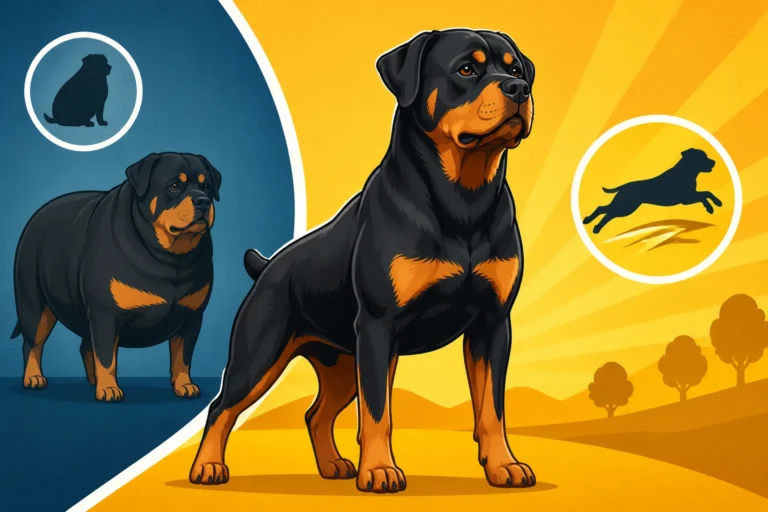
While exercise is vital, we can't talk about healthy bone and joint development without discussing nutrition. What you feed your Rottweiler from puppyhood right through adulthood plays a massive role. During their growth phase, it's crucial to feed a high-quality, large breed puppy food that has carefully controlled calcium and phosphorus levels. Too much calcium, surprisingly, can be just as detrimental as too little, leading to developmental orthopedic diseases. Avoid giving calcium supplements unless specifically directed by your vet. As adults, a balanced diet that maintains a lean body condition is critical because Rottweiler Obesity and the Load It Adds to their joints is immense. Look for foods that support joint health, often containing ingredients like glucosamine and chondroitin, or consider supplements later in life. Brands like Ollie often offer tailored nutrition plans that could be a good fit, focusing on whole ingredients and appropriate macronutrient balances. Rottweiler Calcium Limits and Why Supplements Hurt elaborates on this important topic.
Essential Gear and Tools for Safe Puppy Exercise
Having the right gear isn't just about convenience; it's about safety, comfort, and ensuring your growing Rottweiler develops good habits without risking injury. Just as you wouldn't send a toddler out to play football in flip-flops, your Rottweiler puppy needs appropriate equipment.
Appropriate Leashes, Harnesses, and Collars
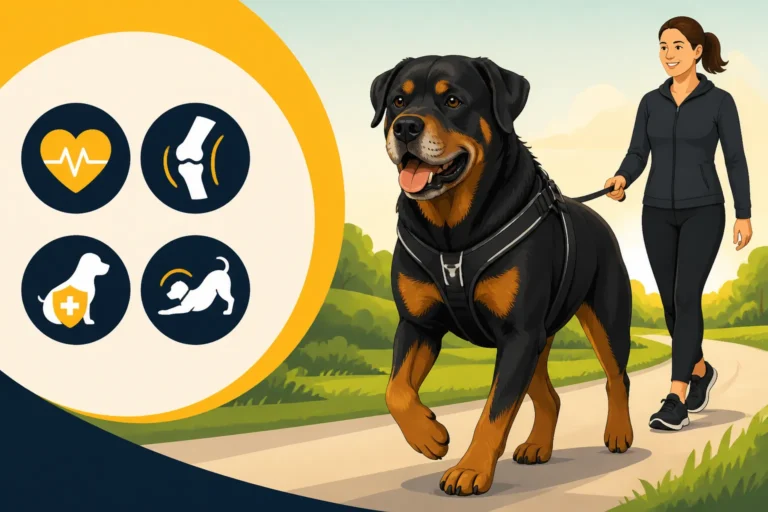
For a growing Rottweiler, a sturdy, comfortable leash and harness are non-negotiable. A standard flat collar is fine for ID tags, but for walks, a front-clip harness or a head halter can be incredibly beneficial. Rottweilers get big and strong fast, and they can easily pull you off your feet if not properly managed. A front-clip harness discourages pulling by redirecting their forward momentum, making walks more pleasant for both of you and preventing strain on their neck and throat. A head halter offers even more control but requires careful introduction. Avoid harsh training tools like choke chains or prong collars, especially on a young puppy whose neck and spine are still developing. Look for harnesses made from durable, comfortable materials that fit snugly without chafing, and ensure the hardware is strong enough to withstand a powerful Rottweiler. Many good options can be found on Chewy or Amazon. Remember, Harness Hardware That Holds a Pulling Rottweiler is a sound investment.
Safe Chew Toys and Enrichment
Part of keeping a growing Rottweiler healthy isn't just about physical exercise, but also mental stimulation. This is where appropriate chew toys and enrichment come in. A bored Rottweiler is a destructive Rottweiler, and destructive chewing can lead to ingestion of inappropriate items or damage to your home. Choose chew toys that are durable enough for their powerful jaws but not so hard that they risk cracking a tooth. Look for rubber toys that can be stuffed with treats, puzzle feeders, or dental chews designed for large breeds. These toys encourage mental engagement, help with teething, and can keep them occupied without requiring high-impact physical activity. Rotate toys to keep them interesting. Brands often stock durable chews specifically for large, powerful chewers. Always supervise new toys to ensure they are safe and don't pose a choking hazard. For more ideas on how to keep your pup engaged, consider exploring Rottweiler Enrichment Beyond Walks.
| Activity Type | Under 6 Months (Puppy) | 6-18 Months (Adolescent) | Post 18-24 Months (Adult) | Joint Impact Level |
|---|---|---|---|---|
| Leash Walks | Short (5 mins/month) | Moderate (30-45 mins) | Long (45-60+ mins) | Low |
| Structured Play | Short, on soft ground | Moderate, supervised | Vigorous, varied terrain | Medium |
| Running/Jogging | No | Very Limited/No | Gradual Introduction | High |
| Jumping/Agility | No | Minimal, low obstacles | Moderate, trained | High |
| Swimming | Short, supervised | Moderate | Regular | Very Low |
| Stairs (daily use) | Avoid/Carry | Limit/Supervise | Normal | Medium |
| Dog Park (unleashed) | Avoid | Supervise closely, avoid | Caution, dog-dependent | Variable |
Disclaimer
This article is for general informational purposes only and does not constitute professional advice. Laws, prices and regulations vary by location and change over time. Consult a qualified professional for guidance on your specific situation.