House Training a Rottweiler Puppy by Week
Bringing home a Rottweiler puppy is an exciting adventure, but let's be real – the sheer size of those little land sharks means their accidents are, well, big. Dealing with unexpected puddles and piles, especially indoors, can be incredibly frustrating and disheartening, making you wonder if you'll ever have a clean floor again. This comprehensive guide is here to walk you through house training your Rottweiler puppy week by week, offering practical strategies and empathetic advice to help you establish a solid potty routine and raise a clean, confident companion.
Understanding Your Rottweiler Puppy's Potty Training Needs
Before we dive into the weekly schedule, it's crucial to understand that house training a Rottweiler isn't quite the same as house training a tiny chihuahua. Everything is amplified: their growth rate, their size, and yes, the volume of their eliminations. But don't despair, their intelligence and desire to please are huge assets!
Why Size and Breed Matter for House Training
When you're dealing with a Rottweiler puppy, you're looking at a dog that will grow into a powerful, substantial animal in a relatively short amount of time. A tiny breed might have a small puddle, but a Rottweiler's "accident" is significant, and cleaning it up thoroughly to eliminate scent markers becomes even more critical. Their physical development, including bladder control, also needs to be taken into account. While they are smart and eager to learn, their bodies are still catching up to their brains in those early weeks. This means frequent trips outside are non-negotiable, and relying on them to "hold it" for long periods is simply unfair and unrealistic. Think about it: a Rottweiler puppy is already many times the size of a full-grown toy breed, meaning more fluid intake and a larger output. It's a game of scale, and recognizing this helps manage expectations and frustration. Remember, Why Rottweiler Training Cannot Wait Until Six Months is a truth for many reasons, and potty training is certainly one of them.
The Golden Rule: Consistency and Supervision
If there's one mantra to repeat during house training, it's "consistency and supervision." These aren't just buzzwords; they are the bedrock of success. A puppy learns through routine and by being prevented from making mistakes. Every time your Rottweiler puppy has an accident inside, it reinforces the idea that it's an acceptable place to go. Our job is to make the right place (outside) the only place. This means a strict schedule for potty breaks, especially during the first few months. You need to be hyper-aware of your puppy's movements and behaviors. Are they sniffing around? Circling? Suddenly disappearing from the room? These are all potential cues that they need to go out now. Using a tether to keep them close to you or keeping them in a designated, puppy-proofed area or crate when you can't actively watch them is invaluable. This isn't about punishment; it's about setting them up for success by removing the opportunity to fail.
Week-by-Week House Training Milestones and Strategies
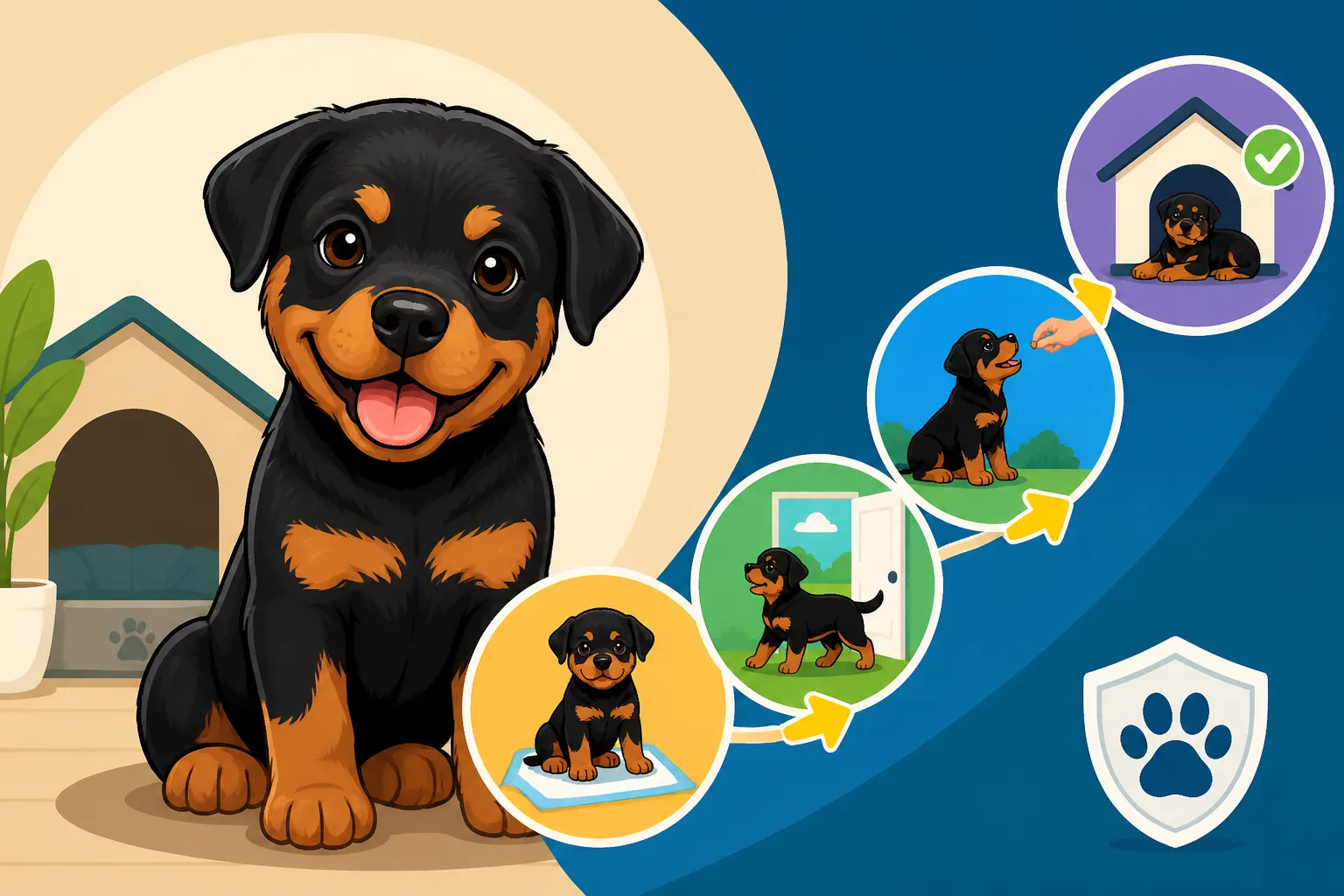
House training isn't a single event; it's a process, and for a Rottweiler puppy, it typically spans several weeks, if not months, to truly solidify. Breaking it down week by week can help you track progress and adjust your approach.
Weeks 8-10: The Foundation of Potty Training
This is often when your Rottweiler puppy first comes home, and it's a whirlwind of new experiences for everyone. Your primary goal here is to establish a rock-solid routine. Puppies this young have very little bladder and bowel control, so frequent trips outside are paramount.
- Establish a Schedule Immediately: Take your puppy out every 20-30 minutes when they are awake and playing. Always take them out first thing in the morning, immediately after waking from a nap, after every meal (give them about 10-15 minutes to digest), and before bed.
- Designated Potty Spot: Choose one area in your yard and take your puppy there every single time. This helps them associate that specific spot with going potty. Wait patiently. Don't play with them during this time; keep it all business.
- Crate Training: A crate is an incredibly useful tool for house training. Dogs instinctively don't want to soil their sleeping area. For short periods, the crate can help your puppy learn to hold it. Make sure the crate is appropriately sized – just big enough for them to stand up, turn around, and lie down comfortably. If it's too big, they might use one end as a bathroom. Crate Training a Rottweiler That Cries at Night can be a challenge, but consistency makes it easier.
- Accident Cleanup: Accidents will happen. When they do, clean them immediately and thoroughly with an enzyme cleaner (more on this below). Never punish your puppy for an accident; they don't understand it after the fact, and it can just make them afraid to go in front of you.
Weeks 11-14: Building Bladder Control and Communication
As your Rottweiler puppy gets a little older, their bladder control will improve, and they'll start to understand the routine better. This is a crucial period for reinforcing good habits and teaching them to communicate their needs.
- Gradually Extend Time: You can start to gradually extend the time between potty breaks, perhaps to every 45-60 minutes, still maintaining the critical "after waking, eating, playing" rule. Always err on the side of going out more frequently than less.
- "Potty" Cue and Praise: Start using a consistent word or phrase, like "Go potty" or "Outside," just as they are eliminating. When they finish, heap on the praise ("Good potty!") and give them a high-value treat. This positive reinforcement makes them associate going outside with good things.
- Recognizing Signals: Your puppy might start offering more subtle signals that they need to go out. Pay attention to changes in behavior: sudden pacing, going to the door, a quick sniff of the floor. Respond instantly.
- Handling Setbacks: It's common for puppies to have a few steps back. An exciting new toy, a surprise visitor, or even just forgetting to take them out can lead to an accident. Don't get discouraged; just go back to basics. Also, during this phase, their mouthiness might increase. Redirecting that energy, as discussed in Teaching a Rottweiler Puppy That Teeth Hurt, can help manage other challenging behaviors alongside potty training.
Weeks 15-18: Solidifying Habits and Expanding Freedom
By this age, your Rottweiler puppy should have a much better grasp of house training. The focus now shifts to solidifying these habits and gradually allowing them more freedom in the house.
- Longer Stretches: They should be able to hold it for 2-3 hours during the day, and ideally, through the night, depending on their individual development. Continue with the strict morning, after meal, and before bed schedule.
- Supervised Free-Roam: Begin to allow them supervised time in other rooms of the house. Start with short periods and gradually increase them. If they start sniffing or circling, scoop them up and take them outside. Remember, every success builds confidence.
- Adolescent Regression: Be prepared for potential regression. Rottweiler Adolescence at Eight Months can bring a new wave of challenges as they test boundaries. Sometimes, this includes a return to "forgetting" their potty training. This isn't defiance; it's often a combination of developing independence and a temporary lapse in focus. Just calmly and consistently redirect them back to the established routine.
- Journaling: Consider keeping a small log of when your puppy eats, drinks, and eliminates. This can help you spot patterns and identify ideal times for potty breaks.
Common House Training Challenges and Solutions for Rottweilers
No house training journey is without its bumps in the road. For Rottweiler owners, these challenges can feel magnified due to their dog's sheer size and strength. But almost every common issue has a solution rooted in consistency and understanding.
Dealing with Accidents Indoors
It's inevitable. Despite your best efforts, your Rottweiler puppy will have an accident indoors. The key is how you handle it.
- Immediate and Thorough Cleanup: As soon as you discover an accident, clean it up with an enzymatic cleaner. Regular household cleaners might remove the visible stain, but they won't eliminate the odor that's imperceptible to humans but a giant "potty here!" sign to your dog. Products widely available on Amazon often contain these enzymes, specifically designed to break down pet waste odors at a molecular level. If the scent remains, your puppy is more likely to revisit that spot.
- No Punishment: Never, ever yell at, scold, or rub your puppy's nose in an accident. They simply don't understand punishment in retrospect. All it teaches them is to fear you or to hide their eliminations, making the problem worse. If you catch them in the act, a quick, sharp "No!" followed by immediately rushing them outside to their designated spot can be effective. If they finish outside, praise lavishly.
- Re-evaluate Your Routine: An increase in accidents often means your schedule isn't strict enough or your supervision has slipped. Are you taking them out often enough? Are you missing their subtle signals? Go back to a more frequent schedule and closer supervision for a few days to reset. Remember, Rottweiler Accidents After Six Months can still happen, especially during growth spurts or developmental changes, so don't get complacent.
Nighttime Potty Training for a Growing Giant
Nighttime can be particularly challenging because you're trying to sleep! For a Rottweiler puppy, who grows so quickly, ensuring they learn to hold it through the night is vital.
- Last Out, First Out: This is paramount. Take your puppy out for a final potty break right before you put them in their crate for the night, making sure they actually eliminate. Then, the very first thing you do in the morning is take them straight outside. No playing, no breakfast, just outside.
- Crate Location and Size: Keep the crate in your bedroom or close enough so you can hear them if they stir. The crate should be just large enough for them to stand, turn around, and lie down. If it's too big, they might relieve themselves in one corner and sleep in another. If you have an adjustable crate, use the divider to make it appropriately snug. Understanding The Crate Size a Hundred Twenty Pound Rottweiler Needs is crucial for both comfort and effective house training.
- Responding to Cries: If your puppy cries in the middle of the night, assume it's for a potty break. Take them out immediately, quietly, and with minimal fuss. Don't play or engage beyond the potty break. Once they've gone, put them back in the crate. This teaches them that crying at night gets them outside, not attention or playtime. As they get older, they should be able to hold it for 6-8 hours.
What If My Rottweiler Still Isn't Getting It?
If you've been consistent for weeks or even months and your Rottweiler puppy is still having frequent accidents, it's time to consider other factors.
- Rule Out Medical Issues: First and foremost, schedule a vet visit. Urinary tract infections (UTIs) or other medical conditions can cause frequent urination or loss of bladder control. It's always best to rule out health problems before assuming it's purely a behavioral issue.
- Consult a Professional: If the vet gives a clean bill of health, consider consulting with a professional dog trainer or a veterinary behaviorist. They can observe your puppy's behavior, assess your routine, and offer tailored strategies. Sometimes, an outside perspective makes all the difference. Finding a Rottweiler-Experienced Trainer Near You can be a lifesaver for persistent challenges.
- Stress or Anxiety: Sometimes, house training issues can stem from underlying stress or anxiety. A significant change in the household, separation anxiety, or fear can manifest as accidents. A behaviorist can help identify and address these root causes. Remember that Rottweiler Behavior Problems That Start Small can quickly escalate if not addressed.
- Patience is Key: Rottweilers are intelligent, but every dog is an individual. Some take longer to grasp concepts than others. Stick with it, maintain a positive attitude, and celebrate every tiny success. You'll get there!
Essential Tools and Best Practices for Success
Having the right tools and employing smart strategies can make the house training process much smoother and more effective for both you and your Rottweiler puppy.
Crate Training Essentials
A good quality crate isn't just a pen; it's your puppy's den, a safe haven, and an invaluable aid in house training.
- Appropriate Sizing: We've mentioned this before, but it bears repeating: the crate must be the right size. For a Rottweiler puppy, this means a large, sturdy crate from the start, often with a divider that can be moved as they grow. This ensures they have just enough room to lie down comfortably without extra space to relieve themselves. If you buy a crate that's too small, it won't be long before your growing pup is cramped. Conversely, one too large will negate the house training benefit. Rottweiler Crate Size and What It Costs is a real consideration, as these larger crates are a significant investment.
- Comfort and Safety: Line the crate with a comfortable, washable mat or blanket. Make sure there are no loose parts or sharp edges that could injure your puppy. Never use the crate as a place of punishment. It should always be associated with positive experiences, like chew toys or a comfortable nap.
- Not a Long-Term Solution: While the crate is essential, remember it's not meant for prolonged confinement. A puppy should only be in a crate for a few hours at a time during the day, extending to 6-8 hours overnight as they mature. Always ensure they get adequate potty breaks and exercise when they are out of the crate.
Cleaning Supplies and Accident Management
Accidents are part of the learning curve, so being prepared for them is key.
- Enzyme Cleaners: As discussed, these are non-negotiable. Traditional cleaners can't break down the biological components of urine and feces, leaving behind an odor only your dog can detect, signaling to them that this is an acceptable potty spot. Brands like Rocco & Roxie, Nature's Miracle, or Simple Solution are popular choices and widely available. Stock up!
- Absorbent Materials: Keep a good supply of paper towels, old towels, or microfibre cloths dedicated to cleaning up accidents.
- Preventing Repeat Offenses: Once an accident spot is thoroughly cleaned with an enzyme cleaner, consider temporarily placing their food or water bowl there, or covering it with a throw rug for a few days. Dogs are less likely to eliminate where they eat or rest.
Harnessing Positive Reinforcement
Positive reinforcement is by far the most effective way to train a Rottweiler. It builds trust and makes learning enjoyable.
- High-Value Treats: When your puppy eliminates in the correct spot outside, immediately offer a high-value treat (something they love, like small pieces of cooked chicken, cheese, or specialized training treats). The timing is critical – the treat must be given within seconds of them finishing their business, so they associate the reward directly with the act. Need ideas for treats? Check out Training Treats Small Enough for a Rottweiler Session.
- Verbal Praise and Affection: Couple treats with enthusiastic verbal praise ("Good potty! Yes!") and a happy, light tone of voice. A little ear scratch or a happy dance from you goes a long way.
- Playtime Rewards: Sometimes, the biggest reward for a puppy is a few minutes of play after a successful potty break. This makes the entire outdoor experience fun and rewarding.
The Role of Online Resources and Puppy Classes
Even if you're a seasoned dog owner, there's always something new to learn, and these resources can provide structure and support.
- Online Courses: Structured online courses can be incredibly helpful, especially for new puppy owners or those tackling a breed with specific needs like a Rottweiler. They often provide step-by-step videos and guides, ensuring you're following a proven method. BAXTER & Bella is an example of an online puppy training program that offers comprehensive resources, including guidance on house training, which can be invaluable for maintaining consistency.
- Puppy Classes: Enrolling your Rottweiler puppy in a puppy class is beneficial for multiple reasons beyond just house training. It provides a controlled environment for socialization, exposes them to other dogs and people, and gives you access to a professional trainer for questions and guidance. Many puppy classes, as discussed in Puppy Classes That Accept Rottweilers, cater to large breeds and can provide specific advice on your Rottie's needs. These classes can reinforce good habits learned at home and tackle common challenges like Rottweiler Puppy Training Through the First Year.
- Community Support: Connect with other Rottweiler owners online or in local groups. Sharing experiences and tips can be incredibly validating and helpful. Knowing you're not alone in the challenges makes the successes even sweeter!
Disclaimer
This article is for general informational purposes only and does not constitute professional advice. Laws, prices and regulations vary by location and change over time. Consult a qualified professional for guidance on your specific situation.