A Rottweiler That Guards a Person
It’s a scenario many Rottweiler owners quietly worry about: your loyal, loving dog suddenly starts acting possessive over you. Perhaps it's a low growl when a friend gets too close, a body block when a family member tries to sit next to you, or an undeniable tension when someone approaches you while you’re relaxing together. This guide will walk you through understanding why your Rottweiler might start guarding you, how to identify the subtle and overt signs, and practical, empathetic strategies to manage this behavior effectively, ensuring a safe and harmonious home for everyone.
Understanding the Root of Person Guarding
When a Rottweiler starts guarding a person, it’s not typically out of malice or aggression, but often stems from a complex mix of instinct, learned behavior, and how they perceive their role in the household. These are dogs bred for centuries to protect and herd, and while our modern lives don’t often involve cattle drives or guarding butcher’s money belts, those inherent traits are still very much alive.
Instinctual Behavior vs. Learned Response
Rottweilers, by their very nature, possess a strong guarding instinct. Historically, they were "Metzgerhunds" – butchers' dogs – entrusted with protecting property, livestock, and even money. This deep-seated drive to protect their "resources," which can extend to their people, is part of their genetic blueprint. It’s why they often exhibit Rottweiler Aloofness and Why It Reads as Cold towards strangers; they need to assess the situation before deciding if someone is friend or foe. However, pure instinct usually manifests as vigilance and observation. When it escalates to overt guarding, where they actively prevent others from approaching or interacting with a specific person, it often becomes a learned behavior, reinforced by environmental factors or unintentional cues from humans. For example, if a dog growls at someone approaching you and you instinctively pull them closer or scold them in a comforting tone, you might accidentally be reinforcing the idea that their guarding was appropriate or that you truly needed protection.
Consider a situation where your Rottweiler, let’s call him Brutus, is lying at your feet while you’re reading. Your spouse walks into the room and goes to sit beside you on the couch. Brutus tenses, maybe gives a low growl, and you, surprised, might say "No, Brutus," but perhaps also pat his head reassuringly or even gently push him away from your spouse. In Brutus's mind, your attention or closeness becomes a resource, and he’s just "succeeded" in keeping it, even if your intention was entirely different.
Factors Contributing to Guarding Behavior
Several factors can contribute to a Rottweiler developing person-guarding behavior. A key element can be a lack of early and proper socialization. If a puppy isn't exposed to a wide variety of people, environments, and situations during its critical Rottweiler Socialization Before Sixteen Weeks window, it may grow up feeling insecure or overly suspicious of new interactions. This insecurity can then manifest as guarding when they feel threatened, or when they perceive a loved one as "their" exclusive possession.
Another significant factor is the perceived hierarchy within the home. While modern dog training moves away from outdated "alpha" theories, a dog does need clear, consistent guidance. If a Rottweiler perceives a lack of leadership or clear boundaries, they might step into that role themselves, deciding who gets to approach "their" person. This isn't necessarily dominance; it's often a dog trying to create order in a world where the rules feel unclear. Additionally, fear or past negative experiences can trigger guarding. A rescue Rottweiler with an unknown history, for example, might guard out of a deep-seated fear of losing their new, beloved owner. Even stress in the household, like frequent arguments or visitors, can make a sensitive Rottweiler more prone to guarding.
The Difference Between Protection and Guarding
It's crucial to distinguish between a Rottweiler's natural protective instincts and undesirable guarding behavior. A truly protective Rottweiler is discerning. They observe, they alert, and they might place themselves between you and a perceived threat, but they respond appropriately to actual threats. They won't typically escalate to aggression unless a genuine danger is present. A protective Rottweiler, for instance, might bark at a stranger at the door, but calm down and allow the person entry once you signal that they are welcome and pose no threat. They are acting as an alarm and a deterrent, following your lead.
Guarding behavior, however, is often disproportionate and misdirected. It's about maintaining exclusive access to a "resource" – in this case, a person – rather than responding to a genuine threat. This looks like a dog growling at a friend reaching for your hand, snarling at another family member sitting next to you, or pushing their body between you and a guest simply because they are interacting. It’s a possessive response that can be incredibly dangerous and erode trust within your home. Understanding this distinction is the first step in addressing the behavior effectively. Your Rottweiler should protect you from harm, not protect you from your loved ones.
Recognizing the Signs of Person Guarding in Your Rottweiler
Identifying person-guarding behavior early is vital for successful management. Rottweilers, being such observant and often subtle dogs, can display early signs that might be missed if you're not paying close attention. It’s not always a dramatic growl or a snarl right off the bat; often, it starts with smaller, more nuanced cues.
Subtle Cues and Early Warning Signals
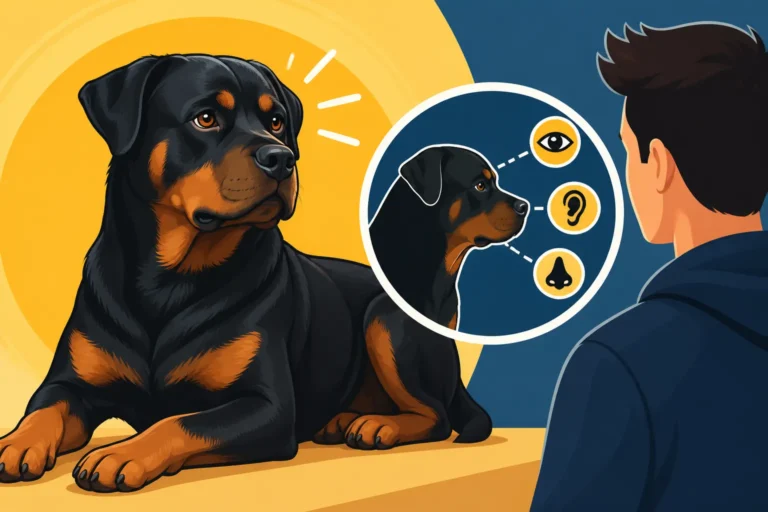
The first signs of a Rottweiler developing person-guarding behavior are usually subtle and can be easily misinterpreted as simple affection or loyalty. You might notice your Rottweiler physically positioning itself between you and another person, subtly blocking access. This could be leaning their entire body against you when someone approaches, or even placing a paw over your leg or arm as if to claim you. Their body language might become rigid, their tail might stiffen, and their ears might become more alert, focused on the "intruder." You may notice them giving what's called a "hard stare" at someone who gets too close – a direct, unblinking gaze that communicates a strong boundary.
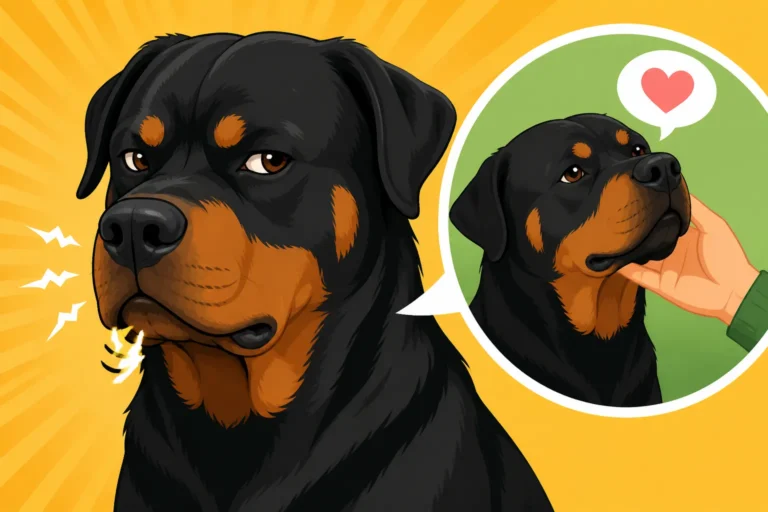
Another common early cue is a soft grumble or a "woof" that isn't a playful greeting. This The Rottweiler Grumble That Is Not a Growl can escalate if ignored. Pay attention to how your Rottweiler reacts when someone tries to pet you, hug you, or even just engage you in conversation while your dog is nearby. Do they shift their position to get closer to you? Do they nudge your hand away from the other person? These seemingly innocuous actions are often the precursors to more overt guarding. Sometimes, they might even put their head down on your lap or shoulder, appearing affectionate, but if accompanied by a stiff body and an intense stare at anyone nearby, it’s a form of soft blocking to claim you.
Escalation of Guarding Behavior
If the subtle cues are missed or not addressed, the guarding behavior will almost certainly escalate. What started as a soft grumble can turn into a clear, sustained growl when someone approaches. This growl might be accompanied by a raised hackle, a snarl showing teeth, or a stiff-legged stance. They might begin to herd or body-block people more forcefully, physically pushing them away from you. A Rottweiler might even stand over you when you are sitting or lying down, forming a protective barrier and making eye contact with anyone who tries to enter "their" space around you.
In more severe cases, a guarding Rottweiler might snap or even air-bite at someone who ignores their warnings and persists in approaching the "guarded" person. This is where the behavior becomes truly dangerous. It's not uncommon for guarding to intensify in specific situations, such as when you are on the couch, in bed, or otherwise relaxed and vulnerable, as these are times when the dog feels most compelled to protect. They may also guard you more intensely around certain individuals, perhaps someone new, or someone they perceive as a rival for your affection. Recognizing this progression is key to understanding the urgency of intervention.
Identifying the "Guarded" Person
While the title of this article is "A Rottweiler That Guards a Person," it's important to understand that sometimes the object of guarding isn't always the primary owner. Sometimes a Rottweiler will fixate on one particular individual in the household and guard them fiercely, even if other family members are also beloved. This can be the person who spends the most time with them, feeds them, or gives them the most affection. Or, it could paradoxically be the person who is weakest or most vulnerable in the dog's eyes, prompting a stronger protective instinct.
For instance, a Rottweiler might guard a child, seeing them as part of their "pack" that needs vigilant protection, leading to issues like When a Rottweiler Guards a Child. They might also guard an elderly or infirm family member, sensing their vulnerability. It's less common, but a dog might even guard a visitor if that visitor gives them a lot of high-value attention or treats. Observe carefully: Who is the dog consistently positioning themselves near? Who do they watch most intently when others approach? Who triggers the most defensive posture? Pinpointing the specific "guarded" person (or people) helps to tailor your management and training strategies more effectively.
Proactive Strategies for Preventing Person Guarding
The best defense against problematic person guarding is a good offense: proactive training and socialization from puppyhood. It's far easier to prevent these behaviors from taking root than it is to undo them once they've become ingrained.
Early Socialization and Exposure
From the moment you bring your Rottweiler puppy home, robust and positive socialization is paramount. This means exposing them to a vast array of people, sounds, sights, and experiences in a positive, controlled manner. Think beyond just "meeting people." Take your puppy to busy parks (from a safe distance initially, then closer as they gain confidence), introduce them to friendly, vaccinated adults and children (under strict supervision), and expose them to different types of environments like bustling downtown streets, quiet residential areas, and even the sounds of home appliances. The goal is to build a confident, resilient dog who sees novel experiences as opportunities, not threats.
Enroll your puppy in well-run puppy classes. These are invaluable for structured socialization, not just with other puppies but also with different people and handling by various instructors. A program like BAXTER & Bella offers online resources and structured guidance that can be incredibly helpful for new owners, especially in those crucial early weeks. Make sure every interaction is positive – carry high-value treats and reward your puppy for calm, accepting behavior when new people approach. The more positive experiences they have with a diverse range of people, the less likely they are to view strangers or guests as a threat to your bond. Rottweiler Socialization Before Sixteen Weeks is a critical window you don't want to miss.
Establishing Clear Leadership and Boundaries
While the term "dominance" is often misused, establishing yourself as the calm, consistent leader of the household is vital for a Rottweiler. This doesn't mean being harsh or punitive; it means providing clear structure, rules, and expectations. Your Rottweiler needs to understand that you are in charge of resources – food, toys, attention, and indeed, access to you. This removes the perceived need for them to take on that role themselves. Practice impulse control exercises daily. Have your dog "sit" and "wait" before being released for meals, walks, or play. This teaches them that good things come from you, and through patience and following your cues.
Consistent boundaries are also essential. Decide where your Rottweiler is allowed and not allowed, and enforce those rules kindly but firmly. If you don't want them on the furniture, ensure they never are. If you want them to respect personal space, teach them that. Simple commands like "off" or "place" can be powerful tools. Ensure all family members are consistent with these rules; a mixed message can quickly confuse a Rottweiler and lead them to make their own decisions. Early Rottweiler Puppy Training Through the First Year is crucial for laying this groundwork.
Teaching "Place" and "Go To Your Mat"
One of the most effective proactive tools for preventing and managing person guarding is teaching your Rottweiler a solid "place" or "go to your mat" command. This command teaches your dog to go to a designated spot – a dog bed, a mat, or a crate – and remain there calmly until released. This is incredibly useful when guests arrive, during meal times, or when you simply want to enjoy quiet time without your dog feeling the need to hover and potentially guard.
Start by making the "place" super inviting with high-value treats. Lure your dog to the mat, say "Place," and reward them heavily for lying down. Gradually increase the duration they stay there, then add distractions. Practice having them stay on their mat while people move around, then while people approach you. The goal is for them to learn that "Place" means relax and be calm, and that good things (like treats from you) happen when they are in their designated spot, regardless of who is around you. This creates a predictable, safe space for your dog and gives you a powerful tool to manage their location and behavior, especially when guests are interacting with you. You can find excellent quality, durable dog beds suitable for Rottweilers on sites like Amazon that can serve as their "place" mat.
Managing Existing Person Guarding Behavior
If your Rottweiler has already started to display person-guarding behavior, prevention is no longer enough. You need to implement careful management strategies and systematic training to change their emotional response and underlying behavior. This takes patience, consistency, and often, professional guidance.
Desensitization and Counter-Conditioning
The core of managing existing person guarding lies in desensitization and counter-conditioning. Desensitization means gradually exposing your Rottweiler to the trigger (people approaching you) at a low intensity, so they don't react. Counter-conditioning means changing their emotional association with that trigger from negative (threat) to positive (good things happen).
Start with a "safe" person your Rottweiler is less likely to guard you from, or even a family member. Have that person approach you from a distance where your Rottweiler shows no signs of guarding. As they approach, immediately start feeding your Rottweiler high-value treats. The moment the person stops or turns away, stop the treats. The idea is to create an association: person approaches = treats from owner! Repeat this many, many times, slowly decreasing the distance and increasing the interaction. Always stay below your dog's threshold for reacting. If your dog growls or stiffens, you've gone too fast. Retreat to an easier step. The goal is for your Rottweiler to see an approaching person not as a threat to your attention, but as a predictor of delicious rewards.
Managing Triggers in the Home Environment
While you're working on desensitization, it's absolutely critical to manage your home environment to prevent guarding incidents from happening. Every time your Rottweiler successfully guards you, the behavior is reinforced, making it harder to change. This means identifying the specific triggers and avoiding them as much as possible initially.
If your Rottweiler guards you when you're on the couch, have them on their "place" mat or in their crate when guests are over, or when family members want to sit next to you. If they guard you when you're eating, ensure they are in a separate room or crated during meals. Utilize baby gates or exercise pens to create physical barriers that prevent your Rottweiler from interfering when someone approaches you. Use a sturdy leash if necessary, especially when you have visitors, so you can calmly guide your dog away from potential conflict. Think of it like this: if an alcoholic is trying to quit, you don't keep alcohol in the house. Similarly, if your dog is trying to learn not to guard, you don't set up situations where guarding is likely to occur. This management is a temporary bridge while you build new, desirable behaviors.
Teaching "Off-Duty" Commands
Beyond "place," teaching your Rottweiler "off-duty" commands can be incredibly helpful. An "off-duty" command is essentially a cue that tells your dog they don't need to be vigilant or protective in a given situation. This requires advanced training and a strong bond. It's often taught in the context of protection sports, but the concept can be adapted for home use.
One way to implement this is to teach your Rottweiler to "settle" on command, completely relaxing and disengaging from whatever is happening around them. This is more than just "down-stay"; it’s a mental state of calm. Another approach, often used by professional trainers, involves teaching a command like "all clear" or "nothing to see here," paired with a relaxed hand signal and a reward. When you give this command, you're essentially communicating to your Rottweiler that you have assessed the situation, and there is no need for them to be on guard. This empowers them to defer to your judgment and relax. This kind of advanced training often benefits from working with a professional Rottweiler-experienced trainer. You can often find such trainers via online platforms like BAXTER & Bella, which connect owners with certified experts.
When to Seek Professional Help
Dealing with a Rottweiler that guards a person is serious business, and sometimes, even with the best intentions, it's too much for an owner to handle alone. Knowing when to call in the cavalry is not a sign of failure, but rather responsible pet ownership.
When Behavior Becomes Aggressive or Unmanageable
The line between problematic guarding and outright aggression can be blurry, but if your Rottweiler is showing any of the following, it’s time to consult a professional immediately:
- Snapping or Biting: Any actual snaps, lunges, or bites (even if they don't break the skin) are a huge red flag. This indicates the dog feels the need to use force to get its point across, and the risk of serious injury is high.
- Intense Staring with Growling/Snarling: If the growling or snarling is persistent, difficult to interrupt, and combined with a hard stare or rigid body, it’s a sign of significant escalation.
- Inability to De-escalate: If your Rottweiler doesn't back down or calm down when you give a correction or try to redirect them, their arousal level is too high for you to manage effectively on your own.
- Fear and Stress in the Household: If family members or frequent guests are genuinely afraid of your Rottweiler, or if the dog's behavior is causing constant stress and tension in the home, a professional must step in.
- Unpredictability: If the guarding behavior seems to come out of nowhere, or is directed at different people without a clear pattern, it’s unpredictable and therefore dangerous.
A Rottweiler That Guards a Doorway can be a serious issue, but when it's you they're guarding with aggression, the stakes are much higher.
Finding a Qualified Professional
Not all dog trainers are equipped to handle serious behavior issues like person guarding. You need to find a qualified professional who specializes in canine behavior, preferably with experience with large, strong guardian breeds like Rottweilers. Look for:
- Certified Professional Dog Trainers (CPDT-KA): These individuals have passed an independent certification exam and have experience in training.
- Certified Applied Animal Behaviorists (CAAB) or Veterinary Behaviorists (Diplomate, ACVB): These are veterinarians or individuals with advanced degrees in animal behavior. They are often the best choice for severe aggression or complex behavioral issues, as they can also prescribe medication if necessary.
- Positive Reinforcement Focus: Ensure the professional uses humane, science-based, positive reinforcement methods. Avoid anyone who relies on harsh corrections, intimidation, or claims to be an "alpha" trainer. Why You Should Never Punish a Rottweiler Growl is a crucial piece of understanding here; a growl is communication, and suppressing it can lead to a dog biting without warning.
- Rottweiler Experience: Ask about their experience with working breeds and specifically with Rottweilers. Their understanding of the breed’s natural drives and tendencies will be invaluable.
Asking for references and observing a session before committing can also be very helpful when looking for Finding a Rottweiler-Experienced Trainer Near You.
What to Expect from a Behaviorist
When you work with a professional behaviorist, expect a thorough intake process. They will likely ask for a detailed history of your Rottweiler's behavior, health, daily routine, and the specific incidents of guarding. They may ask for videos of the behavior in question (if safe to capture) and will observe your dog's interactions within the home. A good behaviorist will perform a functional analysis, trying to understand why the behavior is happening and what reinforces it.
Their plan will likely involve a multi-faceted approach:
- Behavior Modification: Detailed instructions for desensitization and counter-conditioning.
- Management Strategies: Specific recommendations for preventing incidents and keeping everyone safe.
- Environmental Enrichment: Ways to reduce stress and provide appropriate outlets for your Rottweiler's energy and instincts. Rottweiler Impulse Control Games can be a part of this.
- Training Exercises: Specific commands or exercises to build confidence, impulse control, and a stronger bond.
- Medical Assessment: For veterinary behaviorists, they may recommend a vet check-up or specific medications if anxiety or pain is contributing to the guarding. Rottweiler Behavior Changes That Mean Pain can sometimes be misinterpreted as purely behavioral.
Be prepared for homework; behavior modification is a partnership, and you'll be doing much of the work under their guidance. It's a journey, not a quick fix.
Living Harmoniously with a Protective Rottweiler
Managing a Rottweiler with person-guarding tendencies is a long-term commitment. It requires ongoing vigilance and a deep understanding of your dog's needs and communication. The goal isn't to eliminate their protective nature entirely – that's part of what makes a Rottweiler a Rottweiler – but to channel it appropriately and ensure everyone's safety.
Consistent Management and Training
Consistency is the bedrock of success when dealing with person guarding. Every single person in the household must adhere to the same rules, training protocols, and management strategies. If one person allows the guarding and another tries to correct it, your Rottweiler will become confused and the behavior will persist. Regularly revisit your desensitization and counter-conditioning exercises, even if you feel the problem is "solved." Maintenance is key.
Continue to practice impulse control exercises daily. Reinforce "place" or "settle" whenever visitors are present or when you're engaging in activities where guarding previously occurred. Don't be afraid to use management tools like baby gates, leashes, or crates to prevent incidents, especially during times of higher arousal or stress. For instance, if you know a friend who your Rottweiler tends to guard you from is coming over, have your dog secured in their "place" with a high-value chew from Amazon or a stuffed Kong before the friend even arrives. This preempts the opportunity for guarding.
Ensuring Safety for Guests and Family
The safety of everyone in your home, both humans and other pets, must be your top priority. If your Rottweiler has a history of even mild guarding, take extra precautions when guests are present, especially children.
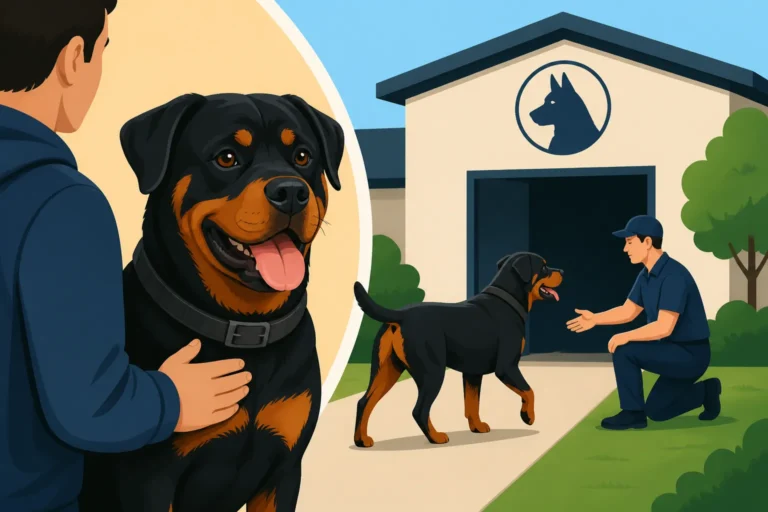
- Controlled Introductions: Never allow a guarding Rottweiler to free-roam with new guests. Keep them on a leash, in their crate, or behind a sturdy barrier during initial greetings.
- Educate Guests: Inform visitors about your dog's tendencies and instruct them on how to interact (or not interact) with your Rottweiler. Explain that they shouldn't approach your dog or you too closely unless you specifically invite them to, and always under your supervision.
- Safe Zones: Establish clear "safe zones" for your Rottweiler where they can retreat and be undisturbed, such as their crate or a specific room.
- Muzzle Training: Consider Muzzle Training a Rottweiler Before You Need It. A muzzle isn't a punishment; it's a safety tool. If your dog is comfortable wearing one, it can provide peace of mind during highly triggering situations, like vet visits or when you absolutely cannot predict interactions.
- Never Leave Unsupervised: A Rottweiler with guarding issues should never be left unsupervised with children or guests. Even if the dog has shown improvement, supervision is crucial.
Building Trust and Confidence
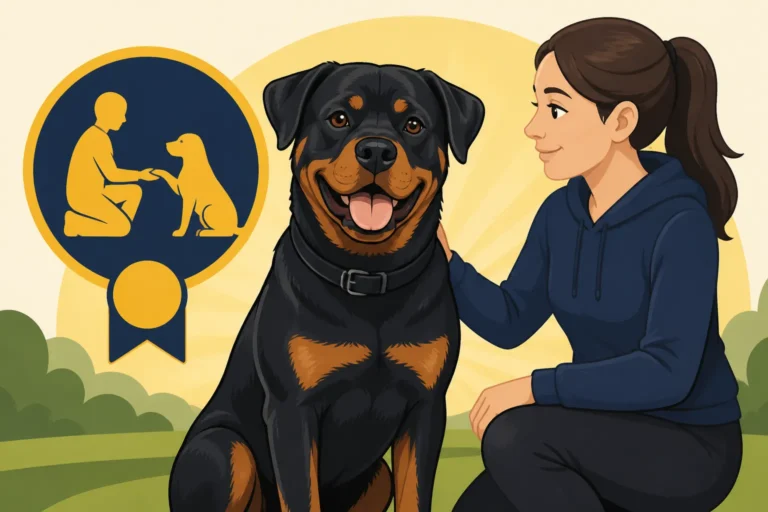
Ultimately, addressing person guarding is about building a deeper relationship of trust and confidence with your Rottweiler. You want them to trust that you have everything under control, and that they don't need to take on the burden of "protecting" you from benign interactions. This means being a consistent, fair, and reliable leader.
Engage in activities that build confidence in your dog, such as obedience training, scent work, or other dog sports. These activities provide mental stimulation and reinforce your bond. Continue positive exposure to new people and situations, always ensuring positive outcomes. Reward calm, attentive behavior, and celebrate every small step forward. A confident, well-adjusted Rottweiler, secure in their role and trusting in your leadership, is less likely to feel the need to guard you inappropriately. This journey of behavior modification is as much about teaching your dog new ways to respond as it is about teaching you how to understand and communicate with them more effectively.
Here's a quick overview of approaches:
| Strategy | Description | Key Goal | When to Use |
|---|---|---|---|
| Early Socialization | Positive exposure to diverse people, places, sounds during puppyhood. | Build confidence and positive associations with novelty. | From 8-16 weeks, ongoing through first year. |
| Clear Boundaries | Consistent rules about space, resources, and interactions. | Establish owner as leader, reduce perceived need for dog to guard. | Immediately upon bringing puppy home, ongoing. |
| "Place" Training | Teaching dog to go to and stay on a designated mat calmly. | Provide an alternative, calm behavior during triggering situations. | Before and during visits, mealtimes, or when you need quiet time. |
| Desensitization/Counter-Conditioning | Gradual, positive exposure to triggers (people approaching). | Change emotional response from negative (threat) to positive (reward). | For existing guarding behavior, with careful progression. |
| Environmental Management | Using physical barriers (gates, leashes) to prevent guarding incidents. | Prevent reinforcement of guarding behavior, keep everyone safe. | Crucial during training, especially with guests or unpredictable situations. |
| Professional Consultation | Seeking guidance from a certified behaviorist. | Address aggressive or unmanageable behavior, complex cases, or safety concerns. | Any time aggression occurs, if you feel overwhelmed, or if progress stalls. |
Disclaimer
This article is for general informational purposes only and does not constitute professional advice. Laws, prices and regulations vary by location and change over time. Consult a qualified professional for guidance on your specific situation.