Sending a Rottweiler Away to Board and Train
When you're facing persistent challenges with your big, powerful Rottweiler – maybe they're dragging you down the street, or those "cute" puppy nips have turned into painful, unwanted mouthiness at a hundred pounds – the idea of sending them away to a board and train program can feel like a lifeline. You’re exhausted, perhaps a little embarrassed, and desperate for a solution that promises a well-behaved dog. This guide will delve deep into what board and train programs entail for a Rottweiler, exploring the benefits, unique considerations, potential drawbacks, and crucial questions you need to ask to make the best decision for your family and your cherished companion.
Understanding What Board and Train Programs Offer for Rottweilers
The appeal of a board and train program is undeniable, especially for owners of large, strong-willed breeds like Rottweilers. It often feels like the ultimate solution when you've hit a wall, or simply don't have the time and expertise to tackle complex behavior issues yourself.
The Allure of Professional, Intensive Training
Imagine a world where your Rottweiler walks politely on a leash, comes when called every single time, and doesn't jump on guests. For many Rottweiler owners, this sounds like a dream, especially when grappling with the sheer physical strength and formidable presence of their dog. Daily life with a large breed can be physically demanding, and behavior problems that might be manageable in a smaller dog become significant, even dangerous, when you have a 100-plus pound dog ignoring you.
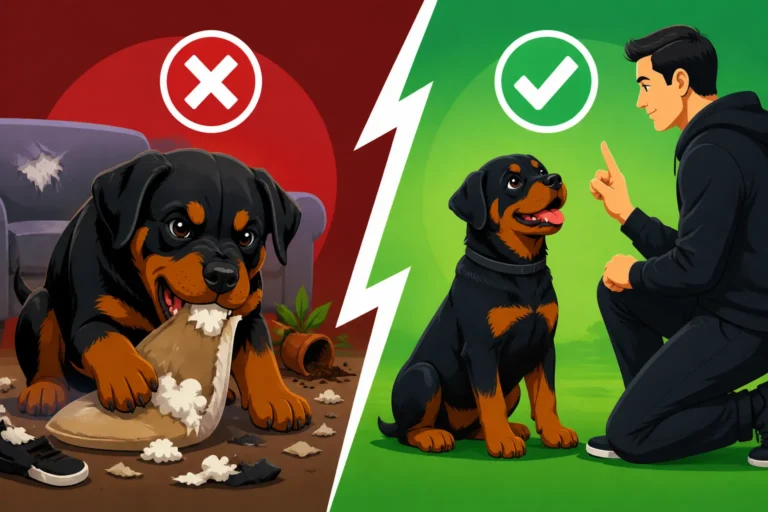
This is where the allure of board and train programs comes in. They promise intensive, consistent training from experienced professionals in a dedicated environment. The idea is that your dog will be immersed in a structured routine, receiving multiple training sessions throughout the day, often for several weeks. This consistent application of techniques, free from the distractions and ingrained habits of the home environment, can lead to rapid progress. Owners often consider this option when facing issues like severe leash pulling, reactivity towards other dogs or people, persistent resource guarding, or a general lack of basic manners that has become overwhelming. It’s an investment, both financially and emotionally, in transforming your dog's behavior and, by extension, your relationship with them. This kind of intensive work is often seen as necessary because Why Rottweiler Training Cannot Wait Until Six Months—establishing good habits early is critical.
Typical Curriculum and Training Methods
While specific programs vary, most board and train curricula for a large breed like a Rottweiler will focus on foundational obedience and addressing common behavioral issues. You can typically expect a strong emphasis on commands like "sit," "stay," "down," "come," and "place" or "bed." More advanced programs might incorporate off-leash obedience, proofing commands in highly distracting environments, or working on complex issues like aggression towards strangers or other animals.
Trainers employ a variety of methods. Some exclusively use positive reinforcement, rewarding desired behaviors with treats, praise, or toys. Others utilize a "balanced" approach, incorporating both rewards for good behavior and corrections for undesirable actions, often using tools like slip leads, prong collars, or e-collars (electronic collars). It's crucial for you, as the owner, to understand the specific training philosophy and tools a program uses. For a Rottweiler, who can be incredibly intelligent and sensitive despite their tough exterior, the chosen method needs to align with their personality and your own comfort level. A good program will involve not just teaching the dog the commands, but also teaching the dog to generalize these commands to different environments and handlers, laying the groundwork for you to continue the training when they return home.
The 'Reset Button' Appeal
One of the most compelling aspects of a board and train program for many owners is the idea of a "reset button." When your Rottweiler has developed problematic habits at home, those behaviors often become deeply entrenched due to consistent reinforcement from the environment or accidental cues from family members. Imagine a dog that constantly counter-surfs because they've had success finding snacks on the kitchen counter more than once, or one that barks incessantly at the mail carrier because it always makes them go away.
Sending your Rottweiler away removes them from these familiar triggers and patterns. In a new environment, under the guidance of a professional trainer, they can learn new, more desirable behaviors without the baggage of past habits. This fresh start, away from the familiar routines and cues that inadvertently strengthen undesirable behaviors, can be incredibly effective. The hope is that by removing the dog from the "scene of the crime," so to speak, they can internalize new rules and expectations before returning to a home environment where you are now equipped with the tools and knowledge to maintain those new behaviors. This can be especially helpful for addressing issues like resource guarding, where specific household items or locations might be triggers.
The Unique Considerations for a Rottweiler in Board and Train
While board and train programs can be beneficial for many dogs, a Rottweiler presents some specific factors that deserve careful thought. Their size, intelligence, guarding instincts, and deep bonds with their families mean that a "one-size-fits-all" approach simply won't cut it.
Rottweiler Temperament and Handler Changes
Rottweilers are known for forming incredibly strong, devoted bonds with their families. They are loyal, confident, and often reserved with strangers. This deep bond is wonderful, but it also means that a sudden separation and intense training with a new handler can be a significant adjustment for them. They aren't typically the type of dog that makes fast friends with everyone they meet. You've likely experienced their Rottweiler Aloofness and Why It Reads as Cold with new people.
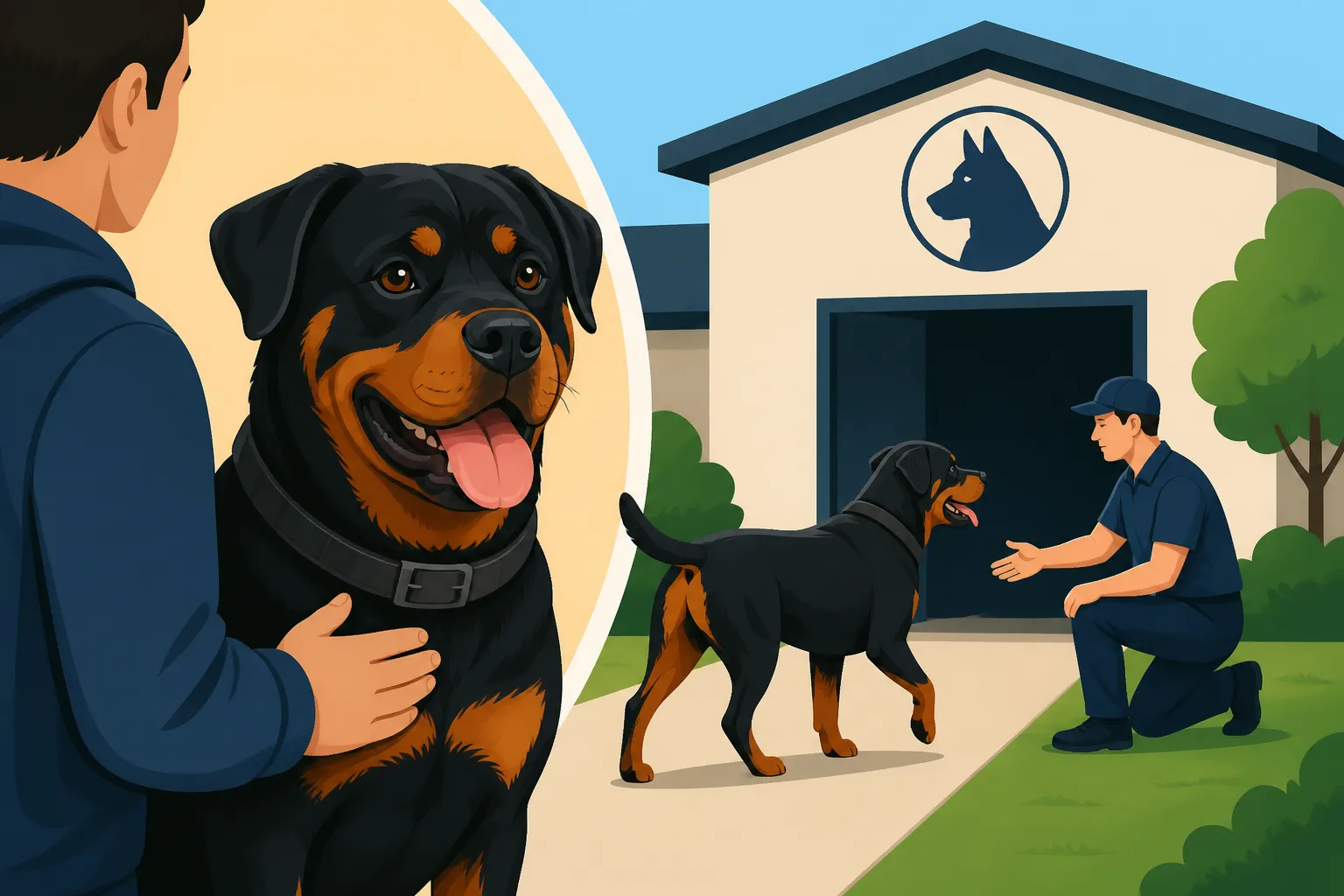
When considering a board and train, you need to think about how your specific Rottweiler will cope with being away from you and navigating new social dynamics with trainers and other dogs. Will they shut down? Will they adapt quickly? A good trainer will understand this breed trait and take steps to build trust and rapport with your dog before diving headfirst into demanding obedience. Moreover, the biggest challenge isn't just teaching your dog new behaviors, but ensuring those behaviors transfer to you. A dog might perform perfectly for the experienced trainer who built that initial rapport, but without a dedicated transfer session and ongoing owner education, your Rottweiler might revert to old habits when they realize you don't have the same level of command or understanding of the new cues.
Size, Strength, and Equipment Needs
Let's be realistic: a Rottweiler is a large, powerful dog. Training a Rottweiler Before It Outweighs You is critical, but if you're already past that point, their sheer strength demands specific handling and equipment. A board and train facility needs to be well-equipped to safely house, exercise, and train a dog of this stature. This means secure kennels that can withstand a determined Rottweiler, appropriate leashes and harnesses (you can find robust options on Amazon for example, or through specialty pet retailers), and trainers who are physically capable and experienced in managing such a strong breed.
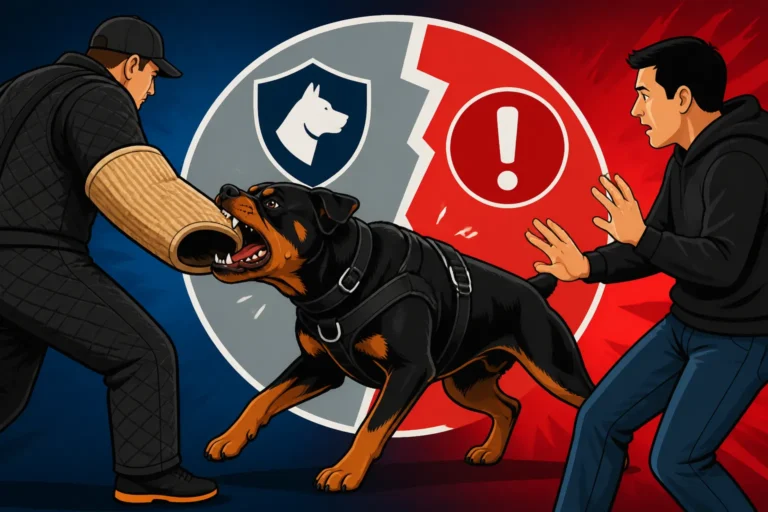
Beyond just physical strength, trainers must understand the breed's drive and genetics. While every dog is an individual, Rottweilers often possess a natural guarding instinct and a desire to work. A program that understands how to channel these traits into productive, desirable behaviors – rather than simply suppressing them – will be more effective in the long run. Proper equipment, from heavy-duty leashes to well-fitted Harnesses and Head Halters Sized for a Rottweiler, is non-negotiable for safety and control during training.
Addressing Specific Rottweiler Behavior Challenges
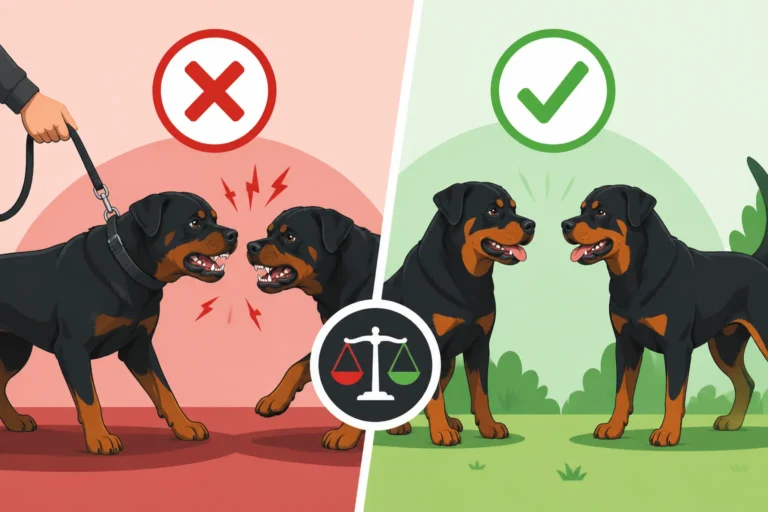
Rottweilers can sometimes present specific behavioral challenges that require a nuanced approach. For instance, Rottweiler Resource Guarding at Home is a common concern, as is a strong protective instinct that, if not properly managed, can manifest as reactivity or over-guarding. These aren't issues that can be "fixed" with a simple obedience command; they require understanding the underlying motivation and carefully reshaping the dog's emotional response.
A board and train program for a Rottweiler should ideally have a clear strategy for addressing these breed-specific tendencies. Are they simply suppressing the guarding behavior, or are they teaching the dog appropriate responses and building their confidence in different situations? How do they plan to integrate your dog back into a home environment where those guarding triggers might still exist? The goal isn't just a compliant dog, but a well-adjusted one. Understanding how the program will work with your Rottweiler's natural Rottweiler Guarding Instinct and How to Shape It is paramount. Without this thoughtful approach, you might find that while the specific symptom is gone, the underlying anxiety or drive remains, potentially resurfacing later.
The Potential Downsides and Crucial Questions to Ask
While board and train can offer significant advantages, it's not a magic bullet, and there are important considerations and potential pitfalls to be aware of, particularly when entrusting your Rottweiler to someone else's care.
Transfer of Learning to the Home Environment
This is, arguably, the biggest challenge and potential pitfall of any board and train program. Your dog spends several weeks learning new behaviors and responding to the cues and body language of a professional trainer in a controlled environment. They become adept at performing for that person in that setting. The crucial question is: will your Rottweiler perform the same way for you in your home?
Often, the answer is "not without significant effort on your part." Training is a two-way street. Your dog needs to learn, but you, the owner, also need to learn how to effectively communicate with your dog, maintain the new behaviors, and become the consistent leader your Rottweiler needs. A common scenario sees a dog return home, perform beautifully for a few days, and then slowly revert to old habits because the owners haven't fully grasped or consistently applied the new training protocols. A high-quality board and train program will emphasize owner education, offering multiple "transfer sessions" where you work hands-on with the trainer and your dog, along with ongoing support once your dog is home. Without this comprehensive owner education, a board and train can feel like a very expensive temporary fix.
Risk of Aversive Methods or Incompatible Philosophies
The world of dog training encompasses a wide spectrum of philosophies and techniques. Some trainers rely heavily on positive reinforcement, using only rewards to shape behavior. Others use "balanced" methods, incorporating both rewards and corrections, which might involve tools like prong collars, choke chains, or e-collars. While these tools, when used correctly by an experienced trainer, can be effective, when used improperly or too harshly, they can cause fear, anxiety, or even aggression, especially in a sensitive breed like a Rottweiler.
Before committing to any program, you absolutely must do your homework. Ask detailed questions about the training tools and methods used. If a trainer is vague or unwilling to explain their approach, that's a red flag. Visit the facility if possible and observe training sessions. Do the dogs seem happy and engaged, or fearful and stressed? Does the trainer use methods you are comfortable with and believe in? Remember, you are entrusting your Rottweiler to their care, and you need to be confident that their methods align with your values and will be beneficial for your dog's long-term well-being. Look for trainers who are transparent and eager to educate you on their process.
Cost Versus Long-Term Value
Let's not beat around the bush: board and train programs are a significant financial investment. Board and Train Costs for a Rottweiler can vary wildly, often running into thousands of dollars for multi-week programs. This isn't a casual expense, and it's vital to weigh the cost against the actual long-term value you'll receive.
Is it simply a quick fix, or does it provide you with the lasting skills and knowledge to maintain a well-behaved Rottweiler for years to come? The long-term value hinges almost entirely on the quality of the owner instruction and follow-up support. If you're paying a premium, you should expect more than just a dog that's "fixed" for a few weeks. You should expect to become a more confident and capable handler yourself. Consider what you might achieve with less expensive alternatives like private, in-home lessons or consistent group classes if you have the time and dedication to implement the training yourself. Sometimes, the added expense of a board and train is justified by truly complex behavioral issues that require intensive professional intervention, but for basic obedience, other options might offer better value if you're committed to the work.
Separation Anxiety and Stress for Your Rottweiler
While some dogs adapt easily to new environments, others, especially deeply bonded breeds like Rottweilers, can experience significant stress or even separation anxiety when separated from their families. Imagine your Rottweiler, who is used to sleeping at your feet, suddenly in a kennel environment with new smells, sounds, and people. This can be emotionally challenging for them.
A reputable board and train facility will prioritize your dog's well-being and provide a comfortable, clean, and safe environment. They should have protocols for easing dogs into the new routine, offering plenty of exercise, mental enrichment, and individual attention. Ask about their daily schedule, how much one-on-one time your dog will receive, and how they handle dogs that are struggling with the separation. If your Rottweiler already suffers from separation anxiety, a board and train might actually exacerbate the issue, making it crucial to discuss this concern with the trainer upfront and explore if their program is truly the right fit. It’s important to consider their health during this time too – stressful changes can impact their immune system, and you'll want to ensure they're monitored for anything unusual, like a change in appetite or Rottweiler Behavior Changes That Mean Pain.
Making an Informed Decision: Questions and Alternatives
Deciding whether to send your Rottweiler away for board and train is a big step, fraught with hopes and concerns. It's not a decision to be made lightly, and arming yourself with the right questions and understanding all your options is key.
Essential Questions to Ask Any Board and Train Facility
Before you even consider signing on the dotted line, you need to become an interrogator. Don't be shy – these are your questions, your money, and most importantly, your beloved Rottweiler's well-being. Here's a list of essential questions to ask:
- Trainer Qualifications and Experience: What certifications do the trainers hold? How many years of experience do they have, specifically with large breeds like Rottweilers? Ask for references!
- Training Philosophy and Methods: Get explicit details. Do they use positive reinforcement, balanced training, or aversive methods? Which tools do they employ (clickers, treats, leashes, harnesses, prong collars, e-collars, etc.), and why for each? Ensure their approach aligns with your comfort level and ethical considerations.
- Facility Environment: What does the living space look like for the dogs? Are the kennels clean, spacious, and temperature-controlled? What is the dog-to-staff ratio?
- Daily Schedule: What does a typical day look like for a dog in their program? How many training sessions per day, and for how long? What about exercise, playtime, and downtime?
- Owner Involvement and Follow-Up: This is crucial. How many "transfer sessions" are included? Are there opportunities for you to observe your dog's training before they come home? What kind of ongoing support (phone calls, emails, refresher lessons) is provided after the program concludes?
- Medical Protocols: What happens if a dog gets sick or injured? What veterinarians do they work with? Where is the nearest emergency vet? This is especially important for Rottweilers, who are prone to sudden, life-threatening conditions like bloat. Ask about their protocol if they notice signs of Rottweiler Bloat Risk Rising With Age.
- Communication During Stay: How often will you receive updates (photos, videos, progress reports)?
- Behavior Guarantee: Does the program offer any kind of guarantee? Understand what that means in practical terms.
- Cost Breakdown: Get a clear, itemized breakdown of all costs. What's included, and what's extra? Board and Train Costs for a Rottweiler can vary greatly, so clarity is essential.
Visiting the Facility and Observing Training
Asking questions is vital, but seeing is believing. A non-negotiable step in your decision-making process should be an in-person visit to any facility you're seriously considering. No matter how good their website or how friendly they sound on the phone, nothing replaces observing the environment and interactions firsthand.
During your visit, pay close attention to:
- Cleanliness and Safety: Is the facility clean, well-maintained, and secure? Are outdoor play areas safely fenced?
- Dog Demeanor: How do the dogs currently in the program appear? Do they seem stressed, withdrawn, or are they relaxed and engaged? Observe their interactions with the staff.
- Trainer Interactions: Watch how the trainers interact with the dogs. Are they patient, confident, and clear, or are they harsh or overly reliant on intimidation? Do the dogs respond willingly, or out of fear?
- Meet Your Dog's Specific Trainer: Ideally, you should meet the specific trainer who will be working with your Rottweiler. You need to feel comfortable with their personality and approach.
- Transparency: A reputable facility will be happy to show you around and answer all your questions without hesitation. Any reluctance to let you see behind the scenes should be a major red flag.
Exploring Alternatives to Board and Train
Board and train is one option, but it's not the only option, nor is it always the best one for every Rottweiler or every family. Before committing to such an intensive and costly program, consider these alternatives:
- Private, In-Home Training: A certified professional trainer comes to your home and works with you and your Rottweiler in your actual environment. This addresses behaviors where they happen, and crucially, teaches you how to handle and train your dog. It fosters a stronger bond and ensures that the learning generalizes to your specific household dynamics. Many trainers specialize in Finding a Rottweiler-Experienced Trainer Near You.
- Group Obedience Classes: These are more affordable and provide excellent socialization opportunities for your Rottweiler, especially if you start early. You learn alongside your dog, under the guidance of an instructor, in a structured setting. They are fantastic for teaching basic manners and building your handling skills. You can find out more about what these cost by searching for Rottweiler Puppy Class Fees.
- Online Training Programs and Resources: For owners who are dedicated and self-motivated, online courses can be incredibly effective. Programs from providers like BAXTER & Bella offer comprehensive curriculum and virtual coaching, allowing you to learn at your own pace and apply lessons directly to your dog at home. You can also find a wealth of training books and equipment on Amazon to support your self-study and practical application.
- Day Training: Some trainers offer a "day train" model where your dog goes to the facility for training sessions during the day but returns home with you in the evening. This offers professional intervention while minimizing separation from your family.
- Behavioral Consultations: If your Rottweiler is struggling with complex behavioral issues like severe aggression or anxiety, a certified veterinary behaviorist or a highly experienced canine behavior consultant can offer a tailored plan, often involving a combination of management, behavior modification techniques, and sometimes medication. This can often be a more targeted and effective approach for deeply ingrained problems.
Ultimately, the best choice depends on your Rottweiler's personality, the specific issues you're facing, your budget, and your personal commitment to continuing the training at home. The goal is always to build a positive, lifelong relationship with your amazing Rottweiler, no matter which path you choose.
Disclaimer
This article is for general informational purposes only and does not constitute professional advice. Laws, prices and regulations vary by location and change over time. Consult a qualified professional for guidance on your specific situation.