The Yard Size a Rottweiler Actually Needs
It's a common image, isn't it? The grand, powerful Rottweiler, trotting majestically across a sprawling green estate. This picture often leads people to believe that owning a Rottweiler means you absolutely must have an enormous yard, acres of land for them to roam freely. The truth, however, is far more nuanced, and this guide is here to unravel the real story behind what kind of outdoor space a Rottweiler truly thrives in, and how you can provide it even if your yard isn't the size of a football field.
Dispelling the Myth of the Massive Yard for Rottweilers
Let's be honest, the idea that a big dog needs a big yard is almost a knee-jerk reaction for many people. You see their impressive size and powerful build, and your mind immediately conjures images of vast open spaces. But when it comes to Rottweilers, simply having a large yard isn't the golden ticket to a happy, well-adjusted dog. In fact, relying solely on a big yard can sometimes do more harm than good if it's misunderstood as a substitute for active engagement.
The "Big Dog, Big Yard" Assumption
This assumption is widespread, and it's particularly prevalent with breeds like Rottweilers. People imagine these dogs needing endless room to run off their energy, believing that a spacious yard will naturally provide all the exercise and mental stimulation they require. The problem with this line of thinking is that it often leads to passive dog ownership. An owner might think, "Well, my Rottie has a huge yard, so they're getting enough exercise," and then not actively participate in walks, training, or interactive play. A dog, regardless of its size, won't typically self-exercise in a yard for hours on end, especially not a Rottweiler. They'll likely find a favorite spot to nap, patrol the fence line, or perhaps dig a hole, none of which truly meet their comprehensive needs.
What a Rottweiler's Energy Levels Actually Look Like
Unlike some high-octane working breeds that truly need to run for miles every day, Rottweilers often possess a more moderate energy level as adults. They're powerful, yes, and they need physical activity, but they aren't usually endless bundles of kinetic energy that bounce off the walls if they don't get several hours of intense running. What they do have is incredible stamina for focused work and a desire for purpose. A Rottweiler often enjoys a good brisk walk or a focused training session much more than simply being turned out into a vast space with nothing to do. Their energy is often more about bursts of activity and then settling, especially once they pass the boisterous puppy stage. Understanding their true energy profile is crucial to providing appropriate outlets.
Why Space Alone Isn't Enough
Imagine a human being given a massive, empty warehouse. Sure, there's a lot of space, but without tools, tasks, or interaction, it quickly becomes boring. The same goes for a Rottweiler in a large, empty yard. Space, in and of itself, doesn't provide mental engagement, teach manners, build a bond with their owner, or offer new experiences. A Rottweiler is a highly intelligent breed, eager to please its people and thrives on having a "job" to do, even if that job is simply learning new commands or playing fetch with enthusiasm. Without this interaction, a large yard can become a canvas for boredom-induced behaviors like excessive barking, digging, or even destructive chewing, simply because the dog is under-stimulated, not because the yard is too small.
Understanding a Rottweiler's True Exercise Needs
So, if a massive yard isn't the be-all and end-all, what does a Rottweiler need to be well-exercised and happy? It comes down to structured activity, mental engagement, and plenty of opportunities to explore the world beyond their own property. These elements are far more critical than mere square footage.
Daily Structured Exercise is Key
Forget the image of your Rottweiler self-exercising in the yard. What they truly benefit from is daily, intentional exercise with you. This might mean brisk walks around the neighborhood, taking them to a dog-friendly park (where appropriate and safe), or engaging in active play sessions like fetch. An adult Rottweiler needs at least one, and ideally two, good 30-60 minute sessions of structured exercise each day. For example, a morning walk and an evening play session. During their younger years, it's vital to remember A Growing Rottweiler's Joints and Overexercise and keep activities appropriate for their developing bodies. This isn't just about burning calories; it's about channeling their natural strength and stamina in a positive way, reinforcing good leash manners, and strengthening your bond. These walks are also great opportunities to work on Rottweiler Leash Manners at a Hundred Pounds.
Mental Stimulation and Training Outweigh Square Footage
A Rottweiler's mind is just as important as its body. They are intelligent dogs that need to think and solve problems. Without mental exercise, they can become bored and frustrated, which often leads to unwanted behaviors. This is where training comes in. Daily training sessions, even short ones, where you work on obedience commands, learn new tricks, or engage in puzzle toys, can be incredibly enriching. Think about scattering their kibble in the yard for them to "hunt" or using a snuffle mat for their meals. Puzzle Feeders Built for a Rottweiler can be a fantastic way to engage their minds during meal times. Regular training isn't just about obedience; it's a vital source of mental stimulation that can tire a Rottweiler out just as effectively as a physical workout, if not more so. A smart dog needs a smart challenge.
The Importance of Socialization Outside the Yard
While a secure yard offers a safe space, it doesn't offer the variety of sights, sounds, smells, and experiences that are crucial for a well-socialized Rottweiler. Early and ongoing socialization is paramount for this breed. This means exposing them to different environments, people, and other dogs (safely and positively) from a young age. Going to obedience classes, visiting pet-friendly stores (if your dog is calm and well-behaved), or simply walking in busy areas can all contribute to a more confident and balanced dog. If your Rottweiler lives a sheltered life confined to a yard, they may become overly protective, fearful, or reactive when encountering novel situations outside their comfort zone. Rottweiler Puppy Training Through the First Year is crucial, and that includes broad exposure to the world.
Making Any Yard Work for Your Rottweiler (or Living Without One)
The good news is that you don't need a sprawling estate to successfully own a Rottweiler. Whether you have a small patch of grass or live in an apartment, thoughtful planning and consistent effort can ensure your Rottweiler's needs are met.
Enhancing a Smaller Yard for a Rottweiler
Even a modest yard can be perfectly adequate for a Rottweiler, provided it's used effectively and complemented by outside activities. Here are some ways to make a smaller space work:
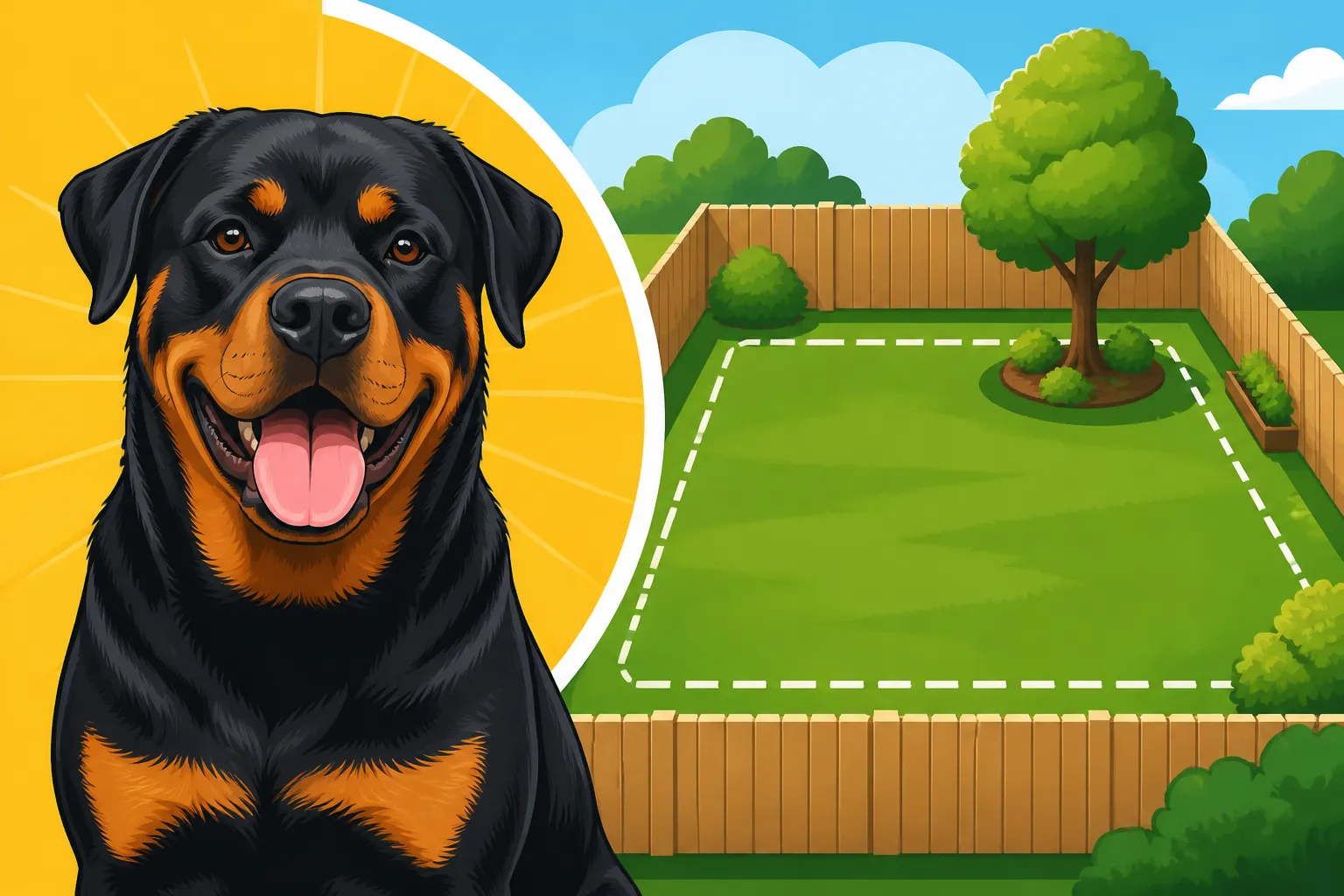
- Security First: The size of the yard matters less than its security. A Rottweiler needs a strong, tall fence – ideally six feet high – that they cannot jump over, dig under, or push through. Chain link can work, but privacy fences often deter barking at passersby. Regularly check for weak spots.
- Designated Play Area: Create a specific area for supervised play sessions. This could involve a durable fetch toy from Chewy, a flirt pole for controlled chasing, or even some agility equipment if your dog enjoys it (keeping Rottweiler Growth Plates and Why They Close So Late in mind for young dogs).
- Sensory Garden: Incorporate different textures (like a sandpit for digging in a designated spot), safe plants to sniff, and perhaps a kiddie pool for cooling off in summer. These elements provide enrichment within a contained space.
- Shade and Shelter: Ensure there's adequate shade and shelter from the elements, especially given the Heat Tolerance in a Black-Coated Rottweiler. A dog house or a shaded patio can be a lifesaver on a hot day.
- Regular Cleaning: Smaller yards can accumulate waste quickly. Regular cleaning is essential for hygiene and to prevent your dog from developing bad habits related to their potty area.
Apartment Living with a Rottweiler
Yes, you absolutely can successfully raise a Rottweiler in an apartment, provided you are committed to meeting their needs. It actually forces owners to be more intentional about exercise and mental stimulation, which benefits the dog immensely.
- Walk, Walk, Walk: This is your primary outlet. Multiple daily walks, including at least one long, brisk one, are non-negotiable. These walks are your Rottweiler's main opportunity to stretch their legs, sniff new smells, and engage with the world.
- Dog Parks and Daycare: If your Rottweiler is well-socialized and enjoys the company of other dogs, controlled visits to a well-managed dog park can provide excellent exercise. Some dogs also thrive in reputable doggy daycare environments, offering structured play and supervision. Always evaluate these environments carefully; not all dogs or dog parks are a good fit for a powerful breed like a Rottweiler.
- Indoor Games: Don't underestimate the power of indoor play and training. Hide-and-seek with treats, scent work games, or even just short bursts of fetch in a hallway can burn energy and engage their minds.
- Crate Training: A crate can be invaluable in an apartment setting, providing a safe den for your Rottweiler and helping with house-training. Ensure you get a Rottweiler Crate Size and What It Costs that is appropriate for their adult size.
- Neighbor Relations: Be a responsible neighbor. Keep your Rottweiler quiet, clean up after them diligently, and ensure they are always on leash in common areas. Good behavior from your dog helps challenge breed stereotypes.
The Role of Safe Outdoor Access and Activities
Beyond your yard (or in lieu of one), seeking out various safe outdoor activities is paramount. This expands your Rottweiler's world and prevents boredom.
- Hiking Trails: Many Rottweilers love hiking. It's a fantastic way to get physical exercise and mental stimulation from all the new scents and sights. Be mindful of their stamina and joint health, especially when they're young.
- Swimming: For Rottweilers who enjoy water, swimming is a wonderful low-impact exercise that's easy on their joints. Look for dog-friendly lakes or pools.
- Training Classes: Beyond basic obedience, consider enrolling in advanced obedience, rally, or even nose work classes. These provide mental challenges and social interaction in a structured environment. Rottweiler Obedience Class Fees are an investment in a well-behaved dog.
- Exploring New Places: Simply taking your Rottweiler to different neighborhoods, quiet parks, or even just a new walking route can be incredibly stimulating. The variety keeps their minds active and prevents routine boredom. Remember to always bring a sturdy leash and collar, perhaps a durable one from Chewy, for these outings.
Here’s a quick comparison of yard sizes and how to meet a Rottweiler's needs:
| Yard Size / Living Arrangement | Description | Key Considerations | Recommended Activities |
|---|---|---|---|
| Large Yard (1/4 acre+) | Plenty of space, often with varied terrain. | Still requires active owner participation. Not a substitute for walks or training. Must be securely fenced. Can lead to self-entertainment behaviors like digging or barking if not engaged. | Supervised fetch, scent games, perimeter patrol with owner, dog sports in a contained area. |
| Medium Yard (1/8 – 1/4 acre) | Common suburban yard size. | Sufficient for potty breaks and short, supervised play. Needs strong focus on daily walks and training outside the yard. Fence security remains critical. | Controlled play, short training sessions, interaction with owner. Multiple daily walks. |
| Small Yard (<1/8 acre) | More compact, usually just enough for potty breaks. | Primarily a potty area. Absolutely requires commitment to multiple, longer daily walks. Owners must seek out additional exercise and mental stimulation outlets elsewhere. | Potty breaks, brief supervised stretching. Heavy reliance on outside activities. |
| Apartment / No Yard | No private outdoor space. | Forces intentional dog ownership. Requires utmost dedication to daily, structured exercise, training, and socialization outside the home. Potty training must be meticulous. House Training a Rottweiler Through the Winter takes dedication. | Several long walks daily, dog park visits (if suitable), daycare, indoor games, training. |
When a Yard Becomes a Problem, Not a Solution
While a yard can be a great amenity, it's vital to recognize that it can also become a source of problems if not managed correctly. Owners sometimes fall into traps, assuming the yard will solve all their dog's needs, which can lead to behavioral issues and even danger.
Unsupervised Yard Time and Bad Habits
The biggest pitfall of having a yard, especially a large one, is the temptation to simply open the door and let your Rottweiler entertain themselves. Unsupervised yard time is rarely beneficial. For a Rottweiler, it can quickly lead to a host of bad habits:
- Excessive Barking: Without supervision, a Rottweiler might develop a habit of barking at everything that moves – squirrels, birds, neighbors, delivery drivers. This can become a nuisance for you and your neighbors, and it's hard to break once ingrained. Rottweiler Barking at the Fence Line is a common frustration.
- Digging: If bored, a Rottweiler might decide to become an expert landscaper, turning your lawn into a lunar landscape. This isn't usually malicious; it's often a sign of under-stimulation.
- Escaping: Even with a good fence, an unsupervised and bored Rottweiler might discover a weak spot or simply become determined to find something more interesting on the other side. This puts them in danger of traffic, getting lost, or encountering other animals or people in an uncontrolled manner.
- Resource Guarding: If children or other pets are also in the yard, unsupervised time can create scenarios where a Rottweiler might start Rottweiler Resource Guarding at Home over toys, space, or even attention, leading to potential conflicts.
The key is supervision. Your yard should be an extension of your living space, where you and your Rottweiler engage in activities together, not a place where you simply "put" your dog.
Fence Security and Escape Artists
A Rottweiler is a strong, determined, and intelligent dog. If they want to get out of a yard, they can be remarkably persistent. This means fence security isn't just a suggestion; it's a necessity. A standard picket fence might look nice, but it's often inadequate for a Rottweiler.
- Height and Strength: A minimum of a six-foot fence is highly recommended, and it needs to be sturdy. A solid wood or vinyl fence can offer privacy, reducing visual stimulation that can trigger barking or prey drive.
- Digging Prevention: For diggers, the fence needs to extend below ground level or have a "L-footer" made of wire mesh laid flat on the ground along the inside perimeter. This prevents them from digging underneath.
- Gate Security: Gates are often the weakest point. They need to be as tall and sturdy as the fence, open inward, and have secure latches that a Rottweiler cannot manipulate or accidentally open. Double-latching mechanisms are a good idea.
- Supervision, Always: Even with the most secure fence, vigilance is still required. Never leave your Rottweiler unattended in the yard for extended periods, especially if they have a history of trying to escape or are known diggers.
The Dangers of a Yard Being the Only Outlet
If a yard is the only source of exercise and mental stimulation for your Rottweiler, you're setting them up for failure and potentially serious behavioral problems. A Rottweiler needs to be an integrated member of the family, sharing experiences and responsibilities.
- Lack of Socialization: Confinement to a yard severely limits a Rottweiler's exposure to the outside world. This can lead to fear, aggression, or over-protectiveness when they eventually do encounter new people, dogs, or environments, making them harder to manage in public. Rottweiler Dog Park Risks at Adult Size are higher if they aren't well-socialized.
- Behavioral Issues: Boredom and lack of stimulation are prime drivers for destructive chewing, excessive barking, digging, and even anxiety. These behaviors aren't inherent flaws in the Rottweiler; they're often a cry for more engagement and purpose.
- Poor Physical Conditioning: While a dog might run in a large yard, it's rarely the structured, consistent exercise that builds proper muscle tone and joint health. Daily walks, runs, or focused play are more effective. Building Adult Rottweiler Fitness Safely requires intention.
- Weakened Bond: Your relationship with your Rottweiler is built on shared experiences, training, and trust. If your only interaction is opening the back door, that bond will suffer, and you'll miss out on the incredible companionship this breed can offer. Utilizing products from Chewy for training or enrichment can enhance these interactions.
Ultimately, the size of your yard is far less important than your commitment to actively engaging with your Rottweiler. Whether you have a sprawling ranch or a cozy apartment, a Rottweiler can thrive with consistent, thoughtful exercise, mental stimulation, and plenty of quality time spent with their human family. It's about how you use the space, not just how much of it you have.
Disclaimer
This article is for general informational purposes only and does not constitute professional advice. Laws, prices and regulations vary by location and change over time. Consult a qualified professional for guidance on your specific situation.