Heat Tolerance in a Black-Coated Rottweiler
One of the biggest worries for any Rottweiler owner, especially as the temperatures climb, is keeping their magnificent black-coated companion safe and comfortable. It's a real and valid concern: that deep, dark coat, while stunning, can feel like a heat magnet on a sunny day, making our Rotties much more susceptible to overheating than their lighter-colored canine pals. This comprehensive guide is here to shed light on exactly why black-coated Rottweilers feel the heat more intensely and, more importantly, to arm you with practical, realistic strategies to ensure your beloved dog stays cool and healthy, even when the mercury rises.
Understanding Why Black Coats Absorb More Heat
It's not just your imagination; there's a scientific reason your Rottweiler seems to soak up every ray of sunshine. Their striking black coat, while beautiful, is inherently designed in a way that makes them less efficient at shedding heat in direct sunlight compared to dogs with lighter fur. This isn't a minor detail; it's a fundamental aspect of their physiology in warm weather that every Rottweiler owner needs to grasp.
The Physics of Heat Absorption
Think about wearing a black t-shirt on a blazing summer day versus a white one. The black shirt feels noticeably hotter, right? The same principle applies to your Rottweiler's coat. Dark colors, like the rich black of a Rottweiler, absorb a much higher percentage of the sun's electromagnetic radiation, which includes visible light and infrared radiation. When this energy is absorbed, it's converted into heat, directly raising the temperature of the fur and, subsequently, your dog's skin and core body temperature.
In contrast, lighter colored coats, or even those with significant rust markings, tend to reflect more of this solar radiation away from the body. It’s like having a natural shield against some of the sun’s intensity. For a Rottweiler, this means that every minute they spend in direct sunlight, their coat is actively working against them in terms of heat regulation. This added burden means their internal cooling mechanisms, primarily panting, have to work much harder and less efficiently to dissipate the absorbed heat, making them prone to heat stress far quicker than you might expect.
The Double Coat Factor
Beyond the color, a Rottweiler's coat structure itself plays a significant role in their heat tolerance. Rottweilers boast a dense double coat: a harsh, medium-length outer coat that feels a bit coarse to the touch, and a softer, thick undercoat. This double layer is fantastic for insulating them against cold weather, providing a natural barrier against winter's chill and moisture. However, in warmer climates or during summer, this same insulating property can become a hindrance.
The thick undercoat, particularly, can trap a layer of warm air close to the dog's body, preventing effective heat dissipation. While shedding does occur, especially in the spring and fall when they "blow" their undercoat, even a regularly groomed Rottweiler will retain enough density in their coat to pose a challenge in the heat. It essentially acts like a down jacket in summer – great for warmth, terrible for cooling down. This combination of a dark, heat-absorbing color and an insulating double coat means you, as their guardian, need to be extra vigilant and proactive in managing their environment when temperatures rise. Understanding this dual challenge is the first step in ensuring your Rottweiler's safety and comfort.
Recognizing the Signs of Overheating in Your Rottweiler
Knowing why your Rottweiler gets hot is crucial, but recognizing when they are getting too hot is absolutely paramount. Rottweilers, being stoic by nature, might not always immediately broadcast their discomfort in ways that are obvious to a casual observer. As their owner, you need to be tuned into the subtle cues that signal trouble before it escalates into a life-threatening situation like heatstroke.
Early Warning Signals
The earliest signs of overheating are often subtle and can easily be missed if you're not paying close attention. Your Rottweiler might start with more pronounced panting than usual, even if they haven't been exercising vigorously. This isn't just a casual "dog pant"; it's deeper, faster, and more labored. You might notice excessive drooling, with long ropes of saliva dripping from their mouth, a direct result of their body trying to cool itself through evaporation.
They might actively seek out cooler spots, like the shade under a tree, a patch of bare concrete, or trying to lie down on tile floors indoors. If you're on a walk, they might drag their feet, be less enthusiastic, or simply refuse to continue, indicating they're feeling sluggish. Their gums might appear a bit redder than their usual healthy pink. These are critical early warnings. Think of it like a smoke detector: it's telling you there's a problem before the fire gets out of control. Ignoring these early signs, especially when the ambient temperature is high or they've been exercising, can quickly lead to a more severe situation. Be particularly mindful of Rottweiler Heat Exhaustion Warning Signs when the weather turns warm.
Progressive Symptoms of Heat Exhaustion and Stroke
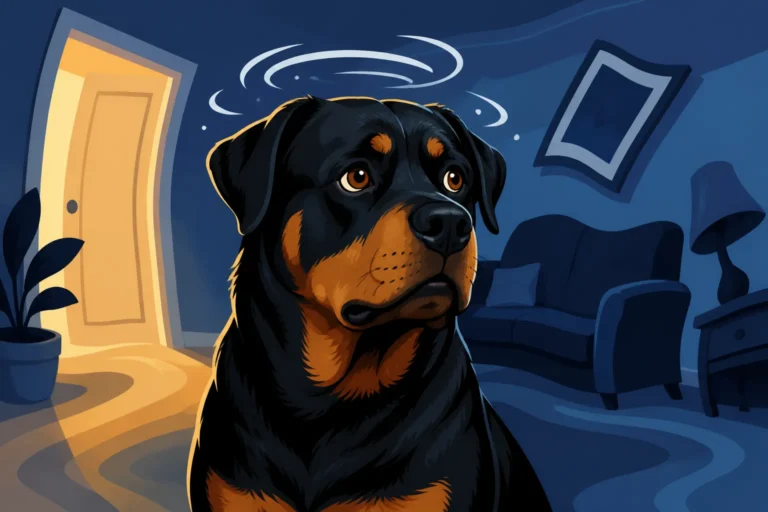
If the early warning signs are ignored or conditions worsen, your Rottweiler can rapidly progress from heat stress to heat exhaustion, and then to the extremely dangerous stage of heat stroke. These later symptoms are far more severe and constitute a genuine emergency. You might see staggering or uncoordinated movements, almost like they're drunk, as their neurological function begins to be affected. Weakness, lethargy, or even collapsing are clear red flags.
Gastrointestinal issues like vomiting and diarrhea, which can sometimes be bloody, indicate internal system breakdown. Their gums might turn a brilliant cherry red or, conversely, become pale or bluish if they're going into shock. A very rapid heart rate and breathing difficulties are also common. You might also notice their body temperature feels excessively hot to the touch, far beyond what's normal, or they could have glassy eyes and appear disoriented.
The difference between heat exhaustion and heat stroke is primarily in severity and body temperature. Heat exhaustion is serious but generally precedes heat stroke. Heat stroke involves a dangerously high body temperature (often above 104°F or 40°C) and can lead to organ damage, seizures, coma, and even death if not immediately addressed. At this stage, every minute counts. Your Rottweiler needs immediate, aggressive cooling and emergency veterinary care. There's no time to "wait and see" once these more severe symptoms appear.
Practical Strategies for Keeping Your Rottweiler Cool
Given the Rottweiler's predisposition to overheating, proactive management is key. It's about creating an environment and a routine that prioritizes their comfort and safety, especially during the warmer months. You wouldn't wear a parka in July, and your Rottweiler shouldn't be asked to cope with summer heat without your diligent intervention.
Timing and Intensity of Exercise
This is perhaps the most straightforward yet often overlooked strategy. On hot days, completely rethink your exercise schedule. Forget those midday walks or play sessions. The coolest parts of the day are typically early morning, right as the sun is coming up, and late evening, after the sun has set and the pavement has had a chance to cool down. Even then, you need to gauge the ambient temperature and humidity. A seemingly mild 75°F (24°C) with high humidity can feel much hotter to your Rottweiler than a dry 80°F (27°C) because humidity makes it harder for them to cool down through panting.
Reduce the duration and intensity of exercise significantly. Instead of a long, brisk walk, opt for a shorter, slower stroll around the block. Avoid strenuous activities like running, fetching, or vigorous play, which can quickly push their body temperature into dangerous territory. Remember that Rottweiler puppies have Rottweiler Growth Plates Closing at Eighteen to Twenty-Four Months, so overexercise is a concern beyond heat, too. Even gentle activities should be closely monitored for signs of heavy panting or fatigue. Prioritize mental stimulation with indoor puzzle toys over physical exertion when it's hot. For more specifics on balancing activity and safety, consult our guide on Exercising a Rottweiler in Summer Heat.
Providing Ample Shade and Water
This seems obvious, but it's astonishing how often dogs are left without adequate access to these basic necessities. Your Rottweiler needs constant, unlimited access to fresh, cool water, both indoors and outdoors. On hot days, offer water frequently, and consider adding ice cubes to their bowl to keep it cooler for longer. You can even freeze water in a large bowl overnight to create a giant ice cube that slowly melts throughout the day, providing a continuous source of cool water. Rottweiler Water Intake at Size is significant, so multiple bowls are a good idea.
Shade is equally vital. If your Rottweiler spends any time outdoors, they must have immediate and constant access to shaded areas. Natural shade from trees is ideal, but if that's not available, provide artificial shade with tarps, umbrellas, or a well-ventilated dog house. Ensure the shaded area moves with the sun throughout the day. Concrete and asphalt can get incredibly hot, burning paw pads and radiating heat back onto your dog. Always prioritize moving them to grass or a cooler surface. Remember, even on cloudy days, UV rays are still present, and a dark coat will still absorb ambient heat. Don't forget to review Yard Shade a Black-Coated Rottweiler Needs.
Cooling Aids and Techniques
Thankfully, there's a wide array of products and techniques designed to help keep dogs cool. Cooling mats, for instance, often contain a gel that activates with pressure, providing a cool surface for your Rottweiler to lie on. Cooling vests or bandanas, which you soak in water before use, work by evaporative cooling against your dog's chest and neck where large blood vessels are close to the surface. These can be particularly effective during short outdoor excursions. For more information, check out our article on Cooling Mats and Vests for a Rottweiler.
Beyond specific products, simple water can be your best friend. Misting your Rottweiler with a spray bottle or gently wetting their paws, belly, armpits, and groin area with a cool, damp towel can provide rapid relief. These areas have less fur and significant blood flow, making them ideal for cooling. A shallow kiddie pool filled with a few inches of water can be a fantastic way for your Rottweiler to cool off and play, provided they enjoy water. Always supervise them during water play. Some Rottweilers even enjoy a supervised swim in a lake or dog-friendly pool, which is an excellent low-impact way to cool down. See Swimming as Low-Impact Rottweiler Exercise for more ideas.
Additionally, remember that hot pavement can not only burn your Rottweiler's paw pads but also radiate heat up to their body. Before walking, test the pavement with the back of your hand. If it's too hot for you to hold your hand there for five seconds, it's too hot for their paws. Consider dog boots or stick to grassy areas. Our guide on Rottweiler Paw Protection on Hot Pavement has more details.
Car Safety and Travel Precautions
This is a non-negotiable area. Never, ever, under any circumstances, leave your Rottweiler unattended in a parked car, even if the windows are cracked or it seems like "just a minute." The temperature inside a vehicle can rise to dangerous levels incredibly quickly, even on a moderately warm day. On an 85°F (29°C) day, the temperature inside a car can reach 102°F (39°C) in just 10 minutes, and 120°F (49°C) in 30 minutes. This is a death trap for any dog, especially a black-coated Rottweiler.
If you must travel with your Rottweiler in warm weather, ensure your vehicle's air conditioning is functioning properly and directed towards the back where they are. Make frequent stops for water and potty breaks in shaded areas. Bring a water bowl and a jug of fresh, cool water with you. If possible, consider travel during cooler hours of the day. If you can't take your dog with you wherever you're going, it's safer to leave them at home in an air-conditioned environment. For longer trips, consider our advice on Rottweiler Car Manners and Loading Up.
Here's a quick reference for safe outdoor temperatures and general precautions:
| Temperature Range | Humidity Level | Activity Recommendation | Precaution Level |
|---|---|---|---|
| Below 68°F (20°C) | Any | Normal activity levels, monitor for comfort. | Low |
| 68-75°F (20-24°C) | Low to Moderate | Normal activity, but increase water access and shade. | Moderate |
| 68-75°F (20-24°C) | High | Reduce activity significantly, constant shade & water. Monitor closely. | High |
| 75-80°F (24-27°C) | Low | Limit outdoor activity to cool hours, shade, water. Very short walks only. | High |
| 75-80°F (24-27°C) | Moderate to High | Avoid all but essential outdoor activity (potty breaks), seek air conditioning. | Critical |
| Above 80°F (27°C) | Any | Avoid outdoor activity completely. Keep indoors with AC. Only brief potty breaks. | Extreme |
Note: These are general guidelines. Individual Rottweilers may have different tolerances based on age, health, and fitness.
When to Seek Veterinary Care for Heat-Related Issues
Despite your best efforts, accidents happen, or the heat can become overwhelming. Knowing when to escalate from home care to emergency veterinary intervention is a critical part of being a responsible Rottweiler owner. Delay can be fatal.
Emergency Signs and Immediate Action
If your Rottweiler exhibits any of the progressive symptoms of heat exhaustion or, more critically, heat stroke – severe staggering, collapse, uncontrollable vomiting or diarrhea, seizures, dark red or bluish gums, or a body temperature above 104°F (40°C) – this is an emergency. Do not hesitate.
Your first step, while simultaneously preparing to transport them to the vet, is to begin immediate cooling. Move your dog to the coolest possible area, ideally indoors with air conditioning or in front of a fan. Apply cool (not ice-cold) water to their body, focusing on the ears, armpits, groin, and paw pads. You can use wet towels, a garden hose on a gentle setting, or even immerse them in a tub of cool water if they are not resisting too much. Do not use ice water, as it can cause their blood vessels to constrict, hindering the cooling process, and can actually cause them to shiver, increasing their body temperature. Offer small amounts of cool water if they can drink, but do not force it.
Crucially, call your veterinarian or the nearest emergency veterinary clinic while you are doing this. Inform them you are on your way with a suspected heatstroke case. This allows them to prepare for your arrival, potentially saving precious minutes when you get there.
Understanding Vet Treatment and Recovery
Once at the veterinary clinic, the medical team will take over. Their immediate goals will be to rapidly and safely lower your Rottweiler's body temperature and to address any secondary complications that may arise. This often involves intravenous (IV) fluids to combat dehydration and support organ function, continuous monitoring of their core temperature, blood pressure, and heart rhythm. They may use additional cooling methods like fans, enemas, or even cool compresses.
Blood tests will likely be performed to assess organ damage, particularly to the kidneys, liver, and blood clotting system, as heat stroke can cause widespread systemic effects. Your Rottweiler may need medication to control seizures, manage pain, or address nausea. The recovery process can be lengthy and depends heavily on the severity of the heat stroke and how quickly treatment was initiated. Some dogs suffer long-term organ damage, even if they survive the initial crisis.
Emergency veterinary bills, especially for something as severe as heat stroke, can quickly become substantial, easily running into the thousands of dollars due to intensive care, diagnostics, and overnight hospitalization. This is where having pet insurance, such as a comprehensive plan from Healthy Paws, can be an absolute lifesaver. While no one wants to think about their dog needing emergency care, a good insurance policy can provide immense peace of mind, allowing you to focus on your Rottweiler's health rather than the overwhelming financial burden during a crisis. Early intervention and prompt veterinary care offer the best chance for a positive outcome, so never hesitate when it comes to heat-related emergencies. Remember, Emergency Vet Bills a Rottweiler Owner Should Expect can be significant.
Disclaimer
This guide provides general information and recommendations regarding heat tolerance and care for Rottweilers. It is not a substitute for professional veterinary advice. Always consult with your veterinarian for any health concerns or before making changes to your dog's care routine, especially in an emergency.