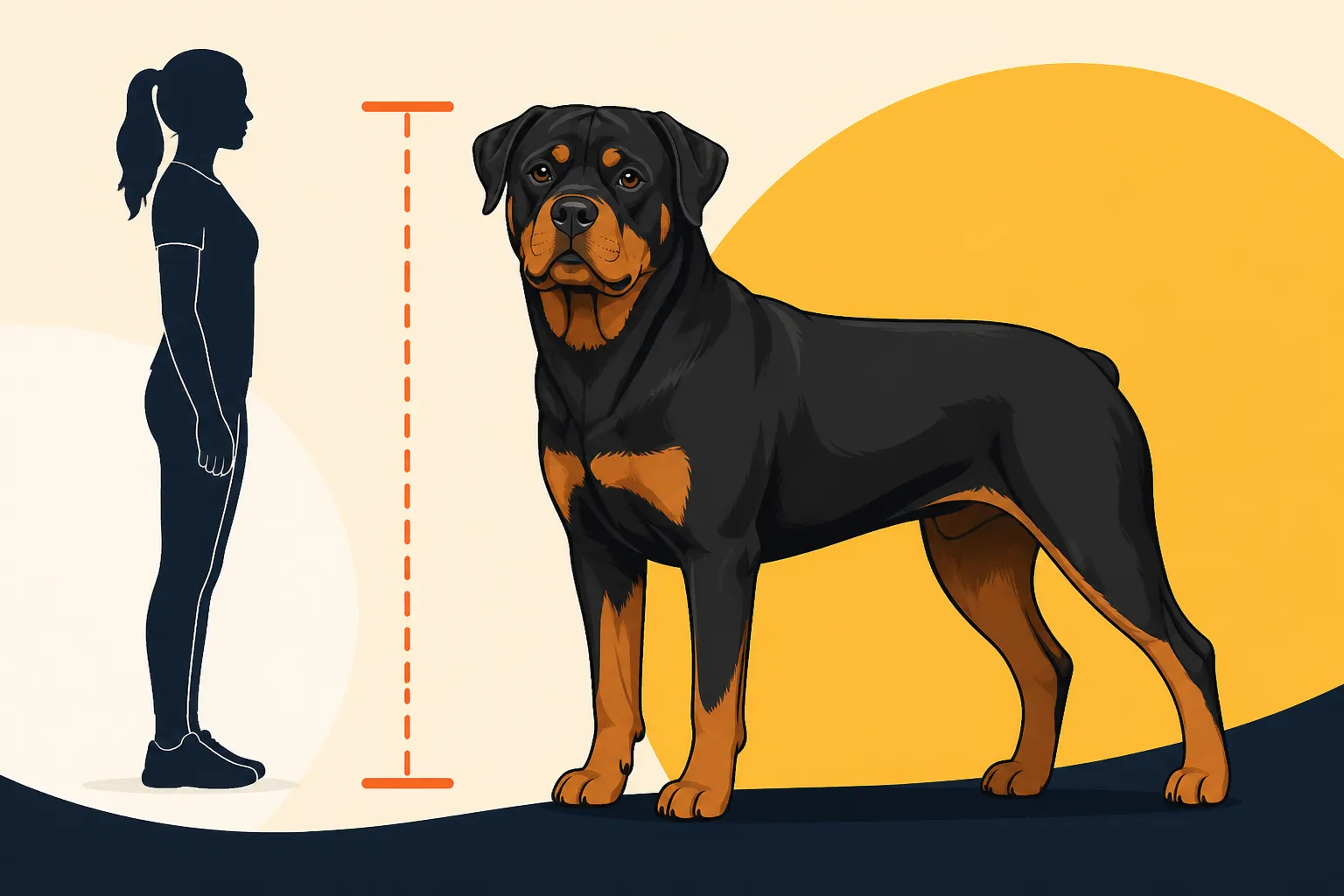
How Tall a Female Rottweiler Stands
If you're considering bringing a female Rottweiler into your life, or perhaps you already have a bouncy puppy growing at what feels like warp speed, one of the biggest questions that often pops up is just how big she's going to get. It’s not just about curiosity; knowing the typical height range for a female Rottweiler is crucial for everything from choosing the right-sized crate to ensuring your home environment is truly suitable for such a magnificent and powerful dog. This guide will walk you through what to expect regarding a female Rottweiler's mature height, the standards that define it, and the many factors that contribute to her eventual stature.
Understanding the Rottweiler Standard for Females
When we talk about a dog's size, we often look to the breed standard set by kennel clubs. These standards aren't just arbitrary numbers; they are carefully crafted descriptions of the ideal Rottweiler, outlining physical traits, temperament, and movement. For female Rottweilers, height is a key component, guiding breeders and owners alike on what constitutes a well-balanced and true-to-type dog.
The AKC and FCI Standards: What They Say
Across the globe, two major kennel organizations primarily dictate the breed standards for the Rottweiler: the American Kennel Club (AKC) in the United States and the Fédération Cynologique Internationale (FCI), which influences most of Europe and many other parts of the world. While both agree on the overall essence of the Rottweiler, there can be subtle differences in their specifics, including ideal height.
The AKC standard for a female Rottweiler states that her ideal height should be between 22 and 25 inches (56 to 63.5 cm) at the withers. The "withers" is the highest point of the shoulder blades, where the neck meets the back, and it's the official point from which a dog's height is measured. This range provides a clear benchmark, but it's important to remember that these are ideals. A female Rottweiler slightly outside this range might still be a fantastic companion, though she might not meet the exact criteria for conformation showing.
The FCI standard, typically associated with what many refer to as "German Rottweilers," is quite similar, aiming for a height of 56 to 63 centimeters (22 to 25 inches) for bitches (female dogs). They further specify an ideal midpoint within this range, often favoring females closer to the middle, ensuring they retain their robust yet agile working dog appearance. These standards aim to preserve the functional characteristics of the breed, ensuring that Rottweilers remain strong, enduring, and capable of the work they were historically bred for. A female too tall might become gangly and less powerful, while one too short might lack the imposing presence characteristic of the breed.
Why the Height Standard Matters for Breeders and Owners
These precise height standards are more than just guidelines for the show ring; they have practical implications for both breeders and everyday owners. For breeders, adhering to the standard helps maintain the breed's integrity and health. Deviations can sometimes signal underlying health issues or genetic predispositions that might impact a dog's overall well-being. A responsible breeder will select dogs for breeding that fall within these parameters, alongside clear health clearances, to produce puppies that are not only beautiful but also sound. You'll often see breeders proudly listing their dogs' heights and weights, demonstrating their commitment to the standard.
For owners, understanding the standard provides a realistic expectation of what your female Rottweiler will look like and the space she will command. A dog standing 25 inches at the shoulder is a significant presence. This height impacts your choice of home—perhaps ruling out a tiny apartment with narrow hallways—and the type of vehicle you'll need for comfortable transport. It affects considerations like kennel size, how high your fencing needs to be, and even the ergonomics of feeding and grooming. Imagine trying to bathe a large, strong dog in a small tub or lifting her into a car with a high clearance. Knowing her potential adult height helps you plan ahead, ensuring you can provide an environment that truly supports her size and needs. What a Rottweiler Should Weigh Fully Grown provides more context on the full adult size.
Growth and Development: When Females Reach Their Full Height
Witnessing a Rottweiler puppy grow is truly astonishing. They start as these adorable, clumsy bundles of fur and seem to double in size every few weeks. However, their growth isn't a straight line, and understanding the stages can help you manage their care and exercise properly.
The Puppy Stages: Rapid Growth and Gradual Filling Out
From the moment you bring your Rottweiler puppy home, usually around eight weeks old, you'll see incredible changes. For the first several months, their growth is incredibly rapid. They shoot up in height, often looking a bit lanky or "leggy" during this phase. It's like they're trying to outgrow their own skin! This initial period, roughly up to 6-8 months, is when they gain most of their height. Their bone structure is developing at a furious pace, laying the foundation for their adult frame. During this time, proper nutrition is paramount – specifically, a diet formulated for large-breed puppies that ensures controlled growth, preventing skeletal problems later on. You don't want them growing too fast.
After this initial burst, the growth rate starts to slow down, but it certainly doesn't stop. They continue to gain some height, but the focus shifts more towards "filling out." Their chests deepen, their bones thicken, and their musculature develops. That gangly puppy look gradually transforms into the powerful, substantial Rottweiler silhouette we all recognize. This filling-out process can continue for quite some time, long after they've reached their approximate adult height. It's a common misconception that once they hit a certain age, they're "done." In reality, they're often still maturing.
Reaching Mature Height: Usually by 18-24 Months
Most female Rottweilers will reach their full adult height between 12 and 18 months of age, with some continuing to gain a little bit of height until they are closer to 24 months. While the height growth largely plateaus around this period, their weight, muscle mass, and overall breadth can continue to develop for another year or even longer. It’s not unusual for a female Rottweiler to feel like she’s still maturing well into her third year, even if her height hasn't changed.
The reason for this extended growth period, particularly the bone development, is tied to their large breed nature. Rottweiler Growth Plates and Why They Close So Late explains that their growth plates, which are the soft areas at the ends of long bones responsible for lengthening, close much later than in smaller breeds. Rushing their growth, whether through excessive protein, calcium, or over-exercise, before these plates have fully fused can lead to serious and irreversible orthopedic issues like hip or elbow dysplasia. This is why patience and careful management of their exercise and diet during these crucial first two years are absolutely vital. Don't be tempted to push them into looking like an adult Rottweiler too soon; their long-term health depends on a slower, more natural development curve.
Factors Influencing a Female Rottweiler's Height
While the breed standard gives us an ideal range, individual female Rottweilers can vary. Just like humans, no two dogs are exactly alike, and several factors play a role in determining how tall your girl will ultimately stand.
Genetics and Lineage: The Primary Determinant
Without a doubt, genetics is the single most important factor influencing a female Rottweiler's mature height. Look at her parents. Are they tall, robust examples of the breed, or are they on the smaller end of the spectrum? Generally, a puppy will inherit her size potential from her parents and their lineage. If both parents are well within the standard's height range, it's highly likely their offspring will be too. Conversely, if one parent is exceptionally tall or short, there's a higher chance your puppy might lean in that direction.
Understanding your puppy's lineage means looking beyond just the parents, too. Grandparents, great-grandparents – their sizes and conformation can all play a part. This is why reputable breeders keep meticulous records and can often give you a good estimate of a puppy's likely adult size based on her family tree. There might be cases where a "runt" of the litter surprises everyone and grows quite tall, or a seemingly large puppy ends up being average. These are the exceptions, though. You'll find that "German Rottweiler" lines, for instance, are sometimes perceived as slightly more compact or substantial, but within the breed standard, there isn't a dramatic difference in height when compared to well-bred "American Rottweilers." The overall structure and bone are more the distinguishing features. How German and American Rottweiler Type Diverged delves deeper into these distinctions.
Nutrition and Health: Supporting Healthy Growth
While genetics sets the potential height, proper nutrition and overall health unlock it responsibly. Providing a high-quality, large-breed puppy food designed for slow growth is absolutely non-negotiable for a Rottweiler. These formulas are specifically balanced to have controlled levels of calcium, phosphorus, and protein, preventing rapid growth spurts that can stress developing bones and joints. Overfeeding, especially with foods not tailored for large breeds, can cause a puppy to grow too quickly, putting immense strain on their still-forming skeletal structure. This can lead to serious orthopedic problems such as osteochondrosis (OCD) or hypertrophic osteodystrophy (HOD), which can permanently affect their mobility and overall health.
It's tempting to think that more food equals a bigger dog, but with Rottweilers, it can actually be detrimental. Obesity in puppyhood is a major risk factor for joint issues later in life, regardless of genetic predisposition. Similarly, Rottweiler Calcium Limits and Why Supplements Hurt outlines why supplementing calcium in a growing Rottweiler puppy is incredibly dangerous, as their bodies are finely tuned to absorb what they need from a balanced diet, and excess can cause severe bone deformities. Consistent veterinary care, parasite control, and prompt attention to any illnesses also contribute to healthy development, allowing your female Rottweiler to reach her genetic potential without unnecessary setbacks. Many online retailers, such as Chewy, offer a wide variety of large-breed puppy foods designed specifically for these considerations.
Early Exercise and Environment: Avoiding Stress on Growing Bones
The type and amount of exercise your female Rottweiler puppy receives during her formative months can also impact her development, though perhaps not directly her final height, but certainly the integrity of her skeletal structure at that height. High-impact activities like jumping off tall objects, repetitive stair climbing, long-distance running, or intense agility training are highly discouraged before her growth plates have fully closed, typically between 18 and 24 months. These activities can cause microtrauma or even serious damage to the soft, unfused growth plates, leading to painful and debilitating conditions that can affect her posture and overall soundness. The Exercise That Damages a Growing Rottweiler illustrates these risks clearly.
Instead, controlled, low-impact exercise is best. Think multiple short walks on soft surfaces, gentle play sessions, and supervised time in a securely fenced yard. Swimming is an excellent non-weight-bearing exercise that builds muscle without stressing joints. A comfortable, supportive bed is also important for her resting hours, protecting her growing bones and joints from hard surfaces. Even something as simple as allowing her to regularly jump down from a sofa or a truck bed can have cumulative negative effects. It’s all about protecting those vulnerable growth plates during her critical development period.
Practical Considerations for a Full-Grown Female Rottweiler
Once your female Rottweiler has reached her full height, her substantial size becomes a daily reality. This isn't a small lap dog; she's a powerful and impressive animal who requires thoughtful management and specific accommodations.
Managing a Large Dog in the Home and Public
A female Rottweiler, standing 22 to 25 inches tall, takes up considerable space. In your home, this means ensuring she has enough room to move around comfortably without constantly bumping into furniture or people. Her bed or crate needs to be appropriately sized to allow her to stretch out fully, turn around, and stand without stooping. Rottweiler Crates, Beds and Gear at That Size covers specific needs. Her presence is a constant factor in family dynamics, especially with children or smaller pets. While generally gentle with her family, her sheer mass means accidental bumps or knocks can occur. Training her in good manners, such as not jumping on guests or crowding doorways, is paramount.
Out in public, her size and powerful build command attention, sometimes positive, sometimes wary. Even if she's the sweetest dog, her appearance can be intimidating to others. This means you must be extra diligent about leash manners and socialization. A hundred-pound female Rottweiler pulling on the leash can be incredibly difficult to manage, even for a strong adult. Walking a Rottweiler Safely as a Smaller Person provides tips for this. Ensuring she is well-behaved and under control at all times is not just good pet ownership; it's a responsibility to her breed's reputation and public safety. When considering travel, she'll need a spacious vehicle. Rottweiler Car Barriers and Travel Crates are often necessary to keep her and passengers safe during journeys.
The Role of Height in Overall Health and Mobility
A female Rottweiler's height, combined with her muscular build, places specific demands on her body throughout her life. Her larger frame means more stress on her joints, making her more prone to conditions like hip and elbow dysplasia if not managed carefully from puppyhood. Regular, moderate exercise is key to keeping her muscles strong and supporting her joints, but it must be appropriate for her age and physical condition. As she ages, her mobility might decline, and her height can make it challenging to assist her. Lifting her into a car or helping her up stairs can become a real physical test for you.
Routine veterinary care is crucial, with regular check-ups to monitor her weight, joint health, and overall condition. Any sign of lameness or discomfort should be addressed promptly. Grooming a large dog like a Rottweiler also has its considerations. While their coats are relatively low-maintenance, bending over to brush or bathe a 25-inch tall dog can be tough on your back. Special grooming tables or elevated bathing tubs can make the process easier. Rottweiler Grooming and Shedding Supplies are essential. Even routine tasks like nail trims can become a wrestling match if not started early and maintained consistently.
Equipment Sizing for a Tall Female
Finding appropriately sized equipment for a large female Rottweiler is a practical necessity. Standard-sized items often won't cut it. Her collar needs to be broad and strong, a sturdy harness is often preferable for walks to distribute pressure and reduce pulling, and her leash should be robust enough to handle her strength.
| Item Type | Key Consideration for Female Rottweiler | Why It Matters |
|---|---|---|
| Crate | Extra-large, 42-inch or 48-inch | Must allow her to stand, turn, and stretch comfortably without stooping or crowding. |
| Dog Bed | Orthopedic, dense foam, large/extra-large | Supports her weight, protects joints, especially important as she ages. |
| Harness | Heavy-duty, adjustable, front-clip option | Distributes pressure, prevents pulling, durable enough for her strength. |
| Collar | Wide (1.5-2 inches), strong buckle | Prevents pressure points on her neck, secure for her power. |
| Bowls | Large capacity, perhaps elevated | Holds enough food/water, elevated bowls can assist with digestion and neck comfort. |
| Car Barrier | Heavy-duty, full-width SUV barrier | Prevents her from entering the passenger compartment, crucial for safety. |
When shopping for these items, remember that a strong, active Rottweiler can be surprisingly destructive to flimsy gear. Investing in high-quality, durable products specifically designed for large breeds will save you money and headaches in the long run. Many pet supply stores, and especially online retailers like Chewy, specialize in carrying heavy-duty equipment for giant breeds, making it easier to find items that are both functional and safe for your magnificent female Rottweiler. It’s not just about her height, but the total package of her size and strength.
Disclaimer
This article is for general informational purposes only and does not constitute professional advice. Laws, prices and regulations vary by location and change over time. Consult a qualified professional for guidance on your specific situation.