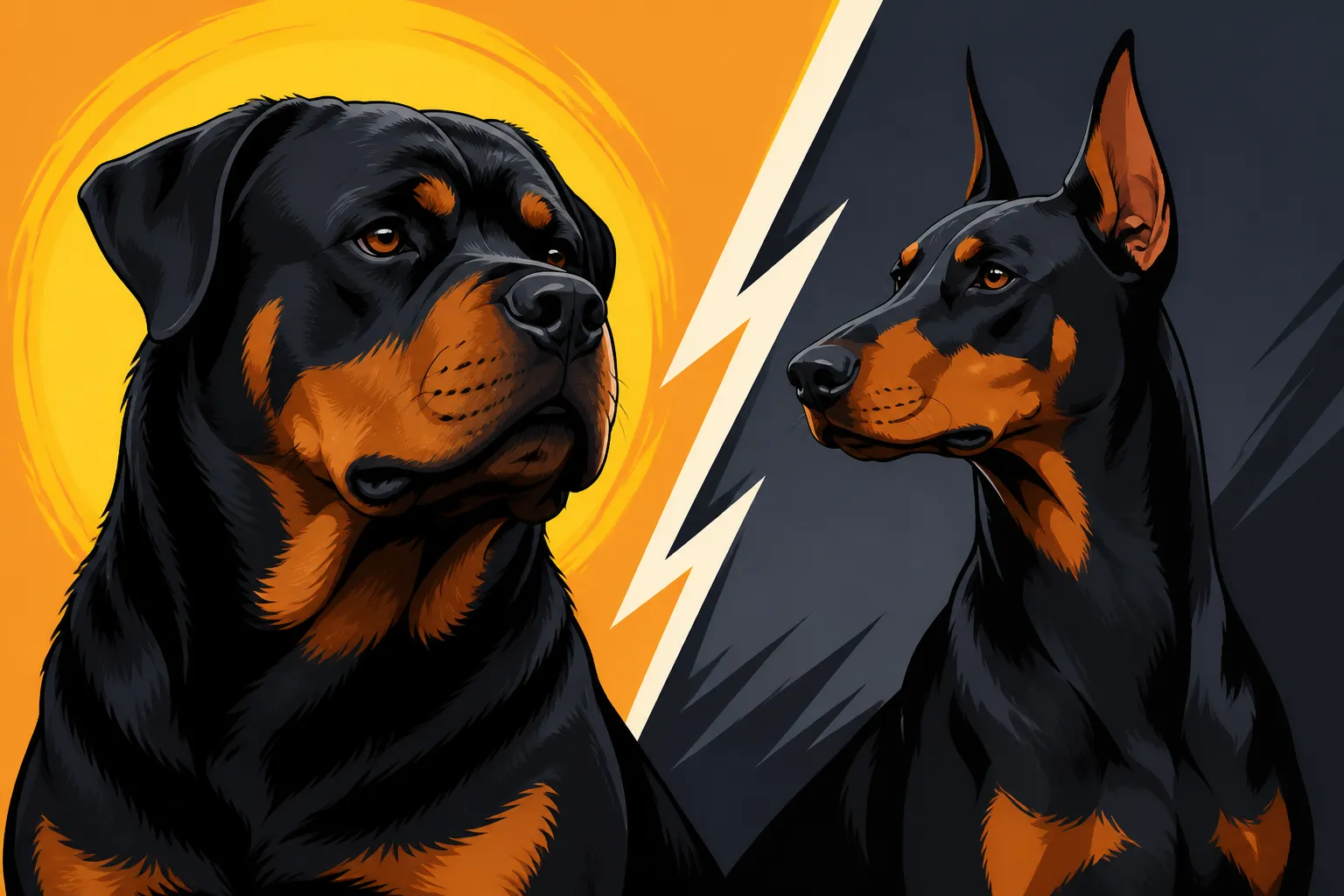
A Rottweiler Set Against a Doberman Pinscher
For anyone considering bringing a large, powerful dog into their home, the choice between a Rottweiler and a Doberman Pinscher can feel like a genuine quandary. Both breeds are undeniably striking, incredibly intelligent, and possess strong protective instincts, leading many to mistakenly believe they are interchangeable. However, beneath their similar reputations lie distinct histories, physical traits, and temperaments that demand a thorough understanding before you commit. This guide will meticulously break down the unique characteristics of each, helping you navigate the differences and determine which magnificent breed is the best fit for your life.
Origins and History: A Tale of Two Working Breeds
To truly appreciate the nuances between a Rottweiler and a Doberman Pinscher, we have to travel back in time to understand the very purpose for which they were created. Both are deeply rooted in working roles, but their specific jobs shaped them into the dogs we know today.
The Butcher's Dog: Rottweiler's Roots
The Rottweiler's story begins not with a single visionary breeder, but with the practical needs of Roman legions and, much later, German butchers. Their ancestors were likely Roman drover dogs, accompanying Roman armies across the Alps, herding cattle to feed the troops. When these legions settled in the region around what is now Rottweil, Germany, their robust, intelligent dogs remained.
Over centuries, these dogs adapted to the local needs. Rottweil became a thriving cattle town, and the dogs became indispensable to the local butchers, earning them the affectionate moniker "Metzgerhund" or "butcher's dog." Their duties were varied and demanding: they drove cattle to market, protected money pouches tied around their necks from bandits, and stood guard over their owners' property. This history explains so much about the Rottweiler's innate traits: their strength, their calm demeanor under pressure, and their natural protective instincts towards their family and their perceived "flock." They weren't bred for speed or flashy maneuvers, but for steady, unwavering presence and power. The breed came perilously close to disappearing with the advent of railways, which made cattle droving obsolete, but dedicated fanciers worked to revive it in the early 20th century, cementing its place in modern history. You can learn more about their incredible journey in The Rottweiler From Roman Cattle Drives to the AKC and What Rottweil Made the Metzgerhund Do.
The Tax Collector's Companion: Doberman's Genesis
In stark contrast to the Rottweiler's centuries-long, organic development, the Doberman Pinscher is a relatively modern creation, intentionally bred by one man, Karl Friedrich Louis Dobermann, in late 19th-century Germany. Dobermann was a tax collector and night watchman in Apolda, Thuringia, roles that often put him in precarious situations. He needed a fearless, intelligent, and highly protective companion to deter threats and ensure his safety.
Dobermann meticulously selected dogs with traits he desired, though the exact breeds he used in his early breeding program are a matter of historical debate. It's widely believed he incorporated various dogs, possibly including old German Shepherds, German Pinschers, Rottweilers, Greyhounds, and Weimaraners. His goal was to create the ultimate personal protection dog: swift, alert, formidable, and utterly devoted to its owner. The Doberman's sleek, athletic build and highly alert temperament are a direct result of this focused breeding objective. They were designed for quick action, acute awareness, and an almost intuitive understanding of their handler's needs, making them excellent partners for police work and personal defense.
Physical Distinctions: Form and Function
While both breeds are large and powerful, a side-by-side comparison reveals significant differences in their physical structure, each reflecting their original purpose.
Size, Build, and Stance of the Rottweiler
The Rottweiler is often described as having a stocky, robust, and muscular build – a true powerhouse. They are built for strength and endurance, designed to move cattle over long distances and hold their ground. When you look at a Rottweiler, you see substance. Their heads are broad, with a distinctive stop, and their jaws are powerful. The breed standard emphasizes a body that is longer than it is tall, giving them a rectangular, grounded appearance.
Males generally stand a bit taller and are heavier than females, but both sexes possess that unmistakable heavy-boned structure. Their gait is powerful and confident, a steady trot that covers ground efficiently. Their coat is short, dense, and coarse, always black with well-defined rust (mahogany) markings on specific areas of the face, chest, and legs. This dense double coat offers protection from the elements. While traditionally their tails were docked, the practice is becoming less common in many parts of the world, and many Rottweilers now sport their natural, saber-shaped tails. For more on their physical characteristics, check out Rottweiler Size Under the AKC Standard and The Black and Rust Rottweiler Coat.
The Sleek, Athletic Doberman Pinscher Physique
The Doberman Pinscher, in contrast, presents a picture of elegance, athleticism, and refinement. They are built for speed, agility, and quick reflexes – a lighter, more streamlined physique compared to the Rottweiler. Their bodies are square-shaped, meaning they are roughly as long as they are tall, giving them a more upright and agile appearance. Their heads are long and wedge-shaped, and their muzzles are lean and powerful.
Like Rottweilers, Doberman males are typically larger and heavier than females, but they maintain that sleek, muscular profile. Their gait is often described as effortless and graceful, covering ground with an almost spring-like energy. The Doberman's coat is short, hard, and smooth, lying close to the body. While black and rust is a classic, Dobermans also come in red, blue, and fawn, all with distinctive rust markings. Traditionally, Doberman ears were cropped to stand erect and tails were docked, practices that remain prevalent in some regions but are also increasingly debated and restricted in others.
Temperament and Personality: Guarding with Different Styles
Here's where the two breeds really diverge in their day-to-day interactions and what you can expect as a family companion. Both are loyal protectors, but their approaches are quite different.
The Rottweiler's Calm Confidence and Aloofness
A well-bred and properly socialized Rottweiler is characterized by a calm, confident, and self-assured temperament. They are not prone to frantic excitement or immediate displays of affection with strangers. Instead, they exhibit a "wait-and-see" approach, observing new people or situations with a steady, watchful gaze before deciding how to react. This can often be misinterpreted as being cold or unfriendly, but it's actually a hallmark of their discerning nature. They don't give their trust lightly, but once earned, their loyalty to their family is absolute and unwavering.
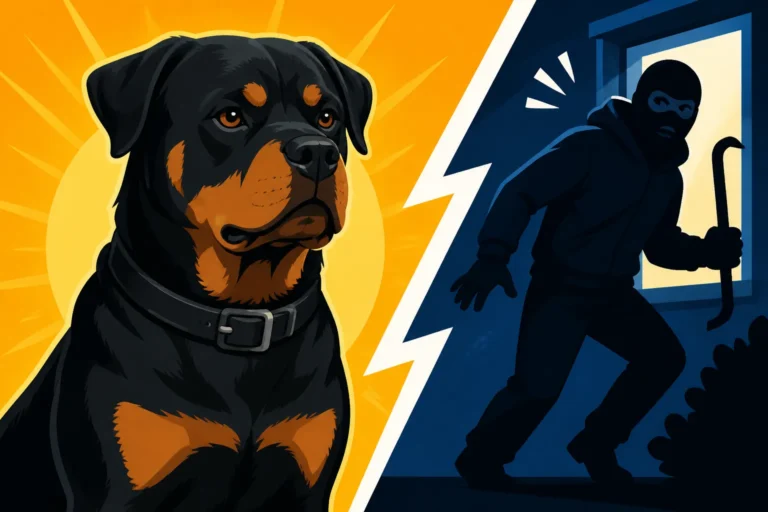
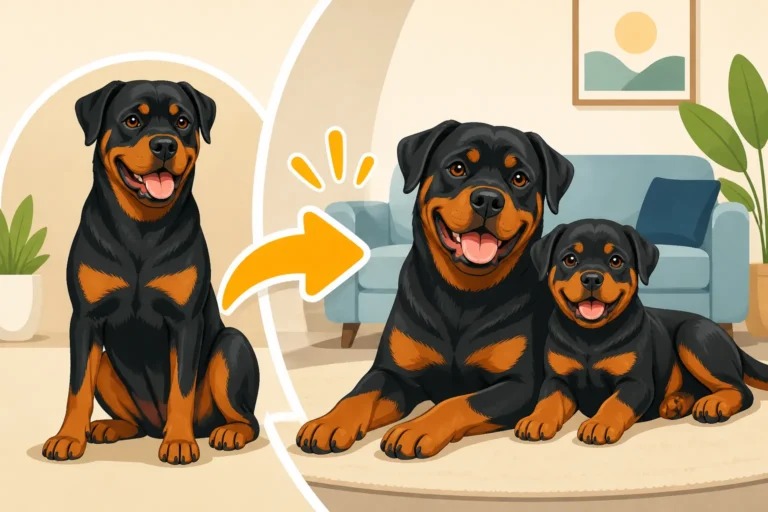
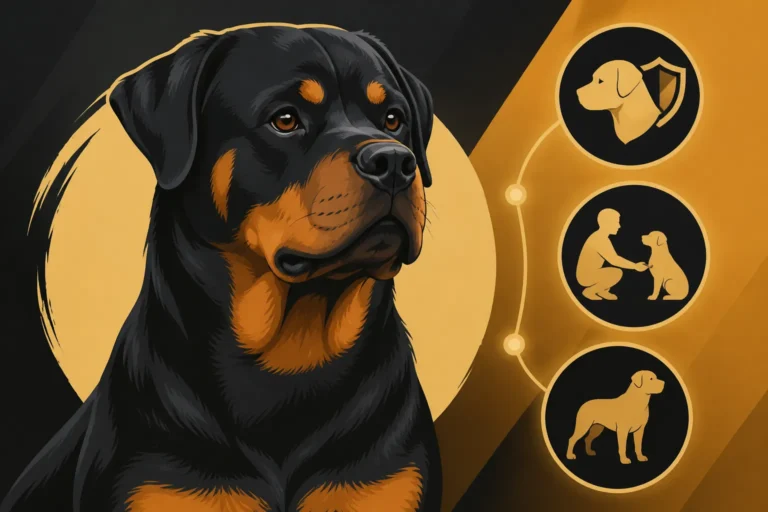
Rottweilers form incredibly strong bonds with their human companions and thrive on being part of the family unit. They have a natural guarding instinct, not in an aggressive way, but as a deep-seated desire to protect their loved ones and territory. This instinct, however, needs careful guidance through consistent training and extensive socialization from a young age to ensure it's channeled appropriately. Without it, their natural protective drive can become problematic. For more insight into their unique social style, explore Rottweiler Aloofness and Why It Reads as Cold and Socializing a Rottweiler Puppy Properly. When considering a Rottweiler, understanding their inherent guarding behaviors is crucial, as detailed in The Rottweiler Guarding Instinct and How to Shape It.
The Doberman's Alertness, Drive, and Sensitivity
Dobermans are known for their extreme alertness, high intelligence, and strong drive. They are often described as "Velcro dogs" due to their intense desire to be close to their people, often following them from room to room. Unlike the Rottweiler's stoicism, Dobermans are typically more expressive and can be quite sensitive to their owner's moods and commands. They are highly perceptive and incredibly quick to learn, making them excel in obedience and dog sports.
Their guarding instinct is also strong, but it tends to be more proactive and outwardly expressive than a Rottweiler's. A Doberman is often the first to notice an unfamiliar sound or presence and will alert its family with a keen watchfulness. They possess a tremendous amount of energy and mental acuity, meaning they require consistent engagement and a "job" to do, whether it's advanced obedience, agility, or simply being an active companion. Without sufficient physical and mental stimulation, a Doberman can become bored, anxious, and destructive. Their sensitivity also means they thrive on positive reinforcement and can become withdrawn or fearful if subjected to harsh training methods.
Training, Exercise, and Living Needs: Meeting Their Demands
Both breeds are significant commitments, but their needs differ in important ways that can greatly impact your daily life.
Training a Powerful and Thoughtful Rottweiler
Training a Rottweiler isn't just a suggestion; it's an absolute necessity. Given their size, strength, and strong will, consistent and early training is paramount to ensure they grow into well-behaved, manageable adults. Positive reinforcement methods work beautifully with Rottweilers, who are eager to please their loved ones and respond well to clear, fair expectations. From day one, focus on basic obedience commands, leash manners, and appropriate social interactions. Without proper guidance, their impressive physical presence can quickly become overwhelming, particularly on a leash. Training a Rottweiler Before It Outweighs You is a must-read for new owners, as is mastering Rottweiler Leash Manners at a Hundred Pounds.
Rottweilers are intelligent and enjoy having tasks, so incorporating mental challenges into their routine is important. Puzzle toys, scent work, and advanced obedience classes can keep their minds engaged. When choosing gear for your powerful Rottweiler, look for durable options; retailers like Chewy offer a wide selection of robust collars, harnesses, and indestructible chew toys that can stand up to a Rottie's strength. Remember, crating your Rottweiler needs careful planning due to their eventual size; learn more in Crating a Rottweiler That Will Triple in Size.
Engaging the Energetic and Intelligent Doberman
Dobermans are renowned for their intelligence and intense work ethic, making them highly trainable for those willing to put in the time and effort. They truly shine in structured training environments and excel at various dog sports, including obedience, agility, tracking, and even protection work (when guided by experienced professionals). Their keen minds and eager-to-please nature mean they pick up commands quickly, but they also require mental stimulation to prevent boredom.
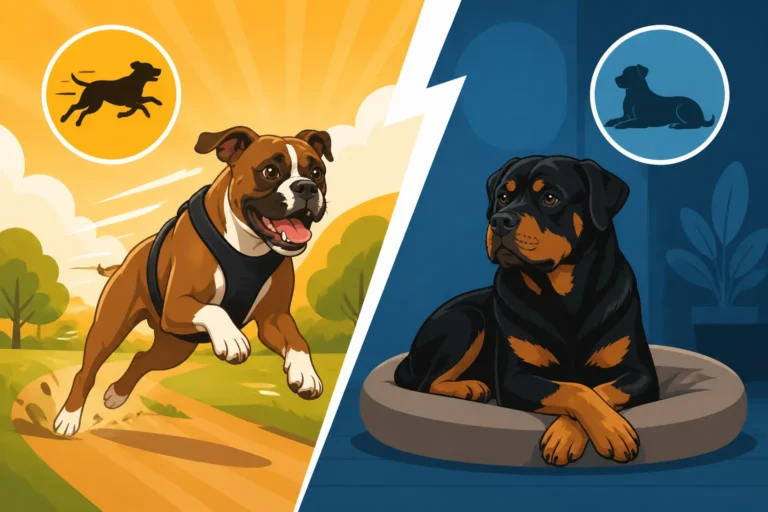
Exercise is non-negotiable for a Doberman. They need more than just a casual stroll around the block; daily vigorous activity, such as long runs, intense play sessions, or dog park visits (if safely introduced and supervised), is crucial. Without an outlet for their abundant energy, Dobermans can become restless, destructive, and even anxious. They thrive in homes where they are an active participant in family life and have a clear role, whether it's a running partner, a dog sport competitor, or simply a devoted companion who gets plenty of outdoor adventures.
Health Considerations: Similarities and Differences
Both Rottweilers and Dobermans are purebred dogs, and as such, they are prone to certain genetic health conditions. Responsible breeders for both breeds prioritize health clearances to minimize the risk of passing on these conditions to their puppies.
For Rottweilers, common concerns include hip and elbow dysplasia, which are joint conditions that can cause pain and mobility issues. Rottweiler Hips and Elbows and the 24-Month Rule highlights the importance of screening for these issues. Bloat (Gastric Dilatation-Volvulus or GDV) is another life-threatening emergency that Rottweilers are predisposed to, and understanding its signs and prevention is critical, as discussed in Bloat in a Rottweiler and the Hours That Matter. Certain cancers, such as osteosarcoma, are also seen more frequently in the breed.
Dobermans, on the other hand, have their own set of prevalent health issues. Dilated Cardiomyopathy (DCM), a severe heart condition, is a significant concern within the breed. They are also prone to Wobbler's Syndrome (cervical vertebral instability), von Willebrand's Disease (a bleeding disorder), and hypothyroidism. Both breeds benefit from regular veterinary check-ups, a high-quality diet, and maintaining a healthy weight to support their overall well-being throughout their lives. Always seek breeders who can provide proof of health clearances for their breeding stock, such as OFA or PennHIP certifications for joints, and cardiac evaluations. The Five Clearances a Rottweiler Breeder Must Have provides excellent guidance on what to look for.
Which Breed is Right for Your Household?
To help you visualize the core differences, here's a quick comparison:
| Characteristic | Rottweiler | Doberman Pinscher |
|---|---|---|
| Origin | Roman drover/German butcher's dog (centuries of evolution) | German tax collector's protection dog (late 19th-century) |
| Build | Stocky, powerful, muscular, heavy-boned, rectangular body | Sleek, athletic, elegant, lean, square body |
| Coat | Short, dense, coarse; always black with rust markings | Short, hard, smooth; black, red, blue, fawn with rust markings |
| Temperament | Calm, confident, self-assured, discerning, aloof with strangers, deeply loyal to family | Alert, intelligent, high-drive, sensitive, highly devoted, "Velcro dog" |
| Exercise Needs | Moderate to high; regular walks, mental engagement, endurance activities | High; daily vigorous activity, running, intense play, mental challenges |
| Training Approach | Requires consistent, firm, positive reinforcement; highly intelligent but can be stubborn | Excels in structured training, intelligent, eager to please, sensitive to harshness |
| Guarding Instinct | Natural, watchful, observant, protective of territory/family | Highly alert, more proactive, personal protection focus |
| Common Health Concerns | Hip/elbow dysplasia, bloat, osteosarcoma, eye issues | Dilated Cardiomyopathy, Wobbler's Syndrome, vWD, hypothyroidism |
As you can see, both the Rottweiler and the Doberman Pinscher are extraordinary breeds, each with their own unique set of characteristics that make them truly special. Neither is a "beginner's dog," and both demand a significant investment of time, training, and commitment from their owners.
If you are drawn to a calm, confident powerhouse with a stoic demeanor and a deep, unwavering loyalty that blossoms once trust is earned, and you have the experience and dedication to provide consistent, positive training and socialization, a Rottweiler might be your perfect match.
If, however, you seek a highly energetic, exceptionally intelligent, and deeply sensitive "Velcro" companion that thrives on being constantly engaged, needs intense physical activity, and wants to be your shadow in every endeavor, the Doberman Pinscher could be the dog for you.
Ultimately, the best choice depends entirely on your lifestyle, experience, and what you are prepared to offer a canine companion. Whichever you choose, be ready for an incredible journey with a truly magnificent dog.
Disclaimer
This article is for general informational purposes only and does not constitute professional advice. Laws, prices and regulations vary by location and change over time. Consult a qualified professional for guidance on your specific situation.