Keeping a Rottweiler Puppy Lean on Purpose
One of the biggest temptations when you bring home a Rottweiler puppy is to make sure they're "well-fed," often leading to a cute, round belly that feels like a sign of health and happiness. However, for a rapidly growing giant breed like a Rottweiler, carrying extra weight during their crucial developmental stages can lay the groundwork for serious and painful joint problems down the line. This guide will walk you through why keeping your Rottweiler puppy lean on purpose is one of the kindest, most preventative measures you can take for their long-term well-being, dispelling myths and providing practical, actionable advice to set them up for a healthy life.
The Critical Importance of a Lean Start for Your Rottweiler Puppy
It's natural to want to see your puppy thriving, and for many, that image includes a robust, even plump, little body. But what looks healthy for a tiny Maltese puppy can be detrimental for a large, heavy-boned breed like a Rottweiler. Their rapid growth and the sheer amount of weight they're expected to carry means every extra pound during puppyhood places undue stress on their developing skeletal system, with consequences that can last a lifetime.
The Hidden Dangers of Rapid Growth and Excess Weight
Rottweiler puppies grow at an astonishing rate. They can go from a few pounds to over 100 pounds in less than two years. This incredible growth spurt, while normal, makes their skeletal system incredibly vulnerable. Their Rottweiler Growth Plates and Why They Close So Late remain open for an extended period, sometimes up to 18-24 months. These growth plates are areas of soft cartilage at the end of long bones, where new bone tissue is formed. Any excessive pressure or strain on these delicate structures can cause malformation as they harden, leading to permanent issues.
When a puppy carries too much weight, it significantly increases the load on these still-developing joints. This added stress is a major contributing factor to developmental orthopedic diseases such as Rottweiler Hip Dysplasia and the OFA Grade and elbow dysplasia. These conditions are often genetic, but environmental factors like diet and exercise play a huge role in how severely they manifest. A genetically predisposed puppy carrying extra weight is far more likely to develop painful, debilitating joint disease than a lean one with the same genetic background. It’s like asking a building with a weak foundation to hold an extra story – it’s just asking for trouble. Many of these issues, once they appear, are often irreversible, managing only the symptoms rather than truly fixing the underlying problem.
Dispelling the "Chubby Puppy" Myth
Let's be honest, a roly-poly puppy is incredibly endearing. Those little fat rolls and that soft, round belly can make us feel like we're doing a great job providing for them. We see pictures of cute, pudgy puppies online or in advertisements, and it reinforces this idea of a healthy, happy youngster. However, for a Rottweiler, this perception can be a dangerous trap. The "chubby puppy" myth stems from a general love for baby animals and a misunderstanding of large breed physiology.
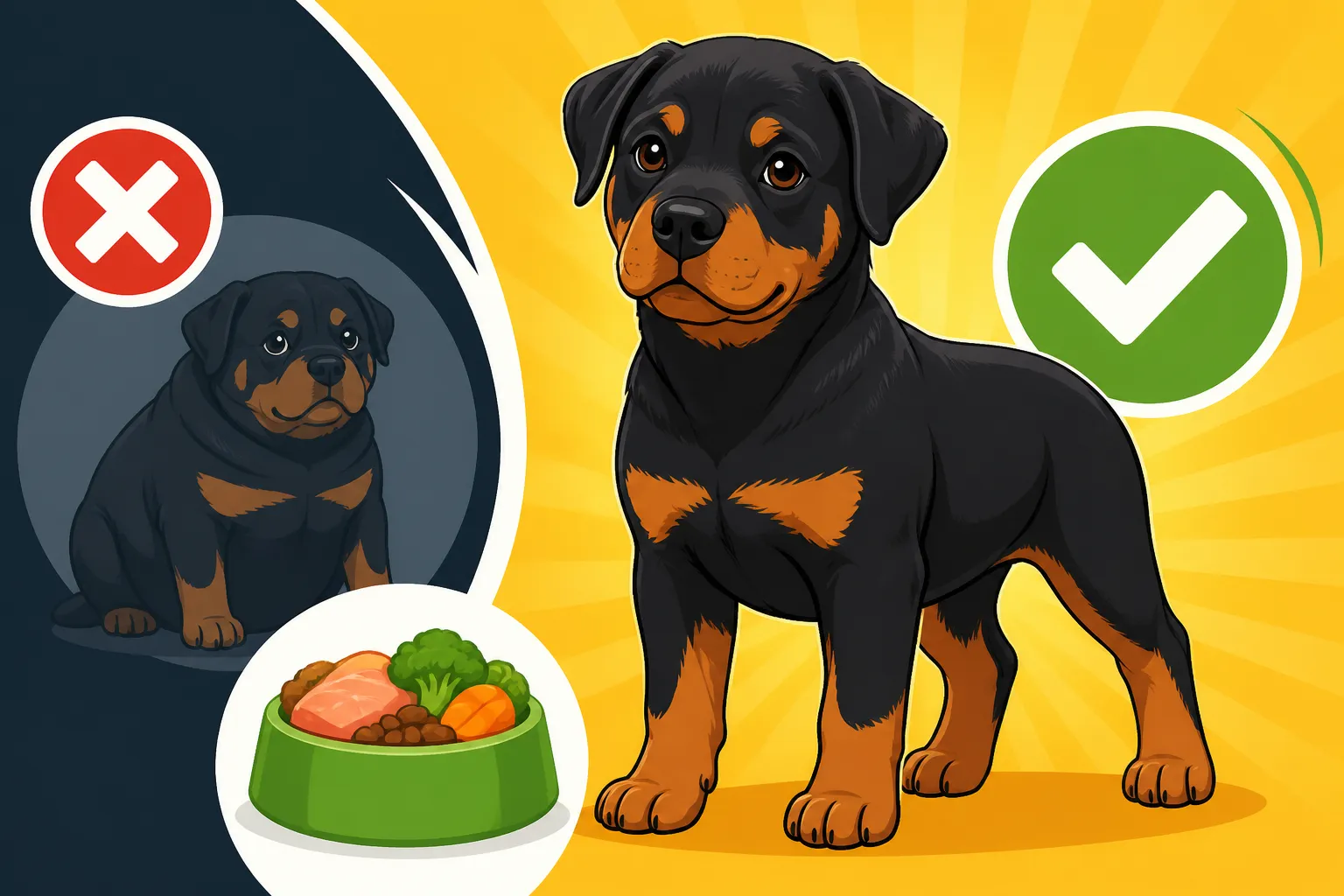
For breeds that will eventually weigh over a hundred pounds, lean is the ideal. It's not about starving your puppy; it's about providing optimal nutrition without excess. Imagine a human child who is significantly overweight during their formative years – their bones, joints, and organs would be under immense strain. The same principle applies, perhaps even more so, to a Rottweiler, whose bone structure must support an enormous amount of weight very quickly. Embracing the lean look means understanding that a visible waist and easily felt ribs (without being bony) are signs of a healthy, optimally growing Rottweiler puppy, not a neglected one.
Implementing a Lean Puppy Feeding and Exercise Plan
Achieving and maintaining a lean body condition for your Rottweiler puppy isn't about deprivation, but about intentional, informed care. It requires a thoughtful approach to both what and how you feed them, coupled with appropriate exercise that supports, rather than strains, their developing body.
Choosing the Right Food and Portions
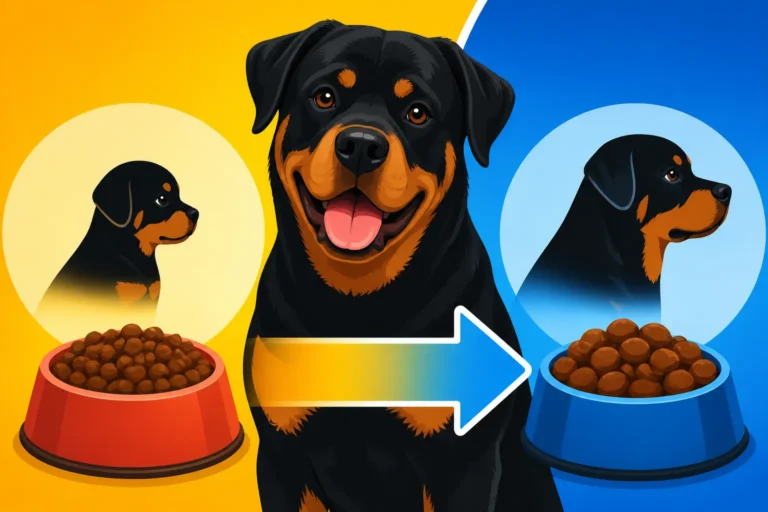
The foundation of a lean puppy plan starts with the food itself. For Rottweilers, it's absolutely crucial to feed a high-quality large breed puppy formula. These foods are specifically formulated with controlled calcium and phosphorus levels, and appropriate calorie counts, to support slow and steady growth, which is exactly what a giant breed needs. Don't be tempted by regular puppy foods, which might have higher calcium levels suitable for smaller, faster-growing breeds but can be detrimental to a Rottweiler. You'll want to be reading those labels carefully to understand Reading a Large Breed Puppy Food Label. Pay particular attention to the Calcium Percentages to Look For on a Rottweiler Bag, aiming for around 1.0-1.5% on a dry matter basis.
Once you have the right food, portion control is paramount. The feeding guides on the back of kibble bags are just that – guides. They are typically calculated for an average puppy and might suggest more food than your individual puppy actually needs, especially if your puppy is less active or naturally prone to gaining weight. It's often beneficial to begin at the lower end of the recommended range for your puppy's age and weight, and then adjust based on their body condition, not just their appetite. You can find many reputable large breed puppy food brands on platforms like Chewy or Amazon, making it easy to compare ingredients and formulations. Don't fall into the trap of free-feeding; measured meals are essential. I personally recommend Measuring Rottweiler Food by Weight Not Cups for ultimate accuracy.
Smart Exercise for Growing Joints
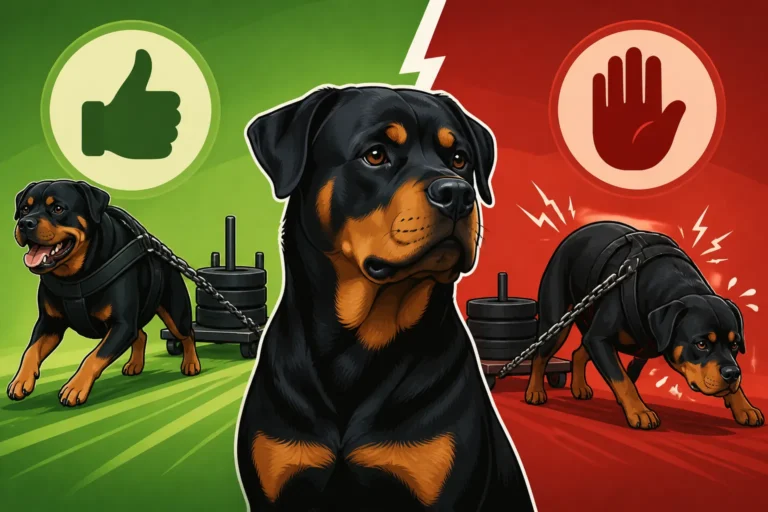
While diet is critical, exercise also plays a huge role in healthy development. However, "exercise" for a Rottweiler puppy needs to be carefully managed to prevent injury to their still-soft joints and growth plates. Over-exercising a young, growing Rottweiler can be just as damaging as overfeeding them. Forget long jogs, intense fetch sessions, or excessive stair climbing. Their bodies are not ready for high-impact or repetitive strain.
Instead, focus on short, controlled walks and plenty of supervised playtime in a secure, level yard. A good rule of thumb for leash walks is the "five-minute rule": 5 minutes of structured exercise per month of age, twice a day. So, a 4-month-old puppy would get two 20-minute walks. This allows them to explore, socialize, and build muscle without putting undue stress on their joints. You can learn more about this in The Five Minute Rule for Rottweiler Puppy Walks. Avoid any activity that involves hard stops, starts, or jumping, as these can easily damage growth plates. Seriously, The Exercise That Damages a Growing Rottweiler can haunt them for life. Mental stimulation through puzzle toys, training sessions, and scent work is equally important and often less physically strenuous. The goal is to build muscle tone and condition gradually, protecting those precious joints until they are fully closed and hardened.
Regular Body Condition Scoring
Perhaps the most crucial tool in your lean puppy arsenal is the regular assessment of your puppy's body condition. This isn't about arbitrary weight goals, but about evaluating their physical shape. You should be able to easily feel your Rottweiler puppy's ribs with slight pressure, like feeling the back of your hand. Their waist should tuck in noticeably behind their ribs when viewed from above, and they should have an abdominal tuck from the side.
I recommend performing a body condition score check at least once a week. This allows you to catch any creeping weight gain early and make necessary adjustments to their food intake or exercise routine. If you're unsure, your veterinarian is an excellent resource to guide you on how to properly assess your puppy's condition. They can show you what to look and feel for, and help you determine if your puppy is on the right track. Don't hesitate to ask for their objective assessment, as it's easy to become "kennel blind" to your own puppy's condition.
Here's a simple guide to body condition scoring:
| Score | Description | What to Feel/See |
|---|---|---|
| 1 | Emaciated | Ribs, lumbar vertebrae, pelvic bones, and all bony prominences easily visible from a distance. No discernible body fat. |
| 2 | Very Thin | Ribs, lumbar vertebrae, and pelvic bones easily visible. Minimal fat. Obvious waist and abdominal tuck. |
| 3 | Ideal (Lean) | Ribs easily felt, not seen. Waist easily noted when viewed from above. Abdominal tuck present. |
| 4 | Overweight | Ribs palpable with difficulty. Noticeable fat deposits over lumbar area and tail base. Waist barely discernible. |
| 5 | Obese | Ribs not palpable under thick fat. Heavy fat deposits over lumbar area, tail base, neck, and limbs. No waist or tuck. |
For a growing Rottweiler, you want to aim for a healthy "3". Some breeders even aim for a slightly leaner 2.5, especially during peak growth.
Common Feeding Mistakes to Avoid
Even with the best intentions, it's easy to fall into common traps when feeding a Rottweiler puppy. These mistakes, often born of love or misinformation, can inadvertently undermine your efforts to maintain a lean body condition and protect their developing joints.
The Perils of Over-Supplementation
One of the most insidious mistakes is the belief that "more is better" when it comes to supplements, especially calcium. Owners often think they're boosting bone strength by adding extra calcium to their puppy's diet. However, for large breed puppies like Rottweilers, this couldn't be further from the truth. Commercial large breed puppy foods are already carefully balanced to provide the optimal amount of calcium and phosphorus for their slower growth rate. Adding additional calcium can severely disrupt this delicate balance.
Excess calcium can lead to skeletal deformities and conditions like osteochondrosis (OCD) or hypertrophic osteodystrophy (HOD). It can cause growth plates to close prematurely or unevenly, leading to permanent lameness and pain. Seriously, please read Why Calcium Supplements Damage a Rottweiler Puppy. It's a critical error that can have devastating consequences. Unless specifically instructed by your veterinarian for a diagnosed medical condition, do not supplement your Rottweiler puppy with extra calcium or bone-building vitamins. Trust the formulation of a reputable large breed puppy food to provide everything they need.
Resisting the Urge to Over-Treat
Those big, soulful Rottweiler puppy eyes are masters of manipulation, aren't they? It's incredibly hard to resist giving in when they beg for an extra treat, especially during training sessions or just because they're so darn cute. However, treats, even small ones, add up quickly and can significantly contribute to excess calorie intake. Remember, every treat is an additional calorie your puppy isn't burning off, and those calories are directly impacting their body condition.
Instead of constantly reaching for the treat jar, get smart about your treat strategy. Use a portion of your puppy's daily kibble ration for training rewards. This way, you're not adding extra calories, just redistributing them. If you do use commercial treats, choose low-calorie options and break them into tiny pieces. A small pea-sized crumb is often just as rewarding as a whole biscuit for a puppy. Even high-quality fresh food options like Ollie need careful portioning as treats – they're formulated as complete meals, so adding them on top of kibble without adjusting the main meal will lead to excess calories. Be mindful, be consistent, and keep track of all the "extras" your puppy receives throughout the day.
Why Free-Feeding is Not an Option for Rottweilers
Free-feeding, or leaving food out all day for your puppy to graze on, is another common practice that simply doesn't work for a Rottweiler. While it might seem convenient, it presents several serious problems for this breed. Firstly, it makes it impossible to accurately monitor your puppy's food intake, leading to easy overconsumption and weight gain. Without measured meals, you can't control their body condition effectively.
Secondly, and perhaps even more critically for Rottweilers, free-feeding can increase the risk of bloat, a life-threatening condition where the stomach fills with gas and can twist. While the exact causes of bloat are complex, rapid eating and large meals are often cited as contributing factors. Free-feeding encourages grazing, but sometimes puppies will still gorge themselves if a large amount is left out. Consistent, measured meals served at regular times, ideally split into two or three smaller meals per day, allows you to monitor intake and encourages slower eating. Make sure to implement Feeding Rules That Lower Rottweiler Bloat Risk right from puppyhood. This controlled approach not only aids in weight management but also helps mitigate one of the most feared health crises for Rottweiler owners.
The Lifelong Rewards of a Mindful Puppyhood
The effort you put into keeping your Rottweiler puppy lean during their formative years might seem like a constant battle against those adorable puppy eyes, but the rewards are profound and long-lasting. You're not just preventing problems; you're actively building a foundation for a healthier, more comfortable, and potentially longer life for your cherished companion.
Promoting Long-Term Joint Health
The most direct and significant benefit of a lean puppyhood is the profound impact it has on joint health. By minimizing the stress on those vulnerable growth plates and developing cartilage, you drastically reduce the risk and severity of debilitating conditions like hip and elbow dysplasia. A Rottweiler who grows up lean is far less likely to develop early onset arthritis and other painful orthopedic issues that can plague heavy breeds. This proactive care means a higher chance of your adult Rottweiler enjoying full mobility, comfort, and an active lifestyle well into their senior years. You're essentially investing in their future comfort, saving them from potential pain and you from significant veterinary bills down the road. It also delays the onset of conditions that lead to Managing Arthritis in an Older Rottweiler.
Think of it as building a strong, stable house. If the foundation is laid correctly and isn't stressed during construction, the house will stand firm for decades. If the foundation is overloaded during its crucial setting phase, you're looking at cracks and structural issues much sooner. Your Rottweiler's skeletal system is no different. Giving them a lean start provides the best possible opportunity for their powerful frame to develop correctly and robustly.
Establishing Healthy Habits for Adulthood
Beyond physical health, a mindful approach to feeding and exercise during puppyhood instills excellent habits that carry into adulthood. When your Rottweiler puppy learns to eat measured meals, they develop a routine that's less prone to overeating or digestive upsets. They learn that food comes at specific times and in specific amounts, rather than being constantly available. This structured feeding also makes it easier to manage their weight as an adult, preventing Rottweiler Obesity and the Load It Adds.
Similarly, controlled and appropriate exercise teaches them how to use their body effectively, building muscle without damaging joints. It sets the stage for a lifetime of safe activity, rather than fostering habits that lead to injury. These early habits contribute significantly to their overall well-being, potentially adding years to their life, improving their quality of life, and strengthening the bond you share. Ultimately, keeping your Rottweiler puppy lean on purpose is one of the most powerful ways to ensure they live up to their full potential, both in health and happiness, maximizing their Rottweiler Lifespan and the Eight to Ten Year Average.
Disclaimer
This article is for general informational purposes only and does not constitute professional advice. Laws, prices and regulations vary by location and change over time. Consult a qualified professional for guidance on your specific situation.