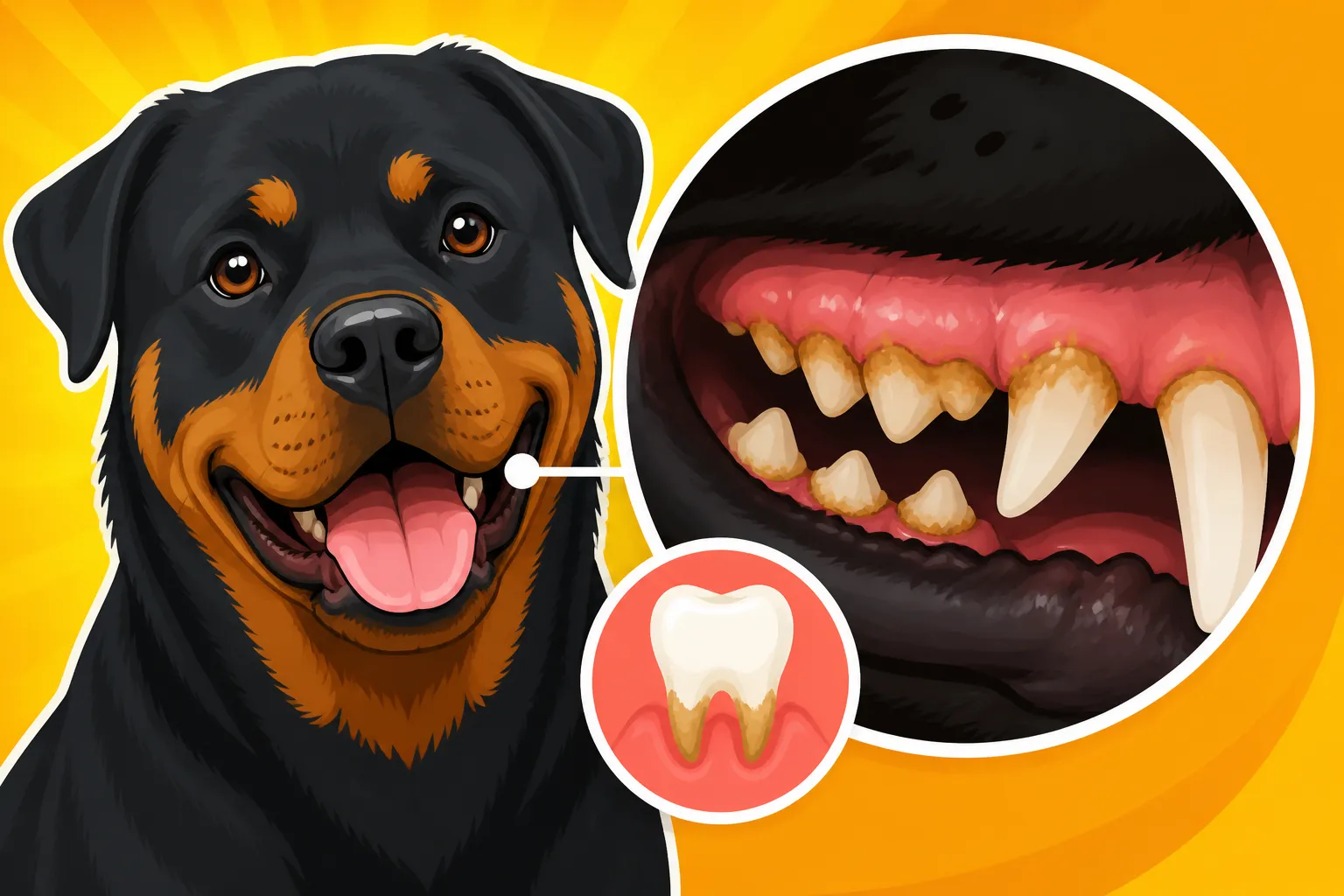
Rottweiler Tartar Between Cleanings
One of the most disheartening things for any Rottweiler owner is watching their dog's teeth rapidly accumulate tartar, even after a diligent brushing routine or a professional dental cleaning. You work hard to keep your big companion healthy, only to notice that familiar yellowish-brown buildup creeping back, and with it, that tell-tale "dog breath" that tells you something isn't quite right. It feels like a losing battle, but trust me, you're not alone in this struggle. This guide is all about tackling that persistent tartar between cleanings, diving into why it happens, what risks it poses, and, most importantly, offering practical strategies to keep your Rottweiler's mouth as healthy as possible.
Understanding Rottweiler Tartar: More Than Just Bad Breath
It's easy to dismiss a bit of bad breath or some yellowish teeth as "just being a dog," but with a powerful breed like a Rottweiler, dental health is deeply intertwined with overall well-being. Their strong jaws, often intense chewing habits, and even genetics can play a role in how quickly plaque transforms into rock-hard tartar. Neglecting this isn't just about appearances; it can lead to serious health issues, causing pain, infection, and even impacting vital organs.
The Silent Threat: How Plaque Becomes Tartar
Think of it like this: every time your Rottweiler eats, tiny food particles and bacteria mix with saliva to form a sticky film called plaque on their teeth. This film is soft and can easily be brushed away. The problem is, if that plaque isn't removed regularly, it starts to mineralize. Calcium salts in your dog's saliva attach to the plaque, and over time, this sticky film hardens into what we call tartar or calculus. Once it's tartar, it's cemented onto the tooth surface and becomes incredibly difficult, if not impossible, to remove with just a toothbrush. It's like concrete forming on their teeth, and it creates a rough surface that attracts even more plaque, speeding up the whole nasty cycle.
For a Rottweiler, with their large mouth and powerful chewing, food can often get lodged in crevices, and if they're not keen on having their teeth brushed, that plaque can build up remarkably fast. Before you know it, you’re looking at significant tartar even weeks after a professional cleaning.
Why Tartar is a Big Deal for a Rottweiler's Health
When tartar takes hold, it’s not just an aesthetic issue. That hard buildup pushes against the gums, causing inflammation, a condition known as gingivitis. You might notice your Rottweiler's gums looking red, swollen, or even bleeding slightly if you touch them. If gingivitis isn't addressed, it progresses to periodontitis, a much more serious condition. This is where the infection spreads below the gum line, destroying the supporting structures of the tooth – the bone and ligaments that hold it in place.
Imagine the pain of a deep toothache, or a loose tooth that’s constantly throbbing. Your Rottweiler experiences this in silence, often continuing to eat despite the discomfort because their instinct tells them to hide pain. This chronic infection can lead to tooth loss, jaw bone infections, and even abscesses that require immediate and often costly veterinary intervention. Beyond the mouth, the bacteria from severe dental disease can enter the bloodstream and travel to other organs, including the heart, kidneys, and liver, potentially contributing to more serious systemic diseases. This is why a healthy mouth isn't just about fresh breath; it's a foundational part of your Rottweiler's overall health and Rottweiler Lifespan and the Eight to Ten Year Average.
Proactive Home Care Strategies to Combat Tartar
So, if tartar is such a menace, what can we actually do about it between those vital professional cleanings? The good news is, there are several effective home care strategies that, when used consistently, can make a huge difference in slowing down tartar accumulation and keeping your Rottweiler’s mouth healthier. It’s about building a multi-pronged attack to tackle plaque before it hardens.
The Gold Standard: Brushing Your Rottweiler's Teeth
This is, hands down, the single most effective thing you can do at home. Just like for humans, mechanical abrasion is key to removing plaque. Yes, it can be a challenge with a large, strong Rottweiler, but it’s a habit worth establishing early. You'll need a dog-specific toothbrush – some people find finger brushes easier for control, while others prefer a long-handled brush with an angled head. Crucially, use dog-specific toothpaste; human toothpaste contains xylitol, which is toxic to dogs, and fluoride, which shouldn't be swallowed. Dog toothpaste comes in flavors they often enjoy, like chicken or peanut butter, which can make the experience more palatable.
Start slowly, making it a positive experience. Let your Rottweiler lick the toothpaste off the brush, then gently rub it on a few teeth. Gradually increase the number of teeth and the duration until you can brush most of their teeth for a minute or two, focusing on the outside surfaces where tartar tends to build up most. Aim for daily brushing if possible, but even a few times a week is better than nothing. Consistency is your best friend here. For more tips on getting started, check out our guide on Getting a Rottweiler Used to a Toothbrush Early.
Dental Chews, Treats, and Diet Modifications
While brushing is king, there are other tools in your arsenal. Dental chews and treats can be a fantastic supplement, but you need to be smart about your choices. Look for products that have the Veterinary Oral Health Council (VOHC) seal of acceptance. This means they've been proven to reduce plaque and/or tartar. These aren't just crunchy treats; they're designed with specific textures and ingredients to scrape plaque off teeth as your dog chews. Always choose chews appropriate for your Rottweiler's size and chewing intensity – you don't want them to swallow it whole, nor do you want something so hard it risks cracking a tooth. For good options, you can often find a wide variety of VOHC-approved chews on platforms like Chewy or Amazon, making it easy to compare and select the right fit for your big chewers. Remember, some hard chews, like antlers or very dense bones, can actually cause more harm than good by fracturing teeth. We dive into this more in Chews That Do Not Crack a Rottweiler Molar and Antlers and Bones a Rottweiler Should Not Have.
Certain dental diets are also formulated to help. These kibbles often have a larger, more fibrous texture that encourages scrubbing action against the tooth surface as your dog crunches. Some also contain ingredients that help reduce plaque adhesion or minimize calculus formation. Water additives are another option; these are typically diluted into your Rottweiler's drinking water and contain ingredients that can help reduce bacteria in the mouth. While not as effective as brushing, they can offer an extra layer of defense, especially if brushing is a struggle.
| Home Dental Care Method | Primary Benefit | How It Helps Combat Tartar | Pros | Cons |
|---|---|---|---|---|
| Tooth Brushing | Mechanical Plaque Removal | Physically scrapes away plaque before it hardens into tartar | Most effective method; reaches all tooth surfaces | Requires training and cooperation; time-consuming; can be difficult with resistant dogs |
| Dental Chews/Treats | Abrasive Action / Special Ingredients | Textured design mechanically scrubs teeth; some inhibit plaque | Enjoyable for dogs; easy to administer; VOHC-approved options available | Not a substitute for brushing; must choose appropriate size/hardness; calorie content |
| Dental Diets | Mechanical Plaque Removal | Kibble design and texture promote scrubbing action | Consistent effect at every meal; convenient | May not be suitable for all dietary needs; can be more expensive than regular kibble |
| Water Additives | Reduce Oral Bacteria | Ingredients inhibit bacteria in drinking water, lessening plaque | Very easy to administer; passive prevention | Least effective on its own; does not remove existing plaque or tartar |
When Home Care Isn't Enough: Professional Interventions
No matter how diligent you are with home care, most Rottweilers will eventually need professional dental cleanings under anesthesia. This isn't a failure of your efforts; it's simply a recognition that plaque and tartar are relentless, and there are areas in the mouth that home brushing just can't reach effectively, especially below the gum line. Think of it as a reset button for their oral health, allowing you to start fresh with your home care routine.
Signs Your Rottweiler Needs a Dental Cleaning
Your Rottweiler might be stoic, but their body will often give you clues that their dental health needs attention. The most obvious sign is persistent bad breath – what vets call halitosis. It's not just "dog breath"; it's a foul odor that indicates a bacterial overload. Other signs include visible tartar buildup, especially on the back molars and the canine teeth, which often appear yellowish-brown. You might also notice red, swollen, or bleeding gums, particularly along the gum line where it meets the tooth.
Beyond visual cues, your Rottweiler might show behavioral changes. They might be reluctant to chew on hard toys, drop food while eating, show favoritism to one side of their mouth, or suddenly prefer softer foods. Sometimes, they might paw at their mouth, drool excessively, or become irritable when you try to touch their face. Any of these signs should prompt a call to your vet for a dental check-up. These could also be signs of something more serious, like a cracked molar or an abscess, which need immediate veterinary attention. For example, if you see any swelling under their eye, that’s a common sign of a tooth root abscess, and it’s a full-blown emergency. You can learn more about general issues in Rottweiler Dental Disease and Cracked Teeth.
What Happens During a Professional Dental Cleaning
A professional dental cleaning for a Rottweiler is a significant procedure that always involves general anesthesia. This isn't just for comfort; it's absolutely necessary to thoroughly clean all tooth surfaces, including the critical areas beneath the gum line, without causing pain or stress to your dog. Before anesthesia, your vet will typically recommend pre-anesthetic bloodwork to ensure your Rottweiler's organs, particularly their kidneys and liver, are healthy enough to metabolize the anesthetic drugs. Given a Rottweiler's size, careful consideration of anesthesia protocols is paramount, and it's something we talk about in Anesthesia Risk for a Dog a Rottweiler's Size.
Once safely under anesthesia, the veterinary team will perform a comprehensive oral examination, often including dental X-rays. These X-rays are crucial because a significant portion of dental disease occurs below the gum line, hidden from plain view. They can reveal bone loss, un-erupted teeth, or abscesses. Then, a specialized ultrasonic scaler is used to remove tartar from both above and below the gum line, followed by hand scaling for precision. After all tartar is removed, the teeth are polished to smooth out any microscopic etches on the enamel, which helps prevent future plaque accumulation. If any diseased or damaged teeth are found, extractions may be performed, and the veterinarian will advise you on post-operative care and pain management.
Long-Term Dental Health: A Lifetime Commitment
For a Rottweiler, managing tartar and maintaining optimal oral health isn't a one-time fix; it's a continuous journey. It requires diligence, patience, and a preventative mindset throughout their entire life. Just like you wouldn't expect a single human dental cleaning to last forever without daily brushing, your Rottweiler needs ongoing care to stay healthy.
Building a Preventative Dental Routine
The key to long-term success is consistency. Integrate dental care into your Rottweiler's daily or weekly routine, making it as normal and positive as possible. This means regular brushing, smart choices in dental chews and food, and sticking to scheduled veterinary check-ups. Remember, their mouth changes as they age; a puppy's needs are different from an adult's, and a senior Rottweiler will have unique considerations. For instance, senior Rottweilers are often more prone to dental disease and might need more frequent check-ups, as discussed in Senior Rottweiler Care After the Age of Seven.
Start training your Rottweiler early to accept mouth handling and brushing. Puppyhood is the ideal time to get them accustomed to it, making it less of a battle later on when they're a massive adult. You can refer to guides like Rottweiler Puppy Training Through the First Year to help with foundational training that will support good dental habits. Positive reinforcement, yummy dog toothpaste, and short, frequent sessions will build a positive association.
The Big Picture: Oral Health and Overall Well-being
Understanding the connection between oral health and overall well-being is perhaps the most motivating factor for staying on top of tartar control. The bacteria and inflammation associated with severe dental disease don't just stay in the mouth. They can contribute to chronic systemic inflammation, and those circulating bacteria can put extra strain on vital organs. Maintaining a healthy mouth literally helps maintain a healthy body.
A Rottweiler free from dental pain is a happier, more energetic companion. They'll eat better, play more, and simply have a better quality of life. By being proactive about preventing tartar buildup, you're not just preventing bad breath; you're investing in years of comfort and health for your cherished Rottweiler. It's an essential part of responsible ownership and one that pays dividends in their happiness and longevity.
Disclaimer
This article is for general informational purposes only and does not constitute professional advice. Laws, prices and regulations vary by location and change over time. Consult a qualified professional for guidance on your specific situation.