What the Rottweiler Was Actually Bred to Be
It’s easy to look at a powerful, self-assured Rottweiler today and fall into the trap of believing they were simply bred to be intimidating guard dogs. That assumption often leads to misunderstandings about their true nature and the incredible versatility ingrained in their very being. This guide will take you on a journey back through history to truly understand the foundational roles the Rottweiler was bred to fulfill, and how those ancient jobs still shape the wonderful dogs we share our lives with today.
The Ancient Origins: Roman Drover Dogs
To understand the Rottweiler, we have to travel back thousands of years, long before the breed we know today even existed. Their story isn't just a few centuries old; it stretches back to the Roman Empire, a sprawling civilization that required vast logistical networks to feed its armies and citizens. Imagine legions marching across Europe, needing a constant supply of food – and that food often walked on four legs.
The Roman Legions' Mobile Larders
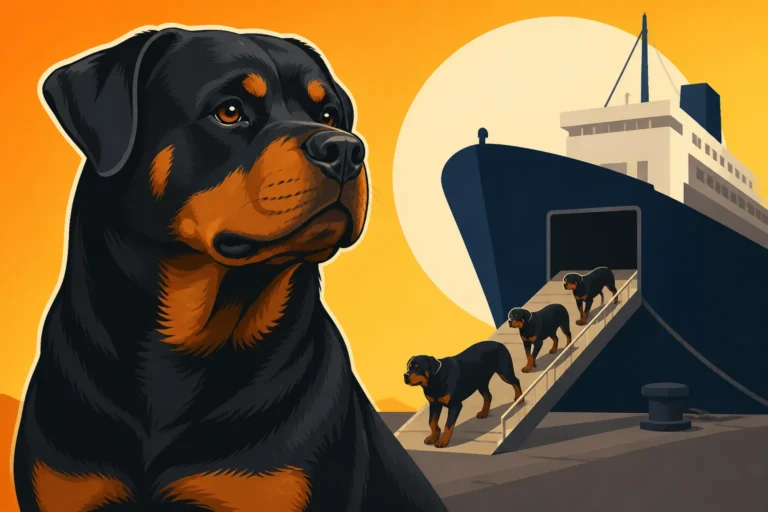
The Roman army wasn't just about soldiers and weaponry; it was a self-sustaining machine. As legions advanced across the Alps and into what is now Germany, they brought immense herds of cattle with them. These cattle were their mobile food source, providing fresh meat for the troops. But moving thousands of head of livestock across rugged terrain and through hostile lands was no small feat. It required powerful, intelligent, and resilient dogs capable of protecting the herd from predators, keeping it moving, and even defending the soldiers' camps.
These were the ancestors of the Rottweiler: the robust, mastiff-type dogs known as Roman Drover Dogs. They weren't just herders in the sense of nipping heels; they were guardians, formidable in size and temperament, able to deter wolves, bears, and human thieves. They were the original working dogs, an indispensable part of Roman military logistics. When you see a Rottweiler's calm, observant demeanor, remember that ancient sentry keeping watch over a moving feast. You can learn more about The Roman Drover Dogs Behind the Rottweiler.
Leaving a Legacy in Germany
As the Roman Empire eventually receded, many of these dogs were left behind in the areas where the legions had established settlements. One such area was a region in southern Germany, specifically around the town that would later become known as Rottweil. This town, situated at a strategic crossroads, became a thriving cattle market town, a hub where livestock from surrounding areas were bought, sold, and driven to other parts of Europe. The Roman drover dogs, having adapted to the local environment and interbred with indigenous dogs, found a new, vital role.
These dogs were perfectly suited to the burgeoning cattle trade. Their powerful build, innate guarding instincts, and intelligence made them invaluable to the local butchers and cattle dealers. They needed dogs that could control large, stubborn animals, protect moneybags from highwaymen, and withstand the harsh conditions of long drives. This is where the Rottweiler's story truly begins to coalesce, transitioning from a general "Roman drover dog" to the specific lineage that would define the breed.
Rottweil's Butchers and the "Metzgerhund"
The town of Rottweil, with its bustling cattle markets, became the crucible for the breed's development. Here, over centuries, the dogs were selectively bred for the specific demands of the local butchers and cattlemen. They were not merely pets; they were essential tools for commerce and survival, forming an integral part of daily life and trade.
The Butcher's Dog: Metzgerhund
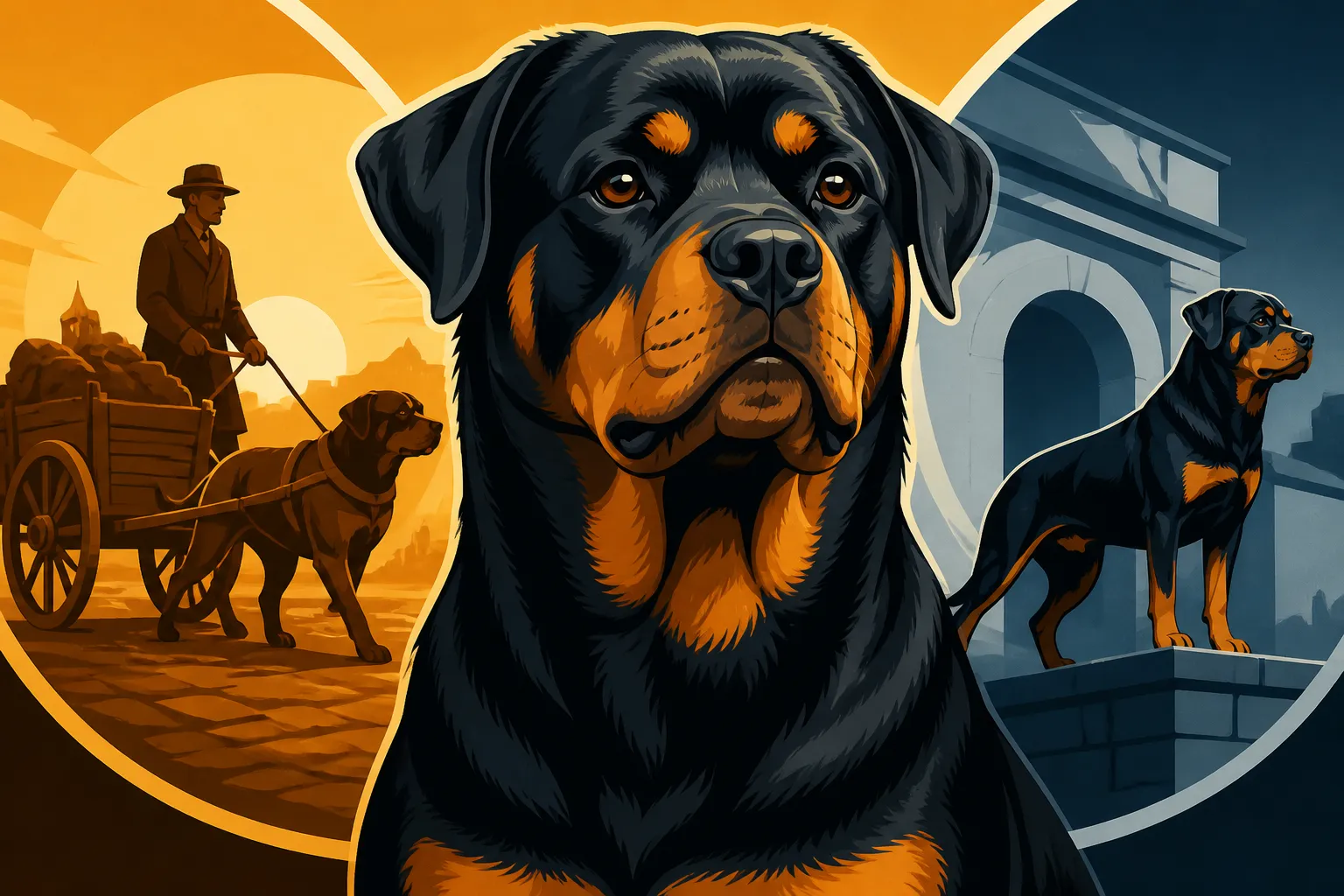
In Rottweil, these dogs became known as "Rottweiler Metzgerhund," which translates to "Rottweil Butcher's Dog." This name perfectly encapsulates their primary role. They were the loyal, tireless companions of the butchers, responsible for driving herds to market, protecting the livestock, and, crucially, safeguarding the butcher's earnings. Imagine a scene in the bustling market: a butcher, having just made a significant sale, would tie a pouch of money around his Rottweiler’s neck, knowing that no thief would dare approach a dog of such stature and protective instinct.
Their job wasn't just about driving cattle; it was about managing valuable assets in a time before banks and secure transportation. This responsibility honed their intelligence, their innate desire to work closely with their human partners, and their impressive physical capabilities. They needed to be biddable enough to follow commands, yet formidable enough to deter any threat. This dual nature – devoted to their family/owner, reserved with strangers – is a hallmark of the breed still today. It’s why people often say Why Butchers Called the Rottweiler a Metzgerhund.
Carting and Protecting Valuables
Beyond driving herds, Rottweilers were also employed in carting. When the butchers needed to transport meat or other goods, they would harness their powerful dogs to carts. This wasn't just for heavy loads; it was often a quicker, more efficient way to move products within the town or to nearby villages. Their incredible strength, combined with their willingness to pull, made them perfect draft animals.
This aspect of their history speaks volumes about their physical prowess and their incredible stamina. They were not delicate dogs; they were built for hard work, for enduring long days, and for putting their shoulder into a task. This carting heritage is why many Rottweilers today still enjoy activities like weight pulling, and why they can often be seen leaning their massive bodies into their beloved humans – a subtle echo of their working past, pushing into their "flock" to keep them close. If you're looking for gear sturdy enough for a carting-inclined Rottweiler, places like Chewy offer incredibly durable harnesses and training equipment that stand up to their strength. You can explore more about Rottweilers Pulling Carts Before the Railways.
Beyond the Meat Markets: Versatility and Near Extinction
While the cattle markets of Rottweil were central to their identity, the breed's natural abilities and intelligence meant they weren't confined to a single role. However, technological advancements brought them to the brink of disappearance.
Adapting to New Roles and Emerging Technologies
As the 19th century dawned, the world began to change rapidly. Railways emerged as a more efficient way to transport livestock over long distances, gradually phasing out the need for drover dogs. This left many Rottweilers without their traditional jobs. Their numbers dwindled drastically, and for a time, it seemed the magnificent Metzgerhund might fade into history. It's a sobering thought to consider How Close the Rottweiler Came to Disappearing.
However, the qualities that made them excellent drovers and carting dogs—their intelligence, strength, trainability, and protective instincts—also made them adaptable. As police forces around the world began to recognize the value of canine partners, the Rottweiler's potential became evident. They could track, apprehend, and protect, making them ideal candidates for police work. This transition marked a crucial turning point, moving them from the fields and markets into structured civil service roles.
The 1901 Revival and Recognition
The early 20th century saw a concerted effort by fanciers and breeders to revive the Rottweiler breed. In 1901, the first Rottweiler club was formed in Germany, dedicated to preserving and promoting the breed. This marked the official recognition of the Rottweiler as a distinct breed and the establishment of a formal breed standard. This period was vital in pulling them back from the brink and solidifying their place in the canine world. The concerted efforts of these dedicated individuals are why we have Rottweilers today, and it's a testament to their enduring qualities that they were worth saving. Dive deeper into The 1901 Revival of the Rottweiler to appreciate this crucial period.
It was during this time that their reputation as outstanding police dogs truly began to blossom. They were among the first breeds chosen for police work, a testament to their inherent suitability for demanding tasks requiring courage, strength, and unwavering loyalty. This versatility ensured their survival and paved the way for their eventual global popularity.
The Modern Rottweiler: Echoes of the Past
Today's Rottweiler, whether a beloved family companion, a show dog, or a working dog, carries the genetic blueprint of those ancient drovers and butchers' companions. Their inherent traits are not random; they are direct reflections of the jobs they were bred to do.
Temperament: The Calm, Confident Guardian
The characteristic Rottweiler temperament—calm, confident, and self-assured—is a direct inheritance from their working past. A drover dog couldn't afford to be flighty or overtly aggressive; it needed to be stable, discerning, and capable of making sound judgments under pressure. They had to assess threats, move livestock, and guard property without panicking or acting impulsively. This is why The Calm Confidence a Rottweiler Standard Asks For is so important.
This means a well-bred and properly socialized Rottweiler isn't inherently aggressive. Rather, they possess a strong guarding instinct coupled with a "wait and see" attitude towards strangers. They observe, they assess, and they decide if a situation warrants intervention. This is why early and continuous socialization is so critical: it teaches them what is a threat and what is just a friendly visitor. Tools found on Chewy, like durable puzzle toys or training treats, can be excellent for engaging their intelligent minds and reinforcing positive behaviors during this crucial development.
Physical Traits: Built for Work
Every aspect of the Rottweiler's physical build speaks to its working heritage. Their powerful, muscular bodies, robust bone structure, and deep chests were essential for enduring long drives, pulling carts, and confronting potential threats. A Rottweiler's solid build isn't just for show; it's a functional design, honed over centuries of demanding work. Their powerful jaws, for instance, were not simply for biting; they were for holding and controlling large cattle, a task requiring immense strength and endurance.
Consider their short, coarse double coat: it offered protection from the elements during arduous journeys, yet was easy to maintain. Their moderate angulation allows for efficient, tireless movement, rather than the flashy, high-stepping gait of some other breeds. Even their "happy lean" into their owners is often seen as a remnant of their droving days, physically nudging their "flock" (their family) into position or keeping them close. This innate body language is a subtle reminder of Rottweiler Leaning and Body Blocking.
Working Drives in the Modern Home
While most modern Rottweilers live as cherished family members rather than cattle drivers, their inherent working drives are still very much alive. These are intelligent dogs who thrive on having a purpose and feeling useful. Without appropriate outlets, these drives can manifest as undesirable behaviors like excessive barking, destructive chewing, or guarding resources inappropriately.
Here's a table summarizing some historical jobs and their modern manifestations:
| Historical Role | Description | Modern Manifestation |
|---|---|---|
| Roman Drover Dog | Driving and guarding large herds of cattle for the Roman legions across vast territories. | Strong protective instincts towards family and home. Excellent observers. Can be aloof with strangers, taking time to assess. Their strong presence acts as a natural deterrent. |
| Metzgerhund (Butcher's Dog) | Moving cattle to market, protecting the butcher's money, pulling carts, guarding property. | High trainability and desire to work alongside their owner. Enjoy tasks that involve strength or problem-solving. Can exhibit resource guarding if not properly trained. Rottweiler Resource Guarding at Home is something many owners contend with. |
| Carting Dog | Pulling carts laden with meat and other goods for local commerce. | Enjoys activities like weight pulling, competitive carting, or carrying backpacks. Needs durable toys and gear. The "Rottweiler lean" where they push into you can be a subtle echo of this pushing instinct. |
| Police/Service Dog | Tracking, apprehending suspects, protection work, search and rescue, guide/assistance work. | Excels in obedience, protection sports (for trained professionals), therapy work, and service dog roles. Needs mental stimulation and consistent training. Rottweiler Jobs From Police Work to Therapy Visits highlights their continuing contributions to society. |
Engaging a Rottweiler in activities that channel their natural abilities is key to a happy, well-adjusted dog. This could be advanced obedience, rally, therapy work, or even just consistent, structured training and plenty of mental enrichment at home. For any training needs, Chewy offers a wide range of training aids, from clickers to long lines, that can help you tap into their intelligence and drive. Understanding What the Rottweiler Was Actually Bred to Be is not just a history lesson; it's a blueprint for understanding and appreciating the magnificent dogs we call our own today.
Disclaimer
This article is for general informational purposes only and does not constitute professional advice. Laws, prices and regulations vary by location and change over time. Consult a qualified professional for guidance on your specific situation.