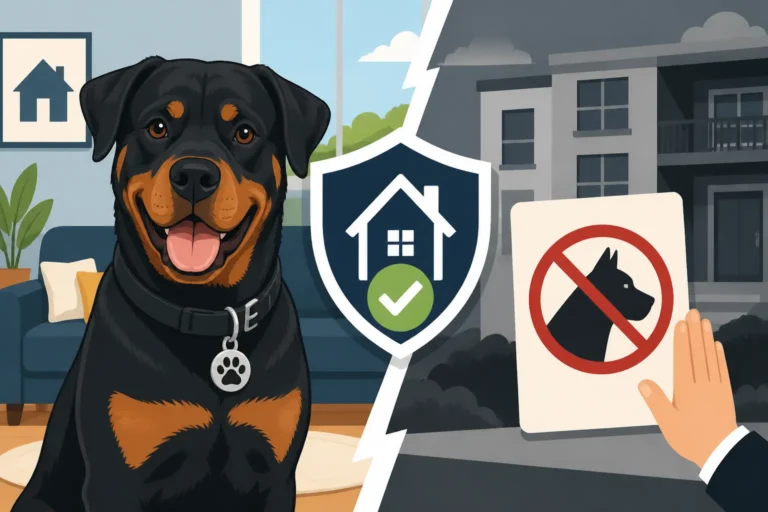
Rottweiler Owners Turned Down by Landlords
It's incredibly disheartening when you find the perfect place to live, only to have your application rejected solely because you share your life with a Rottweiler. This isn't just a minor inconvenience; it feels like a personal attack on your beloved companion and an unfair judgment against a breed that, in the right hands, is loyal, loving, and well-behaved. This guide is here to walk you through the frustrating reality of finding rental housing with a Rottweiler and offer practical strategies to overcome the common hurdles.
Understanding Why Landlords Decline Rottweilers
Let's be honest, the reputation of Rottweilers often precedes them, and unfortunately, it's not always a fair one. When a landlord says no, it's rarely about your individual dog's sweet nature; it's usually rooted in broader perceptions and cold, hard business realities.
The Fear Factor and Media Portrayals
For many people, the image of a Rottweiler is shaped by sensationalized news stories, dramatic movies, or even just old rumors passed down. They see a powerful, muscular dog with a strong presence, and without knowing the breed personally, they often default to fear or apprehension. It's a perception problem, pure and simple. They imagine a dog that is inherently aggressive or dangerous, rather than recognizing the intelligent, confident, and often goofy companion that lives in your home. This fear can lead to landlords having blanket "no Rottweiler" policies, even if they've never met a single one in person. They're responding to a societal narrative rather than actual canine behavior.
Insurance Company Influence on Policies
Perhaps the biggest hurdle for Rottweiler owners isn't the landlord's personal opinion, but the mandate from their insurance provider. Many homeowners insurance policies for landlords include "breed-specific exclusions" or "dangerous dog lists," and unfortunately, the Rottweiler frequently lands on these lists. This means that if a landlord allows a Rottweiler, their insurance premium might skyrocket, or worse, their policy could be canceled altogether. For a landlord, allowing a breed on such a list becomes a significant financial and liability risk. They aren't trying to be cruel; they're trying to protect their investment and livelihood, and the insurance companies leave them very little wiggle room. Understanding these Landlord Breed Clauses That Name Rottweilers is crucial to grasping the landlord's perspective.
Past Incidents and Generalizations
Sometimes, a landlord's reluctance stems from a past negative experience, either directly with a Rottweiler or with another large, powerful breed. Maybe a previous tenant's dog caused property damage, or there was an incident involving another dog or person. These isolated events, unfortunately, can lead to broad generalizations that unfairly punish all future Rottweiler owners. It's an understandable human reaction to avoid what has caused trouble before, but it makes your job of proving your dog's good character all the more challenging. They may not know your Rottweiler personally, but they might recall a difficult situation from years ago, and that memory is enough to close the door.
Navigating the Rental Market with a Rottweiler
Despite the challenges, securing rental housing with your Rottweiler is absolutely possible. It requires a proactive, transparent, and persuasive approach. You need to become an advocate not just for your dog, but for the breed itself, showing landlords that the stereotypes don't apply to your well-managed companion.
Open and Honest Communication with Prospective Landlords
The worst thing you can do is try to hide your Rottweiler. Transparency is key from the very first interaction. When you call about a property, don't wait until the viewing to spring the "oh, by the way, I have a Rottweiler" news. Bring it up early. Be upfront, polite, and confident. Frame it positively: "I'm calling about the property at [address]. I'm a responsible dog owner with a well-trained Rottweiler, and I wanted to confirm your pet policy before scheduling a viewing." This approach immediately sets you apart as a responsible individual and allows you to gauge their openness. If they have a hard "no," you've saved yourself time. If they're hesitant, it opens the door for a conversation where you can begin to make your case.
A fantastic tool for this is creating a "Rottweiler resume" or "pet portfolio." This isn't just for show; it's a professional document that addresses potential concerns head-on. Include:
- A recent, smiling photo of your Rottweiler.
- Your dog's name, age, weight, and a brief, positive personality description (e.g., "gentle giant," "loves naps," "enjoys quiet walks").
- Proof of up-to-date vaccinations and regular vet care.
- Spay/neuter certificate.
- Evidence of professional training (see next section).
- References from previous landlords (if applicable) or a veterinarian who can vouch for your dog's temperament and your responsible ownership.
- A "good citizen" statement, detailing how your dog is house-trained, doesn't bark excessively, and is not destructive.
This proactive approach demonstrates your commitment and paints a picture of a well-cared-for, well-behaved dog, not a liability.
Highlighting Your Dog's Training and Temperament
Words are one thing, but documented proof of good behavior is far more powerful. Invest in your Rottweiler's training, not just for good manners (which are essential when you have a Rottweiler Leash Manners at a Hundred Pounds to control!), but for certification. A Canine Good Citizen (CGC) certificate from the American Kennel Club (AKC) is gold. It shows that your dog has passed a 10-step test demonstrating good manners at home and in the community. This isn't just a piece of paper; it's evidence that your dog is reliably well-behaved, can interact politely with strangers, and responds to commands. You can link to Whether a CGC Title Lowers a Rottweiler Premium to show its value.
Offer to have the landlord meet your Rottweiler. A well-behaved, calm Rottweiler making a positive first impression can completely change a landlord's preconceived notions. Ensure your dog is freshly groomed, has just had a good walk to burn off energy, and is in a calm, settled state. Show off a few commands: "Sit," "Stay," "Down." Emphasize their gentle nature around children (if applicable) or how they greet guests calmly. Demonstrating that your dog is not a "typical" stereotype is incredibly impactful. Sometimes, a calm, leaning Rottweiler can be the best advocate for the breed. Don't forget to highlight how you actively prevent Rottweiler Behavior Problems That Start Small through consistent training.
Offering to Secure Pet Insurance or a Higher Deposit
Sweetening the deal can sometimes make all the difference. If a landlord's primary concern is liability or potential damage, addressing those fears directly can sway them.
- Pet Insurance: Offer to take out a pet insurance policy that includes liability coverage. While most pet insurance focuses on vet bills, some policies or umbrella policies might offer liability protection. Mentioning a well-known brand like Healthy Paws, for example, shows you're serious about your dog's health and potential costs, indirectly reassuring the landlord. While most pet insurance is for medical, discussing Rottweiler Pet Insurance and the $204 Average might help ease worries about emergency vet bills, implying you're a responsible owner who plans ahead.
- Increased Security Deposit: Offer to pay an additional "pet deposit" or a slightly higher monthly pet rent. Be reasonable, but show your willingness to mitigate their financial risk. This signals that you are confident your dog will not cause damage and that you are committed to the property.
- Proof of Prior Pet-Friendly Renting: If you have a history of successfully renting with your Rottweiler, gather landlord references. A previous landlord vouching for your dog's quiet nature, lack of damage, and your responsible pet ownership is incredibly persuasive.
Remember, landlords are running a business, and anything you can do to reduce their perceived risk makes you a more attractive tenant.
Finding Pet-Friendly Housing that Welcomes All Breeds
The truth is, not all rental properties are created equal when it comes to pets, especially certain breeds. Broadening your search tactics can uncover opportunities you might miss with a standard approach.
Utilizing Pet-Friendly Rental Resources
Gone are the days when you had to scour newspaper ads hoping to find a "pets allowed" listing. Many online platforms now cater specifically to pet owners. Websites like Zillow, Apartments.com, and Realtor.com often have robust pet filters, allowing you to search for properties that specify "dogs allowed" and sometimes even list breed restrictions. However, don't rely solely on these filters; always follow up with a direct call to verify their specific policy regarding Rottweilers. Some listings might say "dogs allowed," but then have a blanket breed restriction that isn't clearly stated online.
Beyond general rental sites, look for niche resources. There are often local Facebook groups or community forums dedicated to pet-friendly housing in your area. Sometimes, word-of-mouth through local dog clubs or rescue organizations can also lead to hidden gems – landlords who are known for being more understanding or who have had positive experiences with responsible big-dog owners. You might also want to search for resources related to Renting With a Rottweiler and the Breed Clause for more targeted advice.
Considering Private Landlords Over Large Property Management Companies
This is a big one. Large property management companies often have rigid, non-negotiable policies dictated by their corporate legal teams and insurance providers. They operate on scale, and individual exceptions are rare. Their breed restrictions are typically strict and not open to discussion.
Private landlords, on the other hand, often have more flexibility. They might own just one or a few properties, making them less beholden to the stringent rules of large corporate insurers (though their personal insurance is still a factor). They are more likely to consider your individual case, meet your dog, and make a decision based on personal impression rather than a blanket rule. Building rapport with a private landlord and showcasing your Rottweiler's impeccable manners can significantly increase your chances. They might be more willing to listen to your assurances, especially if you come prepared with a detailed pet resume and offer additional safeguards.
Exploring Options Beyond Traditional Rentals
Sometimes, the traditional rental market just isn't cutting it. If you're consistently running into brick walls, it might be time to think outside the box.
- House Sitting: Platforms like TrustedHousesitters or Rover connect homeowners with sitters. While often short-term, a longer-term house-sitting gig can provide stable housing for a period and give you more time to search for a truly accommodating rental. Plus, homeowners are usually looking for someone who loves and cares for animals, so your Rottweiler could even be a bonus.
- Renting a Room: Sometimes renting a room in a private home can be easier than renting a whole unit. Individual homeowners might be more flexible about a well-behaved dog, especially if they are dog lovers themselves.
- Buying a Home: This isn't a quick fix, but if renting becomes consistently impossible, and you have the financial means, buying a home eliminates the landlord issue entirely. However, even homeowners need to be aware of Homeowners Insurance When You Own a Rottweiler and potential breed restrictions by their own carriers, though it’s generally less prohibitive than rental insurance. If buying is a long-term goal, you might also consider an Umbrella Policies for a Rottweiler Household to bolster your personal liability coverage.
Legal Considerations and Advocacy for Rottweiler Owners
It's important to know your rights and understand the legal landscape surrounding pet ownership and housing, especially when navigating breed discrimination.
Fair Housing Act and Assistance Animals
Here's a critical distinction: the Fair Housing Act prohibits discrimination based on disability, and this extends to individuals with assistance animals (service animals or emotional support animals). If your Rottweiler is a legally recognized service animal or emotional support animal for a person with a disability, they are generally protected under the Fair Housing Act and cannot be denied housing due to breed restrictions or pet policies. They are not considered "pets" in this context.
However, this protection does not extend to companion animals that are simply pets, no matter how well-behaved or loved. It's crucial not to misrepresent your pet as an assistance animal if they are not, as this can have serious legal consequences and undermine the legitimate needs of those with true assistance animals. Always consult with a legal professional or an organization specializing in fair housing if you believe your situation falls under these protections.
Local Breed-Specific Legislation BSL Awareness
While federal law protects assistance animals, local laws can still impact you. Some cities, counties, or even entire states have implemented Breed-Specific Legislation (BSL), which bans or heavily restricts certain dog breeds, including Rottweilers. These laws can make it incredibly difficult, if not impossible, to rent or even own a Rottweiler in those specific areas, regardless of your dog's temperament or your landlord's willingness.
Before you even start looking for properties, research the BSL in your target area. A quick search for "[City/County Name] breed-specific legislation" or "dog breed restrictions [State Name]" should give you the information you need. Moving to an area with BSL can lead to heartbreaking choices, so it's vital to be informed. This often ties into the broader topic of Rottweiler Restrictions by City and County.
Documenting Your Dog's Good Behavior
Whether you're facing legal challenges or simply trying to persuade a hesitant landlord, a comprehensive record of your Rottweiler's good behavior is invaluable. This goes beyond the initial pet resume. Maintain a file that includes:
- Training Certificates: Keep all certificates from puppy classes, obedience courses, and especially CGC.
- Vet Records: Show consistent veterinary care, including vaccinations, flea/tick/heartworm prevention (like products you'd get from Chewy), and any health clearances. This demonstrates you are a responsible owner who prioritizes your dog's well-being.
- Photographs/Videos: Document your Rottweiler interacting calmly with people, children (if applicable), and other animals. Show them relaxing in the home, not being destructive.
- Testimonials: Get written testimonials from neighbors, dog walkers, or even your previous landlord, attesting to your dog's quiet nature and good behavior.
- Daily Routine Log: A simple log showing consistent walks, feeding times (perhaps mentioning high-quality food like Ollie, which shows commitment to their health), and appropriate training can paint a picture of stability and responsible ownership.
This kind of meticulous documentation, as discussed in Documenting Rottweiler Training for an an Insurer, can be a powerful tool in your advocacy efforts, proving that your Rottweiler is a well-integrated, well-behaved member of your family and not the stereotype some landlords fear.
| Strategy | Pros | Cons | Best Suited For |
|---|---|---|---|
| Pet Resume/Portfolio | Professional, proactive, shows responsibility, pre-empts concerns | Requires effort to compile, may not sway all landlords | All landlords, especially private ones |
| CGC Certification | Objective proof of good behavior, recognized standard | Requires training time and effort, not a guarantee of acceptance | Landlords hesitant about breed stereotypes |
| Offering Pet Insurance/Higher Deposit | Directly addresses financial/liability concerns | Adds to personal cost, may not be necessary for all properties | Landlords worried about damage or liability |
| Targeting Private Landlords | More flexibility, personal connection can sway decisions | Harder to find, less inventory, still subject to their insurance | Owners with well-trained dogs and good references |
| Knowing BSL in Advance | Avoids wasted time, prevents heartbreak, informs relocation decisions | Restricts available areas, may force difficult choices if BSL is strict | All owners, before starting any property search |
Remember, every "no" brings you closer to a "yes." Keep advocating for your Rottweiler, highlighting their unique qualities, and arming yourself with knowledge and documentation. You and your loyal companion deserve a welcoming home.
Disclaimer
The information provided in this article is for general informational purposes only and does not constitute legal advice. Housing laws, pet policies, and breed-specific legislation can vary widely by location and jurisdiction. It is always recommended to consult with a legal professional or a housing advocate for specific advice regarding your individual situation.