Rottweiler Eye Discharge Caused by Entropion
Waking up to find your beloved Rottweiler’s eye watery, red, or even matted with discharge can be incredibly worrying. It’s a common scenario that sends many of us straight to Dr. Google, desperately trying to figure out what’s causing our big lug’s discomfort. While many things can cause eye issues, one particularly common culprit in our Rottie friends is a condition called entropion, where their eyelid rolls inward, causing constant irritation. This guide will walk you through exactly what entropion is, how to spot it, and what treatment options are available to bring your dog relief.
What Exactly is Entropion in a Rottweiler?
When we talk about entropion, we’re describing a specific anatomical quirk where a portion of your Rottweiler's eyelid — usually the lower lid, but sometimes the upper or both — inverts or rolls inward. Instead of the delicate, hairless skin of the inner eyelid protecting the eye, you have the coarse hair and skin of the outer eyelid constantly rubbing against the sensitive surface of the eyeball, the cornea. Imagine having an eyelash permanently stuck in your eye, but instead of one lash, it's a whole patch of hair, and it's there all the time. It's no wonder our dogs are uncomfortable.
This isn't just a minor annoyance for your dog; it's a source of continuous friction and irritation. The eye tries to protect itself, often by producing excessive tears and mucous, which is why you see that watery or goopy discharge. Over time, this constant rubbing can lead to more serious problems like corneal ulcers, chronic pain, and even impaired vision if left untreated. For a breed as robust and stoic as the Rottweiler, they might try to tough it out, but the discomfort is very real and debilitating.
Rottweilers, being a breed with specific head and eye conformations, are unfortunately quite predisposed to entropion. Their breed standard often favors a somewhat heavy brow and a deep-set eye, which, while giving them that characteristic noble expression, can also create conditions where the eyelids are more likely to roll inward. It’s often a genetic trait, meaning it’s something they’re born with or develop as they grow, rather than something they "catch." This is why responsible breeders focus on health clearances, including screening for conditions like entropion, because they understand the impact it can have on a dog's quality of life. Knowing about the importance of Rottweiler Eye Certification and the Three Year Rule can help you understand what a good breeder strives for.
The physical mechanics are straightforward: the eyelid’s natural tension is altered, or the surrounding facial structure subtly pushes the lid in. In puppies, it might be temporary, a "spastic" entropion, where muscle spasms cause the temporary turning in of the eyelid, often in response to an initial irritant. But in many adult Rottweilers, it’s a structural issue that won’t resolve on its own. It's not something you can just massage away or hope will improve with eye drops forever. The underlying cause is mechanical, and usually, the solution needs to be mechanical too.
Spotting the Warning Signs of Eye Trouble
One of the most frustrating things about dog health issues is that our pups can't simply tell us what's wrong. We have to become detectives, observing subtle changes in their behavior and physical appearance. With entropion, the signs can be quite obvious once you know what to look for, but they can also be confused with other, less serious eye irritations.
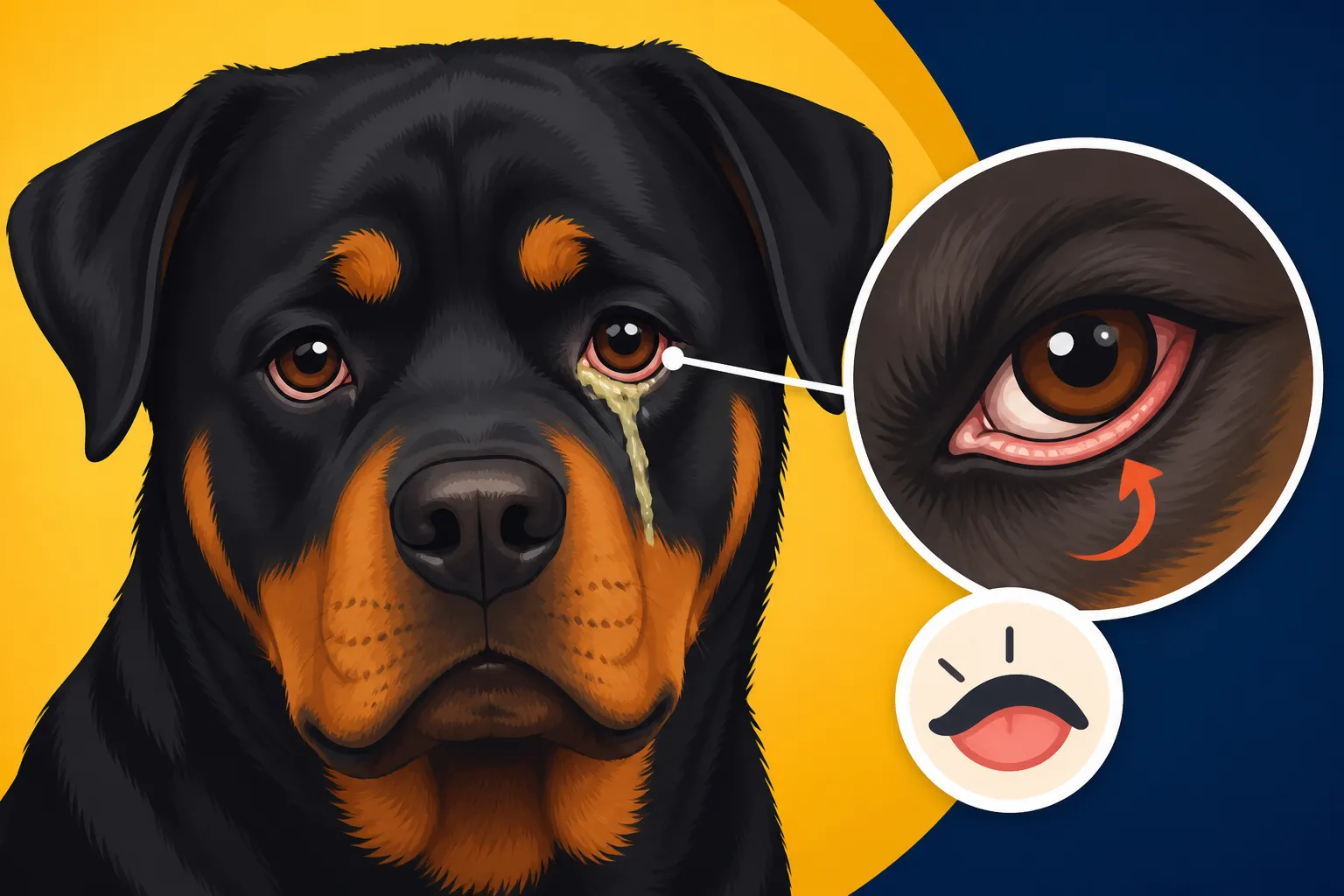
The primary symptom, as the title suggests, is eye discharge. This discharge might start as clear, watery tears, almost like your dog is crying. But because the irritation is constant, the eye often becomes inflamed, and secondary bacterial infections can develop, turning the discharge thicker, yellowish, or greenish. You might notice crusting around the corners of their eyes, especially after they've been sleeping. It can look like persistent "sleep in their eyes" that never quite goes away.
Beyond the discharge, keep an eye out for these tell-tale signs:
- Squinting or Holding the Eye Shut: This is a clear indicator of pain or discomfort. Your Rottweiler might squint in bright light or keep one eye partially or fully closed to try and relieve the rubbing sensation.
- Excessive Blinking: Similar to squinting, rapid blinking is the eye's attempt to dislodge the irritant, which, in this case, is its own eyelid.
- Rubbing or Pawing at the Face: If your Rottie is constantly pawing at their face, rubbing their head along furniture, or trying to scratch near their eye, it’s a strong signal of irritation. Be mindful that this can also worsen the problem by introducing bacteria or causing self-trauma.
- Redness and Inflammation: The whites of the eye (sclera) might appear red and bloodshot, and the conjunctiva (the pink tissue lining the eyelids) can look swollen and inflamed.
- Cloudiness or Ulcers on the Cornea: This is a more serious sign. The constant abrasion from the inward-rolling eyelid can scratch the cornea, leading to cloudiness, visible abrasions, or even deep corneal ulcers. If you see any cloudiness, or if the eye looks dull or bluish, this is an emergency.
- Photosensitivity: Your dog might seem sensitive to light, preferring darker areas or turning away from bright windows.
It’s easy to dismiss a little eye goop as just part of being a dog, but persistent or worsening discharge, especially when coupled with other signs of discomfort, warrants a vet visit. It's important to differentiate entropion from other common eye issues like allergies, conjunctivitis, or even foreign bodies. While some symptoms overlap, a vet can quickly identify the inward-rolling lid characteristic of entropion. If your dog is dealing with Rottweiler Allergies and Recurring Skin Infections, their eyes might also be affected, but the underlying cause is different.
Here's a quick comparison of common eye issues and their typical signs:
| Condition | Primary Eye Discharge | Other Common Signs |
|---|---|---|
| Entropion | Watery, then thick/pus | Squinting, rubbing, redness, corneal cloudiness, pain |
| Conjunctivitis | Clear, mucous, or pus | Redness of conjunctiva, swelling, no inward rolling of eyelid |
| Allergies | Clear, watery | Redness, itching (often general, not just eye), sneezing, skin irritation |
| Foreign Body (e.g., foxtail) | Sudden, intense tearing, thick/pus | Squinting, severe pain, sometimes visible object, rapid onset in one eye |
| Dry Eye (KCS) | Thick, tenacious mucous | Dull, irritated eyes, chronic low-grade discharge, can lead to corneal changes |
If you observe any of these symptoms, particularly the squinting or pawing, don't wait. Early intervention can prevent more severe damage to the eye.
Diagnosis and Treatment Options for Entropion
When you suspect your Rottweiler might have entropion, the first and most crucial step is a trip to your veterinarian. They are equipped to properly diagnose the condition and recommend the best course of action. They'll perform a thorough eye examination, which might include staining the cornea to check for ulcers, measuring tear production, and carefully examining the eyelids. The diagnosis of entropion is usually quite straightforward upon visual inspection of the eyelid margin.
For young puppies, especially those experiencing mild discomfort, your vet might suggest a temporary solution known as "eyelid tacking." This involves placing a few sutures in the eyelid to gently pull it into a more normal position, preventing it from rolling inward. This is a temporary measure, often done under light sedation, and can give the puppy’s facial structure time to develop. Sometimes, as they grow, the problem resolves itself. This approach might be attempted if the entropion is thought to be spastic or temporary, rather than a permanent structural defect.
However, for most adult Rottweilers with persistent entropion, the definitive treatment is surgical correction, a procedure called blepharoplasty. This surgery aims to permanently adjust the eyelid so it no longer rolls inward. Your vet, or more often a veterinary ophthalmologist, will carefully remove a small, crescent-shaped piece of skin and muscle from the affected eyelid, then suture the edges together. This tightens the lid and rolls it outward to its proper position. The goal is to achieve a functional and comfortable eyelid, while also maintaining the natural appearance of the eye.
The thought of your big, strong Rottweiler undergoing eye surgery can be daunting, but it’s a relatively common and highly effective procedure. Recovery generally involves a period of wearing an Elizabethan collar (the dreaded "cone of shame") to prevent your dog from rubbing or scratching at the sutures. You'll likely administer eye drops or ointments to help with healing and prevent infection. Most dogs recover quickly, and the relief they experience post-surgery is often immediate and profound. Your vet will provide specific post-operative instructions, including when to remove stitches and what activities to limit. Considering Anesthesia Risk for a Dog a Rottweiler's Size, your vet will carefully assess your Rottweiler's overall health before surgery.
When considering the financial aspect of entropion surgery, it’s worth noting that it can range from a few hundred to over a thousand dollars, depending on the severity, whether one or both eyes are affected, and where you live. This is where Rottweiler Pet Insurance and the $204 Average can be an absolute lifesaver. Many pet insurance providers, like Healthy Paws, will cover such surgical corrections, especially if the policy was in place before any symptoms of entropion were noted. It's a prime example of how investing in a good pet insurance plan can save you from significant unexpected veterinary bills, giving you peace of mind that you can afford the best care for your Rottie. Make sure to check What a Rottweiler Policy Will Not Cover before signing up. Having a policy from Healthy Paws can truly help mitigate these costs.
After successful surgery, the prognosis for Rottweilers with entropion is excellent. They usually regain full comfort and can enjoy life without the constant irritation and pain. Regular follow-up appointments with your vet, and ongoing monitoring for any recurrence (which is rare but possible), are key to ensuring long-term eye health. Some Rottweilers may also develop Rottweiler Entropion and Eyelid Problems later in life, so staying vigilant is always a good idea.
Disclaimer
The information provided in this guide is for general educational purposes only and should not be considered a substitute for professional veterinary advice. Always consult with a qualified veterinarian for any health concerns or before making any decisions related to your Rottweiler's health and treatment.