PennHIP Set Against OFA for a Rottweiler
It's incredibly frustrating, isn't it? You're doing your best to ensure your beloved Rottweiler lives a long, healthy life, and then you encounter terms like OFA and PennHIP, and suddenly it feels like you need a veterinary degree just to understand hip and elbow health. Deciphering these complex certifications for your Rottweiler's joints can feel overwhelming, but this guide is here to break down the differences between OFA and PennHIP, helping you understand their significance and how they contribute to the health and longevity of our magnificent companions.
Understanding the Importance of Hip and Elbow Health in Rottweilers
Our Rottweilers are truly magnificent dogs – strong, loyal, and athletic. But with their impressive size and powerful build comes a predisposition to certain orthopedic conditions, particularly in their hips and elbows. It’s not just a minor inconvenience; these issues can profoundly impact their quality of life, leading to chronic pain and reduced mobility.
The Genetic Predisposition to Joint Issues
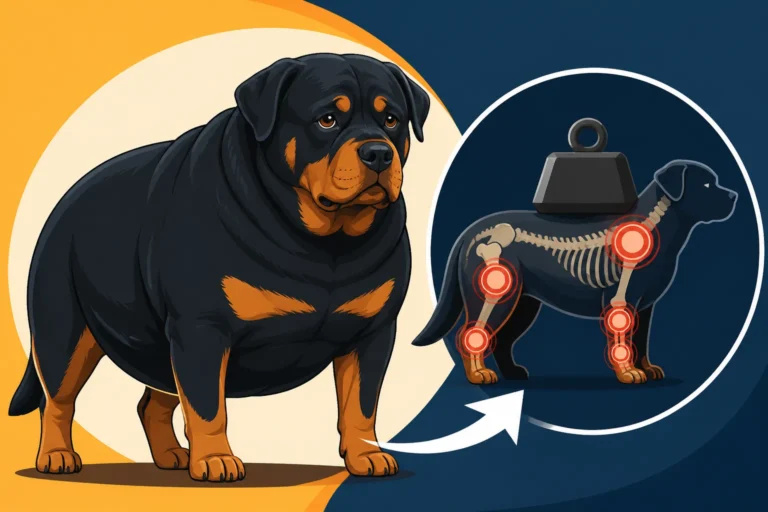
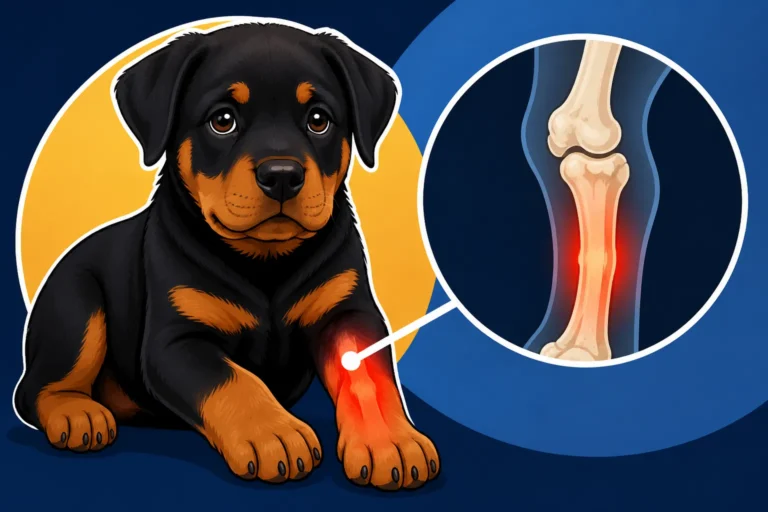
Rottweilers, like many large and giant breeds, have a well-documented genetic predisposition to developmental orthopedic diseases such as hip dysplasia and elbow dysplasia. These aren't conditions that just appear out of nowhere; they often have a strong inherited component. When we talk about hip dysplasia, we're referring to a malformation of the hip joint, where the ball and socket don't fit together perfectly. This can lead to excessive wear and tear, inflammation, and eventually debilitating arthritis. Similarly, elbow dysplasia is a complex condition involving abnormal development of the elbow joint, often leading to lameness and pain in the front legs.
It's a heavy burden to know our dogs might be genetically prone to such painful conditions. This is precisely why health screening and certifications are so vital, especially for responsible breeders. They aren't just checking a box; they're actively working to reduce the incidence of these diseases in future generations. Knowing a puppy's parents have been properly screened gives you, as an owner, a much better chance of bringing home a healthier dog.
The Lifelong Impact of Dysplasia
The impact of hip and elbow dysplasia extends far beyond a simple limp. In younger Rottweilers, you might notice subtle signs like a reluctance to jump, difficulty rising, or a change in gait, which could unfortunately be Rottweiler Hip Dysplasia Symptoms Before Age Two. As the disease progresses, often due to the cumulative stress on improperly formed joints, the cartilage wears down, bones rub against each other, and severe arthritis sets in. This can lead to chronic, excruciating pain that limits a dog's ability to walk, run, or even enjoy simple daily activities. Imagine your powerful Rottweiler, once so full of life, struggling to get up from a comfortable bed.
For older Rottweilers, these conditions can severely diminish their quality of life, making their senior years much more challenging than they need to be. The constant pain and inflammation can require lifelong medication, joint supplements, and sometimes even expensive surgical interventions. The financial strain of managing these conditions can be significant, with Rottweiler Surgery Costs From Bloat to Bone Cancer being a very real concern for many families. Beyond the financial aspect, it's the emotional toll of watching your beloved companion suffer that truly hits hard. Proactive health management and understanding the genetic risks are key to giving our Rottweilers the best chance at a pain-free, active life.
OFA Certification: The Established Standard
For decades, the Orthopedic Foundation for Animals (OFA) has been the cornerstone of canine orthopedic health screening in North America. It’s the standard many breeders and owners are most familiar with, and for good reason—it provides a clear, recognized system for evaluating hip and elbow health.
How the OFA Evaluation Works
The OFA evaluation primarily relies on a specific set of X-ray images, typically taken when a dog is at least 24 months old. This age requirement, outlined in detail in guides like Rottweiler Hips and Elbows and the 24-Month Rule, is crucial because it's believed that by two years of age, a dog's skeletal system is mature enough for an accurate assessment of permanent joint conformation. For hips, the dog is positioned on its back with its hind legs extended straight and parallel to each other. For elbows, specific lateral and craniocaudal views are taken, often discussed further in resources like Rottweiler Elbow X-Rays Taken at Twenty-Four Months. These X-rays are then submitted to OFA, where three independent, board-certified radiologists review them.
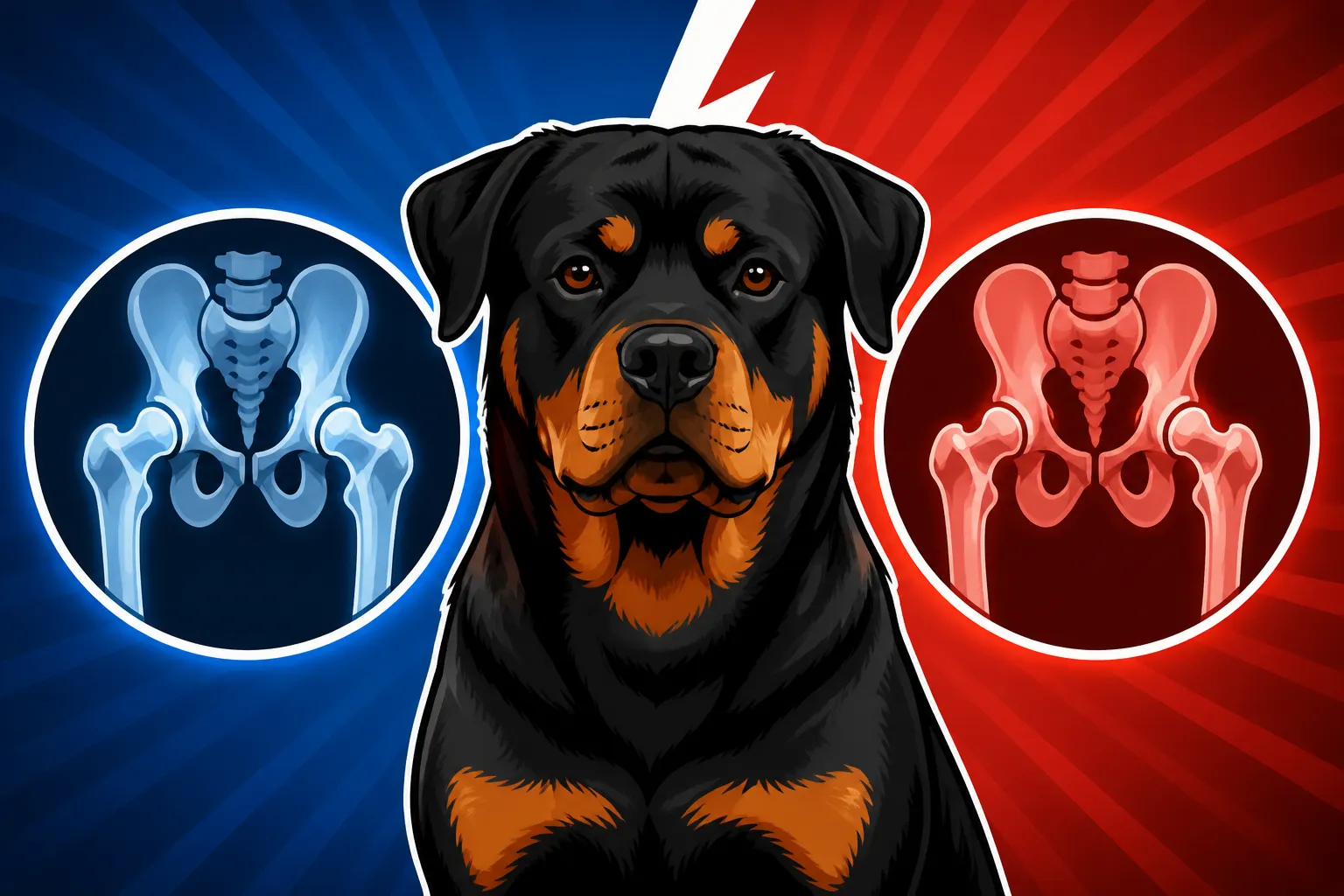
The radiologists assess the joints for signs of dysplasia, looking at various anatomical markers such as the depth of the acetabulum (hip socket), the fit of the femoral head (ball) into the socket, and the presence of any degenerative changes. For hips, a composite grade is given: Excellent, Good, Fair (all considered passing for breeding), Borderline, or Dysplastic (Mild, Moderate, Severe). For elbows, the grades are Normal (no evidence of dysplasia) or Grade I, II, or III (indicating varying degrees of dysplasia). While a "Fair" hip grade technically passes, breeders often strive for "Good" or "Excellent" to improve their lines, as even a "Fair" grade can sometimes lead to questions about optimal joint health, a topic explored in Why a Fair Hip Grade Still Passes for Rottweiler CHIC. The OFA results are then publicly recorded in their database, offering transparency for potential puppy buyers.
Pros and Cons of OFA for Rottweilers
Choosing to use OFA for your Rottweiler's health clearances comes with distinct advantages and some points to consider.
Pros of OFA for Rottweilers:
- Widespread Recognition and Acceptance: OFA is a long-established and widely respected organization. Its certifications are recognized by breed clubs, kennel clubs like the AKC, and breeders across North America. This broad acceptance means that an OFA certification carries significant weight when evaluating a Rottweiler's breeding potential or simply understanding its health history.
- Established Database: The public, searchable database maintained by OFA allows prospective puppy owners to research the health clearances of a puppy’s parents and even several generations back. This transparency is invaluable for making informed decisions and ensures breeders are accountable for their stock's health.
- Clear Grading System: The OFA's hip and elbow grading system is straightforward and easy to understand, providing a clear "pass" or "fail" for breeding purposes. This simplicity has contributed to its popularity and ease of use for many breeders.
- Accessibility: Many veterinary clinics are equipped and experienced in taking the specific OFA-required radiographs, making the procedure relatively accessible across various regions.
Cons of OFA for Rottweilers:
- Age Requirement: The primary drawback for some is the minimum age requirement of 24 months for final certification. While preliminary evaluations can be done earlier, official clearances only come at two years of age. This means a breeder must wait two years before definitively knowing a dog's hip and elbow status for breeding, delaying breeding programs and potentially increasing the cost of keeping a dog for that duration.
- Reliance on Static X-Rays: OFA evaluations are based on static, extended X-rays. While excellent for visualizing bone structure and degenerative changes, this method might not fully reveal the degree of hip joint laxity, which is a key precursor to hip dysplasia. A dog could have seemingly good bone structure but underlying joint looseness not fully captured by these views.
- Potential for Positional Influence: The accuracy of OFA evaluations can, to some extent, be influenced by the positioning of the dog during the X-ray. While strict guidelines are in place, improper positioning can sometimes lead to an inaccurate representation of the joint's true condition.
- Less Predictive for Early Laxity: Because it's generally done later and focuses on conformation, OFA may be less effective at identifying dogs with significant joint laxity at an early age. This is where other methods aim to provide an earlier, more predictive assessment.
- Healthy Paws Perspective: From an insurance standpoint, conditions like hip and elbow dysplasia are often considered pre-existing if signs or diagnoses occur before policy enrollment or during waiting periods. While OFA screening is a preventative measure for breeders, any existing lameness or diagnosis, regardless of parental clearances, would likely fall under pre-existing condition exclusions by providers such as Healthy Paws. This underscores the importance of obtaining all available health documentation from your breeder.
PennHIP Evaluation: A More Predictive Approach
While OFA has been the traditional standard, the PennHIP method offers a different, more quantitative perspective on hip health, focusing on the degree of joint laxity. It's quickly gaining traction among discerning breeders looking for even more precise data to guide their breeding decisions.
The Science Behind PennHIP
PennHIP, developed by the University of Pennsylvania Hip Improvement Program, is fundamentally different from OFA in its approach. Instead of assessing observable conformation at maturity, PennHIP directly measures hip laxity – essentially, how loose the hip joint is. This is crucial because joint laxity is widely recognized as the primary risk factor for developing hip dysplasia. A looser joint allows for more movement, leading to cartilage damage, inflammation, and eventual degenerative joint disease.
The PennHIP procedure involves three distinct X-ray views, typically performed under sedation to ensure proper muscle relaxation and accurate positioning:
- Distraction View: This is the most unique and critical view. A specialized device is used to gently push the femurs apart, distracting the hip joints and revealing the maximum amount of laxity. The resulting image allows for the calculation of the Distraction Index (DI).
- Compression View: In this view, the femurs are pushed into the hip sockets to show how tightly they fit without any distraction. This helps assess the "congruity" of the joint.
- Hip Extended View: Similar to the standard OFA view, this image provides information about the quality of the hip joint and the presence of any degenerative changes.
The Distraction Index (DI) is a numerical value (ranging from 0 to 1) calculated from the distraction view. A DI of 0 means no laxity (the joint is perfectly tight), while a DI of 1 means the femoral head is completely out of the socket. Lower DI values indicate tighter hips and a lower risk of hip dysplasia. Dogs with DIs closer to 0.3 are considered to have very tight hips, while those with DIs above 0.7 are at high risk. This objective, quantitative measurement makes PennHIP a powerful tool for predicting future hip health. Importantly, PennHIP can be performed on dogs as young as 16 weeks, providing breeders with crucial information much earlier than OFA. This early screening can also be a valuable piece of your dog's health history when considering pet insurance, as proactive health assessments can provide clarity on a dog's baseline joint health.
Advantages and Considerations of PennHIP for Rottweiler Owners and Breeders
PennHIP brings a modern, data-driven approach to evaluating canine hip health, offering several advantages, particularly for a breed like the Rottweiler.
Advantages of PennHIP:
- Earlier Predictability: One of the most significant advantages is the ability to perform PennHIP evaluations as early as 16 weeks of age. This means breeders can get a strong indication of a puppy's hip laxity much sooner, allowing them to make more informed decisions about future breeding stock without waiting until the dog is two years old. For owners, this also means knowing their puppy's potential risk earlier.
- More Objective and Quantitative: The Distraction Index (DI) provides an objective, numerical measure of hip laxity, rather than a subjective interpretation of conformation. This quantitative approach allows for more precise comparisons between dogs and offers a more scientific basis for selection.
- Superior for Identifying Laxity: PennHIP is specifically designed to measure joint laxity, which is the primary indicator of hip dysplasia risk. It can identify dogs that may appear normal on a standard extended view but still have significant laxity, and thus a higher risk of developing the disease.
- Enhances Breeding Programs: By allowing breeders to select for tighter hips (lower DI scores), PennHIP provides a powerful tool for accelerating genetic improvement within a breed, working to reduce the prevalence of hip dysplasia over generations.
- Provides a Breed-Specific Ranking: PennHIP provides percentile rankings for individual dogs within their breed, allowing breeders to see how their dog compares to the rest of the Rottweiler population. This is incredibly helpful for selection decisions.
Considerations of PennHIP:
- Requires Specialized Training and Equipment: Not all veterinary clinics are certified to perform PennHIP. It requires specific training for veterinarians and specialized equipment, meaning it might be less readily available or require travel to a certified practitioner.
- Generally More Expensive: Due to the specialized nature of the procedure, including sedation and specific equipment, PennHIP evaluations typically cost more than standard OFA radiographs.
- Sedation Requirement: While generally safe, sedation always carries a small degree of risk. It's a necessary component of the PennHIP procedure to ensure muscle relaxation and accurate measurements.
- Less Widespread Adoption (Historically): While growing, PennHIP has historically been less widely adopted than OFA in some circles, although this is changing rapidly among progressive breeders who prioritize objective data.
- Healthy Paws and Early Detection: While PennHIP offers early detection of laxity, pet insurance providers like Healthy Paws would still consider hip dysplasia a pre-existing condition if there are clinical signs or a diagnosis before or during the waiting period. However, for a proactive owner choosing a puppy from PennHIP-certified parents, it offers peace of mind about the genetic predisposition. This early insight allows owners to potentially implement preventative measures like appropriate exercise, as discussed in A Growing Rottweiler's Joints and Overexercise, and dietary management to support joint health from a young age.
Comparing OFA and PennHIP: Which is Best for Your Rottweiler?
When you’re faced with the decision of how to assess your Rottweiler's joint health, it's natural to wonder which method is superior. The truth is, both OFA and PennHIP offer valuable insights, but they do so in different ways and at different stages of a dog's life. Understanding their direct comparison will help you, whether you’re a breeder trying to improve your lines or an owner seeking the healthiest possible companion.
Direct Comparison of Methods and Results
Let’s lay out the key differences between these two prominent hip evaluation methods in a clear format:
| Feature | OFA (Orthopedic Foundation for Animals) | PennHIP (University of Pennsylvania Hip Improvement Program) |
|---|---|---|
| Primary Focus | Visual assessment of hip/elbow joint conformation and degenerative changes. | Objective, quantitative measurement of hip joint laxity (looseness). |
| Minimum Age for Final Eval | 24 months (preliminary at 4-23 months) | 16 weeks (can be performed earlier than OFA) |
| Number of Radiographs | 1-2 standard views (hips extended, elbow flexed) | 3 views (distraction, compression, hip extended) |
| Sedation Required | Generally not required, but often recommended for optimal positioning. | Required for accurate distraction index measurement. |
| Measurement Type | Subjective grading by radiologists (Excellent, Good, Fair, etc.) | Objective, quantitative Distraction Index (DI) from 0 to 1. |
| Predictiveness | Assesses current conformation; good for identifying existing dysplasia. | More predictive of future hip dysplasia risk due to direct laxity measurement. |
| Cost | Generally less expensive for the radiographs themselves. | Generally more expensive due to specialized equipment and sedation. |
| Availability | Widely available at most veterinary clinics. | Requires a PennHIP-certified veterinarian and specialized equipment. |
| Public Database | Yes, searchable by name/registration. | Yes, for certified veterinarians, providing breed average and percentile ranking. |
While OFA provides a snapshot of the hip joint's structural integrity at maturity, PennHIP delves deeper into the mechanical stability of the joint by measuring laxity, a factor that is evident much earlier in life. This difference is fundamental to how each test contributes to breeding decisions and owner understanding.
Making Informed Decisions for Breeding and Pet Ownership
The choice between OFA and PennHIP, or even the decision to use both, often comes down to individual priorities, resources, and the specific goals of a breeding program.
For Breeders:
Responsible Rottweiler breeders often go above and beyond, typically obtaining The Five Clearances a Rottweiler Breeder Must Have to ensure they are producing the healthiest puppies possible. For these dedicated individuals, PennHIP offers an invaluable tool for genetic improvement. By consistently selecting breeding dogs with tighter hips (lower DI scores), even if their OFA grade is "Good," breeders can actively reduce the incidence of hip dysplasia in their lines more effectively. Some elite breeders choose to do both OFA and PennHIP. This comprehensive approach provides the best of both worlds: the broad acceptance and conformation assessment of OFA, combined with the objective, early predictability of PennHIP. This dual screening offers the most robust data for making highly informed breeding decisions.
For Pet Owners:
Even if you're not planning to breed your Rottweiler, understanding these health certifications is absolutely vital when choosing a puppy. A reputable breeder will openly share the OFA and/or PennHIP results of their breeding stock. This transparency is a strong indicator of their commitment to health. Knowing your puppy's parents have been screened thoroughly gives you the best foundation for a healthy dog.
Beyond selecting a puppy, this knowledge helps you proactively manage your Rottweiler's health throughout its life. If your dog comes from parents with excellent hip scores, you might have less immediate concern, but it doesn't mean you can ignore joint health entirely. No test guarantees a dysplasia-free dog, as environmental factors also play a huge role. For instance, understanding Rottweiler Growth Plates and Why They Close So Late is critical; over-exercising a growing Rottweiler puppy can cause irreversible damage, regardless of genetics. Similarly, maintaining a lean body weight, providing a high-quality diet, and considering joint supplements, potentially starting as early as two years, as detailed in Joint Supplements Started Before a Rottweiler Turns Two, can significantly support joint health. For older dogs, this proactive care transitions into managing conditions like Managing Arthritis in an Older Rottweiler if they do arise.
When it comes to pet insurance, a provider like Healthy Paws is a fantastic consideration for major illnesses and accidents. While they would typically exclude conditions identified as "pre-existing" before your policy starts or during waiting periods, ensuring your puppy comes from health-tested parents and maintaining good records can still be beneficial. Early awareness of genetic predispositions, even if not a formal diagnosis, empowers you to take preventative steps and discuss potential risks with your vet, allowing you to be prepared for future health needs and expenses.
Ultimately, both OFA and PennHIP serve the critical purpose of providing information about a Rottweiler's joint health. By understanding their nuances, you become a more informed advocate for your dog's well-being, helping ensure a happier, more comfortable life for your cherished companion.
Disclaimer
The information provided in this guide is for general educational purposes only and should not be considered a substitute for professional veterinary advice. Always consult with a qualified veterinarian regarding your Rottweiler's specific health concerns and before making any decisions related to medical care, breeding, or training.