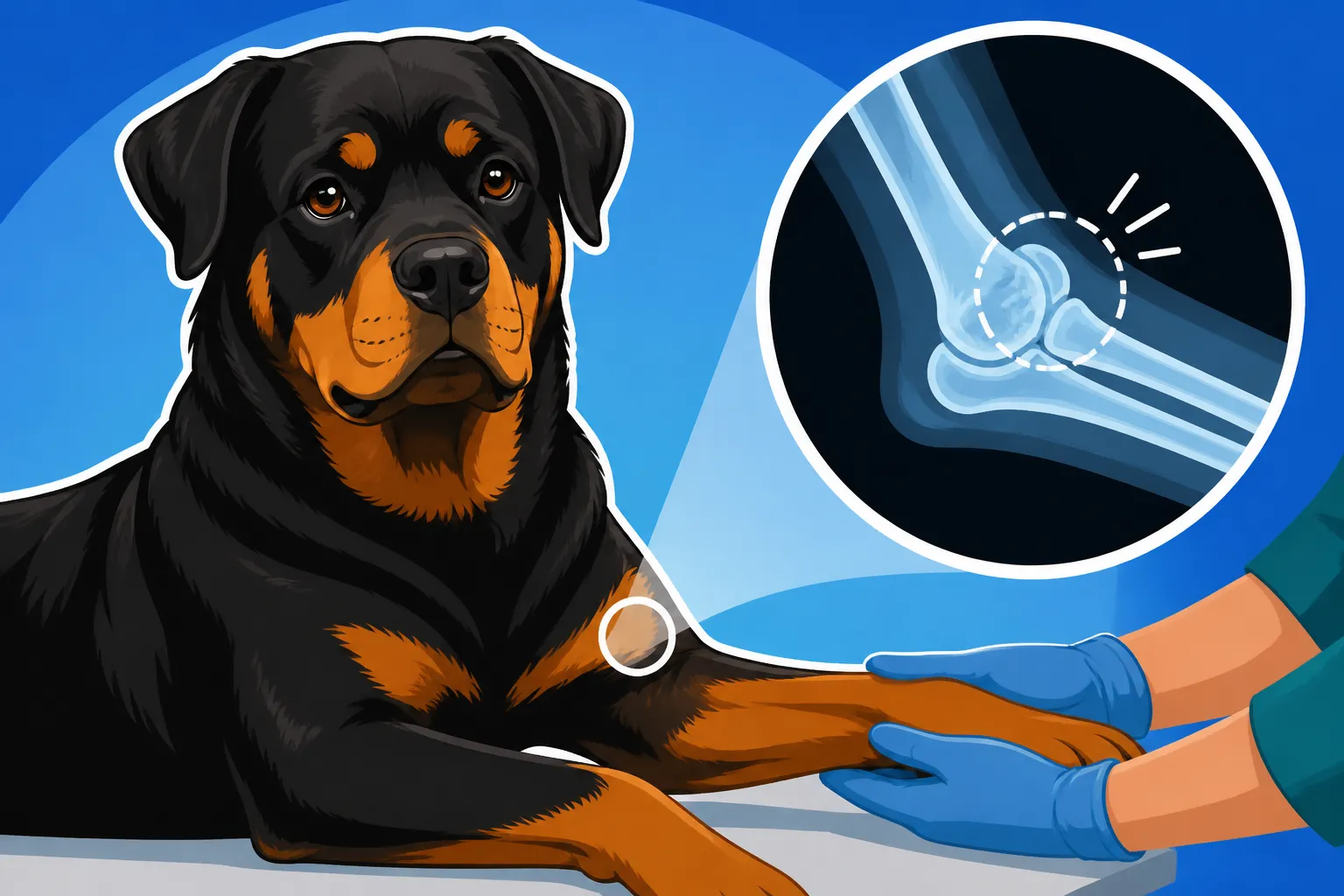
When a Rottweiler Can Have Its Elbow X-Rays
It’s a common worry for any Rottweiler parent: navigating the world of health clearances and making sure you’re doing everything right for your big, beautiful companion. You hear about hip and elbow problems, and suddenly you're wondering when exactly you should be getting those crucial X-rays done, especially for elbows, and what the right timing means for their future health and any official documentation. This guide is here to clear up that confusion, explaining the optimal time for Rottweiler elbow X-rays and why timing is so incredibly important for their health journey.
The Critical Age for Official Rottweiler Elbow X-Rays
When it comes to getting official health clearances for your Rottweiler's elbows, there's a specific age that most veterinary organizations, like the Orthopedic Foundation for Animals (OFA), strictly adhere to. This isn't just an arbitrary number; it's based on the developmental stages of a large breed dog's bones and joints. Getting these X-rays done at the right time is paramount for accurate diagnosis and for any potential breeding certifications.
Why the Twenty-Four Month Mark is Non-Negotiable
For a Rottweiler to receive an official OFA elbow grade, the X-rays must be taken at 24 months of age or older. This specific age is chosen because by two years old, a Rottweiler's growth plates should be fully closed, and their skeletal system has reached its mature state. Before this age, the bones are still developing, and any subtle signs of elbow dysplasia might not be fully evident or could even be misinterpreted due to ongoing growth. Imagine trying to assess the strength of a building while it's still under construction – it’s just not going to give you the most accurate picture.
Many prospective Rottweiler owners are keenly aware of the importance of these clearances, often asking breeders for documentation like "The Five Clearances a Rottweiler Breeder Must Have". The elbow clearance is a big one. Without X-rays taken at or after the 24-month mark, the OFA will only issue a preliminary rating, which isn't considered final for breeding purposes. This is why a reputable breeder will always wait for this milestone before submitting their dogs for final certification. It gives a true representation of the dog's joint health at skeletal maturity.
The Purpose of Elbow X-Rays Beyond Just Clearances
While official clearances are a significant driver for these X-rays, especially in breeding lines, the underlying purpose is always about understanding and managing a Rottweiler's health. Elbow dysplasia is a complex condition involving multiple possible abnormalities in the elbow joint, including ununited anconeal process, fragmented coronoid process, osteochondritis dissecans (OCD), and incongruity of the joint. These issues can cause pain, lameness, and eventually lead to debilitating arthritis.
Knowing the status of your Rottweiler's elbows allows you to make informed decisions about their exercise regimen, diet, and even future medical interventions if needed. Even if your Rottweiler isn't destined for the show ring or breeding program, understanding their joint health is a cornerstone of responsible ownership. Early identification of issues, even if not officially graded, can guide preventive care or lifestyle adjustments to minimize discomfort later in life.
Understanding Preliminary Versus Official X-Rays
It’s natural to want to know about your dog's health as early as possible, and sometimes, concerns arise long before that 24-month benchmark. This is where the distinction between preliminary and official X-rays becomes important. You might be seeing signs like front leg lameness in your young Rottweiler, and your vet recommends X-rays sooner.
The Value of Earlier, Preliminary X-Rays
Sometimes, a veterinarian might recommend preliminary elbow X-rays for a Rottweiler puppy or adolescent, perhaps if they are showing signs like limping, stiffness, or an unusual gait. These X-rays can be taken as early as four months of age, though typically they are done around 12 to 18 months if there's a clinical suspicion of a problem. These early radiographs are often performed to diagnose active lameness or discomfort, rather than for official breeding clearances.
For instance, if you notice your young Rottweiler puppy is experiencing shifting lameness and panosteitis, your vet might want to rule out other joint issues, including those related to elbow development. While these preliminary X-rays won't yield an official OFA grade, they can be incredibly valuable for early diagnosis and treatment planning. If a significant issue like severe elbow dysplasia is detected early, it can allow you to start managing the condition, which might include specific therapies, pain management, or even surgical intervention, sooner rather than later. This proactive approach can significantly impact your Rottweiler’s quality of life.
The Differences in Interpretation and Acceptance
The biggest difference lies in how these X-rays are interpreted and accepted. Preliminary X-rays are typically read by your local veterinarian or a local radiologist. Their findings are crucial for clinical management but are not published in public databases like the OFA. The OFA requires specific positioning and submission protocols for their official evaluations, and these are often more stringent than what might be done for a quick diagnostic X-ray.
When it comes to official clearances, the OFA requires three specific views of each elbow. These are then submitted to a panel of three board-certified veterinary radiologists who independently evaluate the joints for any signs of elbow dysplasia. Their consensus determines the final grade. This rigorous process ensures consistency and reliability in the certification, which is vital for maintaining breed health standards. If you have pet insurance, like Healthy Paws, understanding these timelines can be crucial. Many policies consider conditions diagnosed before enrollment or before official clearances as pre-existing, potentially impacting coverage for future treatments related to elbow dysplasia. Getting the official X-rays done at the right time with documented clear results can help protect against such issues down the line.
Here's a quick comparison of preliminary vs. official elbow X-rays:
| Feature | Preliminary Elbow X-rays | Official OFA Elbow X-rays |
|---|---|---|
| Minimum Age | As early as 4 months, typically 12-18 months | 24 months (2 years) or older |
| Purpose | Clinical diagnosis of lameness/pain, peace of mind | Breeding certification, public health database |
| Reading Veterinarian | Local vet, local radiologist | Panel of 3 board-certified OFA radiologists |
| Acceptance | For owner's information, clinical treatment | Accepted for breeding, public record |
| Cost | Generally lower than OFA submission fees | Typically higher due to multiple readings |
| Impact on Insurance | Can establish a pre-existing condition if diagnosed before policy/clearance | Provides official clear status for future claims |
Preparing Your Rottweiler for Elbow X-Rays
Getting a large dog like a Rottweiler to hold still for perfect X-ray positioning can be a challenge. Ensuring your dog is comfortable and cooperative is key, both for the quality of the radiographs and their overall experience at the vet. This often involves careful preparation and sometimes, sedation.
Why Sedation is Often Recommended
For clear and accurate elbow X-rays, especially the specific views required for OFA certification, your Rottweiler will need to be perfectly still and positioned precisely. This is rarely possible without some form of sedation or even general anesthesia, especially for a strong, potentially anxious, or wiggly dog. Sedation helps relax the muscles, allowing the veterinary team to manipulate the limbs into the correct positions without causing discomfort or stress to your dog. It also prevents movement artifact, which can blur the images and necessitate repeat X-rays, exposing your dog to more radiation.
Your veterinarian will discuss the best sedation protocol for your Rottweiler, considering their age, health, and temperament. They'll perform a pre-sedation physical exam and potentially blood work to ensure your dog is a good candidate. While the idea of sedating your beloved companion might cause some anxiety for you, remember it's done for their safety and to achieve the best diagnostic images possible. For an adult Rottweiler, the risks associated with anesthesia are generally very low in a healthy dog, but it's always good to discuss any concerns with your vet.
What to Expect on X-ray Day
On the day of the X-rays, you’ll likely be asked to fast your Rottweiler for several hours prior to the appointment, if sedation is planned. This reduces the risk of vomiting and aspiration during sedation. Once at the clinic, your vet team will administer the sedative. As your Rottweiler relaxes, they'll be carefully positioned on the X-ray table. For OFA elbows, the dog is usually placed on their back with their front legs extended straight out and rotated slightly inward to get the best view of the elbow joint components.
The actual X-ray process is quick once the dog is positioned. After the images are taken, your Rottweiler will be monitored as they recover from the sedation. They might be a bit groggy or wobbly for a few hours, so it's important to provide a quiet, comfortable space at home for them to rest. You'll typically receive preliminary feedback from your veterinarian on the day, and if submitted to OFA, those results will follow in a few weeks. Remember that getting these radiographs done is a key part of your Rottweiler's health care, similar to getting their Rottweiler Eye Exams Recertified Every Three Years or checking for Rottweiler Heart Disease and Subaortic Stenosis. Each step contributes to a full picture of their well-being.
The Long-Term Benefits of Timely Elbow X-Rays
Investing the time and resources into properly timed elbow X-rays for your Rottweiler offers significant long-term benefits, not just for potential breeding, but for the overall health and longevity of your beloved pet.
Informing Future Care and Management
A clear set of elbow X-rays at 24 months, confirming healthy joints, gives you immense peace of mind. It means your Rottweiler is less likely to develop severe, debilitating elbow problems that can seriously impact their mobility and quality of life. This knowledge empowers you to maintain an active lifestyle for them, knowing their joints are robust enough to handle appropriate exercise. This is especially important considering a Rottweiler's adult size and potential for conditions like Cruciate Tears in a Heavy Rottweiler.
Conversely, if the X-rays reveal signs of elbow dysplasia, even mild forms, this knowledge is invaluable. It allows you to work proactively with your veterinarian to implement management strategies. This could include dietary adjustments, joint supplements, physical therapy, weight management to reduce stress on the joints, and potentially even medications or surgical options if the condition is severe. Early intervention can often slow the progression of arthritis and keep your Rottweiler comfortable for much longer. Knowing these things can help you budget for potential needs, as Rottweiler Surgery Costs From Bloat to Bone Cancer can be substantial.
Contributing to Breed Health and Responsible Breeding
For those involved in breeding Rottweilers, official elbow clearances are an ethical imperative. By only breeding dogs with clear elbow certifications, you contribute to the ongoing effort to reduce the incidence of elbow dysplasia in the breed. This practice, combined with other crucial health clearances, helps ensure that puppies born from your lines have the best possible start to a long and healthy life.
Responsible breeders understand that every puppy they produce is a testament to their commitment to the breed's future. The commitment to proper health testing, including waiting until the correct age for official elbow X-rays, is a hallmark of an ethical breeder. It’s part of the comprehensive approach to health, alongside genetic tests like for JLPP and the Rottweiler DNA Test, that defines conscientious breeding practices.
Disclaimer
The information provided in this article is for educational purposes only and should not be considered a substitute for professional veterinary advice. Always consult with your veterinarian regarding your Rottweiler's specific health concerns and treatment options.