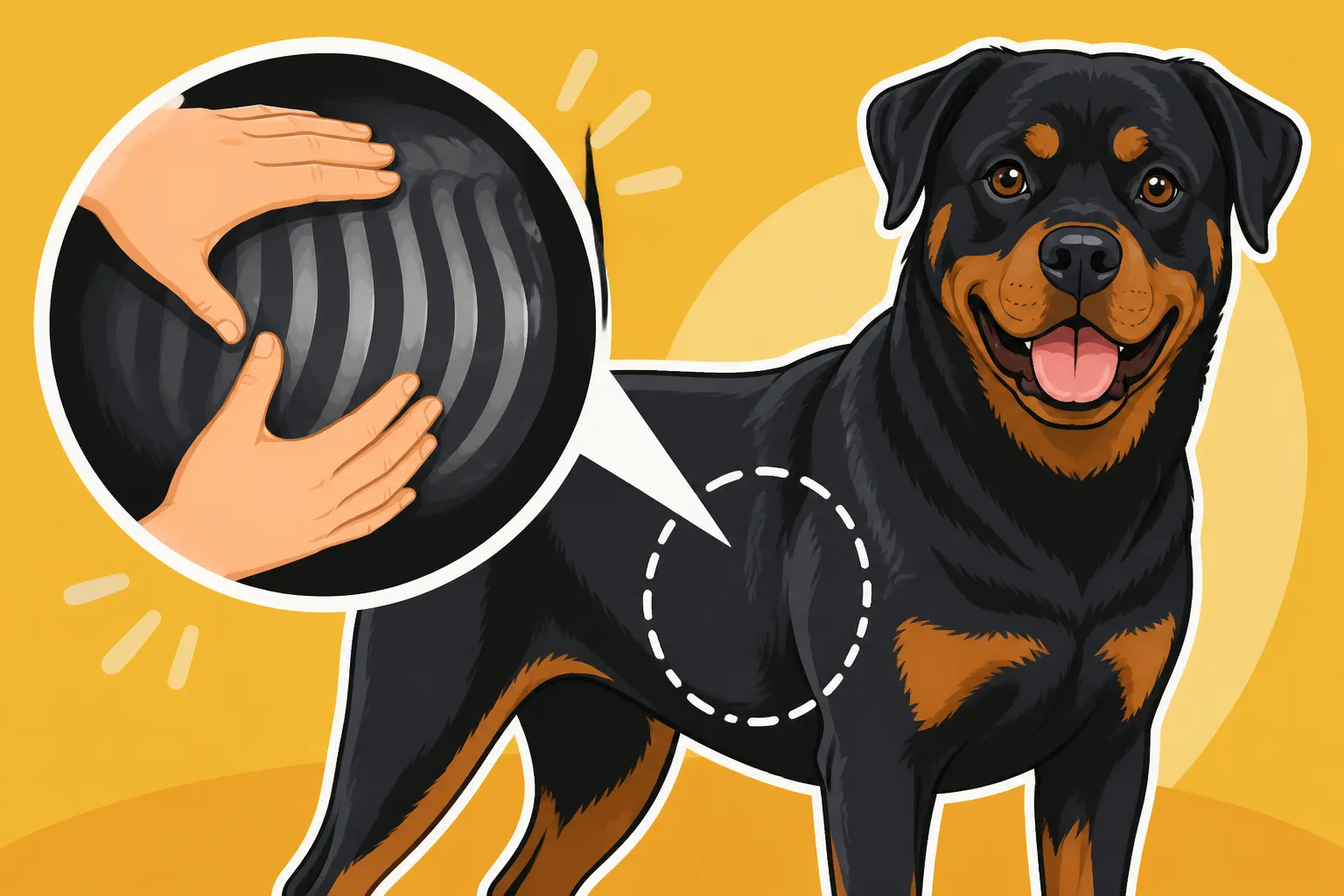
Feeling for Ribs Under a Rottweiler’s Coat
It can be surprisingly tricky to tell if your Rottweiler is at a healthy weight. Their dense, dark coat and naturally muscular, blocky build can hide a lot, making it easy to misjudge their body condition. This guide will walk you through the simple, hands-on method of feeling for your Rottweiler's ribs and other key areas so you can confidently assess their physical health and ensure they're not carrying extra pounds or, conversely, not getting enough.
Why Feeling for Ribs Is Essential for Rottweiler Health
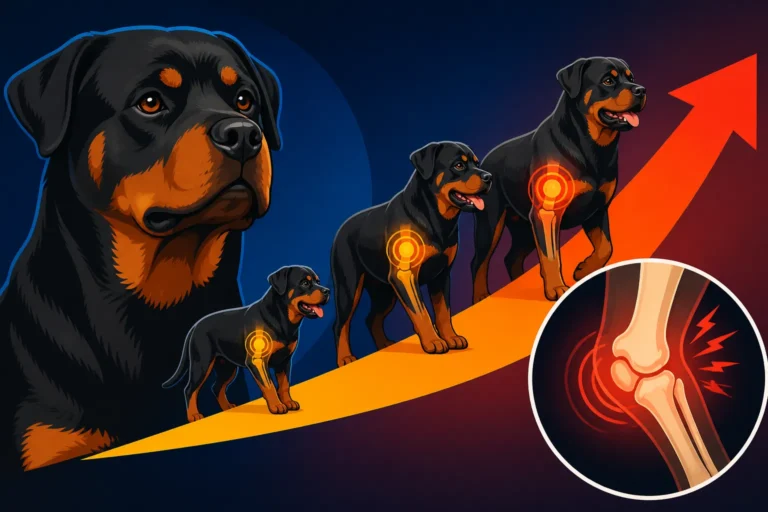
Rottweilers are big, powerful dogs, and their sheer size can sometimes mask changes in their body condition. Many owners mistakenly believe a "big dog" should feel hefty, but an ideal weight is crucial for their long-term health. Because they are prone to joint issues like Rottweiler Hip Dysplasia and the OFA Grade and Rottweiler Elbow Dysplasia and Front Leg Lameness, maintaining a lean body mass is paramount. Every extra pound on a Rottweiler's frame adds stress to those already vulnerable joints, accelerating wear and tear and potentially leading to painful arthritis much earlier in life.
It's not just about the joints, either. Carrying too much weight increases the risk for a host of other health problems, from Rottweiler Heart Disease and Subaortic Stenosis to diabetes and even certain cancers. On the flip side, being too thin can indicate underlying health problems or insufficient nutrition. A Rottweiler's coat, while beautiful, is also thick enough to hide visual cues, making a hands-on approach the most reliable method for monitoring their condition.
The Misconception of a "Hefty" Rottweiler
Many people, even experienced dog owners, tend to think of Rottweilers as naturally "stocky" or "heavy-boned." While they certainly are robust, this doesn't mean they should have a thick layer of fat covering their ribs or no discernible waist. In fact, the breed standard actually calls for a powerful, athletic build, not a bulky one. Their natural musculature is often confused with fat, especially around the neck and shoulders.
This common misconception can lead to overfeeding, as owners might interpret a healthy, lean Rottweiler as being "too thin" and thus increase their food intake. It’s an easy mistake to make when you’re used to seeing oversized dogs, or when you simply love to spoil your furry family member with extra treats. However, for a breed where Rottweiler Obesity and the Load It Adds is a serious concern, understanding the difference between muscle and fat is critical. Regular, gentle palpation is the only way to get past the visual bias and truly know what's going on underneath that coat.
The Impact of Hidden Weight Gain
A Rottweiler's short, dense double coat provides excellent insulation and protection, but it also acts like a cloak, making it difficult to visually spot subtle weight gain. You might not notice your dog slowly putting on a few extra pounds until it becomes a significant problem. By the time you can see a paunch or obvious rolls of fat, your Rottweiler might already be quite overweight.
This hidden weight gain exacerbates conditions prevalent in the breed. For instance, dogs carrying excess weight are at a higher risk for Bloat in a Rottweiler and the Hours That Matter because obesity can affect gut motility and overall abdominal health. Furthermore, if your Rottweiler needs surgery for a joint issue or another problem, an overweight condition makes anesthesia riskier and recovery more challenging. Being proactive about body condition assessment means you can catch weight creep early and make adjustments to diet or exercise before it impacts their quality of life.
The Hands-On Method for Checking Body Condition
Forget relying solely on what you see in the mirror or how "big" your Rottweiler feels when they lean into you (which, by the way, they often do!). The most accurate way to assess their body condition is by using your hands. This physical check, combined with a quick visual scan, gives you a much clearer picture of their health. It’s a simple process that takes just a few minutes, but it provides invaluable information.
Think of it as feeling for changes in contour and cushioning, rather than just raw weight. What you're looking for is that sweet spot between bony and padded. This tactile feedback is far more reliable than just looking at your dog, especially for a breed like the Rottweiler with its deceivingly dense coat. Make it a part of your regular grooming or petting routine, so it becomes second nature for both you and your dog.
How to Find and Feel the Ribs
To properly feel your Rottweiler's ribs, start by placing both palms flat on their side, just behind their front legs. You'll want to apply gentle but firm pressure, similar to how you'd feel for coins in your pocket. Slowly run your hands backward along their chest wall.
What you're aiming for is to feel each individual rib bone distinctively, without having to press hard. There should be a thin layer of muscle and fat over the ribs, offering a slight cushioning, but you should not have to "search" for them. If the ribs are prominent and easily visible without any pressure, your Rottweiler might be too thin. Conversely, if you have to press down firmly and still struggle to count individual ribs, or if they feel like they're under a thick, spongy layer, then your Rottweiler is likely carrying too much weight. This exercise helps you gauge exactly Where a Rottweiler's Waist Should Tuck In and how much padding is truly healthy.
Checking Other Key Areas
While the ribs are a primary indicator, other areas of your Rottweiler's body also offer clues about their condition. After checking the ribs, move your hands to their spine. Run your fingers along the top of their back, down the length of their spine. You should be able to feel the tops of their vertebrae, again, with a slight cushioning, but not sharply prominent or completely buried.
Next, feel their hips. Gently cup your hands over their hip bones at the base of their tail. Similar to the ribs and spine, you want to feel the hip bones with a thin layer of cover, not jutting out or disappearing under fat. Finally, step back and look at your Rottweiler from above and from the side. From above, you should see a discernible waist tucking in behind the ribs, similar to an hourglass shape, though less dramatic than on a leaner breed. From the side, their abdomen should tuck up slightly, not hang low. A hanging belly can be a sign of Rottweiler Obesity and the Load It Adds. Regularly checking these areas gives you a complete picture of their body condition score.
What an Ideal Body Condition Feels Like
Achieving and maintaining an ideal body condition for your Rottweiler is one of the best ways to promote their longevity and overall well-being. It’s a balance, a sweet spot where they are strong, athletic, and healthy without putting undue stress on their vital systems and joints. Knowing what this ideal feels like in your hands and looks like to your eyes empowers you to make informed decisions about their diet and exercise routine.
The goal isn't just to prevent obesity, but to ensure they have the optimal amount of muscle and a healthy fat distribution. This translates to better mobility, more energy, and a reduced risk of many common ailments. When you understand and can consistently assess this ideal, you become a powerful advocate for your Rottweiler's health, making small adjustments as needed to keep them in peak condition throughout their Rottweiler Lifespan and the Eight to Ten Year Average.
The Goldilocks Zone: Just Right
When your Rottweiler is in ideal body condition, feeling for their ribs is like running your fingers over a washboard covered with a thin, soft blanket. You can easily feel each individual rib without having to press hard, but they aren't sharply defined or visible to the naked eye. There's a subtle cushion, just enough to show healthy muscle and a minimal layer of fat.
Their spine should feel similar – you can follow the line of the vertebrae with your fingertips, but they shouldn't protrude like sharp knobs. Over the hips, the bones should be palpable but rounded, not angular. Visually, from above, you'll see a distinct waistline that narrows behind their rib cage before flaring slightly over the hips. From the side, their belly should be tucked up, not sagging, and their powerful chest should be prominent. This "just right" feeling means your Rottweiler has the perfect balance of muscle and fat for optimal health and activity.
Recognizing Underweight and Overweight
It's equally important to recognize when your Rottweiler is outside this ideal range. If your Rottweiler is underweight, their ribs, spine, and hip bones will be very prominent and easily visible, even without pressing. They might feel sharp to the touch, with little to no fat cushioning. Their waist will be severely tucked in, and their muscles might appear sunken. This could indicate a need for more food, a highly active lifestyle requiring more calories, or an underlying health issue that needs veterinary attention. Daily Calories for a Hundred Twenty Pound Rottweiler and Feeding a Hundred Twenty Pound Rottweiler for a Month can vary widely based on activity and metabolism, so consistent monitoring is key.
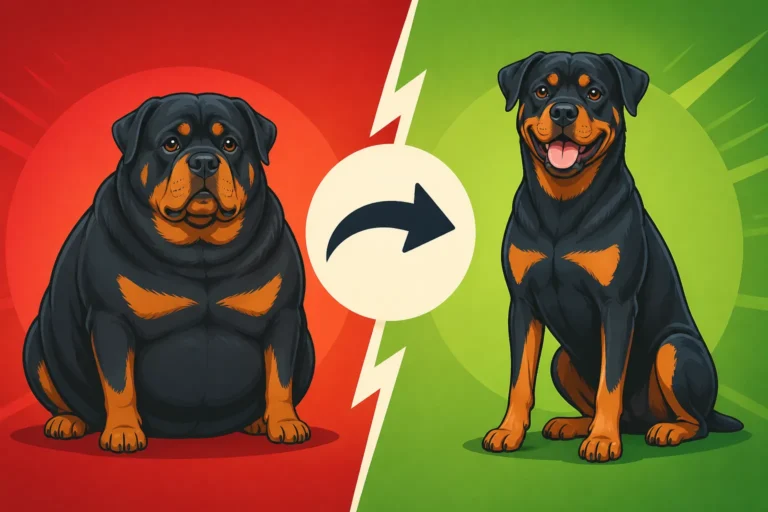
If your Rottweiler is overweight, you'll have to press down firmly to feel their ribs, and even then, they might feel like a continuous, indistinct mass rather than individual bones. The spine and hip bones will be difficult or impossible to feel. Visually, their waist will be absent, looking like a straight line from chest to tail, or even bulging out. Their belly might sag. This indicates a need to reduce calorie intake and increase exercise. Tools like Slow Feeder Bowls That Hold a Rottweiler Ration can help with portion control and slow down eating.
| Body Condition Score | Visual Cues (from side/above) | Ribs (hands-on feel) | General Appearance |
|---|---|---|---|
| Too Thin | Ribs, spine, hip bones visible | Easily seen and felt, no fat covering | Bony, muscles may be wasted |
| Ideal | Ribs not visible, waist tucked | Easily felt without heavy pressure, slight fat cover | Athletic, well-proportioned |
| Overweight | No waist, belly may sag | Hard to feel, covered by thick fat layer | Rounded, heavy, no definition |
| Obese | Abdomen distended, fat rolls | Cannot feel ribs, large fat deposits | Very heavy, unhealthy appearance |
Maintaining an Ideal Weight Through Diet and Activity
Once you've honed your ability to feel your Rottweiler's ribs and assess their body condition, the next step is to use that knowledge to maintain their optimal weight. This isn't a one-time fix; it's an ongoing commitment to their health through careful diet management and appropriate exercise. Remember, a Rottweiler's needs change as they age, with activity levels, and even with the seasons.
Think of it as a partnership between you and your dog, where you provide the right fuel and opportunities for activity, and they offer you years of happy, healthy companionship. Keeping them in that "goldilocks zone" is an investment in their future, helping to mitigate the impact of common breed-specific health challenges.
Adjusting Food Portions for Weight Management
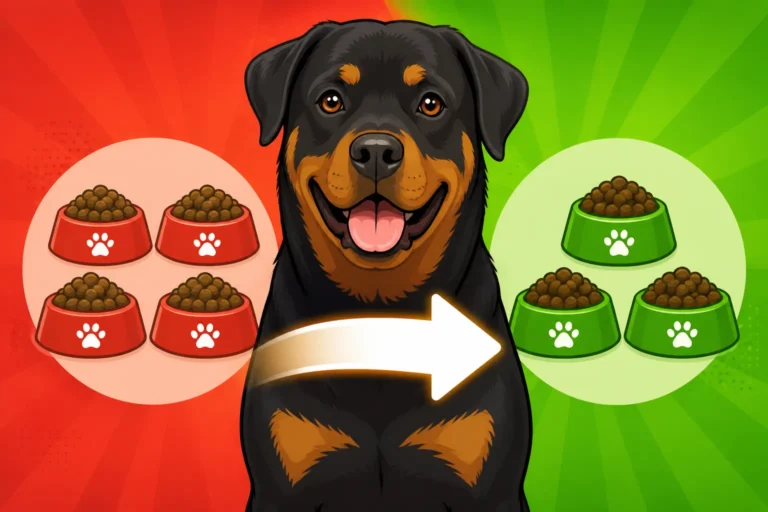
The most direct way to manage your Rottweiler's weight is through their diet. If you determine your dog is becoming a little too padded, the first step is often to slightly reduce their daily food portion. However, don't just drastically cut back, as that can lead to nutritional deficiencies or leave your dog feeling constantly hungry. Instead, aim for a gradual reduction, perhaps by 10-15% of their current intake. You can often find reputable large breed adult formulas through retailers like Chewy or on Amazon.
It’s crucial to measure your Rottweiler’s food accurately, preferably by weight using a kitchen scale, rather than by volume with a scoop, as scoop measurements can be inconsistent. If you feed fresh food, brands like Ollie often provide portion guidance based on your dog's ideal weight and activity level, making adjustments easier. Remember to also account for treats in their daily calorie budget; even small training treats add up for a dog the size of a Rottweiler. Splitting a Rottweiler's Ration Across the Day into two or three meals can also help manage hunger and potentially reduce the risk of bloat, rather than one large meal.
Tailoring Exercise to Body Condition and Age
Alongside diet, exercise plays a vital role in weight management and overall fitness. For an adult Rottweiler in ideal condition, regular, moderate exercise is key. This could include two good walks a day, maybe a game of fetch in a securely fenced yard, or even some low-impact swimming. How Far an Adult Rottweiler Should Walk depends on their individual fitness, but aim for quality over sheer distance.
If your Rottweiler is currently overweight, gradually increase their activity level. Don't go from couch potato to marathon runner overnight, as this can strain joints and cause injury, especially with extra weight on them. Start with shorter, slower walks and gradually increase the duration and intensity as their stamina improves. For Senior Rottweiler Mobility Decline, exercise needs to be gentle and adapted, focusing on maintaining muscle mass and joint flexibility without causing pain. Remember, a healthy Rottweiler is an active Rottweiler, and tailoring their exercise routine to their current body condition and age is just as important as managing their food bowl.
Disclaimer
This article is for general informational purposes only and does not constitute professional advice. Laws, prices and regulations vary by location and change over time. Consult a qualified professional for guidance on your specific situation.