Home Cooking for a Rottweiler and the Calcium Trap
The desire to give our beloved Rottweilers the absolute best often leads us down the path of home cooking. You want to control every ingredient, avoid potential allergens, and feel like you're providing superior nutrition, but without a deep understanding of canine dietary science, especially for a large, rapidly growing breed like the Rottweiler, you can inadvertently cause severe, long-term health problems. This guide will walk you through the complexities of home cooking for your Rottie, specifically highlighting the critical "calcium trap" and how to avoid making serious nutritional mistakes that could impact their health and lifespan.
The Allure and Dangers of Home Cooking for Your Rottweiler
It's completely understandable why so many of us contemplate or even dive headfirst into home cooking for our dogs. We love them like family, and we want to nourish them with fresh, wholesome ingredients, just as we strive to do for ourselves. However, while the intentions are pure, the science behind canine nutrition is far more intricate than most realize, and getting it wrong can have dire consequences, especially for a large, heavy-boned breed.
Why Owners Consider Home Cooking
Many owners turn to home cooking for a variety of compelling reasons. Perhaps their Rottweiler has sensitive digestion, chronic allergies, or a veterinary condition that requires a highly specific diet. Others might be wary of commercial pet food recalls, perceived low-quality ingredients, or simply want to avoid preservatives and artificial additives. The idea of knowing exactly what goes into your dog's bowl—fresh chicken, rice, vegetables—feels inherently healthier and more loving. There's a certain satisfaction in preparing a meal you know is made with care, believing it offers a superior nutritional profile to something mass-produced. For a breed with known sensitivities, like a Rottweiler prone to certain cancers or joint issues, it's easy to fall into the belief that a perfectly tailored, home-prepared diet could offer a preventive edge.
The Hidden Complexity of Canine Nutrition
However, canine nutrition is a science, not just an art. Unlike humans, dogs have very specific dietary requirements for a balanced diet, and these needs vary significantly based on age, activity level, and breed size. For a Rottweiler, whose bones and joints are under immense pressure due to their rapid growth and sheer size, getting the mineral balance right is absolutely critical. It's not enough to simply cook some meat and vegetables and call it a day. A truly balanced diet for a dog requires the correct ratios of macronutrients (protein, fat, carbohydrates), a full spectrum of vitamins, and, most importantly, precise levels and ratios of minerals like calcium and phosphorus. Without this intricate balance, you risk nutrient deficiencies or excesses that can lead to serious health problems, particularly skeletal issues in growing puppies. What seems wholesome to us might be dangerously incomplete or imbalanced for our canine companions.
The Critical "Calcium Trap" for Rottweilers
This is where the real danger of unguided home cooking lies, particularly for a breed like the Rottweiler. Calcium and phosphorus are like the yin and yang of bone health, and getting their balance wrong can derail a Rottweiler's entire skeletal development, leading to lifelong pain and mobility issues. Many well-meaning owners stumble into this "calcium trap" because what seems intuitive for human diets simply doesn't translate to dogs, especially those with such specific growth requirements.
Why Calcium and Phosphorus are So Important and Dangerous for Rottweilers
Rottweilers are large, powerful dogs, and their skeletal structure needs to support a significant amount of weight. During their extensive growth period, which can last up to 18-24 months, their bones and joints undergo rapid development. This period is incredibly delicate, and a proper balance of calcium and phosphorus is paramount. Calcium is vital for strong bones, teeth, nerve transmission, and muscle function, while phosphorus also plays a key role in bone formation, energy metabolism, and cell repair. These two minerals don't just need to be present; they need to be in a very specific ratio, typically between 1.1:1 and 1.5:1 (calcium to phosphorus). Large and giant breeds like Rottweilers are particularly susceptible to problems if this balance is off, as their growth plates remain open longer, making them vulnerable to developmental orthopedic diseases. We've talked about Rottweiler Growth Plates and Why They Close So Late before, and it’s a crucial concept to grasp when considering their diet. Getting the calcium wrong can lead to serious and irreversible damage.
The Risks of Imbalance: Too Much, Too Little, or Incorrect Ratio
The "calcium trap" is insidious because both too much and too little calcium are dangerous, and an incorrect ratio is just as bad.
If a growing Rottweiler puppy receives too much calcium, which is surprisingly common in homemade diets supplemented incorrectly, it can interfere with the normal development of cartilage and bone. This leads to conditions like osteochondrosis (OCD), hypertrophic osteodystrophy (HOD), and other forms of Developmental Bone Disease in a Fast-Grown Rottweiler. These are incredibly painful conditions that can cause lameness, joint deformities, and often require expensive surgeries or lifelong pain management. The body tries to get rid of the excess calcium, but in doing so, it can cause mineral deposits in soft tissues and disrupt the absorption of other vital nutrients like zinc and iron. Owners often mistakenly believe "more is better" for strong bones, but for a growing Rottweiler, it's actually detrimental.
Conversely, if a diet provides too little calcium, a puppy can develop rickets, where bones fail to mineralize properly, leading to soft, weak, and easily fractured bones. This is less common in modern home-cooked diets but still a risk if owners rely solely on lean meats and vegetables without a proper calcium source.
Most critically, the ratio of calcium to phosphorus is vital. If phosphorus levels are too high relative to calcium, the body will pull calcium from the bones to try and re-establish balance in the bloodstream. This effectively demineralizes the skeleton, leaving it fragile and brittle, a condition known as secondary nutritional hyperparathyroidism. This is often the case when a diet consists largely of muscle meat (high in phosphorus) without an adequate, balanced calcium source. This complex interplay is why simply guessing or following anecdotal recipes is so incredibly risky. It's a key reason why we emphasize Rottweiler Calcium Limits and Why Supplements Hurt when we talk about growth.
Why Just Adding Bones Isn't the Answer
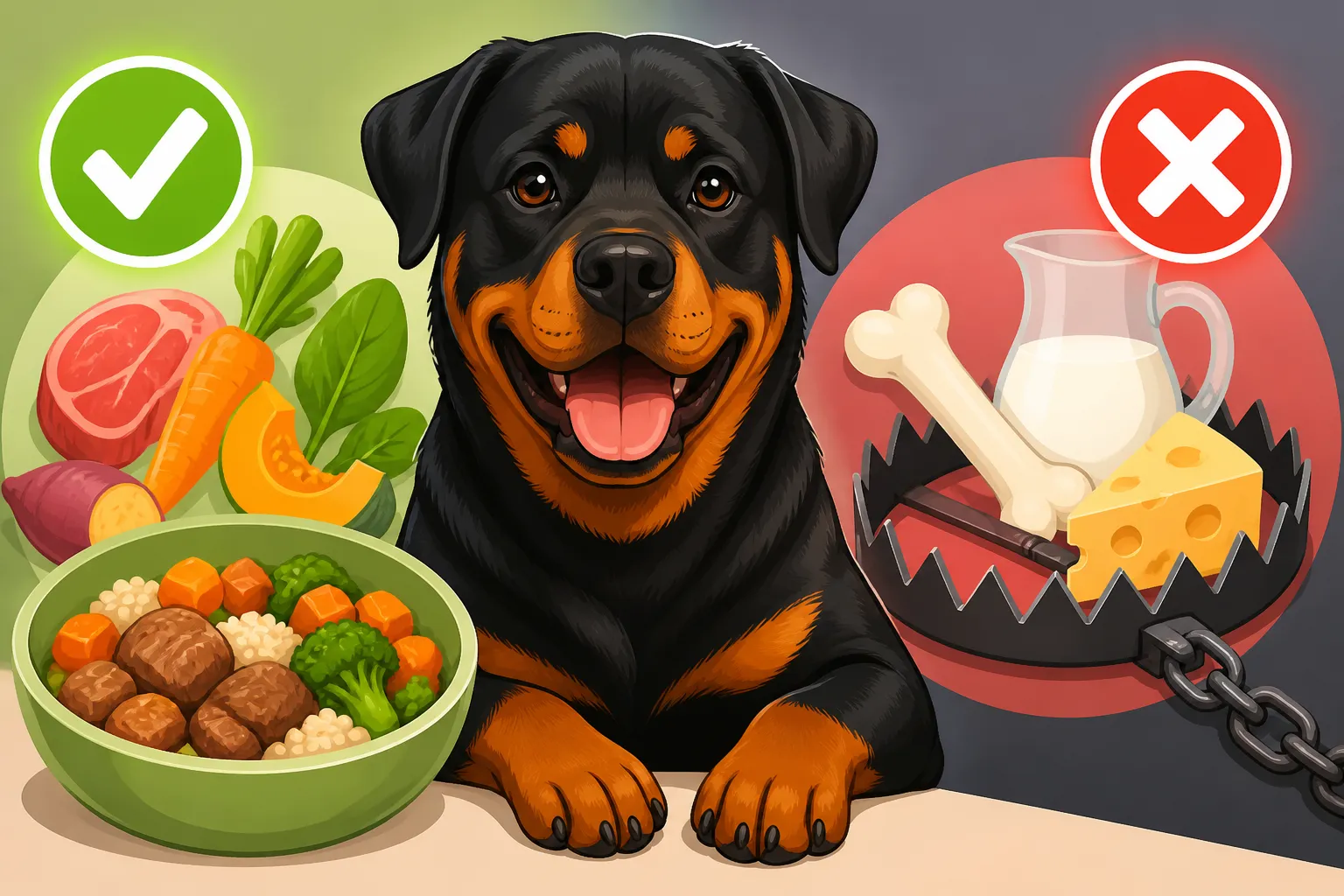
Some might think, "Well, dogs eat bones in the wild, so I'll just add bones to the home-cooked diet!" This is another part of the calcium trap, and it's fraught with danger. While some raw feeders include specific types of raw, recreational bones under strict supervision, simply tossing cooked or raw bones into your Rottweiler's meal is not a safe or nutritionally sound solution for calcium. Cooked bones become brittle and can splinter, causing choking, internal punctures, or blockages in the digestive tract, which are life-threatening emergencies. Raw bones, while less likely to splinter, still pose risks of broken teeth, choking, and bacterial contamination.
Furthermore, even if ground into a meal, bones alone don't provide the precise calcium-to-phosphorus ratio needed for a balanced diet. The mineral content can vary wildly depending on the type of bone, the animal it came from, and even the specific part of the bone. Relying on bones without precise measurement and a comprehensive nutritional analysis is just another form of guesswork, which, for a rapidly growing Rottweiler, is an unacceptable risk. You're aiming for a consistent, scientifically formulated mineral profile, not a variable approximation.
Here's a quick look at some common home-cooking pitfalls related to calcium and phosphorus:
| Common Mistake | Description | Potential Impact on Rottweiler Health |
|---|---|---|
| Too Much Calcium | Over-supplementing with calcium or feeding excessive calcium-rich ingredients without professional guidance. | Developmental orthopedic diseases (OCD, HOD), premature growth plate closure, impaired nutrient absorption (e.g., zinc deficiency), joint pain, lameness, irreversible skeletal damage. |
| Too Little Calcium | Diet primarily composed of lean meat and grains/vegetables without an adequate, balanced calcium source. | Rickets (soft bones), bone deformities, pathological fractures, secondary nutritional hyperparathyroidism (body pulls calcium from bones), weakened bone structure, lethargy. |
| Incorrect Calcium:Phosphorus Ratio | High phosphorus (e.g., lots of muscle meat) relative to calcium, or vice versa, without balance. | Weakened bones (from calcium being pulled out to balance blood levels), joint problems, kidney stress, and all the issues associated with either too much or too little of either mineral. This is often the most dangerous and subtle imbalance. |
| Relying on Cooked Bones | Feeding bones that have been cooked as a calcium source. | Choking, broken teeth, splintering bone fragments causing internal lacerations or blockages, gastrointestinal upset, surgical emergencies. |
| Guessing with Raw Bones | Feeding raw bones or bone meal without precise measurement or nutritional analysis of the overall diet. | Inconsistent mineral intake, potential for bacterial contamination, dental fractures, choking hazards, and an unreliable calcium source that doesn't guarantee a balanced diet. |
| Using Human Supplements Without Guidance | Administering calcium or vitamin D supplements intended for humans. | Human supplements are often too potent for dogs, especially large breeds, leading to rapid calcium overdose and toxicity, or inappropriate vitamin D levels that interfere with calcium metabolism. |
Crafting a Nutritionally Complete Home-Cooked Diet
Given the complexities, especially the calcium trap, you might feel overwhelmed. But don't despair if your heart is set on home cooking. It can be done, but it requires dedication, education, and, most critically, professional help. This isn't a project for casual experimentation; it's a commitment to your Rottweiler's long-term health.
The Non-Negotiable Need for Veterinary Nutritionist Consultation
Let me be absolutely clear: if you are serious about home cooking for your Rottweiler, especially a growing puppy, consulting a board-certified veterinary nutritionist is not optional; it is essential. This is not the same as asking your regular vet for a recipe, though your vet is a great first point of contact and can refer you to a specialist. A veterinary nutritionist has specialized training in animal nutrition and can formulate a diet that is precisely balanced for your individual dog's needs, taking into account their age, weight, activity level, and any underlying health conditions. They use sophisticated software and scientific knowledge to ensure every nutrient, including that tricky calcium and phosphorus balance, is exactly right. They will provide you with specific recipes, exact ingredient quantities, and appropriate supplementation guidance. Just as you'd trust a breeder to provide The Five Clearances a Rottweiler Breeder Must Have for a healthy puppy, you need to trust a professional to provide a healthy diet plan.
Trying to formulate a diet yourself from books or online recipes without professional input is essentially gambling with your dog's health. Most general recipes you find lack the critical detail and scientific backing required for long-term health, particularly for a large, growing breed.
Essential Components of a Balanced Diet Beyond Meat
A balanced home-cooked diet for a Rottweiler goes far beyond just meat. While protein is a crucial building block, your dog also needs:
- Fats: Essential for energy, healthy skin and coat, and absorption of fat-soluble vitamins (A, D, E, K). Sources like salmon oil, flaxseed oil, or animal fats are important.
- Carbohydrates: Provide energy and fiber. This could include cooked grains like rice, oats, or quinoa, or starchy vegetables like sweet potatoes and pumpkin.
- Fiber: Crucial for digestive health. Vegetables like green beans, carrots, and leafy greens contribute fiber.
- Vitamins and Minerals: This is where it gets really complicated. Beyond calcium and phosphorus, dogs need specific amounts of vitamins A, D, E, and K, B vitamins, and trace minerals like zinc, iron, copper, manganese, and selenium. These are often missing or out of balance in homemade diets if not specifically added through carefully selected ingredients and targeted supplements. For example, Reading a Large Breed Puppy Food Label shows how many nutrients are precisely added to commercial foods.
A veterinary nutritionist will help you incorporate these elements in the right proportions, ensuring your Rottweiler gets everything they need to thrive.
Sourcing Ingredients and Supplements Safely
Once you have a vetted recipe from a veterinary nutritionist, sourcing ingredients becomes your next task. Always strive for human-grade ingredients where possible, as they are subject to higher quality control standards. This includes lean meats (chicken, turkey, beef), organ meats (liver, heart, kidney for nutrient density), cooked grains, and a variety of fresh vegetables. You'll need to store these ingredients properly to maintain freshness and prevent spoilage.
When it comes to supplements, never use human supplements or guess at dosages. Your vet nutritionist will prescribe specific canine-formulated supplements, often a vitamin and mineral mix that fills in the gaps that even a well-intentioned home-cooked meal might miss. These specialized supplements ensure the correct balance of micronutrients without overdosing on specific vitamins or minerals. You can often find reputable canine-specific supplements recommended by your nutritionist through online retailers like Amazon, ensuring you get the exact product needed. Be prepared to purchase a kitchen scale for precise measurements, as even small deviations in ingredients can throw off the delicate balance of a home-cooked diet over time.
Practical Considerations and Alternatives
While home cooking can be rewarding, it's not for everyone, and it's essential to be realistic about the commitment involved. Thankfully, there are excellent alternatives that offer the benefits of fresh, high-quality food without the immense nutritional complexities of DIY preparation.
Time Commitment and Cost Realities
Let's be honest: preparing every single meal for a large dog like a Rottweiler is a significant time commitment. You'll spend hours weekly planning, shopping, chopping, cooking, and portioning. It's like having another member of the family to cook for, except this one has highly specific dietary needs that, if neglected, could lead to serious health issues. This isn't just throwing some leftovers into a bowl; it's a careful, measured process.
Beyond time, the cost can also be substantial. Quality human-grade ingredients aren't cheap, especially when buying in bulk to feed a hundred-pound dog. Factor in the cost of supplements, and you might find that the financial outlay is comparable to, or even exceeds, premium commercial foods. It's a valid choice, but it's important to go into it with open eyes about both the time and monetary investment required.
Commercial Fresh Food Options as a Middle Ground
For many Rottweiler owners, a fantastic middle ground exists in the form of commercial fresh food delivery services or high-quality pre-prepared raw diets. Companies like Ollie, for instance, offer nutritionally complete and balanced meals designed by veterinary nutritionists, delivered right to your door. These services take all the guesswork out of nutrient balancing, ensuring your Rottweiler gets a wholesome, fresh diet without you having to become a canine nutritionist yourself. They formulate their recipes to meet AAFCO standards for complete and balanced nutrition, often with options for large breeds and specific health concerns.
You might also find high-quality, pre-made raw or gently cooked meals at specialized pet stores or online retailers like Chewy. The key here is to choose brands that explicitly state their recipes are formulated by board-certified veterinary nutritionists and meet AAFCO nutritional guidelines for your dog's life stage (e.g., large breed puppy, adult maintenance). This offers the control over ingredients that many owners seek, along with the convenience and peace of mind that comes from knowing the food is nutritionally complete and safe. These options can be a great way to avoid the calcium trap while still feeding a fresh diet. We've discussed Why a Rottweiler Puppy Needs Large Breed Formula for commercial foods, and the same principles apply to fresh food services: ensure it's tailored for large breeds.
Monitoring Your Rottweiler's Health on a Home-Cooked Diet
Whether you choose a fully DIY home-cooked diet (with professional guidance!) or a commercial fresh food option, continuous monitoring of your Rottweiler's health is crucial. Regular veterinary check-ups are more important than ever. Your vet will want to perform routine bloodwork to monitor organ function and check for any nutrient imbalances that might not be immediately obvious. They'll also assess your Rottweiler's body condition score to ensure they are maintaining a healthy weight, which is particularly vital for a breed prone to joint issues. After all, Rottweiler Hip Dysplasia and the OFA Grade and Rottweiler Obesity and the Load It Adds are significant concerns for this breed, and diet plays a massive role.
Keep a close eye on your Rottweiler's energy levels, coat quality, stool consistency, and any changes in appetite or behavior. Any unusual signs should prompt a call to your vet and, if applicable, your veterinary nutritionist. Being proactive and observant will help catch any potential nutritional deficiencies or excesses early, allowing for adjustments before they become serious health problems. It's an ongoing partnership between you, your dog, and your trusted veterinary team.
Disclaimer
This article is for general informational purposes only and does not constitute professional advice. Laws, prices and regulations vary by location and change over time. Consult a qualified professional for guidance on your specific situation.