Rottweiler Markings That Fault in the Ring
Navigating the world of Rottweiler breed standards can feel like deciphering a complex code, especially when you're trying to understand what makes a champion-quality dog versus a beloved pet. For many aspiring breeders or show enthusiasts, the specific nuances of Rottweiler markings are a source of confusion, often leading to disappointment in the show ring. This guide aims to pull back the curtain on those critical details, explaining exactly which markings are considered faults and why they matter in the eyes of the breed standard.
Understanding the Rottweiler Standard for Markings
When you look at a truly exemplary Rottweiler, there’s an immediate impression of power, nobility, and a distinct color pattern that is instantly recognizable. The Rottweiler is, by definition, a black dog with clearly defined rust or mahogany markings. This isn't just a preference; it's a fundamental part of their identity as laid out in the breed standard. Every line and curve of their markings has a purpose in defining the ideal specimen. It’s a very specific look, and deviations, even small ones, are noted by judges.
The Ideal Black and Rust: What Judges Look For
The ideal Rottweiler coat is jet black, a deep, rich color that covers the vast majority of the dog's body. This isn't a charcoal black or a faded black; it should be as dark and intense as possible. Against this stark black, the rust or mahogany markings provide a striking contrast. These markings should be a clear, rich tan, ranging from a deep rust to a vibrant mahogany. They should never be faded, pale, or have any hint of black hairs mixed in, which breeders often call "sooty" markings. Think of it as a meticulously painted canvas, where the black is the dominant, bold background, and the rust is the precise, vibrant detail work.
Judges are looking for uniformity and intensity in these markings. If you have a dog with beautiful, deep rust on its cheeks but a paler tan on its chest, that inconsistency will be noted as a less than ideal presentation. The color should be consistent across all marked areas, showing no patchiness or fading. This consistency speaks to the dog's overall genetic quality and adherence to the breed's visual requirements. It's a hallmark of a well-bred animal, where attention has been paid to every detail, right down to the color of its points. For a deeper dive into this, you might find our article on The Black and Rust Rottweiler Coat enlightening.
Specific Placement and Definition of Markings
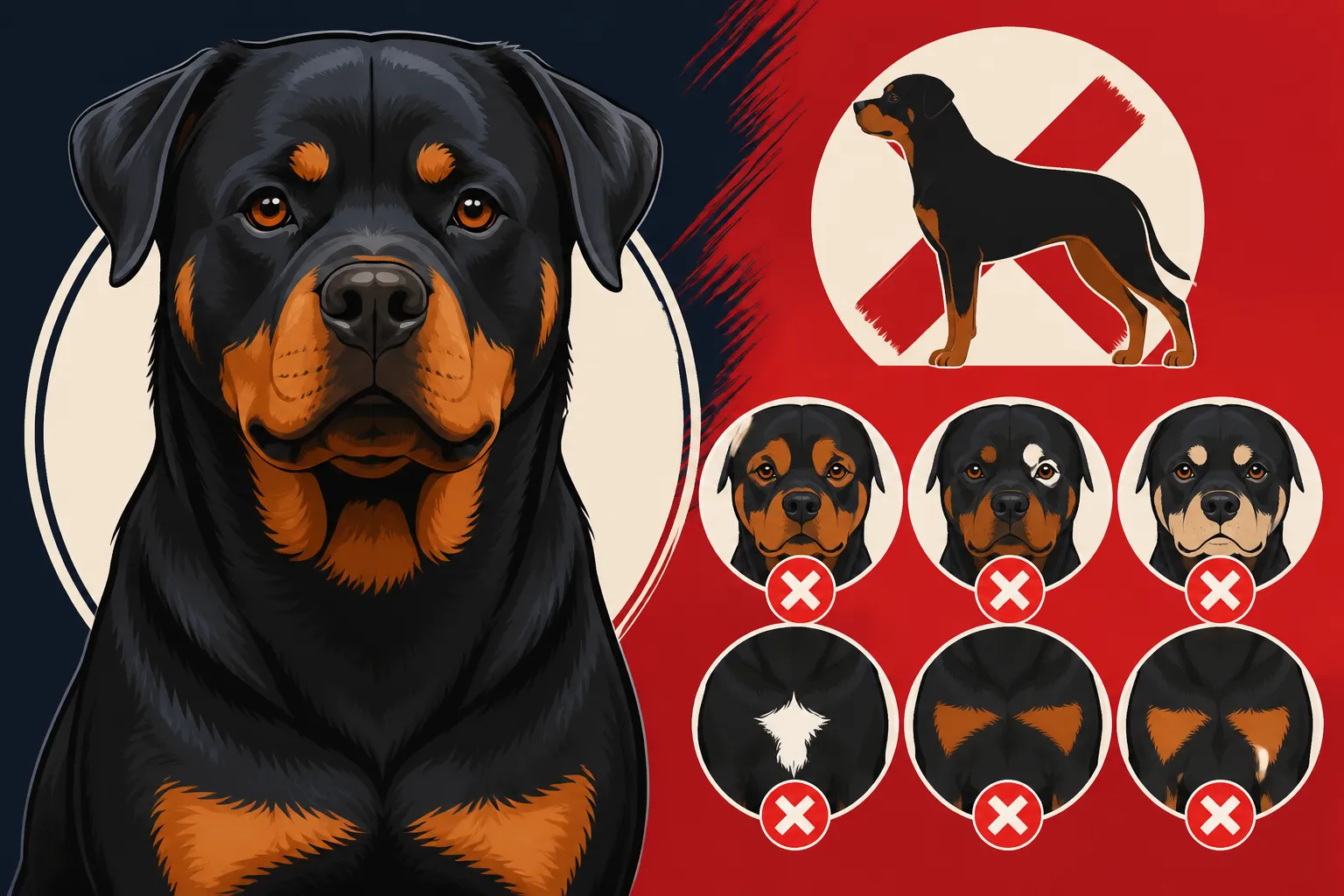
The placement of these rust markings is just as crucial as their color and intensity. The breed standard dictates very specific locations for these markings, and any deviation in their presence, absence, or spread is considered a fault. Generally, you'll find rust markings on the cheeks, over the eyes (often called "pips" or "eyebrows"), on the muzzle (but not extending onto the bridge of the nose), and on the throat.
Moving down the dog's body, these markings should appear on the chest in two distinct triangles or strips, never forming one solid, unbroken band across the entire chest. They are also found on the legs, specifically on the lower portions, inner thighs, and front of the forelegs, and on the hocks. Around the base of the tail, there should be some rust coloring, and on the toes, often referred to as "pencilings." The key here is definition – the demarcation line between the black and the rust should be clear and sharp, not blurry or smudged. A perfectly placed, sharply defined marking indicates adherence to the standard and contributes significantly to the Rottweiler’s distinctive appearance.
Common Faults in Rottweiler Markings
While the ideal is clear, real-world Rottweilers often present with variations that, while not always disqualifying, are certainly considered faults in the competitive show ring. These are the nuances that can prevent an otherwise beautiful dog from placing highly. Understanding these common faults helps breeders make informed decisions and helps owners appreciate the subtle differences in their dogs.
Overly Large or Undefined Rust Markings
One of the most frequent faults seen in Rottweiler markings is when the rust patches are simply too large or bleed into areas where they shouldn't. The standard calls for defined markings, meaning they should be distinct points of color, not vast expanses. For instance, if the rust on the chest forms a wide, unbroken band that stretches too far up the dog's sides, that's considered overly large. Similarly, if the rust on the muzzle extends too high onto the bridge of the nose, it detracts from the classic Rottweiler face.
Another aspect of this is the lack of crisp definition. Instead of a sharp line where black meets rust, some dogs have a gradient or smudged appearance, especially where the markings meet the black coat. This lack of clear demarcation indicates a deviation from the desired aesthetic. It implies a less precise genetic expression of the coat pattern, which can lower a dog's score in judging. Our post on Rottweiler Markings That Are Too Large to Pass goes into even more detail on this specific issue.
Sooty Markings and Black Penciling
"Sooty" markings refer to rust areas that are intermingled with black hairs, giving them a dull, muddy, or darkened appearance rather than a clear, vibrant rust. This often happens on the cheeks or the legs. Instead of a clean mahogany, you might see a rusty brown that looks dusty or shadowed due to the black hairs interspersed within. This can make the rust appear less intense and less defined, again, moving away from the ideal contrasting color.
Black penciling, though sometimes confused with sooty markings, refers specifically to black stripes or streaks appearing within the rust markings, particularly on the toes. While some subtle shading might be present, distinct black lines within the rust are considered a fault. This suggests an incomplete or imperfect expression of the rust gene, where the black pigment is still making its presence known in areas that should be purely rust. Both sooty markings and prominent black penciling dilute the clarity and vibrancy of the markings, signaling a less desirable coat in the show ring.
Serious Faults and Disqualifications
Beyond the common faults, there are certain marking deviations that are considered so significant they can lead to a dog being disqualified from competition entirely. These are usually profound departures from the breed standard, indicating either a significant genetic anomaly or a mixing with other breeds at some point in the ancestry. These are not minor cosmetic flaws but fundamental breaches of what defines a Rottweiler.
White Markings and Their Significance
Any white marking on a Rottweiler is a serious fault, and if it's found anywhere other than a few white hairs on the chest and toes, it becomes a disqualification. The standard is very strict: a few white hairs are permissible on the chest, but a distinct white patch or a spot anywhere else on the body is not. For example, a dog with a small white blaze on its forehead or white toes that extend too far up the paw would be faulted heavily, and a larger white patch on the belly or a white collar would be an outright disqualification.
Historically, white markings sometimes appeared in early Rottweiler lines, but dedicated breeders have worked tirelessly to eliminate them through selective breeding. Therefore, their presence today is seen as a strong indicator of poor breeding choices or a lack of adherence to the established breed type. It's a clear signal that the dog does not meet the visual requirements for the breed, regardless of its other qualities.
Incorrect Base Coat Colors Beyond Black
The Rottweiler is unequivocally a black dog. There is no accepted variation in the base coat color. Any color other than black – such as red, blue, or fawn – is a disqualifying fault. While these color mutations might occur in some breeds, they are completely unacceptable in Rottweilers for exhibition purposes. If a dog presents with a faded black that leans towards a greyish hue, it would be heavily faulted. If the base coat is anything other than pure black, it cannot compete.
This strict adherence to the black base coat reinforces the breed's historical origins and its established aesthetic. It also helps to prevent the introduction of genetic traits that are not part of the breed's healthy genetic makeup. A true Rottweiler must embody that classic dark, powerful silhouette with its distinct rust accents. For anyone wondering about these genetic variations, our article Whether an All-Black Rottweiler Really Exists might offer some interesting context on how specific the color standard is.
Any Markings Outside the Accepted Rust Hue
Just as the base coat must be black, the markings must fall within the rust to mahogany spectrum. Any other color for the markings is a disqualifying fault. This means no yellow, cream, or silver markings are permissible. If a dog has tan markings that are too pale, they would be heavily faulted, but if they were a completely different color, such as a dilute blue-tan, it would be a disqualification.
The vibrancy and richness of the rust markings are crucial. They should stand out clearly against the black coat. Markings that are too dull, washed out, or deviate into other shades of tan or brown that aren't true rust are considered undesirable. This strict color code ensures that the Rottweiler maintains its iconic and majestic appearance, a visual identity that has been carefully preserved and championed by breeders for generations.
Why Markings Matter in the Show Ring
For many pet owners, the precise nuances of markings might seem trivial compared to a dog's health or temperament. And for a beloved companion, they absolutely are! However, in the world of dog shows, every detail matters because the show ring is ultimately about preserving and promoting the breed standard. Judges aren't just picking the "prettiest" dog; they're evaluating how closely each dog adheres to the blueprint of the ideal Rottweiler.
Adherence to Breed Type and History
The Rottweiler breed standard isn't just a list of arbitrary preferences; it's a carefully crafted document that describes the ideal physical and mental characteristics of the breed, reflecting its historical purpose and development. The black and rust markings are integral to the Rottweiler's established breed type. These markings aren't just cosmetic; they've been part of the breed's identity for centuries, tracing back to the Roman drover dogs and later the "Butcher's Dogs of Rottweil."
Every aspect of the standard, including markings, plays a role in defining what a Rottweiler is. Deviations from these fundamental elements suggest a departure from the true breed type. A judge is looking for a dog that could have stepped right out of the historical records, embodying the essence of the Rottweiler. A dog that is too tall, too short, has a less defined head, or incorrect markings, is moving away from that foundational type. You can learn more about the physical aspects of the standard in articles like Why a Rottweiler Is Longer Than It Is Tall or The Rottweiler Head Under the Standard.
The Role of Genetics in Markings
Understanding genetics helps clarify why markings are so important. The black and rust pattern in Rottweilers is controlled by specific genes. When a dog exhibits incorrect markings, it indicates that it carries different genetic alleles than what is considered standard, or perhaps that the interaction of those genes is not producing the desired phenotype. Reputable breeders strive to select for dogs that consistently produce offspring adhering to the standard, including correct markings. This requires careful study of pedigrees and understanding the genetic heritage of their breeding stock.
The appearance of white markings, for example, might indicate recessive genes that have surfaced, suggesting that both parents carried these traits, even if they didn't show them themselves. Breeders work diligently to avoid breeding dogs that might pass on disqualifying faults, aiming to strengthen the genetic consistency of the breed. This meticulous approach is part of why well-bred Rottweiler puppies often come with a higher price tag and comprehensive health guarantees. Why Health-Tested Rottweiler Parents Raise the Price discusses the broader picture of responsible breeding and its costs.
Distinguishing Show Faults from Pet Quality
It's absolutely critical to draw a clear line between what constitutes a "fault" in the show ring and what makes a wonderful family companion. Many dogs with show faults are perfectly healthy, well-tempered, and magnificent pets. A fault for a judge might be something a pet owner never even notices or cares about.
When a "Fault" Doesn't Affect a Companion Dog
Imagine a Rottweiler with a slightly larger-than-standard chest marking, or rust points that are a touch too pale, or even a few stray white hairs on its toes. In the show ring, these might cost the dog points or prevent it from winning. But for a family looking for a loving companion, these cosmetic variations are utterly irrelevant. A dog's ability to be a loyal, protective, and affectionate member of the family is not determined by the exact shade of its rust markings or the precise dimensions of its chest blaze.
These "pet quality" dogs are often available from reputable breeders who prioritize health and temperament above all else. They simply might not meet the strict aesthetic criteria for competition. They still come from health-tested parents and are raised with the same care and socialization as their show-prospect littermates. The only difference is that their coat pattern (or perhaps another minor physical trait) deviates slightly from the exacting show ring ideal. These dogs can live long, fulfilling lives and bring immense joy to their families, as detailed in our guide What a Rottweiler Costs Across Its Whole Short Life.
Understanding Breeder Decisions and Pet Homes
Responsible breeders make conscious decisions about which puppies in a litter are destined for the show ring and which are best suited for pet homes. When a breeder places a puppy in a pet home, it's often because that puppy has a marking fault, a slight structural imperfection, or perhaps isn't exhibiting the specific temperament traits needed for a demanding show or working career. This isn't a negative reflection on the dog; it's simply the breeder upholding the integrity of the breed standard.
These puppies are usually sold with limited registration, meaning they cannot be shown in conformation events or used for breeding. This helps maintain the quality of the breed lines that are shown and bred. If you're looking for a Rottweiler, and your primary goal is a family pet, don't shy away from puppies designated as "pet quality" due to marking faults. They often represent excellent value and provide the same wonderful Rottweiler companionship. Brands like Chewy, for instance, cater to all Rottweilers, whether show champions or beloved family members, offering everything from large breed dog food to durable toys designed for their powerful jaws. You'll find many resources about this, including Show Quality Against Pet Quality Rottweiler Prices, which helps explain the value proposition.
Caring for the Rottweiler Coat, Regardless of Markings
Regardless of whether your Rottweiler is a show contender or a cherished couch potato, proper coat care is essential for their health and comfort. The Rottweiler's distinctive black and rust coat, while short, is not maintenance-free. Understanding its needs will keep your dog looking its best and help you identify potential skin issues early.
Routine Brushing and Shedding Management
The Rottweiler has a double coat: a short, coarse outer coat and a soft, dense undercoat. While it might not seem like it, Rottweilers do shed, and they can shed quite a bit, especially twice a year when they "blow" their undercoat in spring and fall. Regular brushing, at least 2-3 times a week, is crucial to manage this shedding and keep their coat healthy. During heavy shedding seasons, daily brushing might be necessary.
Using a good quality de-shedding tool or a rubber curry brush can work wonders. These tools help to remove loose undercoat hairs before they end up all over your furniture. Not only does brushing reduce shedding, but it also distributes natural oils, keeping the coat shiny and healthy. It's also a great bonding experience with your dog. You can easily find suitable brushes on platforms like Chewy, ensuring you have the right tools for your Rottweiler's coat type.
Bathing and Skin Health
Rottweilers don't need frequent bathing; typically, a bath every 1-3 months is sufficient, or when they get particularly dirty. Over-bathing can strip their coat of essential natural oils, leading to dry skin and a dull coat. When you do bathe your Rottweiler, use a dog-specific shampoo that is gentle and moisturizing. Make sure to rinse thoroughly, as any shampoo residue can irritate the skin and lead to flakiness.
After bathing, ensure your Rottweiler is completely dry, especially their dense undercoat, to prevent skin issues like hot spots or fungal growth. Beyond bathing, regularly check your Rottweiler's skin during grooming sessions. Look for any redness, rashes, lumps, or signs of irritation. Their short, dark coat can sometimes conceal skin problems, so a hands-on approach is best. Early detection of issues like Rottweiler Allergies and Recurring Skin Infections can save you and your dog a lot of discomfort.
Genetic Health and Responsible Breeding Beyond Markings
While markings are a visual aspect of the breed standard, responsible breeding encompasses so much more, particularly focusing on health and temperament. A breeder committed to the breed's future will prioritize genetic health testing over mere aesthetics. This perspective is vital for the long-term well-being of the Rottweiler breed.
The Importance of Health Clearances
Any discussion about breed standards and responsible breeding must circle back to health clearances. A perfectly marked Rottweiler is of little value if it suffers from debilitating genetic diseases. Reputable breeders invest significant time and money into health testing their breeding stock for common Rottweiler ailments such as hip and elbow dysplasia, cardiac disease, and inherited eye conditions. They also test for genetic disorders like JLPP and the RAB3GAP1 Gene in Rottweilers.
These clearances, often obtained through organizations like the Orthopedic Foundation for Animals (OFA) or PennHIP, provide verifiable proof that the parent dogs have been screened for specific genetic conditions. This reduces the likelihood of passing these conditions on to their offspring. When seeking a Rottweiler puppy, always ask to see these health papers for both parents. The article The Five Clearances a Rottweiler Breeder Must Have outlines these crucial evaluations.
Choosing a Responsible Breeder
Choosing a breeder who understands and adheres to both the aesthetic and health aspects of the breed standard is paramount. A responsible breeder will be transparent about their dogs' health clearances, discuss potential genetic issues in the breed, and be happy to answer all your questions about their breeding program. They won't just focus on superficial traits like markings but on the whole dog – health, temperament, and conformity to the standard.
They will also provide a comprehensive contract and health guarantee, outlining their responsibilities and yours. They are a resource for the lifetime of your dog. While places like Chewy are excellent for supplies, choosing the right breeder is the most critical first step in ensuring you bring home a healthy, well-adjusted Rottweiler. If you're looking for guidance on what to expect from a reputable breeder, check out Rottweiler Breeder Contracts and Health Guarantees.
Disclaimer
This article is for general informational purposes only and does not constitute professional advice. Laws, prices and regulations vary by location and change over time. Consult a qualified professional for guidance on your specific situation.