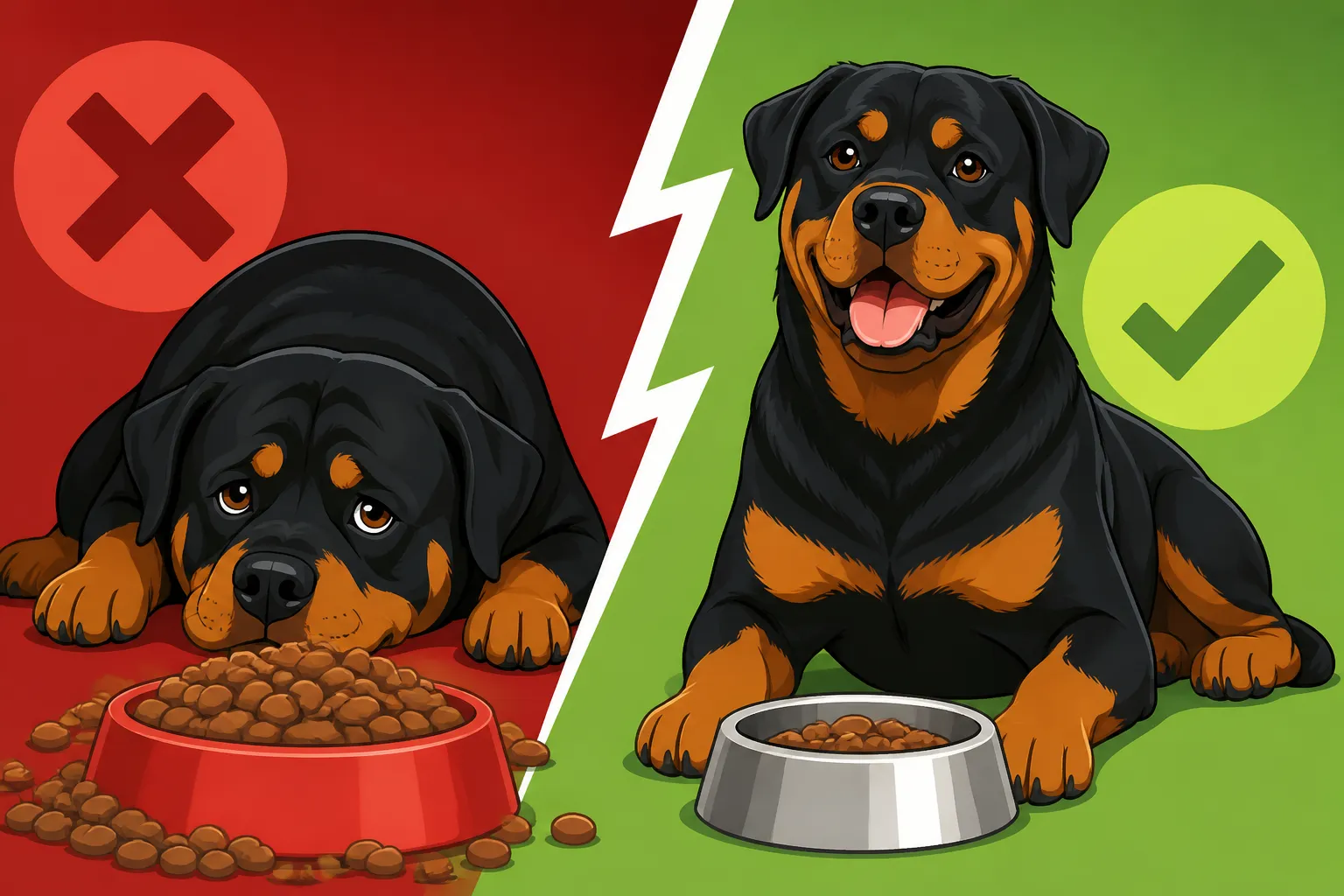
Free Feeding and Why It Fails a Rottweiler
Many dog owners fall into the trap of thinking that leaving food out all day for their Rottweiler is a convenient and harmless way to keep them fed. After all, if the bowl is always full, they'll just eat when they're hungry, right? Unfortunately, for a large, deep-cheested breed like a Rottweiler, free feeding isn't just a minor inconvenience; it's a practice fraught with serious health and behavioral risks that can significantly impact their well-being and even shorten their life. This guide will meticulously break down why free feeding is a detrimental approach for your Rottweiler and outline how a structured mealtime routine is not just better, but essential.
Understanding What "Free Feeding" Means for a Dog
Before we dive into why this practice is so problematic for our big, beloved Rotties, let's make sure we're on the same page about what "free feeding" actually entails. It's more than just leaving a little extra kibble in the bowl.
The All-You-Can-Eat Buffet for Canines
At its core, free feeding means offering your dog an "ad libitum" food source – essentially, an all-you-can-eat buffet where their food bowl is perpetually full, or refilled the moment it starts to look a little sparse. The idea is that the dog can graze throughout the day whenever they feel like it, never experiencing hunger. Some owners might see this as the most natural way for a dog to eat, mimicking how wild canids might scavenge, but domestic dogs, especially large breeds, are a far cry from their wild ancestors and have vastly different metabolic needs and risks.
For certain smaller breeds, particularly those with very high metabolisms or dogs that are extremely picky eaters and tend to just nibble a bit here and there, free feeding might seem to work without immediate, obvious issues. However, even for these dogs, it often prevents owners from truly understanding their pet's eating habits and overall health. The convenience factor for busy owners is a huge draw – no need to remember meal times, no frantic rush to feed before work. But this perceived convenience often comes at a steep cost to your Rottweiler's health.
Why the Convenience Trap is Strong
The lure of free feeding is undeniably strong for many pet parents. In our fast-paced lives, anything that seems to simplify pet care can look appealing. Owners often reason that it's less work, ensures their dog is never truly hungry, and might even believe it prevents things like resource guarding (which, as we'll explore, it often does the opposite of). There's also a common misconception that dogs, like some humans, will simply "self-regulate" their food intake, eating only what they need. While a very small percentage of dogs might possess this mythical self-control, most domestic dogs, when presented with a constant food source, will overeat.
This method also subtly shifts the owner's role in the feeding process. Instead of being the primary provider of sustenance at specific times, you become more of a perpetual refiller. This might seem like a small detail, but it removes a valuable opportunity for interaction, training, and crucially, daily health observation that comes with structured mealtimes. You miss out on gauging their eagerness to eat, which is a powerful indicator of their overall well-being.
The Serious Downsides of Free Feeding for a Rottweiler
For a Rottweiler, free feeding isn't just a less-than-ideal practice; it actively introduces and exacerbates several serious health and behavioral problems that demand a more controlled approach. These aren't minor issues; they can be life-threatening or significantly reduce their quality of life.
The Heavy Price of Obesity and Joint Strain
Rottweilers are naturally robust, powerful dogs, but they are also genetically predisposed to certain orthopedic conditions like hip and elbow dysplasia. Maintaining a lean, healthy weight is absolutely crucial to managing these predispositions and preventing excessive strain on their developing and mature joints. Free feeding makes precise calorie control nearly impossible. When food is always available, a Rottweiler, being a food-motivated breed, will often consume far more calories than they burn.
This leads directly to obesity, a widespread problem in domestic dogs. An overweight Rottweiler carries extra pounds that put immense stress on their hips, elbows, and spine, accelerating the onset and severity of arthritis and other joint problems. Imagine a 100-pound dog carrying an extra 20 pounds – that's like a person carrying a heavy backpack constantly, day in and day out, on every single step. This constant load damages cartilage, inflames joints, and causes chronic pain. You can read more about this in Rottweiler Obesity and the Load It Adds. The long-term impact is a reduced lifespan and a much lower quality of life, characterized by pain, reduced mobility, and increased veterinary bills.
Escalating Bloat Risk Through Gorging
Perhaps the most terrifying and immediate danger of free feeding for a Rottweiler is the drastically increased risk of Gastric Dilatation-Volvulus (GDV), commonly known as bloat. Rottweilers are a deep-chested breed, making them particularly susceptible to this life-threatening condition where the stomach fills with gas and then twists on itself, cutting off blood supply and trapping food and gas. It's a medical emergency that can kill a dog in hours.
When a Rottweiler is free-fed, they often go long periods without eating and then, when they finally decide to visit the bowl, they might eat a large quantity very quickly, gulping down food and air. This rapid, uncontrolled ingestion is a major contributing factor to bloat. A full, gas-distended stomach is much more likely to twist. While the exact causes of bloat are complex, factors like eating a large meal quickly, drinking a large amount of water after eating, and vigorous exercise immediately before or after meals are well-documented risk factors. Free feeding encourages several of these. Understanding Recognizing Bloat in a Rottweiler is critical for any Rottweiler owner. Scheduled meals, often split into two or three smaller portions, can significantly mitigate this risk by controlling the volume and speed of ingestion.
Behavioral Challenges: Resource Guarding and Unpredictable Habits
Ironically, some owners believe free feeding might prevent resource guarding by making food less "valuable." The opposite is often true for a breed like a Rottweiler, which has a natural guarding instinct. When food is constantly available, a dog may feel a continuous need to protect that resource from other pets, children, or even you. This can manifest as growling, snapping, or body blocking anyone who approaches the bowl, as discussed in A Rottweiler That Freezes Over Its Bowl. This behavior is dangerous and completely unnecessary.
Beyond guarding, the lack of structure around food can lead to a host of other behavioral issues. Without clear meal times, a dog's internal clock for elimination can become erratic, making house training more challenging, especially for puppies. Furthermore, food is a powerful motivator in training. If food is always available, it loses its value as a reward, making it harder to teach and reinforce basic obedience commands. You lose a critical tool for positive reinforcement and shaping desired behaviors.
Missing Early Warning Signs of Illness
One of the most valuable aspects of a structured feeding routine is the daily opportunity to monitor your Rottweiler's appetite. A sudden disinterest in food, or a complete refusal to eat, is often one of the very first and clearest indicators that something is wrong. It could signal anything from a minor stomach upset to a serious illness like bloat, pancreatitis, or even cancer.
With free feeding, however, this crucial early warning sign can be completely missed. If the bowl is always full, how would you know if your Rottweiler only ate a quarter of what they normally would, or if they haven't touched it all day? You might not notice until the dog is already showing more severe symptoms, by which point the illness may have progressed significantly, potentially delaying critical veterinary intervention. For rapidly progressing conditions like bloat, every hour counts. Missing that initial sign of a reduced appetite can have dire consequences.
Why Structured Meal Times are Non-Negotiable for Your Rottweiler
Moving away from free feeding and embracing a scheduled meal routine is one of the most proactive and beneficial steps you can take for your Rottweiler's health and behavior. It gives you control, promotes good habits, and offers invaluable insights into their well-being.
The Power of Portion Control and Healthy Weight Management
With scheduled meals, you are in complete control of how much food your Rottweiler consumes. This precision is vital for managing their weight, which directly impacts their joint health and overall longevity. You can accurately measure their daily allowance, rather than guessing or simply refilling a continuously emptying bowl. For best results, use a kitchen scale to weigh their food rather than relying on volume (cups), as kibble density can vary.
Your veterinarian can help you determine the ideal caloric intake for your individual Rottweiler based on their age, activity level, and body condition. This might mean adjusting portions as they grow, as their activity changes, or if they need to lose a few pounds. Regularly assessing your Rottweiler's body condition – feeling for their ribs and observing their waistline – is a great way to ensure they're staying lean and healthy. Portioning an Adult Rottweiler by Body Condition provides more detail on how to do this effectively.
Reducing Bloat Risk with Controlled Consumption
Structured meals are a cornerstone of bloat prevention. Instead of letting your Rottweiler gorge when they finally decide to eat, you present their meal in a controlled environment. Breaking their total daily food allowance into two or, even better, three smaller meals spaced throughout the day dramatically reduces the volume of food and gas in their stomach at any one time. This lessens the chances of a sudden, dangerous expansion. Splitting a Rottweiler's Ration Across the Day is an excellent strategy.
Additionally, using slow-feeder bowls, which can be found readily on sites like Chewy or Amazon, helps to physically slow down rapid eaters, preventing them from gulping air along with their food. These bowls have various ridges or obstacles that make the dog work a little to get each mouthful. Most importantly, structured meals allow you to enforce a crucial rule: no vigorous exercise for at least an hour before or after eating. This helps the stomach settle and reduces the risk of it twisting.
Strengthening the Human-Canine Bond and Training Opportunities
Mealtime becomes more than just sustenance; it transforms into a ritual, a positive interaction, and a powerful training opportunity. When you are the one reliably providing meals at specific times, it reinforces your role as the benevolent leader and provider, strengthening the bond of trust and respect between you and your Rottweiler.
Food becomes a high-value resource that you control, making it an incredibly effective tool for positive reinforcement training. Imagine teaching your Rottweiler to "sit," "stay," or "wait" before their bowl is placed down. These simple acts instill impulse control and good manners. This routine and predictability can also reduce anxiety around food and even mitigate resource guarding behaviors, as the dog learns that you are consistently providing for them, and they don't need to "defend" a constant supply. Rottweiler Puppy Training Through the First Year emphasizes how early structure benefits large breeds.
Implementing a Successful Mealtime Routine for Your Rottweiler
Transitioning from free feeding to scheduled meals might take a little patience, but the benefits for your Rottweiler are immense. Here's how to set up a successful routine.
Choosing the Right Food and Tools
The foundation of a healthy diet starts with the food itself. For Rottweilers, especially puppies, it's crucial to choose a high-quality large-breed specific formula. These foods are specially formulated with controlled calcium and phosphorus levels to support the slower, more sustained growth rate of large breeds, which helps prevent developmental orthopedic diseases. Why a Rottweiler Puppy Needs Large Breed Formula delves into this in more detail. Always consult your vet for personalized dietary recommendations.
Beyond the food, consider your tools. As mentioned, slow-feeder bowls are a fantastic investment for Rottweilers prone to gulping. You can find a wide variety of durable options designed for large breeds on platforms like Chewy or Amazon. Slow Feeder Bowls That Hold a Rottweiler Ration are designed to make eating a more measured process. Ensure bowls are made of sturdy, easy-to-clean materials like stainless steel or ceramic, which are more hygienic than plastic.
Crafting a Consistent Schedule
Consistency is key. For adult Rottweilers, two meals a day is generally recommended. Aim for roughly the same times each day – for example, 7 AM and 5 PM. This predictability helps regulate their digestive system and sets a clear routine. For growing Rottweiler puppies, three to four smaller meals a day are often more appropriate, gradually reducing to two meals as they mature, typically around six months to a year. How Much a Rottweiler Puppy Eats at Each Meal and The Age a Rottweiler Moves to Two Meals a Day provide excellent guidance on this progression.
Set the food down for 15-20 minutes. If your Rottweiler doesn't eat it all within that time, pick the bowl up. Don't leave it down for hours, as this just replicates the free-feeding scenario and prevents them from truly understanding the meal schedule. They'll quickly learn that mealtime is a specific window. It might take a day or two for them to adjust, but a healthy dog won't starve themselves.
Addressing Common Challenges
Picky Eaters: If your Rottweiler is refusing to eat their scheduled meal, first rule out any underlying health issues with a vet visit. If they're healthy but just being picky, stick to the schedule. Don't offer alternative foods or treats in an attempt to coax them to eat their meal. Pick the food up after 15-20 minutes and offer it again at the next scheduled mealtime. They'll eventually eat when they're hungry.
Multiple Dog Households: In homes with more than one dog, especially if one is a Rottweiler, feeding separately is crucial to prevent resource guarding, competition, and ensuring each dog gets their appropriate portion. Feed dogs in different rooms, crates, or at least far enough apart that they can't access each other's bowls. This maintains a peaceful feeding environment.
Special Diets: If your Rottweiler is on a specialized diet, such as fresh food delivery services like Ollie, their portions are often pre-calculated. It’s still imperative to stick to a scheduled feeding routine to ensure they receive these precise amounts at appropriate times, supporting their health goals without the risks of free feeding.
Free Feeding vs. Scheduled Feeding for Rottweilers
Here's a quick comparison to highlight why scheduled feeding is the clear winner for your Rottweiler's health and happiness.
| Feature | Free Feeding | Scheduled Feeding (Recommended) |
|---|---|---|
| Control Over Intake | Very low; dog eats whenever and however much they want | High; precise portion control at set times |
| Obesity Risk | Very High; easy to overeat, leading to weight gain and joint stress | Low (with proper portioning); helps maintain a lean body condition |
| Bloat Risk | High; encourages rapid, large meal consumption and air gulping | Lower; controlled eating pace, often split into smaller meals |
| Behavioral Issues | Can increase resource guarding, inconsistent house training, reduced training effectiveness | Reduces guarding, aids house training, enhances obedience training |
| Health Monitoring | Difficult to detect changes in appetite, delaying illness detection | Easy to observe appetite, crucial for early illness detection |
| Human-Canine Bond | Minimal interaction during feeding | Strengthens bond through routine, positive interaction, and training |
| Convenience for Owner | Perceived as high (set it and forget it) | Requires commitment to routine, but offers peace of mind and health benefits |
Conclusion
The thought of free feeding might initially seem like a thoughtful, convenient way to manage your Rottweiler's diet. However, for these magnificent, powerful dogs, it's a practice riddled with risks that far outweigh any perceived benefits. From the insidious creep of obesity and its devastating impact on their joints, to the immediate, life-threatening danger of bloat, and the various behavioral issues it can foster, free feeding simply fails a Rottweiler. Embracing a structured, scheduled mealtime routine is not just a preference; it's a fundamental pillar of responsible Rottweiler ownership, ensuring their physical health, behavioral stability, and ultimately, a longer, happier life by your side.
Disclaimer
This article is for general informational purposes only and does not constitute professional advice. Laws, prices and regulations vary by location and change over time. Consult a qualified professional for guidance on your specific situation.