The Ten CGC Items and Which a Rottweiler Fails
It's an unfortunate truth that owning a magnificent Rottweiler often means facing public misconceptions. People see the breed, not the individual, and those stereotypes can lead to unfair judgments and even outright fear. That's why demonstrating your Rottweiler's impeccable manners and solid training isn't just a point of pride; it's a vital step in being a responsible owner. This guide will walk you through the ten items of the American Kennel Club's Canine Good Citizen (CGC) test, highlighting where your Rottweiler might naturally excel and where they might need a little extra thoughtful guidance to shine.
Understanding the Canine Good Citizen Test for Your Rottweiler
The Canine Good Citizen (CGC) program is more than just a certificate; it's a foundational step in responsible dog ownership, aiming to ensure dogs are well-behaved family members and good neighbors in the community. For Rottweiler owners, this program holds particular significance.
What the CGC Aims to Achieve
At its heart, the CGC test is designed to identify dogs who have mastered basic good manners and can be relied upon in public settings. It evaluates a dog's behavior in ten common scenarios, from politely greeting a stranger to walking calmly past other dogs. Passing the CGC demonstrates that your Rottweiler is not only trainable but has indeed been trained to a certain standard of public decorum. It’s about building a solid foundation of trust between you, your dog, and the wider world. Think of it as earning a good behavior badge that tells everyone, "My dog is a well-mannered citizen." This isn't just about showing off; it's about being able to take your dog more places, enriching their life and yours, without worrying about unpredictable outbursts or fear-based reactions from others.
The Public Perception Hurdle
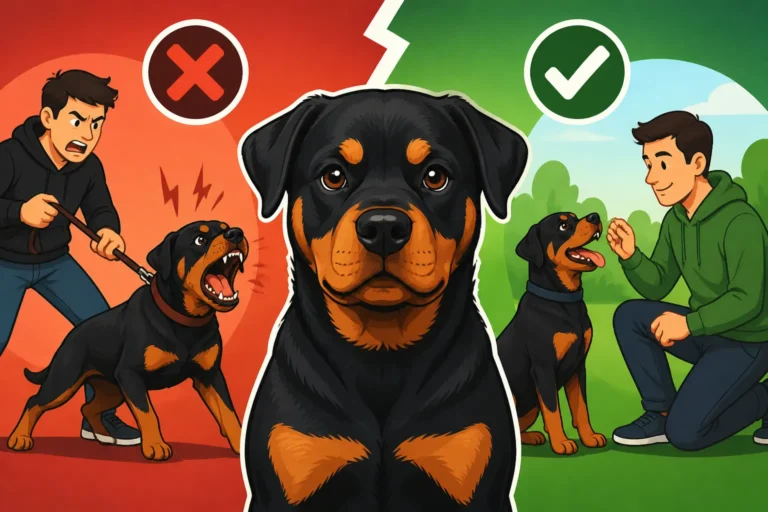
Let's be honest, Rottweilers often get a bad rap. Despite their loving and loyal nature with their families, their imposing size and historical reputation as guard dogs mean many people approach them with apprehension or even outright fear. This isn't fair to the breed, but it's a reality we, as Rottweiler owners, have to navigate. The CGC can be an invaluable tool in overcoming this Rottweiler Aloofness and Why It Reads as Cold. When your Rottweiler calmly walks past a bustling group of people, sits patiently while a stranger "pets" them (as required by the test), or ignores a dropped object, it actively challenges those negative stereotypes. It shows the world that a well-trained Rottweiler is a confident, controllable, and calm companion, not a menace. This kind of public demonstration can subtly, but powerfully, shift perceptions and open doors for your dog in places they might otherwise be unwelcome. It also boosts your confidence, knowing that you have equipped your powerful companion with the skills to handle themselves appropriately in almost any situation.
Breaking Down the Ten CGC Items and Potential Rottweiler Hurdles
The CGC test consists of ten specific items, each designed to assess a dog's real-world manners. Let's go through each one and talk about what it means for your Rottweiler.
Test Item 1: Accepting a Friendly Stranger
This item requires your dog to allow a friendly stranger to approach and speak to you in a natural, everyday manner. The evaluator will extend a hand to shake yours and generally act like a polite acquaintance. Your Rottweiler should not show shyness or resentment and should remain in a controlled position beside you, preferably sitting or standing calmly.
For a Rottweiler, this can sometimes be a nuanced challenge. Many Rottweilers possess a natural "wait-and-see" temperament. They aren't typically exuberant greeters who rush up to strangers with wagging tails. Instead, they might observe quietly, taking in the situation before deciding whether the person is worthy of their attention or trust. This aloofness, while a hallmark of the breed, can sometimes be misinterpreted as being standoffish or even aggressive by someone unfamiliar with Rottweiler behavior. The key here is not to force your Rottweiler into being overly effusive, but to ensure they can remain calm, unreactive, and polite. They don't need to love the stranger, they just need to tolerate their presence without anxiety or aggression. Practicing calm interactions from a young age, rewarding them for simply staying put and observing, is crucial. The Rottweiler Wait-and-See Response Explained covers this aspect of their temperament in more detail.
Test Item 2: Sitting Politely for Petting
Following the initial greeting, the friendly stranger (the evaluator) will then gently pet your Rottweiler. The dog should permit this without becoming shy, aggressive, or overly boisterous. They should remain in a controlled position.
This item builds on the first. If your Rottweiler is comfortable with the presence of a stranger, the next step is accepting a light touch. For a breed that often values its personal space and can be quite discerning about who it allows into its inner circle, this might require specific desensitization. It’s not uncommon for a Rottweiler to tolerate petting from family but be uncomfortable with a sudden touch from someone new. Early positive experiences with various trusted people, always supervised and with an emphasis on calm, gentle petting (especially on the chest or shoulder, rather than directly on the head), can make a huge difference. Ensure these interactions are always positive and never prolonged if your dog shows signs of discomfort. Praise and treats go a long way in making this a positive association.
Test Item 3: Appearance and Grooming
This item assesses your dog's willingness to be examined and groomed by a friendly stranger, mimicking a vet visit or a quick check-up. The evaluator will gently inspect your dog's ears and pick up one front foot. Your Rottweiler should allow this without protest or showing fear.
Most Rottweilers, with consistent handling from puppyhood, can ace this. They have short coats that are relatively easy to manage, and regular brushing and paw checks are usually part of their routine. The challenge, if any, often comes down to early conditioning. Did you get your puppy used to having their paws touched, ears gently flipped, and body handled from day one? If not, a powerful adult Rottweiler can make these necessary tasks difficult. Start with brief, positive sessions, rewarding heavily for compliance. Tools like a slicker brush or a gentle ear wipe, often found easily on Amazon, can make grooming sessions more pleasant for both of you. Regular practice makes perfect, turning these examinations into a routine, non-threatening experience. Rottweiler Ear Care Under a Drop Ear and Rottweiler Dental Care for a Jaw That Cracks Bone underscore the importance of regular care which directly prepares them for this test item.
Test Item 4: Out for a Walk (Walking on a Loose Leash)
Your Rottweiler must walk on a loose leash at your side for a distance, making a right turn, left turn, and a stop. This demonstrates that you are in control and your dog is not pulling you down the street.
This is often where Rottweiler owners really earn their stripes. A hundred-pound Rottweiler who pulls on the leash is not just annoying; they're a potential hazard to you and anyone around them. Their sheer strength makes loose-leash walking a non-negotiable skill. For many Rottweilers, their enthusiasm for the outside world, combined with their powerful build, can make this item tough if not consistently trained. Starting early with positive reinforcement, using a comfortable front-clip harness or a head halter, and practicing in low-distraction environments is key. You'll want sturdy gear – a good quality, wide nylon or leather leash and a secure harness can be found on Amazon. Remember, it's not about correcting every pull, but about teaching your dog that tension on the leash means the walk stops, and slack means it continues. Teaching a Rottweiler Not to Pull at 110 Pounds offers more specific guidance here.
Test Item 5: Walking Through a Crowd
This item simulates walking in a public place, with the evaluator and two other people forming a "crowd" that you and your Rottweiler must navigate. Your dog should walk politely through the group without jumping on people, shying away, or becoming overly excited.
This item tests your Rottweiler's ability to maintain focus on you amidst common distractions. Their natural protective instincts and sometimes wary nature around strangers could make this challenging if not properly socialized and trained. The goal isn't for them to greet everyone, but to move calmly and confidently through the space, respecting personal boundaries. Early and ongoing exposure to various sights, sounds, and people, always positive and controlled, is the best preparation. Think about trips to pet-friendly hardware stores during off-peak hours, or walking in quiet parks when other people are present but not directly interacting. The emphasis is on neutrality and maintaining position.
Test Item 6: Sit and Down on Command and Staying in Place
Your Rottweiler must perform a "sit" and a "down" on command, and then remain in a "stay" position (either sit or down) while you walk away about 20 feet, turn around, and return. The dog must hold the stay for about one minute.
These are fundamental obedience commands, and most Rottweilers, being intelligent and eager to please their owners, can master them with consistent training. The real test here is "staying in place" with you at a distance and for a minute. For a breed that often forms a strong bond and prefers to be close to its handler, this might require building up duration and distance gradually. Distractions during practice are also critical. Start with short durations in a quiet room, then slowly add distance, then move to more stimulating environments. Programs like BAXTER & Bella offer structured online courses that can guide you through building these foundational skills, step by step, which is invaluable for a breed that thrives on clear communication and consistency. Rottweiler Impulse Control Games can help build the mental stamina needed for a solid stay.
Test Item 7: Coming When Called (Recall)
With you at one end of a 20-foot line and the evaluator holding the other end, your Rottweiler must "come" to you when called. This demonstrates reliability and responsiveness, especially vital for a powerful dog.
A reliable recall is arguably one of the most important commands for any dog, and especially for a Rottweiler, whose size and strength can make an uncontrolled dash dangerous. While many Rottweilers are deeply bonded to their owners and naturally want to be near them, distractions can be powerful. A squirrel, another dog, or a new scent could easily override their desire to come back to you if the recall isn't rock-solid. Practice, practice, practice in a variety of safe, enclosed environments, using high-value rewards. Start close, then gradually increase distance. Never punish your dog for coming to you, even if it takes a moment. Make coming when called the most rewarding thing they can do. Rottweiler Recall Away From a Squirrel delves into strengthening this vital command.
Test Item 8: Reaction to Another Dog
This item involves you and your Rottweiler walking past another dog (also on leash, held by another person or the evaluator) without interaction. Both dogs should ignore each other, showing no aggression, shyness, or undue interest.
This is another potentially challenging area for Rottweilers. While many are perfectly amiable with other dogs, their size and natural guarding tendencies can mean they are selective or can be reactive if not properly socialized. Some Rottweilers also have a low tolerance for rude canine behavior, which can lead to tension. The goal here is polite neutrality, not boisterous greetings. Early Introducing a Rottweiler to Other Dogs in a controlled manner, always on leash, can help. Teach your Rottweiler to focus on you when another dog approaches, perhaps by offering a high-value treat as they pass. The idea is to teach them that ignoring other dogs is more rewarding than engaging. If your Rottweiler tends towards reactivity, seek guidance from a professional trainer who specializes in positive reinforcement and desensitization.
Test Item 9: Reaction to Distraction
This tests your Rottweiler's ability to remain calm and composed when faced with common, startling distractions, such as a dropped object (like a crutch or metal bowl) or a sudden loud noise. The dog should not panic, try to escape, or show aggression.
Rottweilers, being confident dogs, often handle sudden noises and movements quite well, especially if they have been well-socialized and exposed to various environmental stimuli from a young age. However, some dogs can be more sensitive than others. The key is to avoid coddling them when a startling event occurs. Instead, model calm behavior yourself and praise your Rottweiler for remaining steady. Desensitization, which involves gradually exposing them to controlled, low-level versions of these distractions and rewarding calm responses, can be very effective. This builds their resilience and teaches them that unexpected noises aren't inherently threatening.
Test Item 10: Supervised Separation
For this final item, your Rottweiler is left with the evaluator for three minutes while you walk out of sight. The dog should not show signs of extreme distress, panic, or destructive behavior. They should remain calm and in control.
This item can be a significant hurdle for some Rottweilers, particularly those with strong guarding instincts or a tendency towards separation anxiety. Rottweilers often form very strong bonds with their primary caregivers and can be deeply uncomfortable when separated, especially in an unfamiliar setting with a stranger. It's crucial that your dog is genuinely comfortable being left with people other than you, even if they aren't interacting. Practice leaving your dog with a trusted friend or family member for short periods, gradually increasing the time. Ensure they are comfortable in a "down-stay" with a familiar person before attempting this with a stranger. Some dogs benefit from having a comfort item, like a favorite chew toy (many durable options available on Amazon), to occupy them during short separations. Rottweiler Separation Anxiety in the First Month addresses the broader issue of being left alone, which plays into this test item.
Preparing Your Rottweiler for CGC Success
Earning a CGC title is a wonderful achievement, but it requires dedication and a strategic approach, especially with a powerful and discerning breed like the Rottweiler.
Starting Early with Socialization and Basic Obedience
The foundation for CGC success is laid long before your Rottweiler is ready to take the test. It begins in puppyhood with consistent, positive socialization and fundamental obedience training. A well-socialized Rottweiler puppy is exposed to a wide variety of people, places, sounds, and other friendly, vaccinated dogs in a controlled and positive manner. This builds confidence and teaches them how to navigate the world without fear or aggression. Simultaneously, enrolling in puppy classes and then continuing with basic obedience helps instill the commands needed for CGC, such as sit, stay, and come, in a fun and engaging way. Think of these early experiences as building blocks; each positive interaction and successfully learned command strengthens your Rottweiler's ability to be a confident and well-mannered adult. Rottweiler Puppy Training Through the First Year emphasizes the importance of these early months.
Consistency is Key
Rottweilers are intelligent, but they also thrive on routine and clear expectations. Sporadic training sessions won't cut it, especially for the nuanced behaviors required for CGC. Daily, short training sessions, even just 10-15 minutes, are far more effective than one long session once a week. Incorporate training into your everyday life – practice loose-leash walking on every stroll, ask for a "sit-stay" before meals, and work on recall in your fenced yard. Every interaction is an opportunity to reinforce good behavior. Online training platforms, like BAXTER & Bella, can provide a structured curriculum and ongoing support, which can be particularly helpful for maintaining consistency and getting new ideas for practice. Their programs often break down complex behaviors into manageable steps, making the journey feel less overwhelming.
Finding the Right Trainer and Environment
While you can certainly prepare for CGC at home, working with a qualified trainer can make a significant difference. Look for trainers who use positive reinforcement methods and have experience with working breeds, particularly Rottweilers or similar powerful, intelligent dogs. A good trainer can identify areas where your Rottweiler needs extra help, troubleshoot challenges, and provide invaluable guidance on how to refine their skills. They can also create realistic practice environments that mimic the test setting, including distractions.
Additionally, consider the environment where you're training. Begin in quiet, familiar places, then gradually introduce distractions. This might mean practicing in your backyard, then a quiet park, then a busier park, and finally in a more bustling pet-friendly store. The goal is to generalize your Rottweiler's training, so they can perform reliably no matter where you are or what's going on around them. A good trainer will help you find the right balance of challenge and success to keep your Rottweiler motivated and confident.
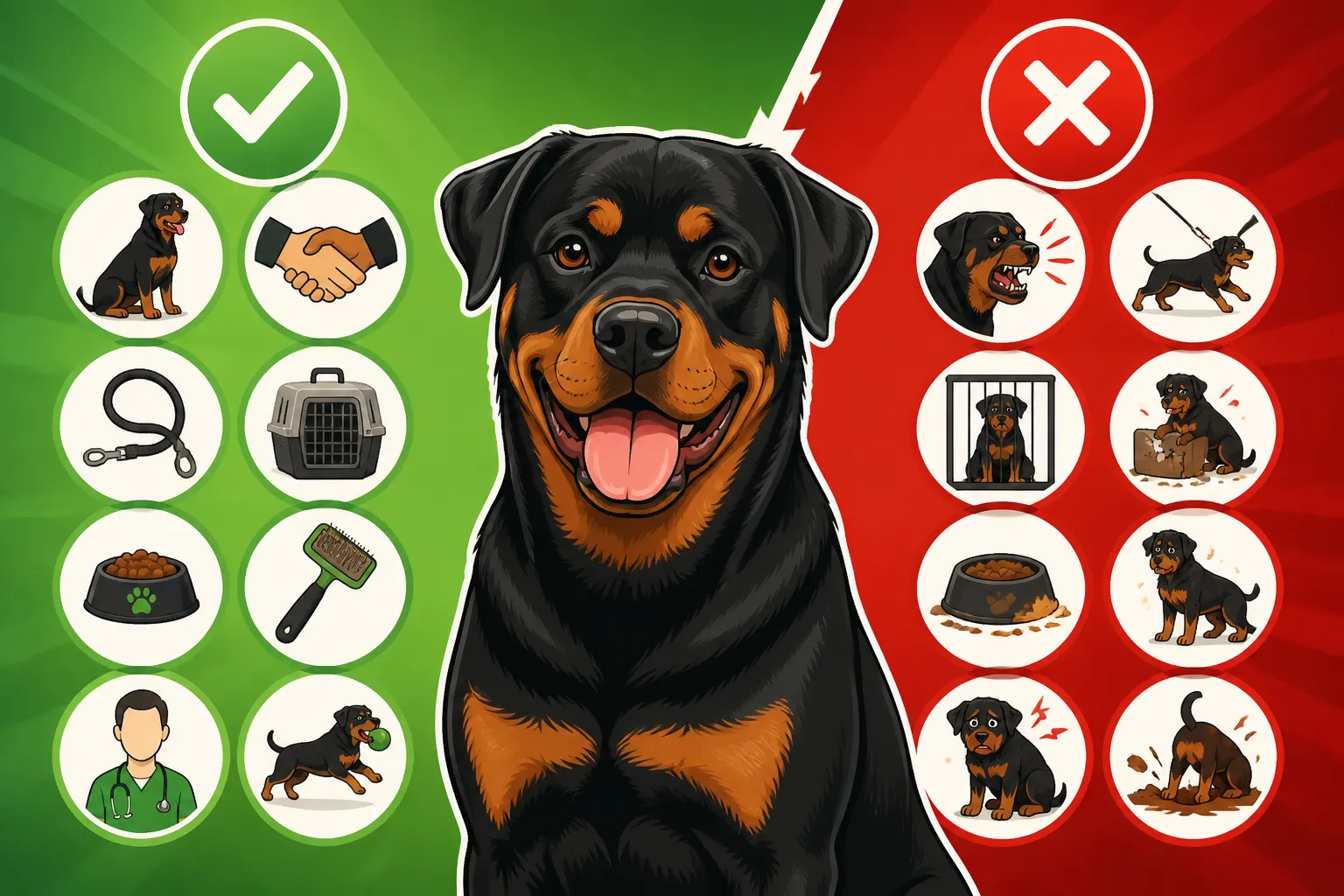
Here's a summary of the 10 CGC items and common considerations for Rottweiler owners:
| CGC Test Item | What It Tests | Potential Rottweiler Considerations |
|---|---|---|
| 1. Accepting a Friendly Stranger | Dog allows a stranger to approach handler politely | Natural aloofness might need training to ensure polite, non-reactive behavior rather than an exuberant greeting. |
| 2. Sitting Politely for Petting | Dog allows a stranger to pet them gently | May need desensitization to touch from unfamiliar individuals; focus on calm acceptance. |
| 3. Appearance and Grooming | Dog allows examination of ears and feet | Usually good with early handling; consistent practice of grooming and body checks is crucial. |
| 4. Out for a Walk (Loose Leash) | Dog walks on a loose leash at handler's side | Significant strength requires early and consistent training to prevent pulling; proper equipment is key. |
| 5. Walking Through a Crowd | Dog walks politely through a group of people | Socialization and focus training help maintain neutrality and prevent shyness or jumping. |
| 6. Sit & Down on Command / Stay | Dog performs commands and holds a 1-minute stay | Intelligent and trainable, but building duration and distance for "stay" with distractions takes practice. |
| 7. Coming When Called (Recall) | Dog reliably comes when called from 20 feet | Strong bond helps, but high distractions can override; requires strong positive reinforcement and consistent practice. |
| 8. Reaction to Another Dog | Dog walks politely past another dog without interaction | Can be challenging due to selectivity or reactivity; focus on neutrality and handler focus over greeting. |
| 9. Reaction to Distraction | Dog remains calm with sudden sights and sounds | Generally confident, but sensitive individuals may need desensitization to unexpected noises or movements. |
| 10. Supervised Separation | Dog remains calm when left with evaluator for 3 min. | Strong bond can lead to distress; needs practice being comfortable with trusted non-family members in separation. |
The Canine Good Citizen title is a testament to your hard work and your Rottweiler's good nature. It’s a powerful statement that helps chip away at unfair stereotypes and demonstrates the true potential of this magnificent breed as a valued and well-behaved member of society.
Disclaimer
This article is for general informational purposes only and does not constitute professional advice. Laws, prices and regulations vary by location and change over time. Consult a qualified professional for guidance on your specific situation.