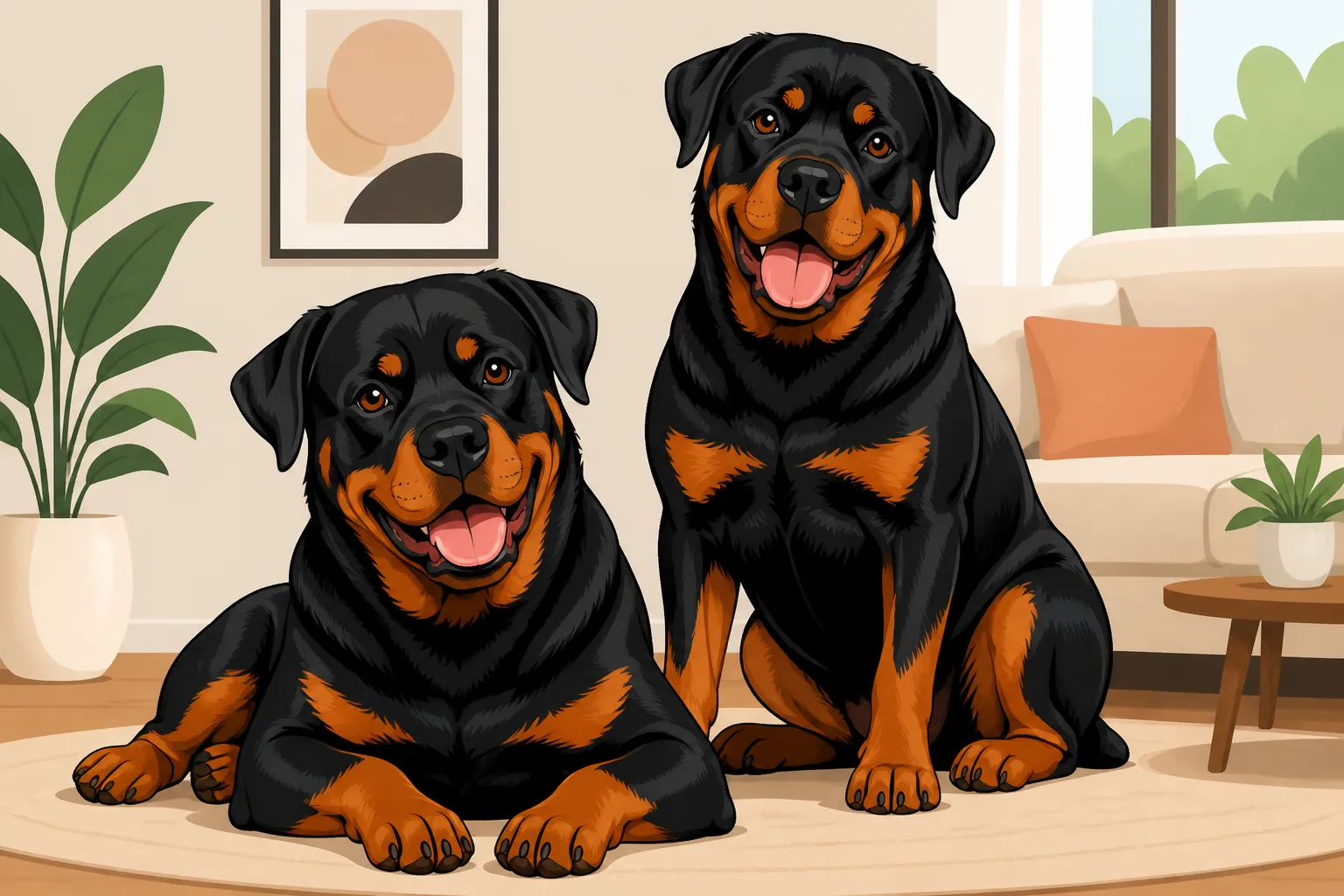
Two Female Rottweilers in One House
Many Rottweiler owners dream of expanding their furry family, but when the idea of bringing two female Rottweilers into the same home comes up, it's natural to feel a mix of excitement and apprehension. The reality is, housing two bitches together, especially in a powerful, strong-willed breed like the Rottweiler, can present unique challenges that are often more complex than integrating a male and a female, or even two males. This guide is here to unravel the complexities, validate your concerns, and provide actionable steps to help you foster a peaceful and happy multi-female Rottweiler household.
Understanding Female Rottweiler Dynamics
Before you even consider bringing a second female Rottweiler into your life, it's crucial to understand the inherent dynamics that can play out between them. This isn't about one dog being "bad"; it's about deep-seated canine social structures and breed tendencies.
The Nature of Female Dog Aggression
Let's not sugarcoat it: female-on-female aggression, often referred to as "bitch aggression," is a distinct and often more serious form of conflict than what you might see between males. While male dogs might engage in ritualized displays, posturing, and sometimes quick, decisive fights, female fights can be relentless, silent, and incredibly vicious. They don't always adhere to a clear hierarchy or display obvious warning signs like roaring growls or bared teeth before an altercation. Instead, it can be a slow burn, a constant undercurrent of tension, or sudden, explosive outbursts that seem to come out of nowhere.
This type of aggression often stems from competition over resources – not just food or toys, but also space, preferred resting spots, and even access to human attention. It can be deeply unsettling for owners because it's less predictable and often more persistent than male conflicts, which can sometimes resolve once a hierarchy is established. With females, the struggle for dominance can be ongoing, creating an environment of chronic stress for both dogs and their human companions.
Typical Rottweiler Female Temperament
Rottweilers, by nature, are a self-assured, powerful, and often stoic breed. The female Rottweiler, while perhaps not as physically imposing as her male counterpart, often possesses an equally strong, if not more independent, will. They tend to be less overtly eager to please than some males, and their loyalty, once given, is fierce and often exclusive. This means that a female Rottweiler might be less inclined to readily accept a new, competing presence in "her" home, especially if she perceives that presence as a threat to her established position or resources.
Their inherent guarding instinct is a double-edged sword here. While it makes them excellent protectors, it can also manifest as intense possessiveness over their territory, their people, and their belongings. The Rottweiler Guarding Instinct and How to Shape It is a vital concept, but when you introduce another strong-willed female, that instinct can be amplified into conflict. They might display a natural aloofness toward strangers, which can extend to a new canine housemate initially, and if not managed carefully, can escalate into outright intolerance.
Recognizing the Early Warning Signs
One of the most crucial skills you'll need as an owner of two female Rottweilers is the ability to read canine body language. Aggression between females often starts subtly, long before a full-blown fight erupts. You might observe signs that seem minor but are actually significant indicators of rising tension.
Look for stiff body language, direct and prolonged eye contact (often called a "hard stare"), or one dog physically blocking another from a doorway, a person, or a preferred resting spot. There might be subtle resource guarding – one dog tensing up when the other approaches a toy or food bowl. You might also notice displacement behaviors, where one dog tries to assert dominance by moving the other dog, nudging them away from you, or even leaning on them. Reading a Still Rottweiler That Is Not Relaxed can offer vital insights here, as a seemingly calm dog might be simmering with tension. Low, rumbling growls or stiff, high tails can also be precursors to trouble. The key is to intervene at these early stages, as ignoring them allows the tension to build and the patterns of aggression to become entrenched.
Introducing a Second Female Rottweiler
The integration process is arguably the most critical phase when bringing a second female Rottweiler into your home. A thoughtful, controlled introduction can set the stage for success, while a rushed or haphazard approach can lead to lifelong conflict.
Careful Selection of a Companion
Choosing the right second dog is paramount. If you're considering a new puppy, a significant age gap is often beneficial – your resident female should be a mature, stable adult, ideally over two years old. Introducing two puppies, or two adolescent females, can lead to clashes as they both mature and vie for status. Similarly, two senior females might struggle with change and become more irritable.
Focus on temperament. Ideally, you want a new dog whose personality is naturally more submissive or laid-back than your existing female. Avoid bringing in another dog with dominant tendencies or a history of aggression towards other females. If you're adopting, ask the rescue or shelter specific questions about the dog's history in multi-dog, female-female households. Always prioritize health-tested dogs; a dog burdened with chronic pain or discomfort is more likely to be irritable and prone to aggression. The Five Clearances a Rottweiler Breeder Must Have for a puppy from a reputable breeder is a good indicator of their commitment to health and temperament.
The Crucial First Meeting
The initial meeting absolutely must happen on neutral territory, far away from your home or yard, which your resident Rottweiler already considers her domain. A quiet park, a field, or even a friend's large yard that neither dog considers theirs are good options. Each dog should be on a separate leash, handled by a calm, confident handler.
Start with parallel walks at a distance, allowing them to acclimate to each other's presence without direct interaction. Keep these initial sessions short, positive, and focused on calm behavior. Reward calm investigation and ignoring with high-value treats and praise. Avoid direct face-to-face greetings initially, as this can be confrontational. If they show signs of comfort, you can gradually decrease the distance, but always be ready to create space if tension rises. This isn't a one-time event; it's a series of carefully managed interactions over days or even weeks before they ever step paw inside your house together.
Integrating into the Home Environment
Once you move past the neutral territory introductions, the real work of home integration begins. The golden rule here is separation of resources and vigilant supervision. Do not allow free access initially. Use crates, baby gates, and leashes to manage their interactions.
- Separate Everything: This is non-negotiable. Each dog needs her own food bowl, water bowl, bed, and toys. Feed them in separate rooms or crates to prevent Rottweiler Resource Guarding at Home around meal times. Splitting a Rottweiler's Food Into Two Meals is a good practice, and ensuring they eat completely out of sight of each other is even better.
- Designated Safe Spaces: Provide each female with her own "safe space" – a crate, a designated bed in a quiet corner, or even a separate room – where she can retreat and feel completely secure and undisturbed. Many owners find robust, comfortable crates from Amazon to be indispensable during this phase, offering both safety and a sense of personal space.
- Rotate Privileges: Be mindful of favoritism. Rotate who gets to lie on the couch, who gets petted first, and who gets one-on-one attention. This ensures neither dog feels consistently slighted or that the other is gaining an unfair advantage.
- Constant Supervision: Never leave the two females unsupervised together until you are absolutely confident in their relationship. Even then, exercise caution. If you have to leave the house, crate them separately.
Managing Conflict and Maintaining Harmony
Even with the best introduction, conflicts can arise. Knowing how to identify, de-escalate, and resolve these issues is crucial for maintaining a peaceful home with two female Rottweilers.
Resource Guarding and How to Mitigate It
Resource guarding is a prime catalyst for female-on-female aggression. This isn't just about food; it can be directed at toys, chews, sleeping spots, preferred people, or even prime sunbathing spots. The first step is to identify what your dogs perceive as high-value resources. Once identified, management is key.
- Remove Temptation: Pick up all toys when not in use. Offer chews and bones only when the dogs are separated in different rooms or crates.
- "Trade Up": Teach your dogs a "trade" command where they willingly give up a guarded item for an even higher-value treat. This builds trust and makes them less likely to guard aggressively.
- "Drop It": A solid "drop it" command for each dog is vital for safety, allowing you to diffuse a situation before it escalates.
- Feed Separately: As mentioned, always feed them in separate, secure areas where they cannot see or reach each other. This prevents tension during a time when guarding instincts are naturally high.
De-escalation Techniques and Safe Spaces
Learning to de-escalate tension before a full-blown fight is a lifesaaving skill. Pay close attention to subtle body language cues like stiff tails, prolonged stares, closed mouths, or a general "stillness" that indicates high alert. Rottweiler Whale Eye and Other Warning Signs is a great resource for understanding these subtle signals.
If you see tension rising:
- Distract: A loud clap, a quick call of their names, or tossing a high-value treat in opposite directions can break their focus.
- Separate Calmly: The moment you see escalation, separate them. This isn't a punishment; it's a management technique. Guide them calmly to separate rooms or crates.
- Use Safe Zones: Reinforce the idea that their crates or designated rooms are places of peace, not punishment. This helps them de-stress and reset.
- Avoid Punishment: Punishing a dog for growling or snapping often suppresses the warning signs, making future aggression more unpredictable and dangerous. Instead, focus on managing the environment and teaching alternative behaviors.
When to Seek Professional Help
If you find yourself constantly walking on eggshells, if fights are becoming more frequent or severe, or if either dog is sustaining injuries, it's time to call in the professionals. This isn't a sign of failure; it's a responsible choice for the safety and well-being of your dogs and yourself.
A certified professional dog trainer with experience in multi-dog households and large breeds, or a veterinary behaviorist, can assess the specific dynamics in your home. They can identify triggers you might be missing, help you implement a tailored management plan, and guide you through behavior modification techniques. While resources like BAXTER & Bella offer excellent online training platforms for foundational obedience, persistent inter-dog aggression often requires hands-on, individualized expert intervention. Don't wait until the situation becomes untenable; early intervention can make all the difference.
Proactive Strategies for Long-Term Success
Living harmoniously with two female Rottweilers is an ongoing commitment. It requires consistent effort, clear communication, and a deep understanding of your dogs' individual needs.
Consistent Training and Structure
Every dog, especially a Rottweiler, thrives on structure and clear expectations. Each of your females needs individual training time with you. This not only reinforces their obedience but also strengthens your bond with each dog, reducing potential competition for your attention. Basic obedience commands like "sit," "stay," "come," and "place" are foundational. A solid "place" command, for example, allows you to send one dog to a designated spot when you need to manage space or attention.
Rottweiler Puppy Training Through the First Year outlines crucial steps for younger dogs, but continuous training for adults is just as important. Establish clear rules and boundaries that apply to both dogs and enforce them consistently. Do not allow one dog to constantly push the other around; intervene to ensure fair treatment from you, the leader of the pack. A Canine Good Citizen With a Rottweiler title for one or both dogs demonstrates a high level of training and control, which can be invaluable in a multi-dog home.
Enrichment and Exercise Needs
A tired dog is a happy dog, and two Rottweilers need a lot of physical and mental stimulation. Insufficient exercise and boredom can exacerbate tension and lead to destructive or aggressive behaviors. Ensure both dogs get adequate daily exercise, individually and sometimes together, if appropriate. Building Adult Rottweiler Fitness Safely is essential for their physical health and overall well-being.
Beyond physical exertion, mental enrichment is key. Puzzle toys, snuffle mats, scent work, and short, engaging training sessions can help burn mental energy and reduce stress. Rottweiler Enrichment Beyond Walks can provide ideas. Consider giving individual walks or play sessions to ensure each dog gets dedicated, undivided attention from you. Rotate toys regularly to keep them novel and less likely to be guarded.
Separation and Supervision
Even when your two female Rottweilers seem to be getting along wonderfully, maintaining a degree of intentional separation and constant supervision is a wise long-term strategy. It ensures that neither dog feels overwhelmed or constantly challenged, and it provides both of them with valuable downtime from each other.
- Scheduled Alone Time: Implement scheduled periods where the dogs are separated, even if it's just for an hour or two in different rooms or crates. This helps them decompress and reduces the constant pressure of cohabitation.
- Never Assume: As much as we love our dogs, we must remember they are animals with instincts. Never leave two female Rottweilers unsupervised together when you leave the house, at least not until you've had years of proven, consistent harmony. Crating them separately ensures their safety and prevents arguments over resources that might arise when you're not there to mediate.
- Emergency Plan: Always have a plan for emergency separation. This might involve keeping a spare leash handy, having accessible dog gates, or even knowing that a loud, startling noise can sometimes interrupt a brewing conflict. Your vigilance is their ultimate safety net.
| Aspect | High Harmony Indicators | High Tension Indicators |
|---|---|---|
| Shared Space | Voluntarily resting near each other, loose body language | One dog avoids areas the other occupies, stiff posture |
| Greeting Rituals | Soft greetings, parallel walking, mutual sniffing | Hard stares, resource guarding of people, blocking access |
| Play Behavior | Reciprocal play bows, taking turns chasing, self-handicapping | One dog constantly ambushes, overt bullying, one always loses |
| Resource Access | Comfortably eating separately but in same room, no guarding | Growling over food bowls, tension during treat time |
| Response to Conflict | Quick de-escalation by one dog, disengagement | Escalation to snapping or fighting, prolonged tension |
| Owner Interaction | Both dogs seek attention independently, comfortable with touch | One dog guards owner's attention, pushes other dog away |
Disclaimer
This article is for general informational purposes only and does not constitute professional advice. Laws, prices and regulations vary by location and change over time. Consult a qualified professional for guidance on your specific situation.