Rottweiler Reactivity That Starts on Walks
There’s almost nothing more disheartening than looking forward to a calm walk with your strong, noble Rottweiler, only to have it dissolve into a chaotic mess of barking, lunging, and pulling at the sight of another dog, a jogger, or even a blowing leaf. Many Rottweiler owners experience this frustration, feeling misunderstood and judged, but rest assured, you're not alone. This comprehensive guide will help you understand the deep-seated reasons behind why your Rottweiler reacts so strongly on walks, how to spot the subtle cues, and most importantly, equip you with actionable strategies to transform those stressful outings into the peaceful, enjoyable experiences you both deserve.
Understanding Why Your Rottweiler Reacts on Walks
Reactivity on walks isn't usually about aggression, though it can certainly look and feel that way. For a large, powerful breed like a Rottweiler, these outbursts are often rooted in a cocktail of emotions, from fear and anxiety to sheer frustration. Understanding the "why" is the first critical step toward managing and ultimately changing the behavior. It’s not just your dog being "stubborn" or "dominant" – there's always a reason bubbling beneath the surface.
The Role of Fear and Anxiety
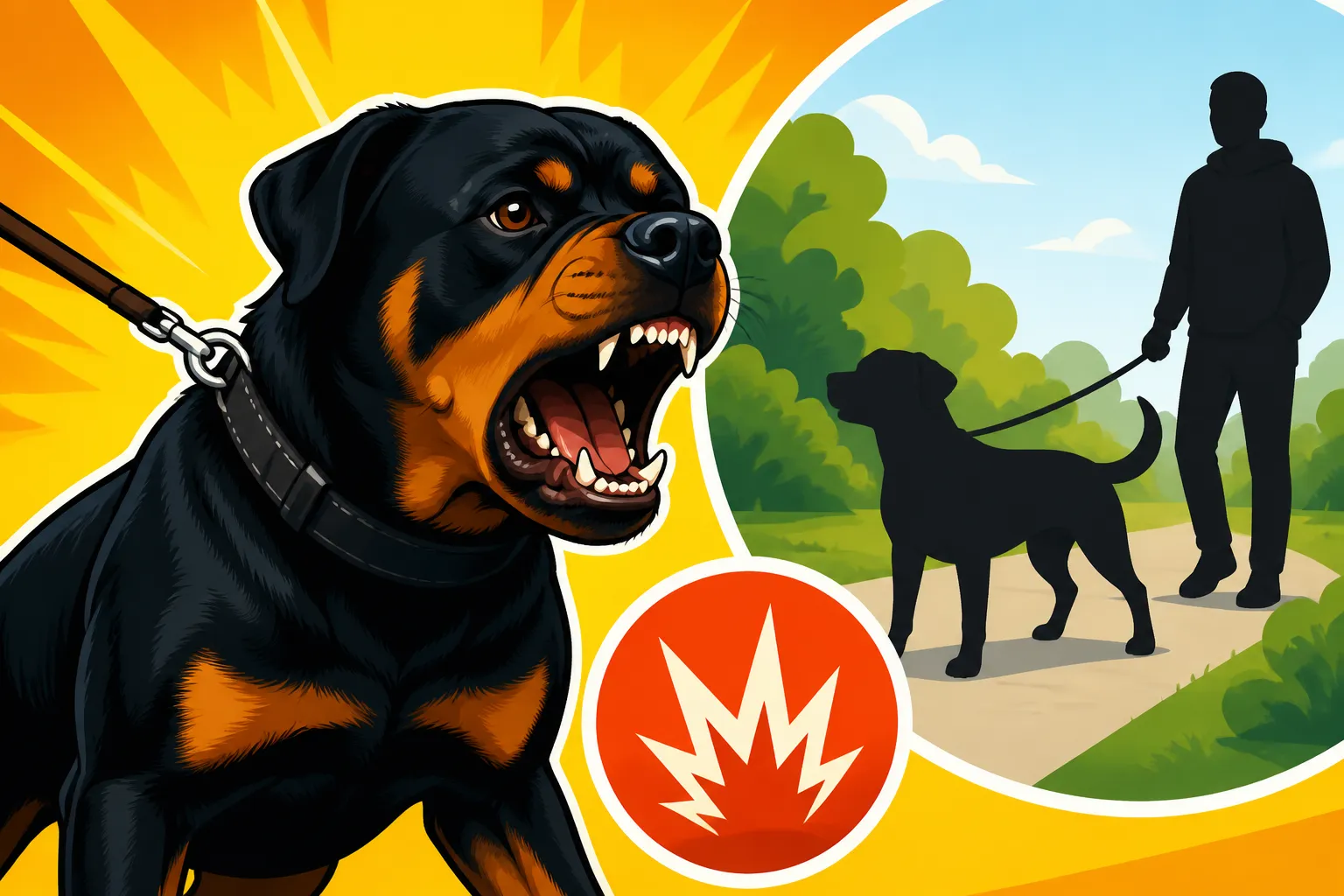
Believe it or not, a lot of the barking, lunging, and growling you see from a reactive Rottweiler often stems from fear or anxiety. Imagine feeling constantly on edge, encountering things you don't fully understand or trust, and feeling trapped on a leash with no escape. For a Rottweiler, an unexpected jogger, a dog around the corner, or a sudden noise can trigger a primal "fight or flight" response. Since they're leashed, "flight" isn't an option, so "fight" (or at least a very dramatic display of it) becomes their only perceived defense. This can be especially true for dogs who had limited positive exposure to the outside world during their critical Rottweiler Socialization Before Sixteen Weeks window. They might be trying to scare away what they perceive as a threat to maintain their personal space, or even protect you.
Sometimes, this fear can be subtle. Your Rottweiler might not cower, but instead stiffen, stare, or give a soft whine before the full-blown reaction kicks in. They might have had a negative experience in the past – perhaps another dog rushed them, or a child startled them. These single incidents can build into a deep-seated apprehension that manifests as reactivity. The problem then becomes a self-fulfilling prophecy: they react, the trigger goes away (because their reaction worked to "scare it off"), and the behavior is reinforced.
Frustration and Over-Arousal
Another huge contributor to leash reactivity, particularly in strong, intelligent breeds like Rottweilers, is frustration. Picture this: your Rottweiler sees another dog across the street. All they want to do is go say hello, sniff, or engage. But they're on a leash, and you're holding them back. This inability to get to the desired stimulus – or sometimes, even to simply avoid it on their own terms – builds up immense frustration. It's like being stuck in traffic when you're in a hurry; eventually, you might honk, yell, or become agitated. Your Rottweiler’s version is barking and lunging.
This frustration is compounded by over-arousal. Rottweilers are powerful dogs with a lot of energy and a keen sense of their surroundings. On a walk, there are a million things to smell, see, and process. For some, this can be overwhelming, leading to a state of heightened excitement that easily spills over into reactivity when a trigger appears. They might be genuinely excited to see another dog, but that excitement, combined with the barrier of the leash, explodes into an uncontrolled display. It’s less about aggression and more about an inability to regulate their intense emotions in a stimulating environment. This is often where proper Rottweiler Leash Manners at a Hundred Pounds training becomes paramount long before reactivity sets in.
Genetic Predisposition and Lack of Early Training
While environment and experiences play a massive role, it's also true that some Rottweilers might have a genetic predisposition to being more sensitive or reactive. Early experiences, or a lack thereof, significantly shape a Rottweiler's temperament. If a Rottweiler puppy isn't properly socialized, exposed to a wide variety of sights, sounds, people, and other calm dogs in a positive way, they can develop anxieties that later manifest as reactivity. Without this foundational exposure, the world can seem like a scary, unpredictable place.
Furthermore, a lack of consistent, positive training from a young age can exacerbate the issue. If a Rottweiler puppy learns that pulling on the leash gets them where they want to go, or that barking makes people and dogs give them space, these behaviors become ingrained. Once a Rottweiler reaches a formidable size and strength, these ingrained habits become incredibly difficult and even dangerous to manage. Investing in early training, especially around impulse control and focus on the handler, is crucial to prevent these behaviors from taking root. Even the calm, confident demeanor described by The Calm Confidence a Rottweiler Standard Asks For requires careful cultivation through early guidance.
Recognizing the Early Signs of Reactivity
Before your Rottweiler launches into a full-blown barking and lunging fit, they often give off subtle signals that they're becoming uncomfortable, over-aroused, or frustrated. Learning to read these early warning signs is absolutely critical. It allows you to intervene before your dog goes "over threshold," giving you a much better chance of managing the situation calmly and effectively. Think of it as catching a cough before it turns into a full-blown cold.
Subtle Body Language Cues
Your Rottweiler is constantly communicating with you through their body language. The trick is learning to speak their language. Before the big reaction, you might notice very subtle shifts. Look for:
- Stiffening: Their body might become rigid, their tail held high and still (even a docked tail will show tension at the base), or their hackles might raise along their spine.
- Intense Staring: They might fixate on the trigger, unable to break eye contact, almost like they're "locking on." This is different from a casual glance.
- Ear Position: Their ears might be pricked forward, indicating high alert, or sometimes flattened slightly back against their head if they're feeling anxious.
- Closed Mouth/Lip Licking: A tightly closed mouth, sometimes accompanied by rapid lip licking (not after a treat), can indicate stress.
- Whale Eye: You might see the whites of their eyes on the edges as they turn their head slightly but keep their eyes fixed on the trigger. This is a clear sign of discomfort.
- Changes in Pace: They might suddenly slow down, speed up, or try to pull in a different direction.
Catching these cues means you can act. For example, if you see your Rottweiler stiffen and stare at a distant dog, you have a window to create distance, redirect their attention, or offer a high-value treat, preventing the situation from escalating. Many owners miss these signals, only reacting when the dog is already "red-lining."
The "Over Threshold" Moment
Every dog has a "threshold" – a point at which they can no longer cope with a trigger calmly and their emotional responses take over. When your Rottweiler goes "over threshold," their ability to listen, learn, or even process information effectively shuts down. This is when the barking, lunging, snapping, or growling typically erupts. At this point, trying to train them or give commands is often futile because they are no longer in a thinking state; they are in a reactive state.
The goal of managing reactivity is to keep your Rottweiler below their threshold. This means identifying what their triggers are and at what distance or intensity they typically react. For some, it might be any dog within 50 feet. For others, it might only be certain types of dogs, or only when the other dog approaches quickly. Observing carefully helps you map out these thresholds. Understanding this concept is vital, as it informs how you plan your walks and your training sessions. You can't effectively teach a dog to be calm if you're constantly putting them in situations where they're overwhelmed. This is also why Why You Should Never Punish a Rottweiler Growl is such important advice; a growl is a warning, and punishing it only teaches your dog to skip the warning and go straight to a bite.
Practical Strategies for Managing Leash Reactivity
Dealing with a reactive Rottweiler on walks requires a multi-faceted approach, combining careful management to prevent reactions, structured training to change emotional responses, and the right gear to ensure safety and control. It's a marathon, not a sprint, and consistency is your best friend.
Management and Avoidance Techniques
The first and often most critical step is management. Until you've made significant progress with training, your priority is to prevent your Rottweiler from going over threshold as much as possible. Each time they react, the behavior is reinforced, making it harder to break the habit.
- Change Your Walking Route and Timing: Avoid known trigger hotspots during peak times. If the park is full of dogs at 5 PM, walk earlier or later, or find quieter streets or trails. Explore different neighborhoods or industrial areas that might be less stimulating. The goal is to set your Rottweiler up for success.
- Increase Distance: This is perhaps the simplest yet most effective tool. If your dog reacts to other dogs at 30 feet, make sure you keep at least 40-50 feet of distance. Cross the street, duck behind a car, or turn around. Your Rottweiler needs to be far enough away from the trigger that they notice it but don't feel compelled to react.
- "Look at That" (LAT) Game: This technique, also known as "engage-disengage," is fantastic. The moment your Rottweiler notices a trigger (before reacting!), mark the observation (a verbal "yes!" or clicker) and immediately reward them with a high-value treat. The treat should come away from the trigger. The goal is to change their emotional association from "scary/frustrating thing" to "precursor to delicious treat." For a Rottweiler, you'll want really high-value treats, like bits of cheese, cooked chicken, or hot dogs.
- U-Turns and Direction Changes: If a trigger appears unexpectedly and you can't create enough distance, simply turn around and walk in the opposite direction. This avoids direct confrontation and reinforces that you are in control of the situation. Practice this preemptively in low-stress environments so it becomes a smooth, automatic maneuver. You might also want to practice with a The Long Line Strength a Rottweiler Needs in a secure area to build confidence in recall and direction changes from a greater distance.
Counter-Conditioning and Desensitization Training
Once you've mastered management, you can start actively working on changing your Rottweiler's emotional response through Counter-Conditioning a Reactive Rottweiler and desensitization. This involves gradually exposing your dog to triggers at a distance where they remain calm, and pairing that exposure with positive experiences.
- Controlled Set-Ups (If Possible): If you have a trusted friend with a calm, well-behaved dog, you can arrange controlled "set-ups." Start with the dogs very far apart, only allowing them to get closer if your Rottweiler remains completely calm and focused on you.
- High-Value Rewards: For a Rottweiler, "high-value" means something truly irresistible. Standard kibble won't cut it when they're stressed. Think freeze-dried liver, soft chicken treats, or even small pieces of real meat. These are your tools to create powerful positive associations. Look for sturdy treat pouches on Amazon that can hold a good supply.
- Structured Online Training: For those who need a structured, step-by-step approach you can do from home, programs like BAXTER & Bella offer comprehensive online modules. They often cover reactivity specifically, providing clear instructions and video demonstrations that can be a lifesaver for busy owners. These resources can guide you through the nuances of timing and technique.
- Redirection and Focus Exercises: Teach your Rottweiler a strong "watch me" or "focus" command in calm environments first. Gradually introduce distractions. The goal is for them to voluntarily look at you when a trigger appears, rather than fixating. This gives you a point of contact and control.
| Reactive Body Language (Early Signs) | Calm Body Language (Desired) | Management Strategy Example |
|---|---|---|
| Stiff body, fixed stare, ears forward | Relaxed posture, soft gaze, ears natural | Cross the street immediately to increase distance. |
| Tail high and rigid, hackles raised | Loose, wagging tail (if natural), smooth coat | Perform a U-turn and walk in the opposite direction. |
| Mouth tightly closed, lip licking | Open mouth, relaxed tongue, gentle pant | Distract with a high-value treat as soon as trigger is seen. |
| Whites of eyes showing (whale eye) | Normal eye exposure, soft blink | Find cover (e.g., parked car) to block line of sight. |
| Sudden stopping or pulling | Consistent, loose-leash walking pace | Guide them away with a "let's go!" cue and treat. |
Essential Gear for Safety and Control
Having the right equipment is not about punishment; it's about safety for everyone and giving you the leverage you need to guide your powerful Rottweiler.
- A Well-Fitting Harness or Head Halter: A standard neck collar can put immense pressure on your Rottweiler's trachea and is ineffective against strong pulling. A front-clip harness can help redirect their pulling strength to their chest, making it harder for them to lunge forward. A head halter, like a Halti or Gentle Leader, gives you control over their head, which in turn controls their body. Many Harnesses and Head Halters Sized for a Rottweiler are available on Amazon.
- Sturdy Leash: Opt for a 6-foot, strong, nylon or leather leash. Retractable leashes are generally discouraged for reactive dogs as they offer little control and can be dangerous if your dog lunges.
- Muzzle Training: This might sound extreme, but muzzle training a Rottweiler is a responsible safety measure, especially if their reactivity includes snapping or biting. A well-fitted basket muzzle allows them to pant, drink, and take treats, making it comfortable. Introducing it positively and gradually (pairing it with treats and praise) means it won't be a punishment. It offers immense peace of mind, particularly if you're working with a trainer or in public spaces where you might encounter triggers. See Muzzle Training a Rottweiler Before You Need It for more on this.
- High-Value Treat Pouch: Essential for quick access to rewards during your training sessions. A durable, easy-to-access pouch keeps your hands free and the treats fresh.
When to Seek Professional Help and What to Look For
While self-help strategies are valuable, there comes a point where professional guidance is not just helpful but essential. A reactive Rottweiler is a big, powerful animal, and safety must always be the top priority. Don't feel ashamed to ask for help; it's a sign of a responsible owner dedicated to their dog's well-being.
Consulting a Certified Professional Dog Trainer or Behaviorist
If your Rottweiler’s reactivity is severe, involves aggression (snapping, growling at people, or actual bites), or if you're simply feeling overwhelmed and making little progress on your own, it's time to bring in a professional. Look for:
- Certified Professional Dog Trainer (CPDT-KA/KPA-CTP): These trainers have demonstrated knowledge and experience in positive reinforcement training methods. They can help you implement management strategies and teach you effective counter-conditioning techniques.
- Certified Dog Behavior Consultant (CDBC) or Veterinary Behaviorist (DACVB): For more severe cases, especially those rooted in deep fear, anxiety, or true aggression, a behaviorist is often the best choice. Veterinary behaviorists are veterinarians with specialized training in behavior and can prescribe medication if necessary to help manage anxiety alongside behavior modification.
- Experience with Large Breeds/Rottweilers: When looking for Finding a Rottweiler-Experienced Trainer Near You, make sure they have experience working with strong, guardian breeds. They understand the nuances of a Rottweiler's temperament and the challenges associated with their size and strength. A trainer who understands the breed will approach the problem with appropriate methods, not one-size-fits-all solutions.
- Positive, Force-Free Methods: Always choose a trainer who uses positive reinforcement and force-free methods. Avoid anyone who suggests using harsh corrections, dominance theory, or tools like prong collars or shock collars for reactivity. These methods often suppress symptoms without addressing the underlying emotional state, and can even escalate fear and aggression in the long run.
When a Veterinary Check-Up is Crucial
Sometimes, underlying medical issues can contribute to or exacerbate reactivity. Pain, discomfort, or even neurological conditions can make a dog more irritable, anxious, or less tolerant of triggers. Before embarking on an intensive training program, a full veterinary check-up is always a good idea.
- Rule Out Pain: Arthritis, hip or elbow dysplasia, dental pain, or even a hidden injury could make your Rottweiler more sensitive and reactive. If they're anticipating pain when moving or being handled, they might lash out. Rottweiler Behavior Changes That Mean Pain are often subtle, so a vet can perform a thorough examination.
- Thyroid Issues: Hypothyroidism, while less common as a direct cause, can sometimes lead to behavioral changes, including irritability or anxiety in some dogs. A simple blood test can rule this out.
- Neurological Conditions: While rare, certain neurological conditions can affect a dog's mood and impulse control. Your vet can assess if further investigation is needed.
- Medication for Anxiety: For some Rottweilers, especially those with severe anxiety, medication (prescribed by a vet or veterinary behaviorist) can be a game-changer. It doesn't "fix" the problem, but it can lower their overall anxiety levels enough for them to be able to learn and respond to training more effectively. It creates a baseline where training can actually stick.
Addressing reactivity in your Rottweiler is a journey, not a destination. It requires patience, consistency, and a deep understanding of your dog's individual needs. But with the right approach, the support of professionals, and a whole lot of love, you can help your magnificent Rottweiler navigate the world with greater calm and confidence, turning those stressful walks into the joyful excursions they were always meant to be.
Disclaimer
This article is for general informational purposes only and does not constitute professional advice. Laws, prices and regulations vary by location and change over time. Consult a qualified professional for guidance on your specific situation.