Feeding a Rottweiler Away From Other Dogs
Feeding multiple dogs in one household can be a daily tightrope walk, and when one of those dogs is a powerful, protective Rottweiler, the stakes are even higher. The reality is, what starts as a subtle stare over a food bowl can quickly escalate into a serious confrontation, putting all your dogs at risk. This guide is here to walk you through why feeding your Rottweiler separately from other dogs isn't just a good idea, but often a crucial one for peace and safety, and how to implement it effectively without turning mealtime into a battlefield.
Understanding Why Feeding Separately Matters
Let's be honest, we all dream of that idyllic multi-dog household where everyone eats harmoniously side-by-side. But with a Rottweiler, or any large, guardian-type breed, that dream can quickly become a nightmare if you're not careful. Feeding separately isn't about isolating your dog; it's about respecting their natural instincts and ensuring a stress-free environment for everyone, especially for a breed with such immense power.
The Root of Resource Guarding in Rottweilers
Rottweilers, deep down in their bones, were bred for guardianship. Their ancestors, the Roman drover dogs, were tasked with protecting livestock and the butcher's money satchels – valuable resources indeed. This inherent guarding instinct is part of what makes them such magnificent, loyal companions, but it also means they often feel a strong drive to protect what they perceive as theirs. Food is, arguably, the most primal and essential resource.
When you put food down for multiple dogs simultaneously, especially if one of them is a Rottweiler, you're inadvertently setting up a scenario of competition. Even if it seems like everyone is eating peacefully, subtle cues – a stiff body, a direct stare, a quick gulping of food – can indicate an underlying tension. Over time, this tension can boil over. A Rottweiler protecting its food isn't just being "naughty"; it's acting on a deeply ingrained instinct. Ignoring or attempting to punish these signs without understanding the root cause can actually make the guarding worse. This is a powerful dog, and a serious resource guarding incident over food can have devastating consequences for the other dogs in your home, or even for you if you get caught in the middle. We delve deeper into this in Rottweiler Resource Guarding at Home.
Stress and Digestion in a Multi-Dog Household
Think about it: do you enjoy eating your dinner while someone stands over you, watching your every bite, or perhaps another person is impatiently waiting for you to finish? No, right? It's stressful. Our dogs feel the same way. When a Rottweiler has to constantly be aware of other dogs, their proximity to the food, or even the possibility of another dog approaching, it creates a chronic low level of stress during mealtime.
This stress isn't just psychological; it has a very real impact on their physical health. Stress can affect digestion, potentially leading to gastrointestinal upset. For a breed like the Rottweiler, this is especially concerning when we consider the risk of bloat (Gastric Dilatation-Volvulus or GDV). While the exact causes of bloat are complex, stress, rapid eating, and exercise around meals are all considered contributing factors. A dog that feels rushed or anxious about its meal might eat faster, gulping down air along with its food, which is a known risk factor for bloat. Ensuring a calm, secure eating environment is a simple but powerful step in promoting good digestion and overall well-being. Knowing the warning signs of this emergency is critical, and we cover it thoroughly in Bloat in a Rottweiler and the Hours That Matter.
Practical Strategies for Separate Feeding
Okay, so we agree that separate feeding is important. Now, how do we actually do it without turning our homes into a doggy obstacle course? It’s all about setting up clear boundaries, consistent routines, and using the right tools to make it easy for everyone involved. The goal is to remove the opportunity for conflict and alleviate stress, not create more work for you.
Designating Individual Feeding Zones
The most straightforward way to feed dogs separately is to give each one their own dedicated space where they can eat undisturbed. This isn't just about physical distance; it's about creating a mental zone of peace and security around their meal. Consistency is absolutely key here – once you establish these zones, stick to them every single meal, every single day.
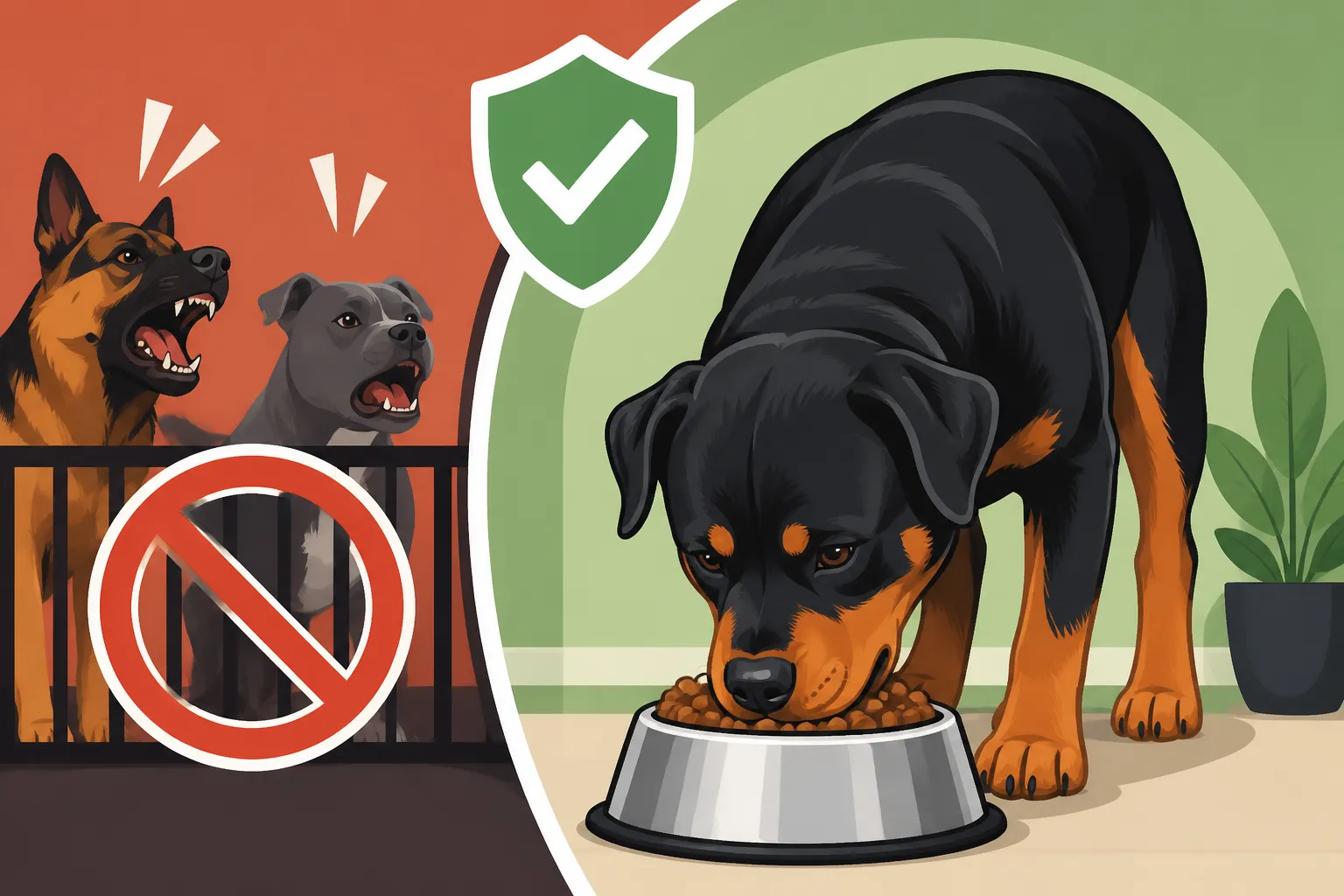
You have several options for creating these individual spaces. Crates are a fantastic tool, assuming your dogs are already crate-trained and view their crates as safe, positive dens. Each dog can go into their own crate, get their food, and eat at their own pace without anyone hovering or feeling threatened. Make sure the crate is appropriately sized, like the kind you can find on Amazon, to allow them to stand, turn around, and lie down comfortably while eating. If crates aren't an option, or if you have a dog that isn't comfortable in one, separate rooms work just as well. A laundry room for one dog, the kitchen for another, perhaps a bedroom for a third. Even using baby gates or exercise pens to create temporary barriers in a larger space can work wonders. The main thing is that each dog has an unobstructed view of their food and feels no pressure from the presence of another dog. This separation needs to apply to all food resources, not just kibble. Even treats and high-value chews, which can often trigger intense guarding behaviors, need to be managed this way.
Implementing a Consistent Feeding Schedule
Beyond where they eat, when and how they eat also plays a huge role in reducing mealtime stress. Dogs thrive on routine, and a consistent feeding schedule helps manage expectations and lowers anxiety. If your dogs know exactly when and where their food will appear, they're less likely to feel the need to compete or worry about missing out.
A good starting point is to establish a set time for meals, typically twice a day for adult Rottweilers, as recommended in Splitting a Rottweiler's Ration Across the Day. Feeding at the same time each day helps regulate their digestive system and their overall routine. When it comes to serving, consider a 'rotation' or 'release' system. For example, prepare all meals beforehand. Then, take the highest-value dog or the one most prone to guarding to their designated eating spot first. Release them to eat. Then, move on to the next dog. This ensures that everyone gets their turn in a calm, orderly fashion. Training programs, like those offered by BAXTER & Bella, often emphasize the importance of routines and structured meal times as part of their comprehensive puppy and dog training courses. Such structured training can be incredibly beneficial in teaching your Rottweiler to patiently wait for its turn, viewing the routine as a predictable and positive experience rather than a competition.
Managing Mealtime Dynamics and Preventing Conflict
Even with separate feeding zones and a schedule, you, as the human, are the conductor of this orchestra. Your presence and your ability to read the subtle cues of your dogs are paramount to maintaining peace and preventing any potential flare-ups. This isn't just about putting food down; it's about actively managing the environment.
Supervising Meals and Recognizing Early Warning Signs
Just because dogs are in separate rooms or crates doesn't mean your job is done. Active supervision during meals is still incredibly important. Even through doors or crate bars, dogs can communicate tension, and sometimes, a barrier isn't enough to completely defuse a deeply ingrained resource guarding instinct. Listen for any unusual noises – growls, whines, excessive gulping. Watch for body language cues like stiff postures, ears flattened, whale eye (where the whites of the eyes are visible), or unusually fast eating. Reading a Calm Rottweiler That Is Actually Alert can help you discern subtle signs of stress.
If you observe any signs of tension, even minor ones, reinforce the separation. This might mean moving bowls further apart, adding an opaque barrier, or physically relocating a dog to a more isolated spot. The key is to intervene before an escalation occurs. Never physically punish a growl or any warning sign, as this can suppress the warning, making a bite more likely in the future without any preceding notice. Instead, calmly separate the dogs further or remove the item causing the tension, then re-evaluate your setup. Remember, your Rottweiler is a powerful animal, and ignoring these signals is akin to ignoring a smoke alarm – you're just inviting a fire. We talk more about this critical distinction in Why You Should Never Punish a Rottweiler Growl.
Teaching "Place" or "Stay" for Mealtime Etiquette
Training isn't just for tricks; it's for life skills, and mealtime etiquette is a vital one in a multi-dog home. Teaching your Rottweiler (and your other dogs!) a solid "Place" or "Stay" command can be incredibly useful in facilitating calm, separate meal times. These commands teach impulse control and reinforce the idea that good things happen when they wait patiently.
Start by teaching each dog their "Place" command individually, perhaps on a mat or a designated bed. Reward heavily for staying on their place. Gradually introduce the presence of food. Begin by placing an empty bowl on their place while they stay, then progress to a full bowl. Once they are reliable in their individual spots, you can start the mealtime routine. Have each dog go to their "Place," then calmly deliver their food to their separate eating areas. They should remain on their "Place" until you release them to eat. This creates a predictable and polite routine, reducing the scramble and competition that often precedes meals. For dogs struggling with impulse control, incorporating games and exercises outlined in Rottweiler Impulse Control Games can build a strong foundation for these vital commands.
Beyond the Bowl: Managing High-Value Treats and Chews
Mealtime kibble isn't the only resource that can trigger guarding behaviors. In fact, for many dogs, high-value treats and long-lasting chews can be even more potent triggers because they represent an extended, highly desirable resource. With a Rottweiler, whose jaw strength is considerable and whose guarding instincts are strong, managing these items carefully is absolutely non-negotiable.
The Difference Between Meals and High-Value Items
Think about it from your dog's perspective. Their regular kibble is a daily necessity, consumed relatively quickly. A bully stick, a raw bone, or a favorite stuffed Kong? That's a treasure that lasts, something to be savored and, for a dog with guarding instincts, something to be fiercely protected. Because these items are consumed slowly and are incredibly rewarding, they often trigger a stronger, more prolonged guarding response than a quick bowl of kibble.
This means your separate feeding strategies need to extend to all high-value items, and perhaps even be more stringent. You cannot assume that because your dogs eat their regular meals separately without issue, they will be fine sharing the same space with a long-lasting chew. The instinct to guard can be profoundly strong. A Rottweiler might be content to eat its kibble in a crate with another dog eating in a different crate nearby, but introduce a marrow bone, and the dynamic could instantly change to intense staring, stiffening, and potentially aggression. For toys and chews designed to withstand a powerful jaw, like many options found on Amazon, the value they hold to a Rottweiler can be immense, making careful management even more critical. If you're looking for durable chews, Rottweiler Chew Toys That Survive the Jaw offers some great insights.
Preventing Resource Guarding Incidents With All Resources
The best approach to managing high-value items is proactive prevention. This means:
- Strict Separation: Always give high-value chews, bones, or even special treats when dogs are completely separated. This could be in individual crates, closed-off rooms, or even outdoors in separate, secure areas. Do not allow them access to these items when they are together, even if you are supervising. The risk simply isn't worth it.
- Trade Up, Don't Take Away: If you absolutely must take a high-value item from your Rottweiler (for example, if it's broken into dangerous pieces, or you need to leave the house), never just reach in and snatch it. This teaches your dog that humans are a threat to their resources, making future guarding worse. Instead, offer something even more desirable. This is often called "trading up." For instance, offer a piece of cooked chicken or cheese, and as they drop the chew to take the high-value treat, quietly remove the chew. This builds trust and teaches them that giving up a resource can lead to an even better reward. More guidance on this can be found in Taking a Bone Back From a Rottweiler Safely.
- Teach "Drop It" Reliably: A strong "Drop It" command, taught in low-stress environments with low-value items first, can be invaluable. Practice this command frequently with various objects, always rewarding generously when they release the item. This command gives you a safe way to ask your dog to release a resource without force.
Remember, consistency, patience, and understanding your Rottweiler's natural instincts are your greatest tools. By proactively managing feeding times and high-value items, you're not just preventing fights; you're fostering a calmer, safer, and happier home for all your beloved companions.
Disclaimer
This article is for general informational purposes only and does not constitute professional advice. Laws, prices and regulations vary by location and change over time. Consult a qualified professional for guidance on your specific situation.