Taking a Bone Back From a Rottweiler Safely
There are few things more intimidating than watching your powerful Rottweiler clamp down on a high-value chew, and then seeing their posture stiffen and hearing that low growl when you simply walk by. Retrieving a bone or another prized possession from a large, strong dog like a Rottweiler can feel like walking into a minefield. This guide will walk you through safe, effective, and trust-building methods to manage resource guarding and retrieve items without conflict or fear.
Understanding Resource Guarding in Rottweilers
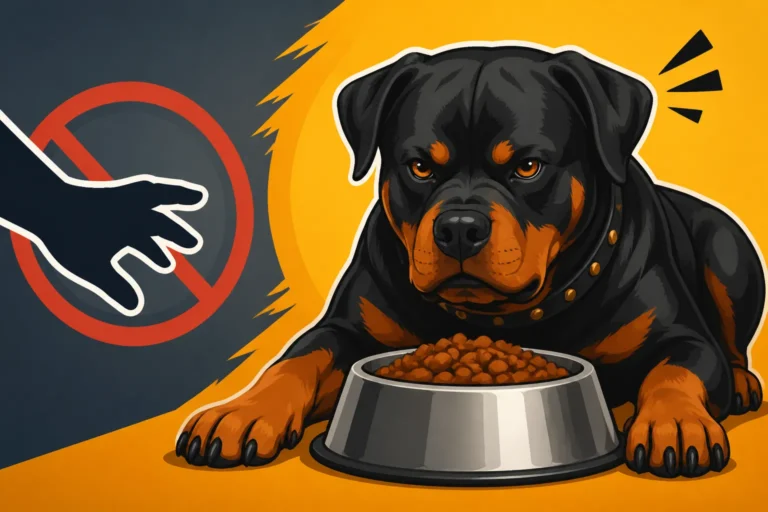
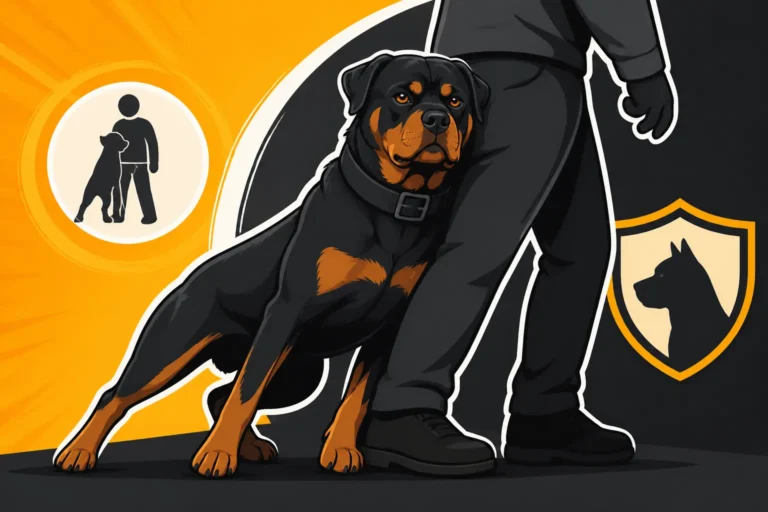
Resource guarding, sometimes called "possessive aggression," is a natural canine behavior where a dog protects its valuable possessions – food, toys, sleeping spots, or even people – from perceived threats. While all dogs can exhibit it, a Rottweiler's size, strength, and guarding instincts can make this behavior particularly concerning for owners. It's not about being "mean" or "dominant"; it's deeply ingrained.
The Instinct Behind the Behavior
Imagine living in the wild, where every meal could be your last. If you didn't protect your scavenged find, someone else would take it, and you'd starve. This primal instinct is still very much alive in our dogs, even if their "dinner" comes from a bag twice a day. Rottweilers, originally bred to guard cattle and butcher's shops, have an amplified natural guarding drive. This isn't inherently bad; it's simply a strong trait that needs careful, consistent management and training. When your Rottweiler guards a bone, they're not being malicious; they're acting on an ancient drive to protect something vital to their survival, even if it's a giant knuckle bone from the pet store.
Recognizing the Early Warning Signs
It's crucial to spot resource guarding behaviors early, especially with a breed as powerful as a Rottweiler. Often, the first signs are subtle. You might notice your dog freezing over its item, or turning their head slightly to keep an eye on you as you approach. Perhaps they eat faster, or their body language becomes stiff. As the behavior escalates, you might see a hard stare, a low growl, or a curled lip. They might hunch over the item, using their body as a shield. Missing these early signals can lead to more intense displays later. Don't wait until you're seeing teeth before you address the issue. Pay attention to how your Rottweiler acts the moment you enter their space while they have something they value. Early intervention is key to preventing the behavior from becoming deeply ingrained and dangerous.
Why Punishing a Growl Backfires
It's tempting to want to "correct" a growl, believing you're teaching your dog who's boss. However, punishing a growl is one of the worst things you can do when dealing with resource guarding. A growl is your dog's way of saying, "I'm uncomfortable, please back off." It's a warning signal. If you punish the growl, your dog learns that this warning signal is unacceptable. What happens next? They might skip the growl and go straight to a bite. You've effectively removed their polite way of communicating their stress, leaving them no option but to escalate to protect themselves and their resource. Always remember that Why You Should Never Punish a Rottweiler Growl is a foundational principle in building trust and safety around a guarding dog. Instead of punishing the warning, learn to listen to it and change your approach.
Setting Up for Success: Prevention is Key
Preventing resource guarding from becoming an issue, or managing it effectively once it starts, is far easier than trying to fix a deeply entrenched aggressive behavior. The groundwork for successful management starts long before you ever need to retrieve a bone in an emergency. It's about building trust and teaching your dog that your approach means good things, not threats.
Management Strategies for Bone Time
When your Rottweiler has a high-value item like a bone, simply manage the environment to prevent conflicts. Give them their special chews in a designated "safe zone" where they won't be disturbed. This could be their crate, a specific mat in a low-traffic area, or even outside if appropriate. The goal is to remove any perceived need for them to guard the item from you or other household members. If you have children or other pets, ensure they understand that the Rottweiler should be left completely alone when enjoying a bone. Think of it like giving them their personal "dining room" where they can relax and enjoy their meal without fear of interruption. This simple step can dramatically reduce guarding incidents. For example, if you're giving a long-lasting chew from a reputable brand like those found on Amazon, make sure your dog can enjoy it in peace.
Teaching the "Trade" Command Early
The "trade" command is your most powerful tool for safely retrieving items. It teaches your Rottweiler that giving up one item results in an even better one. Start this training when your puppy is young and with low-value items. Offer a highly desirable treat (like cooked chicken or cheese) in exchange for a toy they've just dropped or a lower-value chew. As they get comfortable with this exchange, gradually work your way up to higher-value items. Always praise them enthusiastically when they make the trade. The goal is to create a positive association: "When my human approaches while I have something, it means I'm about to get something even better!" Training a Rottweiler Before It Outweighs You includes foundational work like this, ensuring you have control and communication long before your dog reaches their impressive adult size.
Choosing Appropriate Chews and Feeding Practices
The type of chew can influence guarding behavior. Some chews last longer and are more intensely guarded than others. Be mindful of what you're giving and when. Supervise your Rottweiler with high-value chews, or only give them when you can fully ensure their privacy. Also, consider your general feeding practices. Free-feeding, where food is always available, can sometimes exacerbate guarding if multiple pets are involved. Feeding in separate, quiet locations can prevent issues. If your Rottweiler is a fast eater, consider slow-feeder bowls to extend mealtime without creating a rush that might lead to guarding. Consistency in routine and clear boundaries around food can go a long way in preventing Rottweiler Resource Guarding at Home from escalating.
Safe Retrieval Techniques
When you absolutely must retrieve a bone or other guarded item, the "trade up" method is your safest bet. It leverages your dog's learned association that giving something up leads to a better reward, rather than engaging in a confrontational struggle.
The "Trade Up" Method
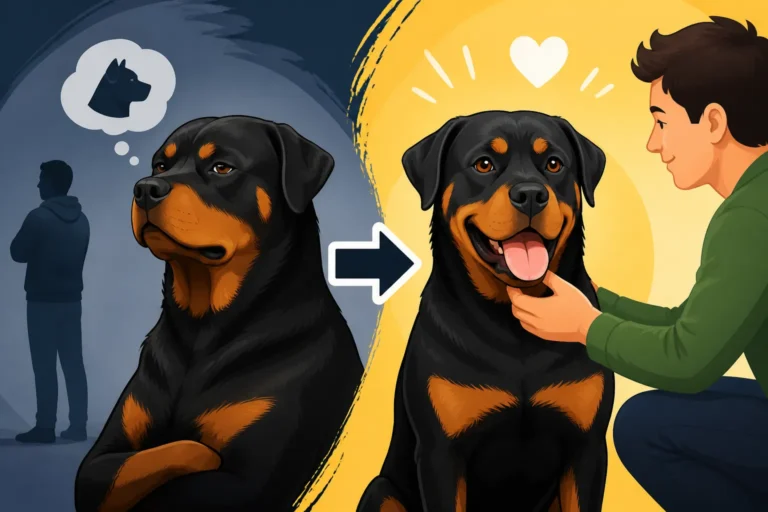
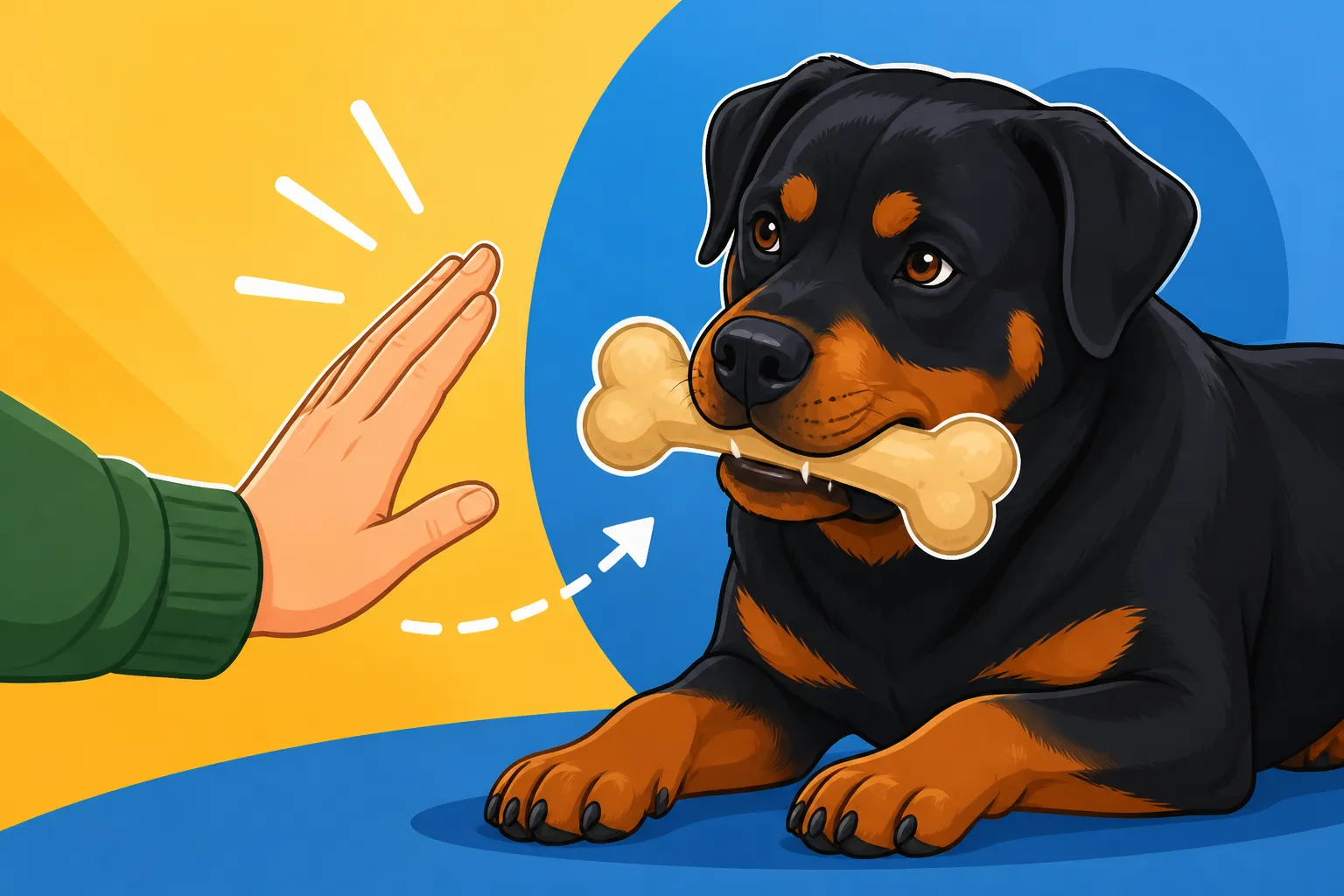
This is the cornerstone of safe retrieval. If your Rottweiler has a bone and you need to take it, never just reach for it. Instead, arm yourself with something incredibly high-value – think a piece of cooked chicken, a smear of peanut butter on a spoon, or a squeaky toy they adore. Present this amazing item to your dog a short distance away from the bone. The moment they release the bone to investigate or take the new offering, pick up the bone. Praise them lavishly for the trade. Then, decide if you want to give them the original bone back or let them keep the new item. By consistently trading up, you reinforce the idea that your approach means gain, not loss. This builds trust and makes future retrievals much smoother. This technique is part of Teaching a Rottweiler to Take Treats Gently, which should be practiced with all kinds of items, not just high-value bones.
Gentle Desensitization and Handling Practice
Beyond the direct trade, regular, low-pressure desensitization can help reduce guarding over time. This involves intermittently approaching your Rottweiler while they have a low-value chew or toy, dropping an even better treat near them, and then walking away without touching their item. They learn that your presence isn't always about taking, but often about giving. You can also practice gently handling them while they have a bone, but only if they are comfortable and not showing any guarding signs. Start by stroking their head or shoulder, then perhaps briefly touching the bone while dropping a treat. This is a very gradual process and should only be done if you are absolutely confident in your dog's comfort level. If your dog shows any signs of discomfort, back off immediately.
Here's a quick overview of how the "Trade Up" method works compared to riskier approaches:
| Method | Description | Pros | Cons |
|---|---|---|---|
| Trade Up | Offer a more valuable item (e.g., chicken) for the item you want. | Builds trust, teaches positive association, reduces conflict, safer for owner. | Requires preparation (high-value treat), may take patience for the dog to decide to trade. |
| Distraction | Lure dog away with a thrown ball, walk outside, etc., then retrieve the item. | Avoids direct confrontation, can be effective in some situations. | Does not teach a "give" command, dog may return quickly to guard the item, less reliable if item is highly valued. |
| Verbal Command | Use "Leave It" or "Drop It" command, followed by a reward. | Reinforces obedience, ideal if dog is already trained. | Only works if dog is highly trained and reliable on command; often fails with very high-value items if not consistently reinforced. |
| Reaching/Grabbing | Physically take the item from the dog. | Perceived immediate solution (though dangerous). | Highly dangerous, breaks trust, escalates guarding behavior, risk of bite, teaches dog to guard more intensely. |
| Punishment | Scolding, alpha rolls, physical corrections when dog guards. | Perceived attempt to assert dominance. | Extremely dangerous, destroys dog-owner bond, suppresses warnings (leading to unprovoked bites), ineffective for learning. |
When Trading Isn't Enough
Sometimes, a Rottweiler's resource guarding can be so severe that even the "trade up" method feels impossible or unsafe. If your dog freezes, growls intensely, snaps, or even attempts to bite when you simply approach or offer a trade, then you've moved beyond basic management and into a behavioral issue that requires professional help. In these cases, it's not a matter of trying harder; it's a matter of safety for everyone in the household. Using high-quality training tools, like those available from BAXTER & Bella, can certainly help reinforce positive behaviors, but they won't fix deeply ingrained guarding on their own.
When to Call a Professional
It's vital to know when a situation has moved beyond what you can safely handle on your own. A large, powerful breed like a Rottweiler exhibiting serious resource guarding is not something to take lightly. Your safety and the safety of those around you are paramount.
Signs Your Rottweiler Needs a Behaviorist
If your Rottweiler's guarding escalates to snapping or biting, if they guard multiple types of resources (not just bones), if they guard from multiple people, or if the behavior is unpredictable and frequent, it's time to call in the cavalry. This isn't a reflection of your failure as an owner; it's recognizing that some behaviors require specialized knowledge. An experienced certified professional dog trainer or a veterinary behaviorist has the expertise to assess the specific triggers, intensity, and underlying motivations for your Rottweiler's guarding. They can create a tailored behavior modification plan that you can safely implement. Trying to DIY serious aggression or guarding can lead to dangerous situations and worsen the problem. Don't let Rottweiler Behavior Problems That Start Small spiral out of control.
What a Behaviorist Can Do
A qualified professional will conduct a thorough assessment, often observing your dog in your home environment. They'll look at all aspects of your Rottweiler's life – diet, exercise, daily routine, any past incidents, and family dynamics – to understand the full picture. From there, they will develop a structured plan. This plan might include:
- Environmental Management: Detailed strategies to prevent guarding incidents.
- Desensitization and Counter-Conditioning: Gradually changing your dog's emotional response to your presence around valued items, turning fear or aggression into positive anticipation.
- Structured Training: Reinforcing "drop it," "leave it," and "trade" commands using positive reinforcement.
- Safety Protocols: Teaching you how to safely manage your dog in situations where guarding might occur, including potential muzzle training if necessary for safety during rehabilitation (remember, Muzzle Training a Rottweiler Before You Need It is always a good idea).
- Medication (for veterinary behaviorists): In some severe cases, medication might be considered as an adjunct to behavior modification to help reduce anxiety and make the dog more receptive to training.
Working with a professional provides peace of mind and, most importantly, a clear path forward to creating a safer, more harmonious relationship with your powerful and loving Rottweiler. Don't hesitate to seek out Finding a Rottweiler-Experienced Trainer Near You if you find yourself struggling with persistent resource guarding.
Disclaimer
This article is for general informational purposes only and does not constitute professional advice. Laws, prices and regulations vary by location and change over time. Consult a qualified professional for guidance on your specific situation.