Subaortic Stenosis in Rottweiler Puppies
It’s a truly frightening moment when your adorable, bouncy Rottweiler puppy, full of life and mischief, receives a diagnosis that mentions their heart. The words "heart murmur" can feel like a punch to the gut, especially when you discover it might be something as serious as subaortic stenosis (SAS). This guide is here to walk you through exactly what this condition means for your Rottweiler, how it's identified, what you can expect, and how to best care for a puppy living with this challenging heart issue.
What is Subaortic Stenosis and Why It Matters for Rottweilers
Imagine bringing home that tiny, black-and-tan bundle of joy, envisioning years of loyal companionship, long walks, and playful romps. Then, at a routine vet check, a murmur is heard. This isn't just a minor blip; for Rottweilers, a heart murmur often points directly to subaortic stenosis, a congenital heart defect that can significantly impact their life, sometimes tragically. It's a condition that demands immediate attention and careful understanding from owners.
Understanding the Heart's Structure and Blood Flow
To truly grasp subaortic stenosis, it helps to visualize the amazing mechanics of a healthy dog's heart. Your Rottweiler’s heart is a four-chambered pump, diligently working to circulate blood throughout their body. Oxygen-rich blood from the lungs enters the left atrium, moves into the powerful left ventricle, and from there, it's propelled with incredible force into the aorta, the body's main artery. The aorta then branches out, delivering that vital oxygen to every cell, muscle, and organ. It's a beautifully synchronized dance, ensuring every part of your dog gets what it needs to thrive.
The crucial part for SAS is the area just below the aortic valve, the gateway where blood leaves the left ventricle and enters the aorta. This valve is designed to open wide, allowing blood to flow freely, and then close tightly to prevent backflow. Any obstruction in this critical pathway can create serious problems, forcing the heart to work harder and impacting its long-term health.
The Specific Defect in Subaortic Stenosis
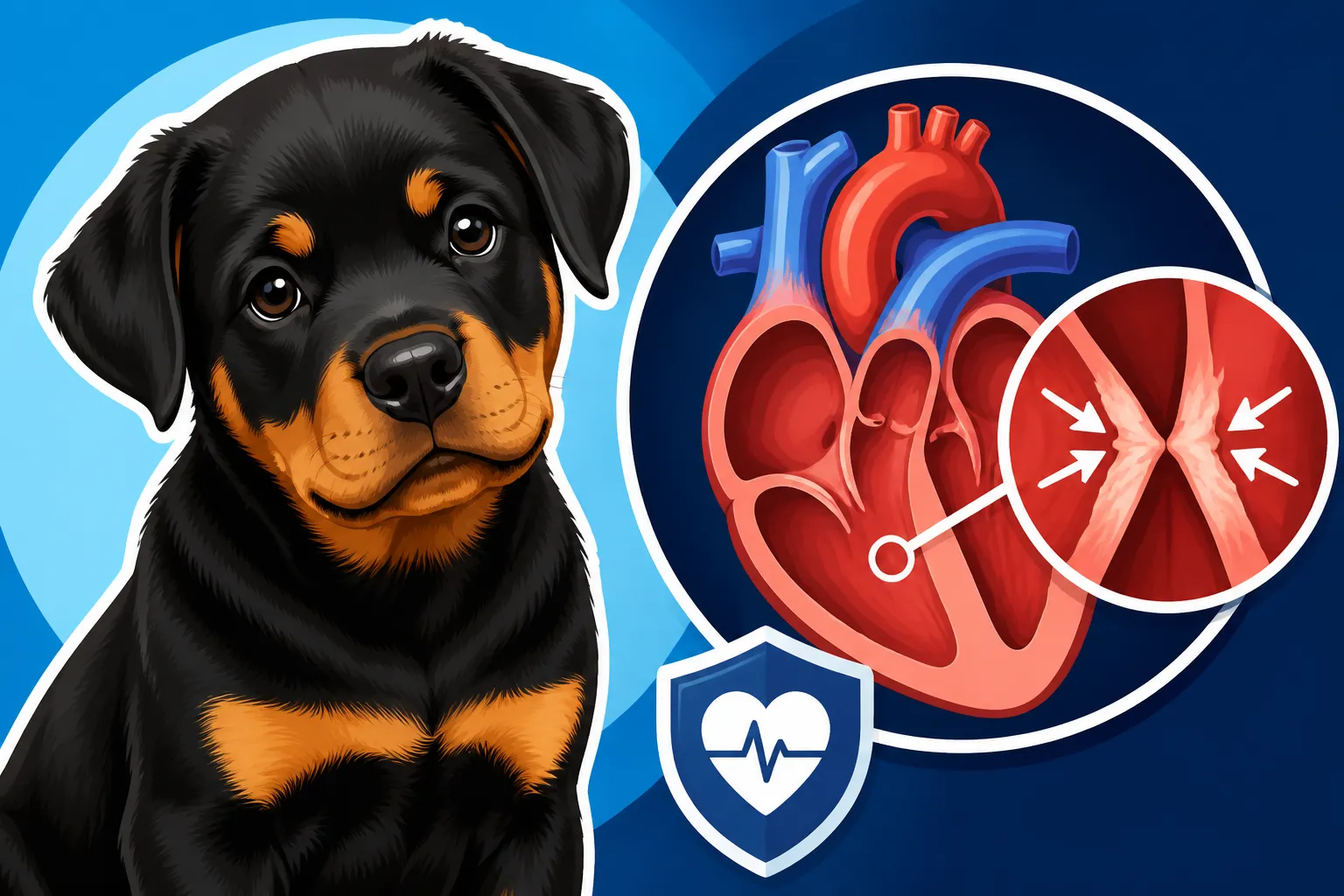
With subaortic stenosis, the problem lies precisely in that region beneath the aortic valve. Instead of a clear, smooth exit, there’s an abnormal ring of fibrous tissue, a band, or a nodule that constricts the outflow tract. Think of it like a kink in a garden hose or a partially closed faucet. This obstruction forces the left ventricle to exert immense pressure to push blood through the narrowed opening. The more severe the narrowing, the harder the ventricle has to pump, and the greater the turbulence created as blood rushes past the obstruction.
This turbulence is actually what the vet hears as a heart murmur. It’s not just a random sound; it's the audible sign of blood struggling to get through. The severity of the stenosis can range from mild, where the obstruction is minimal, to severe, where the pathway is significantly restricted, posing a life-threatening challenge for the heart.
The Impact on a Rottweiler's Heart and Body
When the left ventricle is constantly battling against this obstruction, it begins to thicken, much like any muscle that's put under continuous strain. This thickening is called left ventricular hypertrophy. Initially, it might seem like a stronger heart, but over time, this muscle becomes stiff and less efficient at filling with blood. This compensatory mechanism eventually fails, leading to congestive heart failure. The increased pressure in the heart can also lead to irregular heart rhythms, known as arrhythmias, which can cause sudden collapse or even death.
Beyond the heart itself, the entire body suffers from reduced blood flow and oxygen delivery, especially during exercise. A Rottweiler, a breed known for its robust athleticism and strength, will find its capacity for normal activity severely limited. In severe cases, puppies may appear smaller, less energetic, and struggle to keep up with their littermates. This is not just a "little" heart problem; it's a systemic issue that impacts the entire well-being and, unfortunately, can significantly shorten your Rottweiler's lifespan and the eight to ten year average you might expect.
How Subaortic Stenosis Develops in Rottweiler Puppies
Understanding that SAS is something a puppy is born with, rather than developing later in life, can be particularly hard for owners to grasp. It's not due to anything you did or didn't do, but rather a complex interplay of genetics and developmental processes that occur long before your puppy even opens its eyes.
Genetic Predisposition in Rottweilers
Rottweilers are, sadly, one of the breeds most commonly affected by subaortic stenosis, alongside Newfoundlands and Golden Retrievers. This strong breed predisposition points directly to a genetic component. Research continues to unravel the exact genetic mechanisms, but it's clear that the condition is inherited, likely in a polygenic manner, meaning several genes contribute to its expression, rather than a single simple gene. This makes tracking and eliminating it from breeding lines incredibly challenging, as even parents who don't show severe signs themselves can carry and pass on the genes.
Because of this genetic link, responsible breeders put a huge emphasis on screening. They know that even if a parent appears healthy, they might be a carrier or have a mild form that wasn't properly diagnosed. This is why when you're looking for a puppy, asking about the health clearances of the parents, especially cardiac evaluations, is paramount. Breeders who skip these steps are not only taking a gamble with their puppies' health but also contributing to the perpetuation of this debilitating disease within the breed.
Early Fetal Development and Heart Formation
The fibrous ring or tissue that causes subaortic stenosis forms during the critical stages of fetal development, specifically when the heart and great vessels are taking shape. It’s not something that just appears after birth; it’s a structural anomaly present from day one. During gestation, the complex processes that guide the growth of the outflow tract from the left ventricle can go awry, leading to the formation of this obstructive tissue.
Environmental factors during pregnancy are generally not considered primary causes, reinforcing the genetic root. This means that by the time your Rottweiler puppy is born, the defect is already established. The severity of the obstruction, however, can sometimes progress or become more apparent as the puppy grows and its heart works harder, but the underlying anatomical defect is always there from the start.
Why Some Puppies Are More Severely Affected
It's a frustrating reality that not all puppies inheriting the predisposition for SAS will be equally affected. Some might have a very mild form that causes no clinical signs and minimal impact on their life, while others from the same litter can have severe, life-threatening obstructions. This variability is one of the reasons it’s so difficult to eradicate through breeding, as mildly affected dogs might still be bred if not properly screened, unknowingly passing on the trait.
Factors such as the exact location and thickness of the fibrous ring, as well as individual puppy growth rates, can influence the clinical outcome. A rapidly growing puppy might put more strain on a mildly stenotic heart, making the condition more pronounced. This wide spectrum of severity highlights why early and thorough cardiac evaluation is crucial for all Rottweiler puppies, not just those showing obvious signs of distress. It's a roll of the genetic dice, but proactive screening and careful monitoring can make a world of difference.
Recognizing the Signs of Subaortic Stenosis
One of the most insidious aspects of subaortic stenosis is how subtly it can present in the beginning, especially in an energetic young puppy. As owners, we want to believe our puppies are invincible, but with a serious condition like SAS, being hyper-aware of even minor changes can be life-saving.
Subtle Early Indicators in Young Puppies
In very young Rottweiler puppies, the initial signs of SAS can be easy to miss or dismiss as normal puppy behavior. A puppy might seem a little less active than its littermates, preferring to nap more often or not engaging in boisterous play for as long. You might notice they tire quickly after short bursts of activity, needing more frequent breaks. Their growth might also be slightly stunted compared to their siblings, appearing a bit smaller or leaner.
Another subtle sign can be a persistent cough, especially after exercise or excitement, which can sometimes be mistaken for kennel cough or simply gagging. While these signs aren't definitive on their own, taken together, they should raise a red flag, particularly in a breed known to be at risk for heart conditions. This is why even without obvious symptoms, any good vet will carefully listen to a Rottweiler puppy’s heart during its first few check-ups. It’s during these routine visits that a veterinarian might first detect a heart murmur, often the very first concrete indicator that something isn't quite right.
Progressive Symptoms as the Condition Worsens
As the puppy grows and the heart works harder against the obstruction, the symptoms tend to become more pronounced and concerning. What started as mild lethargy can escalate to noticeable exercise intolerance; your Rottweiler might be unable to keep up on walks or become winded after just a few minutes of play. They might pant excessively, even in cool weather or when resting. You might also observe episodes of weakness, dizziness, or even fainting (called syncope), especially during times of excitement or exertion.
Their gums might appear pale or bluish, indicating poor oxygen circulation. A distended abdomen could point to fluid buildup from congestive heart failure. At this stage, it becomes increasingly difficult to ignore the signs, and your once-active puppy may now spend most of its time resting. These progressive symptoms are a clear cry for immediate veterinary attention and diagnostic testing.
Emergency Signs of Heart Failure
For severe cases of subaortic stenosis, or even milder ones that suddenly decompensate, heart failure can develop, presenting as a terrifying emergency. The signs are stark and demand immediate intervention. These can include severe difficulty breathing, where your Rottweiler is struggling for air, using abdominal muscles to breathe, or making wheezing or gasping sounds. Their tongue and gums might turn a dark blue or purple color.
They might collapse suddenly, unable to get back up, sometimes losing consciousness. These episodes, often described as "A Rottweiler That Collapses Suddenly During Play", are terrifying and require an emergency vet visit. Fluid accumulation in the lungs (pulmonary edema) can cause a wet cough or foamy discharge from the mouth. If you observe any of these critical signs, do not delay. Rush your Rottweiler to the nearest emergency veterinary clinic, as time is of the essence in these life-threatening situations.
Diagnosing Subaortic Stenosis: From Murmur to Echocardiogram
The path to a definitive diagnosis for subaortic stenosis often begins with a subtle sound and progresses to sophisticated imaging. It’s a journey that requires a skilled veterinary eye and ear, and sometimes, a specialist.
The Importance of a Puppy Exam and Murmur Detection
Every Rottweiler puppy, ideally, should have several thorough veterinary examinations during their first few months of life. During these visits, your veterinarian will use a stethoscope to listen carefully to your puppy’s heart. This seemingly simple act is the first and most critical step in detecting conditions like SAS. The turbulent blood flow through the narrowed subaortic area creates a distinct sound – a heart murmur. For SAS, this murmur is typically heard best on the left side of the chest, at the base of the heart, and often radiates up towards the neck.
It’s important to remember that not all murmurs are cause for alarm. Puppies can sometimes have what are called "innocent murmurs" that resolve as they grow. However, given the Rottweiler's predisposition to SAS, any murmur detected in this breed, especially one that persists beyond 12-16 weeks of age, must be investigated further. A persistent murmur, even if faint, means your vet will recommend follow-up. This initial detection is crucial, as it prompts the next steps in diagnosis. This is the first step when a vet hears "Subaortic Stenosis Heard as a Rottweiler Puppy Murmur".
Grading the Heart Murmur: What the Numbers Mean
Once a murmur is detected, veterinarians will often grade its intensity on a scale, typically from I to VI. This grading helps them communicate the severity of the sound, although it doesn't always directly correlate with the severity of the underlying heart disease. A grade I murmur is very soft and barely audible, while a grade VI murmur is so loud it can be heard even without a stethoscope and might even be felt as a thrill on the chest wall.
Here’s a common grading scale:
| Grade | Description | Palpable Thrill |
|---|---|---|
| I | Very faint, only audible in a quiet room | No |
| II | Soft, easily audible | No |
| III | Moderately loud, no palpable thrill | No |
| IV | Loud, with a palpable thrill | Yes |
| V | Very loud, with a palpable thrill, audible with stethoscope slightly off chest | Yes |
| VI | Extremely loud, with a palpable thrill, audible with stethoscope off chest | Yes |
While a higher grade generally suggests a more significant problem, some mild murmurs can still indicate serious SAS, and some loud murmurs might not be as severe as they sound. This is why grading, as helpful as it is, is just one piece of the puzzle. It helps the vet decide how urgently further diagnostics are needed, and to inform you about "How Vets Grade a Rottweiler Heart Murmur".
The Definitive Echocardiogram
To move beyond just hearing a murmur and truly understand the heart's condition, the definitive diagnostic tool is an echocardiogram. This is essentially an ultrasound of the heart, performed by a veterinary cardiologist. It's non-invasive and allows the specialist to visualize the heart's chambers, valves, and the great vessels in real-time. This is what the cardiologist is looking for in "What the Cardiologist Looks For in a Rottweiler Heart".
During an echocardiogram, the cardiologist can precisely measure the blood flow velocity across the subaortic area, identify the presence and severity of the fibrous ring, and assess the thickness of the left ventricular wall. They can also check for any secondary effects, like enlargement of the left ventricle or signs of heart failure. This detailed imaging provides crucial information for confirming the diagnosis, determining the severity of the SAS, and formulating a prognosis and treatment plan. Without an echocardiogram, a definitive diagnosis of SAS cannot be made, making it an essential step for any Rottweiler puppy with a suspicious heart murmur.
Managing Life with Subaortic Stenosis
Receiving an SAS diagnosis for your Rottweiler puppy is devastating, but it's not always an immediate death sentence. While there's no cure for the anatomical defect, careful management can help some dogs live a more comfortable life, potentially extending their time with you. However, it's crucial to have realistic expectations, especially with moderate to severe cases.
Medication and Lifestyle Adjustments
The primary goal of medical management for SAS is to reduce the workload on the heart and prevent or manage complications. Medications like beta-blockers (e.g., atenolol) are commonly prescribed. These drugs work by slowing the heart rate and reducing the force of the heart's contractions, thereby decreasing the pressure difference across the obstruction and helping the heart muscle to relax. This can alleviate symptoms and potentially slow the progression of left ventricular hypertrophy. Diuretics might be used if congestive heart failure develops, to help remove excess fluid from the body. You may be prescribed "Medication for a Rottweiler in Heart Failure".
Lifestyle adjustments are equally important. For Rottweilers with SAS, strenuous exercise is generally contraindicated, as it places too much demand on an already compromised heart. This means no intense running, jumping, or prolonged, high-energy play. Instead, veterinarians often recommend controlled, short, and frequent walks, avoiding excessive excitement or stress. Maintaining a lean body weight is also critical, as obesity adds extra strain on the heart. These "Exercise Limits for a Rottweiler With Heart Disease" are crucial. Your vet will guide you on the appropriate level of activity based on your dog's individual condition and the severity of their SAS.
Monitoring and Regular Vet Visits
Living with a Rottweiler that has subaortic stenosis means committing to a regimen of vigilant monitoring and regular veterinary check-ups. These visits will typically be more frequent than for a healthy dog, especially in the early stages or if symptoms worsen. Your vet or cardiologist will routinely listen to the heart, check pulse quality, blood pressure, and lung sounds, and assess your dog's overall condition.
Follow-up echocardiograms are usually recommended at intervals, sometimes every 6-12 months, to monitor the progression of the disease and the effectiveness of medications. These "The Rottweiler Echocardiogram at Two Years Old" appointments allow the cardiologist to measure any changes in the obstruction or the heart muscle, and adjust treatment as needed. Owners also play a crucial role in daily monitoring. Observing your dog for any changes in energy level, breathing patterns, coughing, or episodes of weakness is vital. Keeping a journal of these observations can be incredibly helpful for your veterinary team to track the disease's course.
When Surgery Might Be an Option
For a very small percentage of Rottweilers with specific anatomical presentations of SAS, surgical intervention might be considered. The most common procedure is called balloon valvuloplasty, where a balloon catheter is inserted and inflated to stretch the narrowed area. However, it’s important to understand the significant limitations here. Unlike some other heart conditions, the fibrous ring in SAS is often firm and not easily stretched, and simply stretching it can sometimes cause further damage or lead to rapid re-narrowing.
Another, more invasive, option is open-heart surgery to remove the obstructive tissue. This is an extremely complex, high-risk, and very expensive procedure, often only available at highly specialized veterinary teaching hospitals. The success rates can be variable, and the recovery is extensive. For most Rottweilers with SAS, medical management remains the cornerstone of treatment due to the inherent risks, complexities, and often limited long-term benefits of surgical options. The decision for surgery is a rare and difficult one, weighed carefully against the prognosis and quality of life.
Breeding Considerations and Prevention
The news that your Rottweiler puppy has subaortic stenosis is heartbreaking, and it naturally leads to questions about how this could have happened and how to prevent it in the future. Given the strong genetic link, breeding practices are paramount in trying to reduce the incidence of this devastating condition in the Rottweiler population.
Genetic Testing and Pedigree Analysis
While a specific, easily identifiable genetic test for SAS isn't widely available yet, the fact that it's highly heritable means breeders must rely on other tools. Thorough pedigree analysis, examining the health history of a dog’s ancestors, siblings, and offspring, can offer clues about the presence of SAS in a particular line. If SAS appears repeatedly in a pedigree, even if a prospective breeding dog has passed its own cardiac clearances, it raises a significant red flag.
Ethical breeders are transparent about their lines and will discuss any known instances of SAS. While it won't give a definitive "yes/no" answer for an individual dog's genetic makeup like a test for JLPP and the RAB3GAP1 gene in Rottweilers would, it provides a crucial risk assessment. As research into the genetics of SAS progresses, more precise genetic tests may become available, offering a clearer path for breeders to make informed decisions.
Screening Breeding Animals for SAS
The cornerstone of preventing SAS in Rottweiler puppies is mandatory cardiac screening of all breeding animals. This means that before any Rottweiler is bred, they should undergo a comprehensive cardiac evaluation by a board-certified veterinary cardiologist. This evaluation should include an auscultation (listening to the heart) and, critically, a full echocardiogram.
The echocardiogram allows the cardiologist to definitively assess the heart for any signs of subaortic stenosis, even mild forms that might not produce an easily detectable murmur. This is often part of the "Cardiac Clearance Before Breeding a Rottweiler" process. Only dogs that receive a clear bill of health from a cardiologist should be considered for breeding. This rigorous screening helps identify affected individuals and carriers, preventing them from passing on the predisposition to their offspring. Without this crucial step, breeders are essentially guessing, and potentially contributing to more heartbreak for future puppy owners. These clearances are a significant part of "The Five Clearances a Rottweiler Breeder Must Have".
The Responsibility of Ethical Breeders
The fight against subaortic stenosis in Rottweilers rests heavily on the shoulders of ethical breeders. Their commitment to extensive health testing, transparent reporting of results, and careful selection of breeding pairs is the best defense against this disease. An ethical breeder will not only perform the recommended cardiac clearances but will also be upfront about any history of SAS in their lines. They understand that while a clear echocardiogram for parents reduces the risk, it doesn't eliminate it entirely, especially given the complex genetic nature of the disease.
When you're looking for a Rottweiler puppy, inquire about these cardiac clearances. Ask to see copies of the parents' echocardiogram reports, ideally from a board-certified cardiologist. Be wary of breeders who offer an $800 Rottweiler puppy with no hip or JLPP papers, or who dismiss the importance of cardiac screenings. While these puppies might seem more affordable upfront, the potential costs of caring for a dog with severe SAS, both financially and emotionally, are immense. Pet insurance providers like Healthy Paws can help manage the financial burden of unexpected health issues, but preventing them through responsible breeding is always the best first line of defense. Remember that enrolling a puppy at eight weeks old is ideal to ensure full coverage, as heart conditions diagnosed later might be considered pre-existing conditions. Considering "What a Health-Tested Rottweiler Puppy Costs" is an investment in your puppy's future health. Responsible breeding is about protecting the breed and ensuring healthier, happier lives for these magnificent dogs.
Financial Planning for a Rottweiler with SAS
Discovering your Rottweiler puppy has subaortic stenosis can feel overwhelming, not just emotionally, but financially too. The specialized diagnostics, medications, and ongoing care can quickly add up, creating a significant burden for even the most dedicated owner.
Navigating the costs of a chronic condition like SAS requires proactive planning and a realistic understanding of veterinary expenses. From initial diagnostic echocardiograms to daily medications and emergency care, the bills can become substantial over time. It's not just about the initial purchase price of your puppy; it's about the lifetime commitment.
Understanding the Cost of Diagnosis and Treatment
The journey of diagnosing SAS typically starts with basic vet visits and auscultation, which are relatively inexpensive. However, once a murmur is detected, the costs escalate. A definitive echocardiogram performed by a board-certified veterinary cardiologist can range from $500 to $1,500 or more, depending on your location and the clinic. This is a critical step, but it’s just the beginning.
If your Rottweiler is diagnosed with SAS, the ongoing treatment will involve regular medication, potentially for the rest of their life. Beta-blockers, for example, can cost anywhere from $30 to $100 per month, depending on the specific drug, dosage, and your dog's size. Factor in routine follow-up cardiologist visits and repeat echocardiograms, which might occur every 6-12 months, adding hundreds of dollars per visit. Should your dog develop congestive heart failure, additional medications like diuretics or ACE inhibitors will be prescribed, further increasing monthly costs. You should also consider the potential "Rottweiler Cardiac Workup Costs" for any associated tests.
The Role of Pet Insurance in Managing Expenses
This is where pet insurance can be an absolute lifesaver. For a breed like a Rottweiler, known for several predispositions to health issues, including heart conditions, investing in pet insurance early is one of the smartest financial decisions you can make. Companies like Healthy Paws offer comprehensive plans that can cover a significant portion of unexpected veterinary bills. Imagine an emergency visit for sudden collapse or a sudden bout of heart failure – these can easily run into thousands of dollars.
If you enroll your Rottweiler puppy when they are young, ideally before any murmurs or other health issues are noted, conditions like SAS would typically be covered, provided they are not considered pre-existing. This means that once the waiting periods are met, your policy could help reimburse you for a large percentage (often 70-90%) of diagnostic tests, medications, specialist consultations, and emergency care related to SAS. While "Rottweiler Insurance Premiums Around $204 a Month" might seem like a monthly expense, it pales in comparison to the potential out-of-pocket costs of managing a severe chronic condition. Make sure to choose a policy with robust coverage for congenital and hereditary conditions.
Long-Term Budgeting and Quality of Life
Beyond the direct medical costs, it’s important to budget for the long-term impact on your Rottweiler’s quality of life. This might include special diets if recommended by your vet, mobility aids if their condition affects their stamina, or even palliative care in their later years. Understanding that "What Shortens a Rottweiler's Eight to Ten Years" can often be heart disease, means you're planning for a potentially shorter, but hopefully, higher quality life.
Making end-of-life decisions is another difficult but important aspect. Sometimes, despite the best medical care, a Rottweiler with severe SAS will reach a point where their quality of life significantly declines. Having a financial cushion, whether through savings or insurance, can alleviate some of the stress during these incredibly emotional times, allowing you to focus on your dog's comfort and well-being. It’s about being prepared for the realities of managing a serious condition, ensuring you can provide the best possible care for your beloved Rottweiler throughout their journey.
Disclaimer
The information provided in this article is for educational purposes only and is not intended to be a substitute for professional veterinary advice, diagnosis, or treatment. Always seek the advice of your veterinarian or other qualified animal health provider with any questions you may have regarding a medical condition.