How Vets Grade a Rottweiler Heart Murmur
Finding out your beloved Rottweiler has a heart murmur can be an incredibly unsettling experience. One minute you're at the vet for a routine check-up, the next you're grappling with complex medical terms and worrying about your dog's future. This guide aims to demystify heart murmurs in Rottweilers, helping you understand what a vet means when they talk about "grading" it, what those grades signify, and what steps you can take next to ensure your Rottie lives the happiest, healthiest life possible.
Understanding What a Heart Murmur Actually Is
Before we dive into the grading system, it’s important to understand what a heart murmur actually is. It’s not a disease in itself, but rather a sound that indicates something might be amiss with the blood flow through your dog's heart. Think of it like a sound effect that clues your vet into a potential issue, much like a squeaking brake on your car tells you something needs attention.
The Sound Behind the Murmur
When your vet listens to your Rottweiler’s chest with a stethoscope, they are primarily listening for two distinct sounds: "lub" and "dub." These sounds are created by the closing of the heart valves as blood is pumped through the chambers. It's a rhythmic, consistent beat that signifies healthy, orderly blood flow.
A heart murmur, however, introduces an extra sound—a "whoosh," "swish," or even a "rumble"—that interrupts or overlays these normal "lub-dub" sounds. This abnormal sound is caused by turbulent blood flow. Instead of flowing smoothly, the blood is encountering an obstruction, leaking backward through a valve, or being forced through an abnormal opening. This turbulent flow creates vibrations that your vet can hear.
Why Some Murmurs Are Harmless
Now, before you panic, it's crucial to know that not all heart murmurs are cause for alarm. Sometimes, especially in young, growing Rottweiler puppies, a vet might detect what's called a "physiological" or "innocent" murmur. These are typically soft, low-grade murmurs that don't indicate any underlying heart disease. They often disappear as the puppy matures and grows.
Innocent murmurs can also be caused by temporary conditions like fever, anemia, or even extreme excitement, which can temporarily increase blood flow velocity. A vet will usually monitor these types of murmurs over time to see if they resolve or if other symptoms develop. The key is careful observation and often a re-check a few weeks or months later to confirm it's truly innocent.
The Difference Between Systolic and Diastolic
Beyond simply hearing a murmur, your vet will also try to determine when in the cardiac cycle the murmur occurs. This timing is a critical piece of information that can help narrow down the potential cause. The heart has two main phases: systole (when the heart muscle contracts and pumps blood out) and diastole (when the heart muscle relaxes and fills with blood).
Most commonly, murmurs are systolic, meaning they occur during the heart's contraction phase. These are often associated with issues like a narrowed valve (stenosis) that impedes blood flow, or a leaky valve (insufficiency) that allows blood to flow backward when it shouldn't. For Rottweilers, a particular concern can be Subaortic Stenosis in Rottweiler Puppies, which is a congenital narrowing below the aortic valve, causing a distinct systolic murmur. Diastolic murmurs, which occur during the relaxation phase, are much less common but often indicate more serious underlying heart disease, typically involving issues with the mitral or tricuspid valves allowing blood to leak into the ventricle during filling. Your vet will listen carefully to precisely time the murmur, which is another step in understanding its significance.
The Grading System for Rottweiler Heart Murmurs
Once a heart murmur is detected, your veterinarian will typically assign it a "grade." This grading system is a standardized way for veterinarians to describe the intensity or loudness of the murmur. It helps them communicate with other veterinary professionals and monitor changes over time.
The Six-Point Scale and What Each Grade Means
The most commonly used system is a six-point scale, ranging from Grade I (very soft) to Grade VI (very loud and palpable). It's important to remember that the grade primarily describes the loudness and detection ease of the murmur, not necessarily the severity of the underlying heart condition. A very loud murmur doesn't always mean a dog is critically ill, and a soft murmur doesn't always mean it's harmless.
Here’s a breakdown of what each grade generally implies:
- Grade I: A very soft murmur, often intermittent, and can be difficult to hear even for an experienced listener. You might only catch it after listening for a while in a very quiet room.
- Grade II: A soft murmur that is consistently audible, but still quiet. It’s easier to detect than a Grade I but doesn’t immediately jump out at the listener.
- Grade III: A moderately loud murmur that is easily heard. This is often the point where vets start to recommend further investigation, especially in an adult Rottweiler.
- Grade IV: A loud murmur that is very obvious and often accompanied by a "thrill" – a vibration you can actually feel with your hand on the chest wall.
- Grade V: A very loud murmur with a palpable thrill. It can be heard even when the stethoscope is only lightly touching the chest wall, or sometimes barely lifted off.
- Grade VI: An extremely loud murmur with a palpable thrill, audible even with the stethoscope lifted off the chest wall. These are typically associated with significant heart abnormalities.
The goal of this grading is to objectively classify what the vet is hearing, providing a baseline for future comparison.
Beyond the Grade: Location and Timing
While the numerical grade tells us how loud a murmur is, its location and timing offer crucial additional clues. The heart has four valves, each located in a specific area, and a murmur heard loudest over a particular valve site can point to an issue with that specific valve. For instance, a murmur heard loudest over the left base of the heart in a Rottweiler might suggest a condition like Rottweiler Heart Disease and Subaortic Stenosis, which is a significant concern for the breed.
Vets refer to the "point of maximal intensity" (PMI) – the spot on the chest where the murmur is heard most clearly. This helps them localize the problem. Is it loudest on the left side of the chest, indicating issues with the mitral or aortic valves? Or on the right, suggesting tricuspid valve problems? Coupled with the timing (systolic, diastolic, or continuous), this detailed auscultation provides a much fuller picture than the grade alone. Understanding these details helps your vet form an initial hypothesis about what might be causing the turbulent blood flow.
What the Grade Doesn't Tell You
It’s absolutely vital to understand what a heart murmur grade doesn't tell you. As mentioned, the grade is about intensity, not severity of disease or prognosis. A dog with a Grade II murmur could potentially have a more serious underlying condition that is simply not causing significant turbulence yet, compared to a dog with a Grade IV murmur from a less severe issue.
Crucially, the grade alone does not tell you the underlying cause of the murmur. Is it a leaky valve? A narrowed artery? A hole between heart chambers? Is it a congenital defect present from birth, or an acquired condition that developed later in life? The grade is merely the first piece of the puzzle. To truly understand what's happening inside your Rottweiler's heart, further diagnostic tests are almost always recommended, especially if the murmur is persistent, loud, or accompanied by other symptoms. This leads us to the critical next steps after a murmur is detected.
Next Steps After a Rottweiler Heart Murmur Diagnosis
Hearing that your Rottweiler has a heart murmur can be daunting, but it’s the starting point for proactive care. Your veterinarian will guide you through the necessary diagnostic steps to understand the murmur's cause and its implications for your dog's health. This often begins with some foundational tests, but for definitive answers, a specialist is usually involved.
Initial Diagnostic Tests a Vet Might Recommend
After detecting a murmur, your general practitioner vet will likely recommend a series of non-invasive tests to gather more information. These initial diagnostics help to assess your dog's overall health and provide clues about the heart's condition.
One common step is blood work, which can include a complete blood count (CBC) to check for anemia (a potential cause of innocent murmurs) and a biochemistry panel to evaluate organ function. Sometimes, a thyroid panel might also be recommended, as thyroid imbalances can affect heart rate and function. Chest X-rays are another crucial tool; they allow your vet to visualize the size and shape of the heart and check for any fluid buildup in the lungs, which can indicate congestive heart failure. An electrocardiogram (ECG) might also be performed to assess the electrical activity of the heart, looking for arrhythmias or irregular beats. While these tests provide valuable insights, they don't offer a direct view of the heart's internal structures or how well it's actually pumping blood.
The Importance of a Veterinary Cardiologist
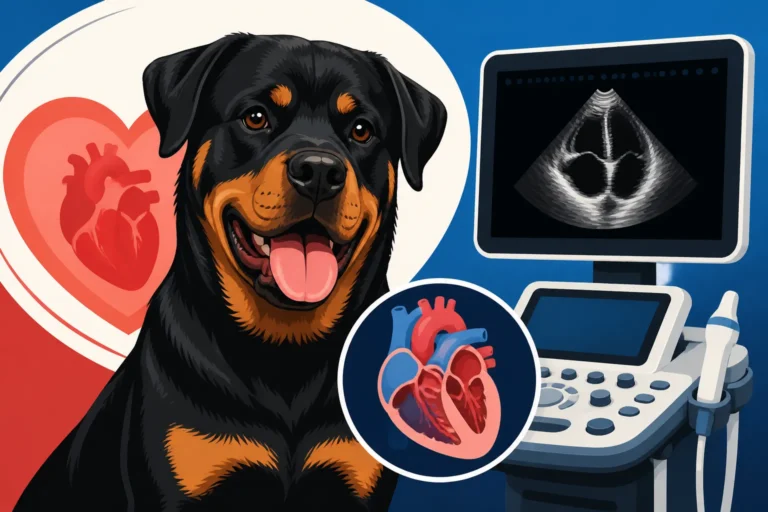
For any significant or persistent heart murmur in a Rottweiler, consulting with a board-certified veterinary cardiologist is almost always the gold standard. These specialists have advanced training and equipment to accurately diagnose and manage heart conditions. They can distinguish between innocent murmurs and those indicating serious disease, and precisely pinpoint the problem.
The primary diagnostic tool a cardiologist will use is an echocardiogram, often referred to simply as an "echo." This is a non-invasive ultrasound of the heart that provides real-time images of its chambers, valves, and surrounding structures. An echo allows the cardiologist to see how well the valves are opening and closing, measure the thickness of the heart muscle, assess the size of the heart chambers, and evaluate the speed and direction of blood flow. For instance, if your Rottweiler has a murmur, a cardiologist using an echo can definitively diagnose conditions like The Rottweiler Echocardiogram at Two Years Old can confirm the presence and severity of conditions like Subaortic Stenosis or Dilated Cardiomyopathy in a Rottweiler. The detailed information from an echocardiogram is essential for formulating an accurate prognosis and a tailored treatment plan, if one is needed.
Managing Your Rottweiler's Heart Health
Once a definitive diagnosis is made by a cardiologist, the focus shifts to managing your Rottweiler's heart health. This management plan will be highly individualized, depending on the specific condition, its severity, and your dog's overall health. If a serious condition is identified, lifestyle adjustments are often a key component. This might include modifications to exercise routines, such as implementing Exercise Limits for a Rottweiler With Heart Disease, ensuring that physical activity doesn't overtax an already compromised heart. Dietary changes, especially controlling weight to prevent Rottweiler Obesity and the Load It Adds, are also vital as excess weight puts additional strain on the heart.
Medications may be prescribed to help the heart function more efficiently, manage fluid buildup, or control arrhythmias. These can range from diuretics to ACE inhibitors to beta-blockers, as discussed in detail for conditions like Medication for a Rottweiler in Heart Failure. Regular follow-up appointments with the cardiologist are crucial to monitor progress, adjust medications as needed, and keep track of the heart's condition over time. These specialized consultations, diagnostic tests, and long-term medications can add up financially, which is where pet insurance, like a policy from Healthy Paws, can become invaluable. Understanding what is covered, especially given the potential for pre-existing conditions if a murmur is found after enrollment, is important. Many owners opt to enroll their pets, like Rottweiler puppies, early on for this reason, even before potential issues like Insuring a Rottweiler Before Its First X-Rays are diagnosed.
Living with a Rottweiler Diagnosed with a Heart Murmur
A heart murmur diagnosis for your Rottweiler doesn't have to mean an immediate decline in quality of life. With proper understanding, diligent care, and informed decisions, many Rottweilers with heart conditions can lead fulfilling lives. The journey involves a partnership with your vet and a commitment to understanding your dog's specific needs.
Understanding Prognosis and Quality of Life
The prognosis for a Rottweiler with a heart murmur varies dramatically depending on the underlying cause, the severity of the condition, and how well it responds to treatment. An innocent murmur in a puppy, for example, typically has an excellent prognosis and often resolves on its own. On the other end of the spectrum, a severe congenital defect or advanced acquired heart disease might carry a more guarded prognosis.
The goal in all cases, especially for adult and Senior Rottweiler Care After the Age of Seven, is to maintain the best possible quality of life for as long as possible. This involves consistent monitoring, adherence to prescribed treatments, and being acutely aware of any changes in your Rottie’s behavior, appetite, or energy levels. Early detection and proactive management, guided by a veterinary cardiologist, can often significantly extend both the lifespan and the happiness of a Rottweiler living with a heart murmur.
Financial Considerations for Ongoing Care
Let's be realistic: managing a heart condition in a large breed like a Rottweiler can involve substantial financial commitment. From initial diagnostic workups like Rottweiler Cardiac Workup Costs for echocardiograms and X-rays, to ongoing medication costs (which can be significant for a dog weighing over 100 pounds), and regular specialist check-ups, the bills can quickly add up.
This is where planning ahead makes a huge difference. Many pet parents find that pet insurance, such as policies offered by Healthy Paws, can be a lifesaver. While most policies won't cover pre-existing conditions (meaning a heart murmur diagnosed before enrollment might not be covered), if you enroll your Rottweiler early, before any murmurs or other heart issues are detected, it can provide invaluable coverage for future cardiac care. It’s crucial to read the fine print about what a policy will and What a Rottweiler Policy Will Not Cover to ensure it aligns with your expectations. Setting aside an emergency fund specifically for veterinary care is also a wise decision for any Rottweiler owner.
Advocacy and Support
As a Rottweiler owner, you are your dog’s best advocate. Being informed, asking questions, and actively participating in your dog's treatment plan are essential. Don't hesitate to seek a second opinion if you feel unsure about a diagnosis or treatment recommendation. Veterinary medicine is constantly advancing, and another perspective can sometimes offer new insights.
Connecting with online forums, breed-specific groups, or local communities of Rottweiler owners can also provide emotional support and practical advice. Sharing experiences with others who have navigated similar challenges can be incredibly validating and helpful. Remember, you're not alone in this journey. With a dedicated team of veterinary professionals and a loving home environment, your Rottweiler can continue to be a cherished member of your family, even with a heart murmur. The average Rottweiler Lifespan and the Eight to Ten Year Average can sometimes be influenced by these conditions, but dedicated care often makes a substantial difference.
Disclaimer
This article is intended for informational purposes only and does not constitute veterinary advice. Always consult with a qualified veterinarian or veterinary cardiologist regarding your Rottweiler's specific health concerns and treatment options.