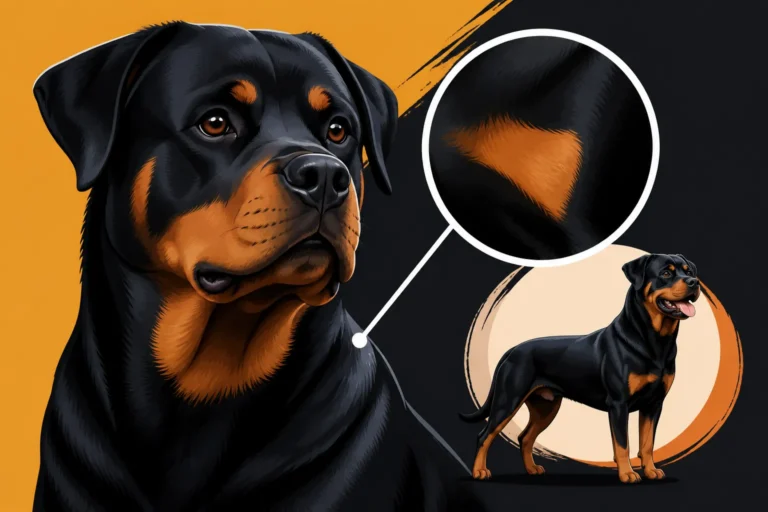
Miniature Rottweilers and Whether They Exist
It's a common question that pops up in forums and rescue groups: "Do miniature Rottweilers exist?" The idea of a smaller version of our beloved, self-assured Rottweilers is certainly appealing to many, perhaps folks who adore the breed's loyal temperament and striking looks but worry about managing a hundred-pound-plus dog. Unfortunately, if you're picturing a perfectly scaled-down, purebred Rottweiler, the reality is a bit more complex and often less ideal than the dream. This guide is here to shed light on what a true Rottweiler is, what people might be encountering when they hear "miniature Rottweiler," and the significant health and ethical considerations involved.
The Standard Rottweiler Size
Let's start with the basics: what is a Rottweiler supposed to look like? The breed standard, maintained by organizations like the American Kennel Club (AKC) and the Allgemeine Deutsche Rottweiler-Klub (ADRK) in Germany, is very specific about size, build, and overall appearance. These standards aren't just arbitrary rules; they define the physical characteristics that allow a Rottweiler to perform its historical duties and embody the breed's robust health and temperament. A true Rottweiler is a powerful, substantial dog, built for strength and endurance, not for fitting into a handbag.
Male Rottweiler Size
A mature male Rottweiler is a truly impressive sight, solid and well-muscled. According to the breed standard, males typically stand between 24 and 27 inches tall at the shoulder. Their weight can range significantly depending on their build and conditioning, but generally falls between 95 and 135 pounds, with some individuals weighing more. They have a distinctly masculine head, broad and powerful, giving them that classic stoic expression we all know and love. This isn't a dog that developed to be small; it was bred to herd and guard cattle, and to pull carts, requiring considerable physical presence.
For those considering getting a male puppy, remember they grow incredibly fast, but their bones and joints are still developing. Rottweiler Growth Plates and Why They Close So Late talks about how their substantial growth plates don't close until they are quite old, meaning you need to be careful with their exercise and diet to avoid developmental bone issues. This rapid growth also means they reach an imposing size quickly, which is why early training is so critical. Why Rottweiler Training Cannot Wait Until Six Months delves into the importance of starting obedience work before they literally outweigh you.
Female Rottweiler Size
Female Rottweilers are equally impressive, though they are typically smaller and possess a more refined, yet still powerful, build than their male counterparts. The breed standard calls for females to stand between 22 and 25 inches tall at the shoulder. Their weight usually ranges from 80 to 100 pounds, again with variations based on individual genetics and muscle mass. While they might be a bit lighter, they are by no means dainty. They still carry the same robust structure and confident demeanor as the males.
When looking at female Rottweilers, it's essential to understand that their size still requires considerable care and management. They will still need spacious crates – you can find excellent options on Chewy – and sturdy leashes capable of handling their strength. Just like males, female Rottweiler puppies are susceptible to joint issues if over-exercised or fed incorrectly during their crucial growth phases. Rottweiler Growth Plates Closing at Eighteen to Twenty-Four Months highlights the delicate balance of nurturing their large bodies. The overall health of a Rottweiler, regardless of gender, depends heavily on responsible breeding and proper care from day one. The Five Clearances a Rottweiler Breeder Must Have details the health testing breeders should be doing.
What People Think Is a Miniature Rottweiler
The concept of a "miniature Rottweiler" often stems from misinterpretations or intentional mixes rather than a recognized, smaller version of the purebred dog. It's easy to see why someone might be drawn to the idea, but it's important to understand the reality behind these smaller versions.
Runts of the Litter and Poor Breeding
Sometimes, what people perceive as a "miniature Rottweiler" might simply be the runt of a litter, or a dog that is undersized due to poor breeding practices, malnutrition, or underlying health issues. A responsible breeder aims for puppies that meet the breed standard, not those that are significantly smaller. A puppy that is considerably smaller than its littermates or one that fails to thrive could be suffering from a range of problems, some of which might not be immediately obvious.
For instance, a runt might have congenital defects, internal parasites, or simply been out-competed for food by its larger siblings. In unethical breeding situations, dogs might be bred without regard for health or genetic lineage, leading to stunted growth or a smaller overall size simply because the parent dogs were themselves undersized or unhealthy. These dogs are not "miniature Rottweilers" in any desirable sense; they are often products of neglect or ignorance, and purchasing such a dog often means taking on a lifetime of potential veterinary bills and heartbreak. You might think you're getting a unique, small version, but you could be inheriting a host of problems. Why an $800 Rottweiler Puppy Costs More Later covers some of the hidden costs of poorly-bred dogs.
Rottweiler Mixes
More often than not, a "miniature Rottweiler" is actually a Rottweiler mixed with a smaller breed. This is a very common way people achieve a smaller dog with some Rottweiler characteristics. Popular mixes might include Rottweilers crossed with Beagles, Miniature Pinschers, Pugs, or even Dachshunds, leading to a wide variety of sizes and appearances. These mixed breeds can be wonderful dogs, but they are not purebred Rottweilers, and their size and temperament will be unpredictable, drawing from both parent breeds.
The challenge with mixed breeds is that you don't always know what traits they will inherit. You might get the Rottweiler's loyalty and protectiveness, but in a smaller body, or you might get a completely different personality. Health-wise, they can inherit problems from either side of their family tree, and it's much harder to get a full health history on the parents of a mixed-breed litter. For instance, if one parent has Rottweiler Hip Dysplasia and the OFA Grade and the other has patellar luxation, the offspring could inherit either, or both. If you are looking at a smaller dog and told it's a "miniature Rottweiler," always ask about the parents and be wary if the answer involves a mix being presented as a purebred.
Deliberate Crossbreeding for Smaller Size
There are also instances where breeders deliberately cross Rottweilers with smaller breeds with the specific goal of creating a "miniature" version. This is often marketed as a designer breed, like a "Rottie-Pin" (Rottweiler x Miniature Pinscher) or a "Rottie-Dach" (Rottweiler x Dachshund). While these dogs can be quite charming and may inherit some of the desirable traits of both parents, they are fundamentally crossbreeds and should never be advertised or sold as purebred miniature Rottweilers.
The key here is transparency. A responsible breeder will clearly state that they are breeding a mix and educate potential owners on the expected range of size, temperament, and health concerns. The danger arises when unscrupulous breeders try to pass these mixes off as something they are not, often charging exorbitant prices for a dog that is simply a mixed breed. If you see a breeder claiming to have "miniature Rottweilers" and they can't provide full pedigree papers for both parents (showing both are Rottweilers within the standard), or they hesitate to explain the parentage, it's a huge red flag. Always do your homework and understand exactly what you're getting into. Reputable breeders are focused on improving the breed, not shrinking it for novelty.
Health Concerns with "Miniature" Versions
While the idea of a smaller Rottweiler might seem appealing, chasing that "miniature" dream, especially through unproven or unethical breeding, comes with significant health risks for the dogs involved. The standard Rottweiler is a robust breed when properly bred, but altering its size without careful consideration can lead to a host of problems.
Genetic Issues from Dwarfism or Poor Breeding
Sometimes, dogs appear smaller due to a genetic condition called dwarfism. In some breeds, certain forms of dwarfism are recognized, but in Rottweilers, it's not a healthy or desirable trait. If a Rottweiler carries a gene for dwarfism, it can lead to disproportionate growth, meaning some body parts might grow normally while others are stunted. This can result in skeletal abnormalities, joint problems, spinal issues, and a reduced lifespan. These conditions are painful and require extensive veterinary care, adding to the Rottweiler Surgery Costs From Bloat to Bone Cancer that owners might already face.
Beyond dwarfism, dogs produced through poor breeding practices—like breeding runts together, or breeding dogs with known health issues simply to get a smaller size—are at a much higher risk for a myriad of genetic health problems. This can include severe hip and elbow dysplasia at a young age, heart conditions like Subaortic Stenosis in Rottweiler Puppies, eye diseases, or immune system deficiencies. These issues are often costly to manage and significantly reduce a dog's quality of life. An ethical breeder prioritizes health above all else, and purposely breeding for a "miniature" size in a breed like the Rottweiler often means sacrificing health for novelty.
Mixed Breed Health Unknowns
When you cross a Rottweiler with another breed, you introduce a whole new set of genetic variables. While some argue that mixed breeds are inherently healthier due to a wider gene pool (hybrid vigor), this isn't always a guarantee, especially if both parent breeds have their own predispositions to certain conditions. For example, crossing a Rottweiler with a Miniature Pinscher could mean the offspring might inherit the Rottweiler's propensity for hip or elbow issues, and the Miniature Pinscher's potential for patellar luxation or Legg-Calve-Perthes disease.
The biggest unknown is that you don't have the predictability that comes with established, health-tested purebred lines. It's much harder to trace the health history of mixed-breed parents, making it difficult to predict what a "miniature Rottweiler" mix might be susceptible to. Responsible breeders of any type of dog, whether purebred or carefully planned cross, will provide comprehensive health clearances for both parent animals. If a breeder of a "miniature Rottweiler" cannot provide these, it's a significant cause for concern. Remember, a dog is a long-term commitment, and investing in a healthy puppy from the start can save you a lot of heartache and money down the road. Pet insurance, available from providers like those found on Chewy, is also something to consider for any dog, but especially those with unknown genetic backgrounds. Rottweiler Pet Insurance and the $204 Average explains typical costs and coverage.
Ethical Breeding Practices for Rottweilers
Ethical breeding of Rottweilers is about preserving the health, temperament, and conformation of the breed as defined by the standard. This means rigorous health testing of parent dogs for conditions common in Rottweilers, such as hip and elbow dysplasia, cardiac issues (Rottweiler Heart Disease and Subaortic Stenosis), and certain eye diseases (Rottweiler Eye Certification and the Three Year Rule). It also means carefully selecting breeding partners based on temperament, genetic diversity, and adherence to the breed standard.
Intentionally breeding for a "miniature" size often means deviating significantly from these ethical guidelines. It can involve breeding undersized dogs, mixing breeds without transparency, or even attempting to create a new "miniature" line without the extensive health testing, generational tracking, and genetic understanding required to do so responsibly. Such practices can lead to dogs with compromised health, unpredictable temperaments, and conformation issues that impact their ability to live a full, pain-free life. Always choose a breeder who can provide transparent health clearances, pedigree information, and who prioritizes the well-being of their dogs over novelty. The Five Evaluations a Rottweiler Needs for CHIC is a great reference for what to look for in a breeder's health records.
Why a True Miniature Rottweiler Doesn't Exist (and Shouldn't)
The absence of a recognized "Miniature Rottweiler" isn't an oversight; it's by design, rooted in the breed's history, purpose, and the meticulous standards set by breed clubs worldwide.
The Rottweiler's Original Purpose and Build
The Rottweiler's history traces back to the Roman Empire, where they were drover dogs, herding cattle for the Roman legions across Europe. Later, in the German town of Rottweil, they became known as "Metzgerhund," or "butcher's dogs," continuing their work of herding livestock and pulling carts laden with meat. What a Metzgerhund Did in a Day's Work explains how integral their strength and size were to these tasks. Imagine a small dog trying to move a stubborn bull or pull a heavy cart! Their substantial bone structure, powerful musculature, and confident demeanor were not merely aesthetic choices; they were functional necessities for a dog bred to handle demanding physical work.
A "miniature" version would completely undermine the very essence of what a Rottweiler is. It would compromise their strength, their endurance, and their imposing presence, which were all critical for their original jobs. When you consider the deep historical roots of the breed, shrinking them to fit a new fad goes against centuries of careful selection for a specific working purpose. The breed's robust build is what makes a Rottweiler a Rottweiler, and attempting to reduce that build can lead to structural compromises and health issues that diminish, rather than enhance, the dog's quality of life.
Official Breed Standards
Official breed clubs, such as the AKC in the United States and the ADRK in Germany, establish stringent breed standards. These standards meticulously detail every aspect of a Rottweiler's appearance, temperament, and health. This includes specific ranges for height and weight, ensuring that dogs conform to the historical and functional ideals of the breed. There is no mention of a "miniature" variety within these standards, nor are there separate classes for smaller Rottweilers in conformation shows.
Breeding to standard is a commitment to the integrity and health of the breed. It means prioritizing traits that have been proven over generations to produce sound, healthy, and temperamentally stable dogs. Introducing a "miniature" line would require a complete redefinition of the breed, a process that would take many generations of careful, health-focused breeding to even begin to establish, and one that currently has no support from official breed organizations. These standards are what protect the breed from arbitrary changes that could introduce widespread health problems or alter the fundamental nature of the Rottweiler. Any dog advertised as a "miniature Rottweiler" that falls significantly outside the established size standards is either a mixed breed, a poorly bred purebred, or misrepresented. Rottweiler Size Under the AKC Standard details these requirements further.
If You Desire a Smaller, Rottweiler-Like Dog
It's completely understandable to love the Rottweiler's loyal, confident nature and striking appearance but still desire a smaller dog. Perhaps your living situation, physical capabilities, or even local breed restrictions make a full-sized Rottweiler impractical. The good news is, you don't have to give up on having a dog with some of those desirable traits! There are responsible ways to find a companion that fits your needs.
Smaller Breeds with Similar Temperaments or Looks
Instead of seeking a non-existent miniature Rottweiler, consider exploring other breeds that share some of the Rottweiler's best qualities but in a more compact package. For example:
- Miniature Pinscher: Often called the "King of Toys," Miniature Pinschers share the Rottweiler's black and rust coloring and confident demeanor, though in a much smaller, more energetic body. They are feisty, intelligent, and fiercely loyal.
- Manchester Terrier (Standard or Toy): These elegant terriers also come in black and tan, are known for their intelligence, alertness, and devotion to their families. They are active and agile, offering a Rottweiler-like alertness without the massive size.
- Beauceron: If you're looking for a dog with a similar herding and guarding heritage, but perhaps a slightly leaner build than a Rottweiler, the Beauceron could be an option. While still a large dog, they are typically more athletic and often slightly less massive than a Rottweiler, with a comparable temperament.
- Doberman Pinscher: Often compared to Rottweilers, Dobermans are also black and tan, loyal, and protective. They are generally more slender and active than Rottweilers, but still a large, powerful breed. A Rottweiler Set Against a Doberman Pinscher explores their differences.
When considering these breeds, research their specific temperaments, exercise needs, and potential health issues. A responsible breeder for any of these breeds will be transparent about their dogs' lineage and health clearances, ensuring you get a healthy, well-adjusted puppy. Reputable sources like Chewy's informational articles or breed club websites can be great starting points for your research.
Adoption of Smaller Mixed Breeds
Another fantastic option is to consider adopting a mixed-breed dog from a rescue or shelter. There are countless dogs of all shapes and sizes looking for loving homes, and many of them are Rottweiler mixes that have inherited some of the breed's best qualities in a smaller body. You might find a Rottweiler mix that is smaller due to its other parentage, offering that beloved black and tan look with a more manageable size.
When adopting from a rescue, they often have a good understanding of a dog's temperament and history, especially if the dog has been in foster care. This can give you a better idea of what to expect than buying a mystery mix from a less reputable source. Many rescues, including those dedicated to Rottweilers or large breeds, often have mixed-breed dogs come through their doors. Taking On a Rescue Rottweiler With No History talks about the unique considerations when adopting a dog with an unknown background. You might even find a dog that is already house-trained and past the challenging puppy stage. Plus, adopting gives a deserving dog a second chance at a happy life, which is a truly rewarding experience.
Here's a quick comparison to help visualize the difference between a standard Rottweiler and what a "miniature" might imply:
| Feature | Standard Purebred Rottweiler | "Miniature Rottweiler" (Often a Mix or Undersized) |
|---|---|---|
| Size (Height/Weight) | Males: 24-27", 95-135 lbs; Females: 22-25", 80-100 lbs | Variable, often significantly smaller than standard |
| Origin/Recognition | Ancient German drover/guard dog; AKC, ADRK recognized | Not a recognized breed; typically mixed or poorly bred |
| Build/Purpose | Robust, powerful, built for strength, herding, guarding | Often lighter bone, less powerful; purpose undefined or lost |
| Temperament | Self-assured, calm, confident, protective, intelligent | Unpredictable, mix of parent breeds, potential behavioral issues |
| Health | Predisposed to specific issues (hips, elbows, heart) but well-studied in responsible lines | Higher risk of unknown genetic issues, poor breeding health |
| Breeding Ethics | Strict health clearances, temperament focus, breed standard adherence | Often lacks health clearances, focus on novelty/size over health |
| Availability | From reputable breeders following breed standard | From indiscriminate breeders, accidental litters, rescues |
In conclusion, while the allure of a "miniature Rottweiler" is strong for some, it's crucial to understand that such a breed doesn't exist as a recognized, healthy purebred. Your best bet for a smaller companion with a Rottweiler's spirit is either to explore other well-established breeds with similar characteristics or to open your heart to a mixed-breed dog from a reputable rescue.
Disclaimer
This article is for general informational purposes only and does not constitute professional advice. Laws, prices and regulations vary by location and change over time. Consult a qualified professional for guidance on your specific situation.