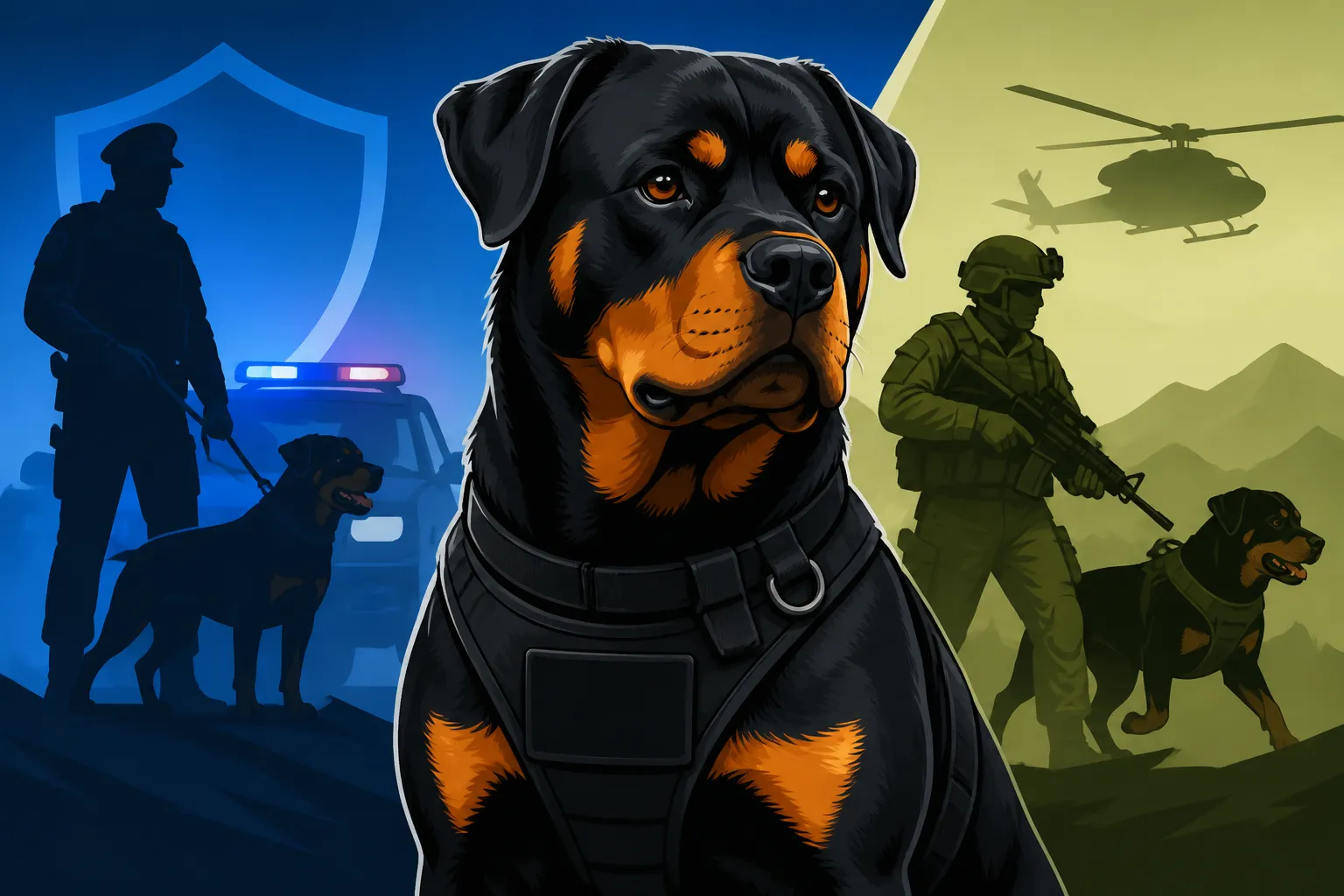
Rottweilers in Police and Military Service
It’s a common misconception that Rottweilers are just big, intimidating house pets or, worse, inherently aggressive dogs. Many people only see the headlines or hear the whispers, never truly understanding the profound dedication, intelligence, and stable temperament that makes this breed an absolute powerhouse in demanding roles like police and military service. This guide is here to pull back the curtain, exploring exactly why these magnificent dogs are chosen for such critical work and what their lives in service truly entail.
The Historical Roots of the Working Rottweiler
To truly appreciate a Rottweiler's role in law enforcement and military service, we have to look back at their origins. These aren't new "designer dogs" bred for a specific modern task; their working drive is woven into the very fabric of their history, a heritage that prepared them for roles far beyond what most people imagine today.
From Drover Dog to Police Dog in Europe
Picture the bustling Roman Empire, legions on the move, needing to feed their armies. They brought along their robust, courageous mastiff-type dogs to herd and guard the cattle that marched with them, ensuring a steady food supply. As these legions moved across Europe, some of these dogs settled in the German town of Rottweil, a vibrant cattle market hub. Here, they evolved into what became known as the "Metzgerhund" – the butcher's dog. Their job was vital: not only did they drive cattle to market, but they also protected the butchers' earnings, often tied around their necks in leather pouches, from thieves. This was serious work, requiring immense strength, unwavering focus, and a natural protective instinct.
It's this deep-seated history of guarding and managing large, unpredictable livestock that provided the blueprint for their later police work. Their natural inclination to assess situations, stand their ground, and protect their charges made them invaluable. As the 19th century arrived and cattle driving declined with the advent of railways, the Rottweiler's traditional job began to fade. However, their inherent working traits didn't go unnoticed. By the early 20th century, particularly in Germany, police forces began experimenting with various breeds for K9 units, and the Rottweiler's intelligence, trainability, and powerful presence quickly made them a top contender, leading to their formal recognition as a police dog breed around 1910. The transition from guarding livestock and butchers to patrolling streets and protecting officers was a natural evolution of their inherent capabilities. To learn more about their journey, you might want to read The Rottweiler From Roman Cattle Drives to the AKC.
Early Military Contributions and World Wars
The Rottweiler’s utility wasn't confined to civilian police work; their robust nature and keen senses made them prime candidates for military service during the World Wars. During World War I and World War II, Rottweilers were deployed by various forces, often serving in roles that demanded immense bravery and resilience under unimaginable conditions. They weren't just mascots; they were working soldiers with paws.
These dogs excelled as messengers, carrying vital communications across dangerous battlefields, often under heavy fire. Their loyalty and determination meant they would complete their mission even when injured. They also served as formidable guard dogs, protecting supply depots, barracks, and vital installations from intruders, their imposing presence often enough to deter unauthorized entry. Furthermore, some were utilized as medical dogs, trained to locate wounded soldiers on the field, barking to alert medics or carrying small first-aid kits to the injured. Their ability to remain focused amidst chaos, their unwavering loyalty to their handlers, and their physical toughness proved invaluable. The harsh realities of war truly showcased the Rottweiler's profound courage and adaptability, proving they were far more than just "dog-of-war" caricatures; they were crucial members of the war effort, embodying strength and unwavering purpose.
Traits That Make a Rottweiler an Ideal Service Dog
When police and military organizations choose a dog for service, they're not just looking for a "tough" dog. They need a complex combination of physical and mental attributes that few breeds possess. The Rottweiler, with its unique blend of qualities, often fits this demanding bill perfectly.
Intelligence, Trainability, and Focus
One of the most critical traits for any service dog is intelligence and trainability. Rottweilers are incredibly smart dogs, often eager to please their handlers and quick to grasp new commands and concepts. This isn't just about learning "sit" and "stay"; it's about understanding complex sequences, discriminating between scents, and making critical decisions under pressure. Their high drive and desire to work mean they thrive on having a job, and training provides that vital mental stimulation.
Their focus is another huge asset. A working Rottweiler can block out distractions in a high-stress environment, whether it's the commotion of a public event, the chaos of a search site, or the loud noises of a military exercise. They lock onto their task, relying on their handler's cues and their own keen senses to accomplish their mission. This profound ability to concentrate allows them to perform tasks with precision and reliability, which is absolutely essential when lives, or critical security, are on the line. They aren't easily deterred or sidetracked, making them incredibly dependable partners in demanding situations.
Strength, Endurance, and Intimidation Factor
Physically, the Rottweiler is a powerhouse. They are robust, muscular, and possess a formidable bite force, making them incredibly effective in roles requiring apprehension or handler protection. Their sheer physical presence alone can be a significant deterrent, often defusing tense situations before they escalate. A hundred-pound Rottweiler at full sprint, trained for a specific task, is an undeniable force.
Beyond raw power, they also boast impressive endurance. Service dogs often work long shifts, covering extensive areas on patrol, or engaging in prolonged search operations. A Rottweiler's stamina allows them to maintain peak performance for extended periods, an attribute that is crucial for sustained operations. This combination of strength and staying power means they can keep up with the physical demands of police and military personnel, without fatiguing easily. When we talk about Whether a Three-Legged Rottweiler Copes at That Size, you start to understand just how resilient these dogs are, even after significant injury or disability, which speaks volumes about their inherent constitution.
Balanced Temperament and Adaptability
Perhaps the most misunderstood aspect of the Rottweiler is their temperament. A well-bred and properly trained Rottweiler possesses a calm confidence and a "wait-and-see" attitude, which is ideal for a working dog. They are not reactive or prone to unnecessary aggression. Instead, they observe, assess, and then act decisively when commanded or when a threat is clearly identified. This measured approach is invaluable in high-stakes environments where erratic behavior could be disastrous. Their natural aloofness toward strangers, often misinterpreted as unfriendliness, is actually a desired trait in service work; they bond intensely with their handler but are not easily swayed by outsiders.
This balanced temperament also contributes to their remarkable adaptability. A police K9 might need to switch from a high-energy chase to calmly sitting by its handler during a public event, or a military dog might transition from patrol to quietly resting in a crowded barracks. Rottweilers have the mental fortitude to handle these transitions, remaining composed and focused on their duties regardless of the changing environment. Their ability to remain stable under pressure is precisely The Calm Confidence a Rottweiler Standard Asks For that makes them so effective, proving that true working dogs are far from the one-dimensional stereotypes often portrayed.
Rottweilers in Modern Police K9 Units
The modern police K9 unit relies heavily on dogs that can perform a variety of tasks, often simultaneously or in quick succession. Rottweilers continue to be a strong choice for these roles, bringing their unique blend of power, intelligence, and discerning temperament to the force.
Patrol and Protection Work
One of the most visible and critical roles for a police K9 is patrol and protection. This involves everything from routine patrols with their human partners to actively apprehending suspects, protecting their handlers in dangerous situations, and assisting in crowd control. When an officer is confronted with a dangerous individual, a trained Rottweiler can be deployed to safely (and intimidatingly) secure the situation, often preventing the need for lethal force. Their presence alone can de-escalate confrontations, as few individuals are willing to engage with a focused, powerful dog.
In apprehension scenarios, a Rottweiler is trained to bite and hold an individual until their handler gives a release command, ensuring that the suspect is controlled without further incident. This isn't about uncontrolled aggression; it's about precision and control, where the dog acts as an extension of the officer's authority. They're also instrumental in searching buildings or large outdoor areas for hidden suspects, their keen sense of smell and hearing far surpassing human capabilities. Their ability to act as a formidable deterrent and a highly effective tool for suspect apprehension highlights why Whether a Rottweiler Is Genuinely Good Guard Dogs is often answered with a resounding yes in the context of controlled, professional service.
Search and Detection Specialties
Beyond patrol, many Rottweilers serve as specialized detection dogs, leveraging their incredible noses to locate everything from illegal narcotics to explosives. Their olfactory capabilities are mind-boggling, allowing them to detect minute traces of substances that are invisible and undetectable to humans. This work requires immense focus, perseverance, and a strong drive to retrieve or indicate their find. A dog's nose is a million times more sensitive than ours, making them indispensable tools in the fight against crime and terrorism.
Whether sniffing out drugs in vehicles, luggage, or buildings, or searching for explosive devices in public spaces, a Rottweiler's dedication to the scent line is unwavering. They are also employed in search and rescue missions, locating missing persons in rubble, wilderness, or disaster zones. Their stamina allows them to cover vast areas, and their determination to find a source of human scent is extraordinary. These dogs don't just find; they save lives, which is why Rottweilers in Search and Rescue Teams is a role they are increasingly excelling in.
The Intense Training Regimen for Police Rottweilers
Becoming a police K9 is no walk in the park for a Rottweiler; it's the culmination of rigorous selection, extensive training, and an unshakeable bond with their handler. Puppies selected for police work often come from carefully screened working lines, chosen for their inherent drives, health, and stable temperaments. Once chosen, their training journey is intense and continuous. It begins with advanced obedience, ensuring the dog responds instantly and flawlessly to commands even in distracting environments. This forms the foundation for all other specialized work.
Next comes bite work, which is highly controlled and focused on specific targets, such as padded sleeves or suits worn by decoys. This teaches the dog when to engage, how to hold, and when to release, all on command. It's not about aggression; it's about discipline. Detection training involves imprinting specific scents and teaching the dog to alert their handler in a consistent, clear manner. The dog must learn to ignore environmental distractions and focus solely on the target odor. Often, these dogs need specialized gear, from durable harnesses to long lines, which handlers might source from reputable pet supply retailers like Chewy, ensuring their K9 partners have the best tools for the job. The entire process requires a highly skilled trainer, which is why Finding a Rottweiler-Experienced Trainer Near You is crucial for both private owners and police departments alike. This isn't just a dog being taught tricks; it’s a highly refined system of conditioning, trust, and partnership, built over thousands of hours.
Rottweilers in Military Roles Across the Globe
Just as they serve on the front lines of domestic law enforcement, Rottweilers are increasingly deployed in military operations worldwide. Their capabilities make them highly effective assets in complex and dangerous environments.
Guarding, Patrolling, and Sentry Duty
In military settings, Rottweilers are frequently utilized for securing perimeters, patrolling sensitive areas, and performing sentry duty. Imagine a remote outpost or a critical supply depot; a trained military working dog (MWD) can detect intruders far before a human guard, thanks to their superior senses of smell and hearing. Their presence adds a crucial layer of security, acting both as an early warning system and a formidable deterrent. They're often tasked with patrolling vast areas, working alongside soldiers to maintain vigilance against potential threats, both human and otherwise.
These dogs are trained to operate silently, moving with their handlers through various terrains and conditions, from dense forests to urban ruins. Their ability to remain alert and focused for extended periods is paramount. They provide an invaluable psychological advantage as well; the sheer sight of a large, disciplined Rottweiler MWD can deter potential adversaries who might otherwise attempt to breach a secure zone. The disciplined nature of military Rottweilers ensures they are not easily startled or panicked, making them reliable partners even in highly chaotic situations, where their calm demeanor is an asset.
Specialized Military Detection Roles
Beyond guarding, Rottweilers in military service are often trained for highly specialized detection roles, particularly in the ever-present threat of improvised explosive devices (IEDs) and contraband. These dogs are literally sniffing out danger, protecting soldiers and civilians from hidden bombs. Their ability to detect minute chemical signatures makes them indispensable in routes clearance, where they walk ahead of troops, identifying threats that could otherwise go unnoticed. This is perhaps one of the most critical and life-saving roles a military dog can perform.
They are also used for detecting hidden caches of weapons, ammunition, or other illegal materials, often in areas where traditional search methods would be too slow or dangerous. Their keen noses can find these items buried underground, hidden in vehicles, or concealed in structures. Furthermore, some Rottweiler MWDs are trained for tracking, following the scent trail of enemy combatants or individuals of interest, even over challenging terrain or after long periods. This highly specialized work requires an extreme level of training, concentration, and precision, and the Rottweiler's natural drive and intelligence make them excellent candidates for such demanding tasks.
The Bond Between Handler and Military Rottweiler
In the intense and often life-threatening environment of military service, the bond between a Rottweiler MWD and its handler is truly something special. It's a partnership built on absolute trust, mutual respect, and countless hours of training and shared experiences. These handlers aren't just giving commands; they are their dog's closest companion, their protector, and their guide in a world of complex missions. The dog, in turn, offers unwavering loyalty, vigilance, and an intuitive understanding of its handler's needs and intentions.
This deep connection is vital for operational effectiveness. In combat zones, a handler relies completely on their dog to detect dangers and protect them, while the dog trusts its handler to provide direction, safety, and care. This bond goes beyond mere obedience; it’s a symbiotic relationship where each partner anticipates the other's moves and needs. When operations are over, many military handlers adopt their canine partners, ensuring these heroes get to retire in loving homes, enjoying the comforts of civilian life. This speaks volumes about the profound and unbreakable connection forged in the crucible of military service, a bond that makes them both more effective and deeply human.
Challenges and Criticisms of Rottweilers in Service
While Rottweilers are undeniably effective in police and military roles, their deployment isn't without its challenges. These include navigating public perception, managing the intense demands of the job, and the practicalities of maintaining such specialized animals.
Public Perception and Breed Stereotypes
Perhaps one of the biggest challenges for Rottweilers in service is the prevailing public perception and entrenched breed stereotypes. Despite their proven capabilities and stable temperaments when properly bred and trained, Rottweilers often suffer from a reputation as "dangerous" or "aggressive" dogs. This can lead to fear and apprehension from the public, even when the dog is working calmly and professionally with its handler. News headlines often focus on negative incidents, further cementing these stereotypes, which can undermine the public's trust in K9 units that utilize the breed.
Police and military departments often work hard to educate the public about their working dogs, emphasizing their rigorous training and the controlled nature of their duties. However, overcoming decades of negative media portrayal and cultural misconceptions is an uphill battle. A working Rottweiler, while demonstrating incredible discipline, can sometimes inadvertently reinforce the perception of a formidable, even fearsome, animal, even if that is precisely what is needed in certain tactical situations. It's a delicate balance for handlers, who must constantly manage their dog's behavior while also managing public opinion, and sometimes the two are at odds. This divergence between popular belief and reality is precisely what Rottweiler Reputation and Reality Diverge seeks to address.
The Physical and Mental Toll of Service
Being a police or military K9 is not just a job; it's a way of life that takes an immense physical and mental toll on these dogs. The constant readiness, the exposure to dangerous situations, and the physical demands of patrols, chases, and detection work can lead to significant wear and tear on their bodies. Injuries are common, from cuts and bruises incurred during apprehending suspects or navigating rough terrain, to more serious issues like joint strain, ligament tears, or even gunshot wounds. Many working dogs face early onset arthritis or other orthopedic issues due to the high-impact nature of their duties.
Mentally, the stress can be considerable. While Rottweilers are inherently stable, the repeated exposure to loud noises, chaotic environments, and potentially traumatic events can affect them. When these dogs retire, often around 8-10 years old, they may carry both physical ailments and psychological scars. Departments strive to provide excellent veterinary care and mental enrichment, but the job is inherently demanding. Their retirement planning often involves ensuring a soft landing, where they can decompress and enjoy a peaceful life, a process not unlike Making End-of-Life Decisions for a Rottweiler but ideally under happier circumstances. It's a testament to their dedication that they perform these duties day in and day out.
The Cost of Maintaining High-Performance Working Dogs
Equipping, training, and maintaining a high-performance police or military Rottweiler involves significant financial investment. The initial cost of a well-bred puppy from working lines, selected for its specific drives and health, can be substantial. Beyond that, the specialized training—from basic obedience to advanced bite work, detection, and scenario-based drills—requires highly skilled trainers and extensive resources. This isn't just a few weeks of puppy class; it's a commitment that lasts years.
Then there are the ongoing costs: premium nutrition to support their active lifestyles, often sourced from trusted retailers like Chewy, ensuring they receive the best large-breed formulas to maintain their physical condition. Regular, specialized veterinary care, often surpassing what a typical pet requires, is essential to keep them in peak physical shape and address any injuries or health concerns promptly. This includes preventative care, emergency treatments, and sometimes rehabilitative therapies. Specialized gear—harnesses, leashes, protective vests, transportation crates, and climate-controlled vehicles—all add to the expense. When you consider The Yearly Cost of Feeding and Keeping a Rottweiler, it's clear that these working dogs represent a substantial investment, underscoring their value to the teams they serve.
The Future of Rottweilers in Service
The world of police and military K9s is constantly evolving, and with it, the roles and training of breeds like the Rottweiler. As technology advances and understanding of canine behavior deepens, so too do the methods by which these incredible dogs are prepared for service.
Evolving Training Methodologies and Technology
The future of Rottweilers in service will undoubtedly be shaped by ongoing advancements in training methodologies and the integration of new technologies. Traditional training, while effective, is being augmented by a deeper scientific understanding of canine cognition, motivation, and learning. This includes more refined positive reinforcement techniques, tailored to the individual dog's drives, and a focus on building resilient, confident working partners. Gone are the days of purely punitive methods; modern training emphasizes collaboration and trust.
Technology is also playing an increasing role. Remote communication devices, GPS tracking for search dogs, and even specialized cameras that can be worn by dogs in dangerous situations are becoming more common. These tools enhance the dog's effectiveness and handler safety. Additionally, virtual reality simulations for handlers could become a training tool, allowing them to practice complex scenarios without putting dogs at risk. The goal is always to maximize the dog's natural abilities while minimizing risks, ensuring that Rottweilers continue to be highly effective and safe components of police and military teams.
Breeding Programs for Service-Specific Traits
The importance of responsible breeding cannot be overstated for working dogs, and this will continue to be a focal point for Rottweilers in service. Breeding programs are increasingly focused on selecting for very specific traits that are critical for police and military work: stable temperament, high drive, trainability, physical soundness, and longevity. This means moving away from breeding solely for appearance and prioritizing health and working aptitude. Why Health-Tested Rottweiler Parents Raise the Price is directly relevant here, as these traits are essential.
Dedicated breeders and organizations work to ensure that working Rottweilers come from lines known for their robust health, including excellent hip and elbow scores (as detailed in Rottweiler Hips and Elbows and the 24-Month Rule), strong hearts, and clear genetic panels for hereditary diseases like JLPP. These health clearances are not just about pet quality; they are about ensuring a working dog can withstand the physical rigors of its career and contribute effectively for as long as possible. The aim is to produce dogs with the genetic predisposition for success in demanding roles, reducing washout rates and ensuring maximum effectiveness and welfare. This strategic approach ensures that the Rottweiler's legacy as a top-tier service dog will continue for generations to come.
Disclaimer
This article is for general informational purposes only and does not constitute professional advice. Laws, prices and regulations vary by location and change over time. Consult a qualified professional for guidance on your specific situation.